

15 min 03 sec
Available in: English
 ไทย
EnglishไทยYou Can Heal Your Life
By Louise Hay
Louise Hay argues that the beliefs we hold about ourselves shape our lives, and she offers simple daily practices, from mirror work to present tense affirmations, for clearing old self-criticism and learning to love yourself.
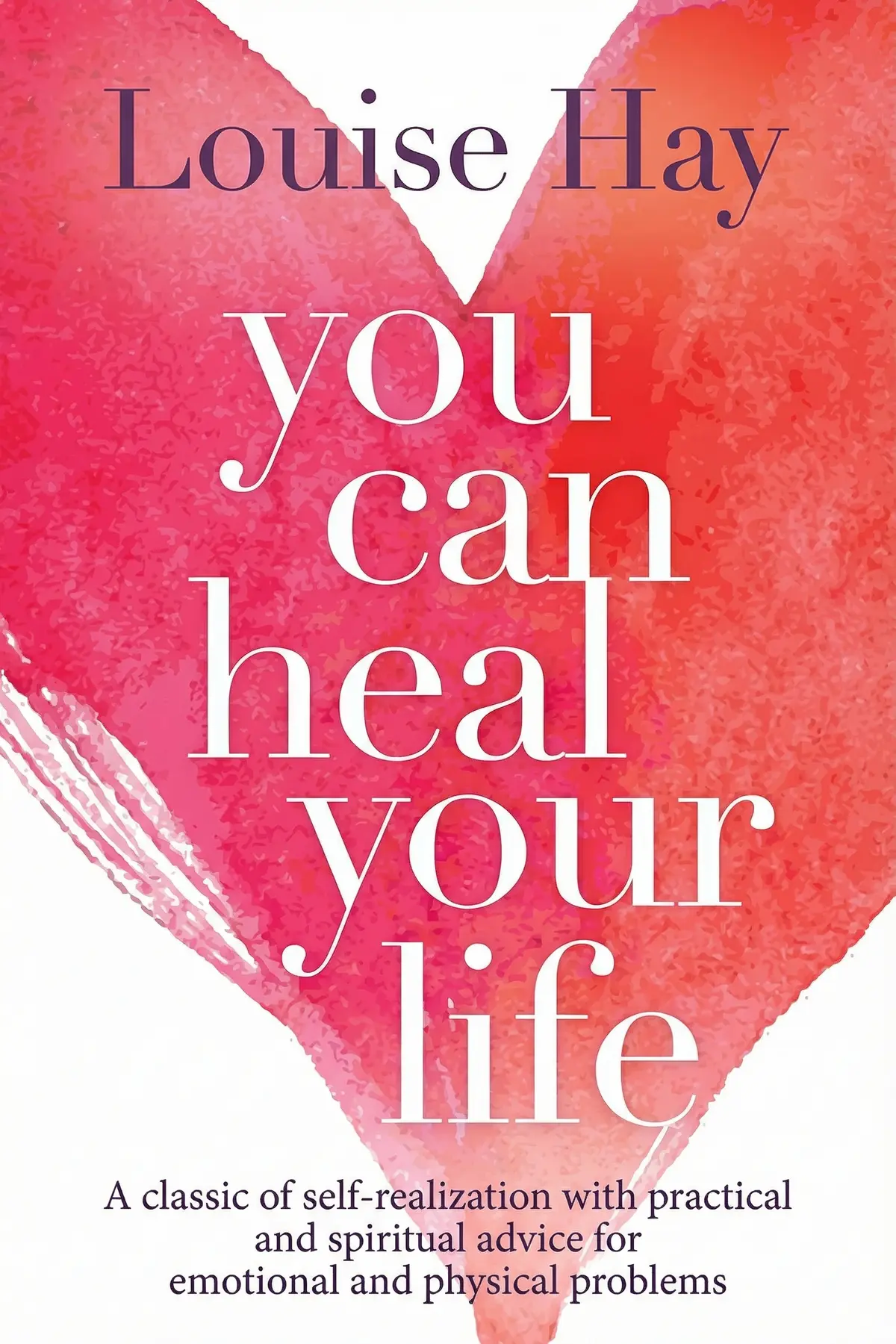
Table of Content
1. Introduction
1 min 11 sec
If the same problems keep returning, a sore back, a lonely evening, work that drains you, Louise Hay’s answer is that they may share one root: the way you think about yourself. In You Can Heal Your Life, the American author and speaker argues that long-held beliefs, many picked up in childhood, shape your moods and, in her view, your body, and that changing those thoughts is where healing starts. Hay arrived at this view after being diagnosed with cervical cancer, which she believed stemmed from years of emotional and physical trauma throughout her life. She sought out natural remedies and natural doctors, and along the way she learned to love herself.
Her argument is easy to state and harder to practice: the beliefs you hold about yourself become the life you live, so learning to love yourself, one thought at a time, is the place to begin. What follows is her method in the order you would use it: sweeping out old beliefs, reading your own resistance, making peace with the past and speaking to yourself in sentences that build you up.
2. Own your reactions and change the world you see
1 min 51 sec
Nobody chooses a flat tire, yet Hay insists you are responsible for everything in your life. Her reason starts with the sentences you say about bad luck, and with where you first learned them.
3. Hear what your body may be asking for
1 min 41 sec
A scowl on a stranger’s face says something about what is going on inside. Hay takes that observation much further, and her reading of aches and illnesses is the most surprising part of her book.
4. Swap your shoulds for coulds and sweep out old beliefs
1 min 51 sec
A single small word can carry a verdict against you every time you use it. Hay shows how to spot it, what to put in its place, and how to tidy a mind full of old judgments.
5. Begin with five words in front of the mirror
1 min 47 sec
Rain on a Monday morning seems to ruin a day before it starts. Hay argues something else is doing the damage, and she offers an exercise so short it feels almost too easy to matter.
6. Read your resistance as a map to your needs
2 min 01 sec
Changing the subject, cleaning the kitchen, reaching for your phone: everyone has a favorite escape. Hay treats these small dodges as signposts, and she follows them somewhere most people would rather not look.
7. Make peace with the past and comfort your inner child
1 min 52 sec
Giving up an old habit can make life feel worse before it feels better, and relationships may start to rub. Hay explains why that friction is a good sign, and what to do with old anger.
8. Speak about yourself in the present tense
1 min 44 sec
Wishing to be less broke or less lonely sounds like a step in the right direction. Hay argues the phrasing itself works against you, and she shows a simple rewrite you can practice on paper.
9. Conclusion
1 min 05 sec
Hay’s book asks you to treat your inner voice as the most influential voice in your life. In her view, peace and happiness are your birthright, something the Universe already wants for you, and when they feel far away it is because you have fallen out of tune with yourself. The sentences you repeat, many of them handed to you by careless adults long ago, keep shaping your days until you choose new ones.
The practice she supports is small and daily. Catch one should and turn it into a could. When you find yourself changing the subject or reaching for your phone, ask what you are avoiding and what need sits under it. Pick a few present tense affirmations, write them out 20 times, and say one kindly to your own eyes the next time you pass a mirror.
The starting point is modest: speak to yourself as you would to the little child you used to be, someone who only ever wanted to hear that they were loved. Keep saying it, Hay promises, and in time the words become what you believe.
About this book
What is this book about?
Many people carry a voice that keeps telling them they are too lazy, too slow or simply not good enough. Louise Hay believes that voice is more than unpleasant. In her view, the thoughts we repeat about ourselves become the reality we live in, shaping our moods, our relationships and even our bodies. Hay came to this view after a diagnosis of cervical cancer, which she believed grew out of a lifetime of trauma. Her method starts from personal responsibility, framed by a supportive Universe that never judges. She asks readers to sweep out limiting beliefs, swap their shoulds for coulds, treat resistance as a clue to hidden needs, forgive the people who hurt them and comfort the child they once were. The practical core is a set of small daily habits: saying I am willing to change into a mirror, writing present tense affirmations out by hand, keeping a gratitude list and ending each day in peace. Readers get a gentle, structured way to change how they speak to themselves.
Book Information
Who it's for
Too hard on themselves
People with a harsh inner critic who want a gentle daily practice for speaking to themselves differently.
Ready to forgive
Readers carrying old anger at parents or past hurts who are ready to work on forgiveness.
New to affirmations
Newcomers to affirmations and mirror work who want a clear method to start with.
About the Author
Louise Hay
Louise Hay (1926 to 2017) was an American author and professional speaker who wrote self-help books in the New Thought tradition. She became a Religious Science practitioner in the early 1970s and also studied with Maharishi Mahesh Yogi. You Can Heal Your Life, first published in 1984, became an international bestseller, and she discussed her work on The Oprah Winfrey Show. She founded the publishing company Hay House and, in 1985, a charitable organization, the Hay Foundation.
Ratings & Reviews
Ratings at a glance
What people think
Listeners find this work both eye-opening and motivating, as it instructs them on adopting a positive mindset and shifts how they view the world. The guide offers practical activities and is viewed as transformative, with one listener noting it includes tangible steps to make changes. They enjoy how easy it is to digest, with several fans so fond of it they revisit it every day, and they admire the stunning artwork along with the uplifting themes regarding self-compassion.
Top reviews
Nim
Finally got around to reading this classic and it’s easy to see why it has stayed relevant for decades. The core message is simple: our thoughts create our reality, and by practicing self-love, we can physically heal ourselves. I love how Hay includes specific affirmations for every ailment, from minor headaches to chronic issues. Truth is, some of the correlations—like the idea that we choose our parents—felt a bit strange at first, but the overall shift in perspective is worth it. The exercises are practical and easy to follow, making this more than just a theoretical text. It’s a roadmap for anyone feeling stuck in negative patterns. I’ve started doing the mirror work every morning and the difference in my mood is undeniable. Highly recommended for those ready to do the inner work.
Show moreSuwit
Wow, I wasn't expecting this to hit so hard during my first read-through. This isn't just a book you read; it's a life-changing manual that requires active participation to get results. The way Louise Hay breaks down the link between mental resentment and physical illness is incredibly empowering for someone dealing with chronic pain. While the writing style is very much a product of its time, the beautiful illustrations and positive affirmations keep the energy high. Personally, I found the section on forgiveness to be the most transformative part of the entire experience. It helped me realize that holding onto old anger was only hurting my own body. Even if you don't believe you can cure every disease with your mind, the psychological benefits of these shifts are massive. It is truly a gift to yourself.
Show moreAnchalee
Louise Hay’s personal journey is nothing short of incredible, and her resilience shines through every single page of this book. After surviving childhood abuse and later healing herself from cancer, she speaks with an authority that few authors in this genre can match. The truth is, we spend so much time being our own worst critics without even realizing the damage it does to our nervous systems. I found the "What is the Problem?" section particularly enlightening because it forces you to look at the root causes of your unhappiness. The writing is accessible, warm, and feels like a hug from a wise grandmother who refuses to let you wallow. It’s a life-changer if you’re actually willing to do the exercises and change your vocabulary. I find myself reaching for it daily just to stay centered.
Show moreLena
Ever wonder if your internal monologue is actually shaping your physical world? This book argues that it is, and it provides the most comprehensive guide to flipping the script that I’ve ever seen. Louise Hay makes the case that every thought we think is creating our future. This might sound intimidating, but it’s actually the ultimate form of empowerment because it means we have the power to change everything. The way she links specific emotions to body parts—like "fat thighs" being a sign of held anger—is fascinating, even if it’s purely metaphorical. It’s a beautiful book that I keep on my nightstand for daily inspiration. Since I started using her techniques, my anxiety has dropped significantly. This is a must-read for anyone on a healing journey.
Show moreOrawan
As someone who has always been skeptical of self-help, I found Louise Hay’s approach surprisingly grounded in many ways. She doesn't just tell you to be happy; she gives you tangible steps to dismantle the negative internal structures we’ve built since childhood. The mind-body connection is a powerful concept that modern science is finally starting to validate, even if Hay’s specific charts feel a bit anecdotal. I did find myself rolling my eyes at the suggestion that we attract every single misfortune through "bad energy," because sometimes life just happens. However, the focus on self-approval over self-criticism is a message everyone needs to hear right now. It’s a very readable book that you can dip in and out of whenever you need a mental reset. A solid four stars for the sheer positivity.
Show moreKrisada
The chapter on how our childhood patterns dictate our current reality was a massive eye-opener for me. I’ve spent years wondering why I repeat the same mistakes, and Hay’s explanation of "mental housecleaning" gave me a new perspective. To be fair, some of the metaphors are a bit cheesy and the tone can be overly simplistic at times. But the core exercises, especially the ones involving mirror work, have genuinely helped me become less critical of my appearance. You have to be in a certain headspace to accept the more "woo-woo" elements, like the idea of the Universe listening to your thoughts. If you can get past the 80s vibes, there’s a lot of wisdom about how we hold tension in our bodies. It’s an empowering read that makes you feel like change is actually possible.
Show moreSamart
Picked this up at a thrift store on a whim and ended up finishing it in two sittings. It's a very easy read, filled with beautiful affirmations and a layout that makes it feel very approachable. I appreciate that she doesn't push a specific religion, instead focusing on a general spiritual connection and the power of the individual mind. My only gripe is that it simplifies very complex systemic issues into "it’s all in your head," which isn't always fair. Still, the emphasis on forgiveness and letting go of the past is something I really needed to hear right now. It's a great tool for anyone looking to improve their self-talk. I’ve started giving copies to my friends who are going through rough patches.
Show morePenelope
To be fair, there is some genuine wisdom buried under a lot of strange theories here. I really appreciated the focus on self-love as the foundation for everything else in life. The book is incredibly easy to navigate, and the affirmations are catchy enough to actually remember throughout the day. I’m still not sold on the idea that I "chose" my parents before I was born, but I can see how that mindset helps people take responsibility for their current lives. It's a polarizing text, for sure. You’ll either find it enlightened or totally eccentric. Personally, I think the benefits of the positive thinking exercises outweigh the weirdness of the more extreme claims. It’s a classic for a reason, even if it requires a bit of a "pick and choose" mentality from the reader.
Show moreMats
Look, I have very mixed feelings about this one after finishing the last chapter. On one hand, the encouragement to treat yourself with kindness and use positive affirmations is lovely and genuinely helpful for mental health. On the other hand, the claim that we literally choose our parents and that cancer is caused by suppressed resentment feels like a dangerous form of victim-blaming. Not gonna lie, seeing her attribute specific body issues to things like "anger at your father" felt more like a parlor trick than actual medicine. If you can filter out the pseudo-science and focus on the parts about self-love and breaking old habits, there is value here. It’s a strange mix of profound psychological insight and total hokum. Take what works for you and leave the rest on the shelf.
Show moreNikolai
This book feels incredibly dated and, frankly, quite irresponsible in its claims regarding physical health. I struggle with the idea that individuals are responsible for attracting their own abusers or that chronic illness is simply a lack of self-love. While the affirmations are harmless enough, the historical context of Louise Hay preaching these ideas during the AIDS crisis makes me deeply uncomfortable. To suggest that a person could cure a terminal illness just by changing their thoughts is a heavy burden to place on someone who is already suffering. There are some okay tips on meditation and being kind to yourself, but the victim-blaming undertones are impossible for me to ignore. If you have a history of trauma, please approach this with caution. It feels more like a fantasy than a healing guide.
Show moreQuestions about this book
What is the main idea of You Can Heal Your Life?
Louise Hay argues that the beliefs you hold about yourself, many picked up from careless adults in childhood, shape your reality. Most of them, she says, boil down to I’m not good enough. Her remedy is learning to love yourself by clearing out limiting beliefs, forgiving the past and replacing negative thoughts with positive affirmations spoken in the present tense, supported by a Universe that she believes never judges you.
What does Louise Hay say about thoughts and physical illness?
Hay believes the body mirrors negative beliefs and that all ailments stem from fear and anger. She links baldness to tension and fear, headaches to failing to validate yourself and varicose veins to hating where you are. She presents these as her own beliefs and asks skeptical readers to keep an open mind. Her practice is to ask what an aching body part represents, which works best as reflection alongside medical care.
What is mirror work in You Can Heal Your Life?
Mirror work means gazing at your own eyes in the glass and stating something positive, beginning with I am willing to change while you touch your throat, which Hay regards as an energy center. You then notice whatever you feel without judging it. Hay values the exercise because a mirror reflects your harshest thoughts about yourself, so speaking kindly to it takes courage. She suggests doing it whenever you pass a mirror.
How do you write affirmations the way Louise Hay recommends?
Turn each negative wish into a positive statement, such as I am healthy or I am successful, and always use the present tense, since Hay believes future phrasing lets the subconscious keep postponing it. A simple starter is I approve of myself. Her daily routine is to choose a few affirmations, write each out 20 times on paper, read them aloud with enthusiasm and carry them with you.
Who should read You Can Heal Your Life?
It suits readers who struggle with self-criticism, repeated toxic relationships, procrastination or old resentments, and who are open to a spiritual frame built around a supportive Universe. The book offers concrete exercises rather than theory: turning shoulds into coulds, a mental housecleaning of memories, noticing resistance, forgiving parents, comforting your inner child and writing daily affirmations.
Readers also enjoyed

A New Earth: Awakening to Your Life’s Purpose
Eckhart Tolle

A Return to Love: Reflections on the Principles of a Course in Miracles
Marianne Williamson

59 Seconds: Change Your Life in Under a Minute
Richard Wiseman

Aflame: Learning from Silence
Pico Iyer


Alcoholics Anonymous
Alcoholics Anonymous World Services



AUDIO SUMMARY AVAILABLE
Listen to You Can Heal Your Life in 15 minutes
Get the key ideas from You Can Heal Your Life by Louise Hay, plus 5,000+ more nonfiction titles.
- 5,000+ titles
- Listen as much as you want
- 7-day free trial
- Cancel anytime









