

A Promised Land
Barack Obama
 English
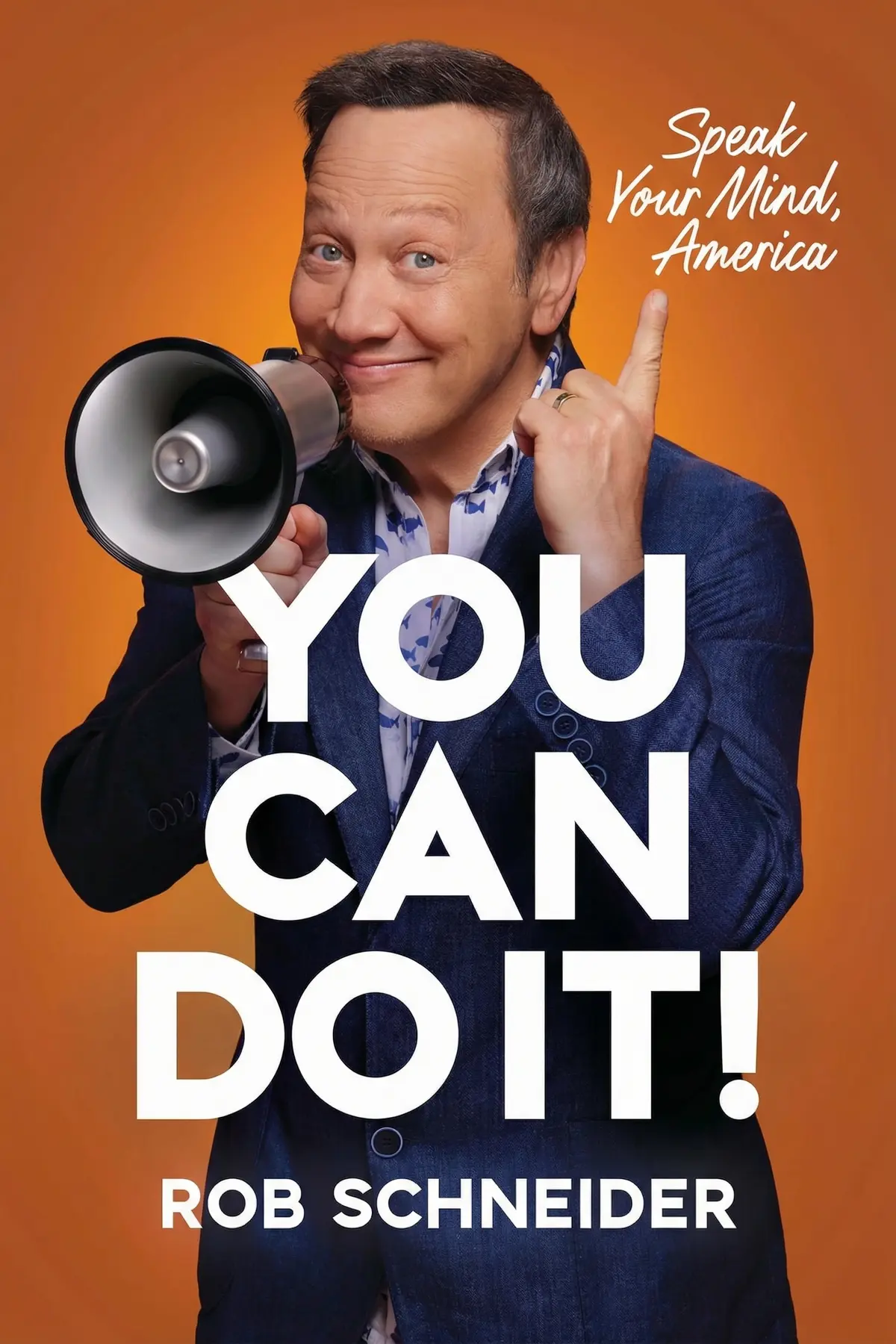
Comedian Rob Schneider argues that fear of backlash, more than any law, is silencing people. He draws on his parents' courage, his comedy career and his pandemic controversies to make the case for speaking up.
1 min 04 sec
Most people know the feeling: the sentence you were about to say, swallowed before it left your mouth. In You Can Do It!, comedian and actor Rob Schneider argues that this private act of self-editing now does more harm to free speech than any law. When people fall silent to avoid trouble, he says, ideas they consider absurd spread with nobody pushing back.
Schneider writes as a former Saturday Night Live cast member who has drawn heavy criticism for his views on vaccines, masks and late-night comedy, and the book is his unfiltered personal view. His throughline is that speaking your mind is a duty as well as a right, and that the courage to do it is learned, often at home. What follows traces the pressures he sees, from our own fear to tech platforms, public health debates and cancel culture, alongside the example his parents set. Agree with him or not, it gives you a clear map of his case and a sharper sense of when your own silence is really a choice.
2 min 00 sec
No government had to ban the jokes many comedians never tell. A philosophy professor’s simple sum and a sketch John Cleese threw away show Schneider where the real censor now sits.
1 min 57 sec
A Filipino girl who lost two brothers in the war, and a San Francisco landlord who answered racist neighbors in a way they never expected. Schneider’s parents taught him a kind of bravery that makes no noise.
1 min 53 sec
Before you read a single result, someone has already ranked what you will see. Schneider cites research suggesting that ranking can shift political views, and finds an unlikely model of resistance in a dying comedian.
2 min 10 sec
Doctors once trusted bloodletting and mercury. Schneider uses that history, and an awkward moment with a store clerk during the pandemic, to argue that the space for medical and climate debate has shrunk too far.
2 min 16 sec
One tweet about late-night comedy, and suddenly the phone stopped ringing. Schneider describes what being canceled cost him, why he thinks it emptied comedy of real argument, and who he believes must push back.
1 min 08 sec
Schneider’s book is finally about where courage comes from and where it goes missing. He traces it to a mother who survived war and loss without calling herself a victim, and to a father who answered racist neighbors by giving them another Black family next door. He finds it missing almost everywhere he looks now, from the comedy stage to the search page to the doctor’s office. His diagnosis never changes: the danger is our reluctance to question ideas out loud.
Many listeners will reject some of his positions, and his argument welcomes exactly that kind of open disagreement. What it supports for anyone is a set of small habits. Notice when you edit yourself, and name the real reason. Treat the top results on a contested topic as a selection made for you. Ask what evidence would change a claim presented as settled. And when someone says the unpopular thing, answer it instead of silencing it.
Marvin Schneider never gave a speech about housing. He just rented the house next door.
Many people now edit their opinions before they say them, at work, online and at the dinner table. Rob Schneider, the former Saturday Night Live cast member, believes that habit of self-censorship has become the biggest danger to free expression. When people go quiet to avoid trouble, he argues, ideas he considers absurd spread with nobody pushing back. Schneider builds his case from his own life. His mother survived the Japanese occupation of the Philippines, and his father defied segregation in 1950s San Francisco. From there he moves through the pressures he sees closing in on open debate: comedians cutting their own jokes, tech platforms filtering what people see, public health and climate debates he believes were shut down too early, and the cancel culture he experienced after his own public comments. This is an openly personal and opinionated book, and many readers will reject some of its positions. What it offers is a clear account of one dissenter's argument, and a challenge to notice when your own silence comes from fear rather than conviction.
Professionals who catch themselves holding back opinions in meetings and want to understand why.
Readers curious about the free speech and cancel culture debate from a dissenting comedian's side.
Fans of Rob Schneider who want the family story and the controversies behind his public stance.
Rob Schneider was a cast member on Saturday Night Live from 1990 to 1994 and earned three Primetime Emmy nominations for that work. He went on to film roles in Big Daddy, The Animal, The Hot Chick and Grown Ups, and is best known as the title character of Deuce Bigalow: Male Gigolo and its sequel. He has kept performing stand-up comedy throughout his career and is the father of singer Elle King.
Listeners find the book witty and skillfully composed, especially valuing the way it addresses free speech. They characterize it as an entertaining experience filled with pleasant anecdotes from the author's life, and one listener mentions it is full of cited facts. Listeners appreciate the work's stimulating material, with one review pointing out its ability to explain complicated issues clearly.
Rob Schneider has always been a polarizing figure, but this book proves he’s more than just the guy from SNL. I found the sections on his Filipino heritage and his mother’s belief in the American dream to be deeply moving. He connects these personal roots to his current fight for free speech, making a compelling case against the censorship currently sweeping through Hollywood. While some might find the political pivot jarring, his humor keeps the heavy topics from becoming a total drag. It’s a bold, well-written defense of why we need comedians to challenge social norms without fear of being silenced. The facts are cited, the stories are hilarious, and the message is clear: speak your mind.
Show moreFinally, a comedian who isn't afraid to cite his sources and tackle the walls being erected around creative expression. Schneider’s take on the current state of America is both frightening and hilariously insightful. He doesn't pull any punches when discussing how we’ve surrendered our freedoms bit by bit to an increasingly intolerant religious left. The book is surprisingly erudite, full of historical examples that back up his stance on why the court jester role is vital for a healthy society. If you’re tired of sanitized, safe comedy, this is the book you’ve been waiting for. It’s a loud, proud call to action for anyone who still values independent thought.
Show moreIn an era of self-censorship, this book feels like a breath of fresh air for anyone who values the First Amendment. Schneider isn’t just complaining; he’s laying out a blueprint for how we can protect our constitutional rights against the encroaching control of Big Tech. I was impressed by how many cited facts he included to support his arguments about the indoctrination occurring on college campuses. It’s not all heavy, though—his stories about SNL and his fellow comedians provide the perfect amount of levity. It’s rare to find a book that is this funny while also being this intellectually challenging. If you’re sick of being told what to think, pick this up immediately.
Show moreTruth is, I wasn't expecting a lecture on constitutional rights from the guy who played the Richmeister, but Schneider is surprisingly sharp. He does a great job explaining how traditional liberals have been abandoned by a new, more intolerant wing of the political spectrum. The conversational style makes it feel like he’s just sitting across from you, sharing his life story while also warning you about the dangers of social oppression. I especially enjoyed the mini stories on the side of the chapters, even if they occasionally distracted from the main point. It’s a fun, quick read that actually leaves you with something to think about once you’ve finished the last page.
Show moreAs a fan of 90s comedy, I picked this up expecting a lighthearted book, but what I got was something much more substantial. Schneider manages to weave his personal history—like his father’s defiance of racism—into a broader discussion about the importance of protecting the First Amendment. I’ll be honest, the anti-vax stuff was a bit much for me, but I can respect his commitment to his principles even when they’re unpopular. The writing is conversational and flows like a stand-up routine, which makes the complex political arguments easier to digest. It’s not your typical celebrity memoir, and that’s probably why it works so well.
Show moreThe audiobook is definitely the way to go here because Schneider’s narration brings the text to life with his signature voices and impressions. Hearing him poke fun at David Spade after decades of friendship is genuinely funny, and those industry anecdotes are easily the best part of the experience. However, the book feels a bit like two different manuscripts mashed together. One half is a fascinating look at a comedian’s rise to fame, and the other is a dense commentary on indoctrination and censorship. While he makes some valid points about free speech, the tone shifts can be quite jarring. It’s worth a listen for the comedy, even if the politics are a bit polarizing.
Show moreSchneider’s family history provides a surprisingly touching backdrop to what is otherwise a very aggressive defense of free speech. I didn't realize how much his parents' experiences shaped his worldview, particularly regarding the American dream and standing up against racism. He makes some incredibly thought-provoking points about why we shouldn't fear hate speech but rather fear the people who get to define what it is. To be fair, some of the phrasing is a bit awkward, and a good editor could have smoothed out the transitions between political rants and personal anecdotes. Despite those minor flaws, it’s a refreshing take from someone who has actually been in the Hollywood trenches for thirty years.
Show moreThis started off so well with the stories about his early days in Hollywood and his family’s resilience. I loved hearing about his mother’s influence, but the book spends an exhausting amount of time focused on the COVID-19 pandemic. Look, I understand it was a pivotal moment for him, but I found myself skimming through the vaccination debates just to get back to the show business stories. The writing is punchy and he clearly knows how to structure a joke, but the comedic messiah vibe gets a little old after a while. It’s a decent read if you share his worldview, but if you’re looking for a pure memoir, you might be disappointed.
Show morePicked this up because I like Rob’s movies, but this was a bit of a slog. I found it slightly underwhelming compared to the memoirs written by his SNL peers. Instead of diving deep into the creative process or the highs and lows of his career, he spends the majority of the time complaining about cancel culture and COVID mandates. Not gonna lie, the constant political commentary felt a bit like a low-budget cable news segment rather than a book. There are a few laugh-out-loud moments, particularly when he talks about his interactions with other comedians, but they aren't quite enough to save the book from its own preachy tone.
Show moreI really wanted to like this because I grew up watching Rob in Sandler’s movies. Unfortunately, the book quickly devolves into a series of political grievances that feel more like a social media rant than a cohesive memoir. I was hoping for more behind-the-scenes stories about Fifty First Dates or his SNL days, but those moments are few and far between. Instead, the narrative is dominated by his views on COVID restrictions and vaccines, which felt repetitive and a bit conspiracy-heavy for my taste. It’s disappointing because there’s a great life story buried under all the social commentary. I just couldn't finish it.
Show moreSchneider argues that the biggest threat to free speech today is self-censorship: people holding back opinions out of fear of backlash. When they stay quiet, he says, ideas he considers absurd spread unchallenged. He connects this to pressure from tech platforms, public health debates and cancel culture, and he roots his own willingness to speak in the example of his parents.
His mother, Pilar, grew up in the Philippines under Japanese occupation, lost two brothers and still kept faith in the American dream. His father, Marvin, rented housing to Black families in segregated San Francisco in the 1950s, and after one tenant faced harassment, he leased the neighboring property to a different Black family. Schneider says they taught him courage that needs no audience.
He points to psychologist Robert Epstein’s work on what Epstein called the Search Engine Manipulation Effect. In Schneider’s telling, close to 40 percent of people shifted their political opinions according to the way information was displayed to them online. Schneider uses this to warn that a few companies controlling communication tools can shift the balance of power in society.
He says he does not. His appeal is to engage with expertise critically and keep debate open. He notes that medicine once trusted bloodletting and mercury, accepts that climate change is real, and argues that consensus should not be confused with certainty. Critics have strongly disputed his views on masks and vaccines, which he describes as the reason he was attacked.
The book points to a few habits. Notice when you edit what you say and ask whether the reason is real danger or just discomfort. Treat search results on contested topics as a selection rather than the whole picture. Ask what evidence would change a claim presented as settled. And when someone voices an unpopular view, argue with it instead of trying to silence it.
Barack Obama

Masaji Ishikawa

John Rawls



Miles Taylor



Tracy Rosenthal

Jessica Valenti
AUDIO SUMMARY AVAILABLE
Get the key ideas from You Can Do It! by Rob Schneider, plus 5,000+ more nonfiction titles.









