

A Liberated Mind: How to Pivot Toward What Matters
Steven C. Hayes
 English
 ไทย
Explains why some women fall for cold, distant or addicted men and mistake the pain for love. It also traces the pattern to childhood and shows how to recover by putting your own needs first.
55 sec
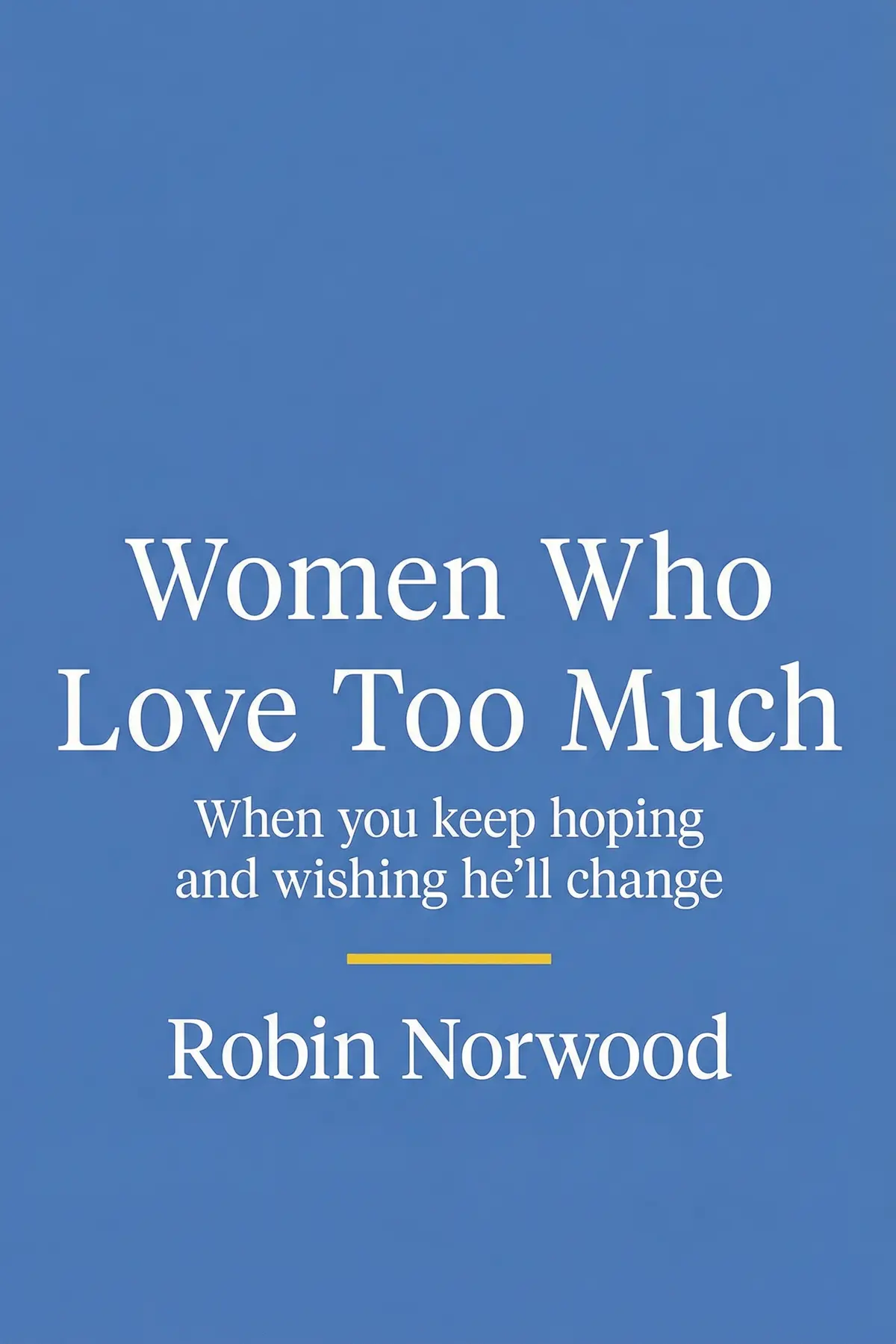
If you keep giving more to a man who stays distant, the cause may be neither bad luck nor bad judgment. In Women Who Love Too Much, licensed family and marriage therapist Robin Norwood argues that many women mistake obsession for love and believe that the more it hurts, the more real it is. Working from the stories of clients she treated, she traces that belief to childhood and to a father whose affection never came.
Her throughline is hard and hopeful at once: no woman can win the love she missed by changing a man who cannot give it, but she can change herself. The ideas move from one anxious phone call to the roots of the pattern, the addictions that feed it, and the habits shared by women who recovered. What you gain is a way to notice the pull of the wrong partner early, and a clear picture of the calmer love on the other side.
1 min 58 sec
A law student calls her new partner the moment he walks through his door, then every night after that. She believes she is being devoted. Norwood sees a very different pattern, and a belief about pain hiding underneath it.
1 min 59 sec
The men these women chase are often not especially handsome, clever or charming. They share one ordinary trait instead, and the reason it attracts is buried in a memory most of these women never connected to their love life.
1 min 54 sec
One woman filled her school days planning time alone with her boyfriend, and later bought lingerie and studied advice to keep a married lover. Her own pleasure was not what drove her, and that detail explains how it ended.
2 min 09 sec
Shame about drinking or eating can make a woman hungrier for a partner who will reassure her. The partner she picks tends to do the opposite, and one woman’s spiral ended with a police arrest before she got help.
1 min 55 sec
Norwood watched which of her clients actually got better and found two things they all shared. The second sounds easy, yet it asks a woman to break a deep habit of placing a man’s needs ahead of her own each time.
1 min 52 sec
After recovery, the men a woman notices start to change, and so does her idea of what love should feel like. Norwood describes the signs, including how she handles the moment she slips back into an old pattern.
1 min 15 sec
Norwood’s book comes down to a misplaced repair job. A girl who could not win her father’s affection grows into a woman trying to win it from a stand-in, and the colder the stand-in, the harder she works. Jill’s nightly calls, Trudi’s lingerie and Brenda’s spiral all come from one hope: that if this man finally loves her, the old wound will close.
Norwood adds one more layer. Many of these women became caregivers while still children, looking after a parent too ill or too damaged to look after them. They learned early to set their own needs aside, and as adults they keep doing it with partners, friends and family, making sure everyone else is all right. That habit, she warns, wears down mental health.
The way out begins with small acts of the opposite. Say what you need out loud, even once this week. Protect one hour for your own help that no man can move. And when a distant partner starts to feel like destiny, look at him clearly and ask yourself whose silence you are trying to fix.
The man was never going to change. The woman can, and the love she finds afterward can finally be peaceful.
Some women keep pouring themselves into men who stay distant: the partner who drinks, the married lover who never leaves, the man who says he does not know what he wants. Robin Norwood, a licensed family and marriage therapist, argues that this is not simply bad luck or poor judgment. It is a pattern in which obsession is mistaken for love, and pain is taken as proof that the feeling is real. Working from the stories of women she treated, Norwood traces the pattern to childhood, often to a father who rarely showed affection. As adults, these women are drawn to men with the same coldness, hoping that winning them will finally prove they deserve love. She shows how sex becomes a tool for that effort, and how addictions to alcohol, drugs or food can lock into the cycle. Readers get a clear way to recognize the pattern, an explanation of where it comes from, and the two habits that Norwood saw in every woman who recovered: asking for help and treating recovery as the first priority. She also describes what life looks like afterward, when calm feels better than drama.
Women who keep falling for married, addicted or emotionally distant men and want to understand why.
Adults raised by a cold or alcoholic parent who see that pattern repeating in their own relationships.
Anyone whose drinking, eating or other habit flares every time a relationship hurts.
Robin Norwood, born on July 27, 1945, worked as a licensed family and marriage therapist. She is best known for Women Who Love Too Much, which became an international best seller. Her other books include Letters from Women Who Love Too Much, Why Me? Why This? Why Now? and Daily Meditations for Women Who Love Too Much.

Listeners consider this title a vital resource that delivers an abundance of beneficial guidance, especially throughout life's hardships. They appreciate the way it fosters a better understanding of their own identity and their connections to others, while one listener points out that it provides deeply meaningful revelations. This life-changing book steers people through the recovery journey, with one listener stating it did more for them than a year of therapy. Listeners find the text to be inspiring, with one noting that it assisted them in feeling more command over their own emotions.
After hearing so much about this classic, I finally dove in and found the insights into relationship dynamics to be genuinely transformative. The way it tackles the 'savior complex' many women carry into their dating lives is both brutal and incredibly healing. Truth is, I saw myself in almost every page, which was terrifying but served as the wakeup call I desperately needed. It provides a clear roadmap for moving from chaos to a place of emotional stability and genuine self-respect. Even though the language is a bit dated, the psychological truths remain timeless. If you are struggling with a toxic cycle, this might be the most important thing you read this year.
Show moreWow, I wasn't expecting a 1980s self-help book to hold up this well, yet the patterns Robin Norwood describes are still painfully relevant today. It helped me feel more in control of my emotions by explaining the chemical rush we get from 'fixing' people who don't want to be fixed. Not gonna lie, some of the truths in here are hard to swallow and might leave you feeling a bit exposed. But that’s exactly why it works—it doesn’t sugarcoat the reality of co-dependency or destructive relationship habits. It’s a profound deep dive into why we settle for less and how we can finally start choosing ourselves over our partners' endless dramas.
Show moreEver wonder why you keep attracting the same type of person? This book breaks down those subconscious choices with surgical precision. It helped me realize that my tendency to be 'overly kind' was actually a way to avoid dealing with my own inner turmoil and lack of self-worth. The healing process described here is rigorous, but it feels authentic and much more sustainable than the usual 'just love yourself' advice. I felt like I was finally understanding the 'why' behind my worst decisions. It’s a must-read for anyone who feels exhausted by the constant drama of their romantic life and wants to start a journey toward healthy attachment.
Show moreThe chapter on childhood influences was a complete game-changer for me. It helped me realize that my 'kindness' was actually a desperate need for control and validation from people who couldn't give it. This book provides a tremendous amount of helpful information for anyone stuck in a loop of disappointing partners and unfulfilled expectations. It’s transformative because it shifts the focus from 'how do I get him to love me' to 'how do I love myself enough to leave.' I feel much more empowered and aware of my own red flags now. It’s an essential tool for personal growth and attaining true emotional maturity in our modern world.
Show moreThis book hits like a ton of bricks if you've ever found yourself prioritizing a partner’s needs over your own sanity. Norwood manages to explain complex psychological patterns in a way that feels incredibly personal and direct. Personally, the realization that 'loving too much' is actually a form of addiction was the most uncomfortable yet necessary part of the journey. While some of the case studies felt a bit repetitive towards the end, the core message about regaining control over your own life is priceless. It’s a heavy read that demands significant self-reflection, so don’t expect to breeze through it without experiencing some emotional discomfort. It genuinely offers more clarity than several sessions of traditional therapy combined.
Show morePicked this up during a particularly messy breakup and it did more for my emotional clarity than months of venting to friends. The book acts as a mirror, showing you exactly where you went wrong without making you feel like a failure for having a big heart. Gotta say, seeing your own toxic patterns laid out in black and white is a jarring experience. It’s not just about romantic love; it’s about why we feel the need to please everyone at the cost of our own well-being. Although it’s a bit kitschy and the title is a bit cringe, the substance is remarkably grounded in reality and provides a tremendous amount of helpful information.
Show moreFrankly, it’s a bit embarrassing to be seen reading this in public because of the title, but the content inside is far more profound than the cover suggests. Norwood explores how our early upbringing shapes our adult attachments in ways that are both subtle and destructive. I appreciated the practical steps toward recovery, even if some of the 12-step program focus felt a bit dated for my taste. The truth is, this book isn't just about men; it's about the relationship you have with your own needs and desires. It’s a helpful guide for anyone looking to break free from the cycle of emotional unavailability and start building something healthy and balanced.
Show moreWhile the first few chapters were eye-opening, the middle section felt like an endless cycle of repetitive case studies that eventually lost my interest. The initial premise is brilliant and helps you identify why you might be drawn to unavailable men. However, after the fourth or fifth similar story, I felt like the author was just hitting the same note over and over again without adding new depth. In my experience, you can get the gist of the book's wisdom within the first fifty pages. It’s certainly a valuable tool for self-discovery, but it could have been about half as long and still had the same impact. It’s a solid resource but definitely requires some skimming to stay engaged.
Show moreTo be fair, there is some excellent advice here regarding setting boundaries and recognizing toxic traits early on. However, the writing style is very much a product of its time and can feel a bit preachy or repetitive. I found myself nodding along for the first few chapters, but then the momentum stalled as the case studies became almost indistinguishable from one another. It’s a good starting point for self-analysis, but you might find yourself wanting more modern perspectives on relationship dynamics. If you can get past the old-school vibe and the clinical tone, there are definitely some pearls of wisdom worth digging for to help you understand your behavior.
Show moreLook, I understand why this was a bestseller, but the tone felt incredibly dated and even a bit victim-blaming at times. While the book aims to empower women, it often focuses so heavily on the woman's internal flaws that it ignores the systemic factors in a relationship. I found the constant focus on childhood trauma to be a bit reductive and overly simplistic for modern psychology. To be fair, there are a few decent nuggets of wisdom regarding boundaries, but they are buried under layers of clinical coldness. It just didn't resonate with me as much as I hoped it would based on the glowing recommendations. There are better, more modern resources available now for relationship healing.
Show moreRobin Norwood argues that some women mistake obsession for love and believe that a relationship that hurts more must be more real. They are drawn to emotionally unavailable men, such as married men or addicts, because they are trying to win the affection a parent, often a father, never gave them. That effort always fails, but a woman can change herself by seeking help and putting her recovery first.
Norwood traces the attraction to childhood. Many of her clients grew up with fathers who rarely showed love; one heard her father say he loved her only once, at 18, after she asked. As adults, these women seek men with the same coldness, hoping that winning them over will finally prove they were worthy of the love they missed.
She saw two habits in every client who recovered. They asked for help, whether through a library book about childhood problems, a therapist, ideally a woman, or the police in cases of abuse. And they made recovery their top priority, refusing to cancel or move therapy or support group time for any reason connected to the man.
Norwood says some of these women also depend on alcohol, drugs or sugary food to numb an inner emptiness. The shame of that dependency makes them crave reassurance from a partner, yet they pick unavailable men, and the rejection drives them back to the substance. Because each problem restarts the other, she argues both must be treated together.
According to Norwood, a recovered woman has a steady regard for herself and no longer tries to change the men she dates, because she stops choosing men who need fixing. She looks for stable, loving and kind partners, leaves harmful relationships when she slips, and values peace over drama, seeing love as built on respect, affection and companionship.
Steven C. Hayes



Leanne Maskell




bell hooks
AUDIO SUMMARY AVAILABLE
Get the key ideas from Women Who Love Too Much by Robin Norwood, plus 5,000+ more nonfiction titles.









