

15 min 39 sec
Available in: English
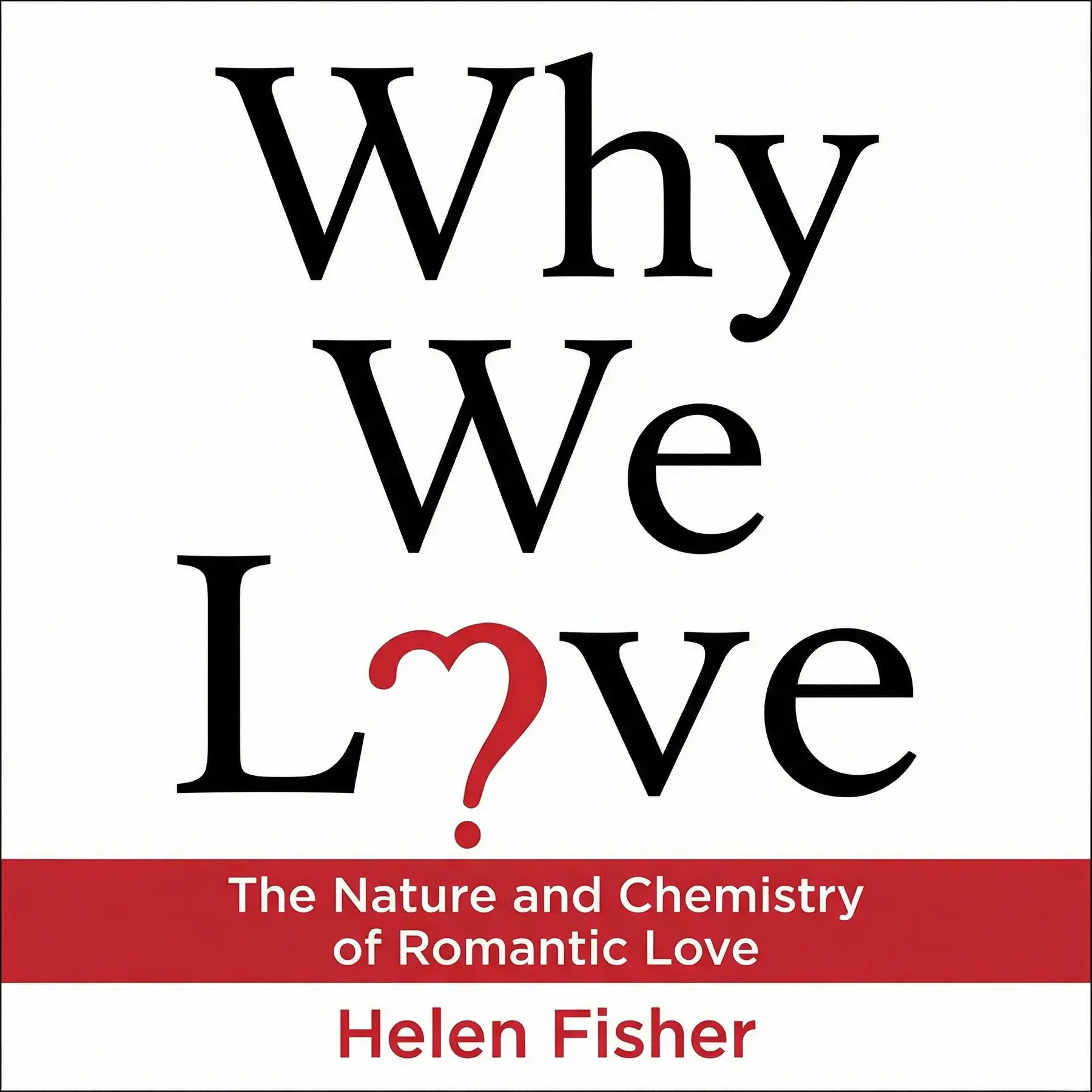
Why We Love: The Nature and Chemistry of Romantic Love
By Helen Fisher
Explains romantic love as brain chemistry shaped by evolution. It shows how that knowledge helps you understand attraction, bring back a fading spark and get through the first hard days after rejection.
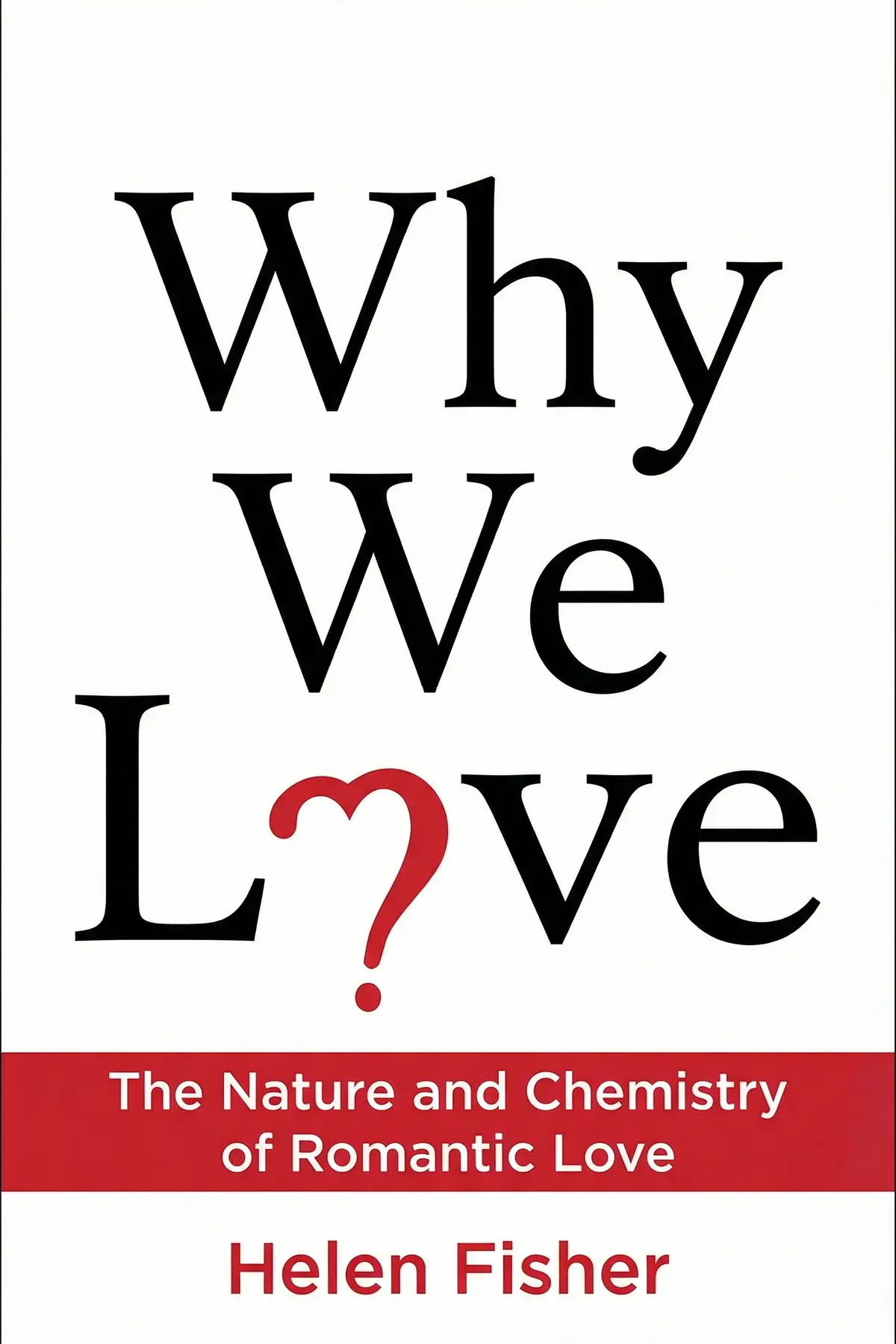
Table of Content
1. Introduction
57 sec
Falling for someone can feel like losing control, and being rejected can leave you painfully depressed. In Why We Love, biological anthropologist Helen Fisher argues that both states run on brain chemistry you can understand and even work with. One of her surprises: the obsessive thinking of new love comes with a drop, not a rise, in the brain chemical serotonin.
Fisher’s case is that romantic love is a drive evolution built into the brain over millions of years. It shapes whom we choose, why the spark fades and why rejection hurts, and it follows patterns that hold across cultures. Learn those patterns and a crush, a relationship gone flat or a breakup becomes something you can read. The payoff is practical too: a way to bring excitement back to a long relationship, and a plan for the first hard days after being rejected.
2. See your own infatuation as a shared human pattern
1 min 34 sec
Being in love feels like something nobody has ever felt before. Fisher’s studies across ages, cultures and orientations tell a different story, and one finding about shy Japanese lovers explains where real differences come from.
3. Know the three chemicals behind falling in love
1 min 49 sec
Sleepless nights, a racing heart and a mind that will not stop replaying one face. Fisher names the brain chemicals behind each symptom, and one of them works in exactly the opposite direction you would expect.
4. Tell lust, romance and attachment apart
1 min 34 sec
Desire, passion and the comfort of a long partnership can feel like one emotion. Fisher splits them into three, each with its own chemistry, and shows how a casual fling can turn into something bigger.
5. Evolution built love to keep parents together
2 min 05 sec
Standing on two feet changed far more than how our ancestors moved. Fisher follows a chain of changes, from carrying babies to cooking dinner, that slowly turned brief pairings into the deep bonds we know today.
6. Spot the traits nearly everyone finds attractive
1 min 55 sec
Tastes in partners seem endlessly personal, yet a few pulls work on almost everyone. A sniff test of worn T-shirts and a precise body measurement reveal what the brain is quietly scanning for.
7. Read the love map that picks your partner
1 min 22 sec
In a room full of strangers, only one or two faces will pull at you. Fisher explains the hidden chart that makes that choice, and why even identical twins end up with different ones.
8. Rekindle a fading spark with shared thrills
1 min 45 sec
Men who crossed a frightening rope bridge behaved very differently from men who crossed a safe one. That 1974 experiment points to a simple way couples can bring back feelings that seem to be slipping away.
9. Get through rejection by staying busy
1 min 32 sec
Heartbreak makes you want to stay in bed and wait for the pain to pass. Fisher explains why the brain after a breakup resembles a brain in love, and what actually helps it let go.
10. Conclusion
1 min 06 sec
Fisher’s argument turns love from a force that simply happens to you into a system with parts you can recognize. The obsession, the sleepless nights, the pull toward someone unlike you and the long ache after a breakup all trace back to a handful of chemicals, shaped over millions of years to keep parents together long enough to raise a child.
That knowledge has practical edges. In a long relationship that has gone flat, plan something new and a little frightening to do together, the way a swaying rope bridge turned a nervous crossing into a phone call. Keep physical intimacy in the picture, since it brings the cuddle chemicals with it. And if you are the one left behind, treat the pain as a craving: stay out of contact one day at a time, keep your days full and get your body moving.
Romance may feel like the most personal thing you will ever experience. Fisher’s comfort is that it is also one of the oldest, and the brain that falls so hard is the same brain that knows how to recover.
About this book
What is this book about?
Love can feel like the most private and mysterious experience a person has, whether it brings the joy of finding the right partner or the misery of being left. Helen Fisher, a biological anthropologist, sets out to explain what is really going on. She argues that romance, sexual desire and long-term attachment are each products of the brain, driven by specific chemicals and hormones. Fisher traces romantic love from its universal symptoms to its chemistry, then back roughly 3.5 million years to the moment our ancestors began walking upright and mothers first needed a partner's help. She covers what draws people to one another, from novelty and symmetry to the unconscious love map each person builds over a lifetime, and the different ways men and women weigh a partner. The book also turns practical. Readers learn why shared thrills, like those in a famous experiment on a swaying rope bridge, can revive feelings in a long relationship, and why staying busy and active, one day at a time, is the best way through heartbreak.
Book Information
Who it's for
Feeling the spark fade
People in long relationships who feel the spark fading and want a practical way to revive it.
Recovering from a breakup
Anyone recovering from a breakup who needs a plan for the first hard days.
Curious about attraction science
Curious readers who want to understand the brain chemistry and evolution behind attraction.
About the Author
Helen Fisher
Helen Fisher (1945 to 2024) was an American biological anthropologist who studied human behavior, especially romantic love. She was a senior research fellow at The Kinsey Institute, a member of the Center for Human Evolutionary Studies at Rutgers University and earlier a research associate at the American Museum of Natural History in New York City. She co-authored the first brain-scan study linking early romantic love to specific brain regions, helped build the matching system behind chemistry.com and wrote five books on love.
Ratings & Reviews
Ratings at a glance
What people think
Listeners find the book to be educational and thoroughly researched, with one review noting how it integrates science with human experience. They describe it as a pleasure to read from start to finish and value the exploration of brain chemistry in love. The work receives praise for its writing quality, with one listener highlighting its focus on making romance last, and listeners generally find the content easy to understand. While the argument is convincing, views regarding the author are mixed.
Top reviews
Ratchada
Wow. It’s rare to find a book that manages to weave complex biological data into such a compelling narrative about the human heart. Fisher explains the dance of dopamine and norepinephrine in a way that feels both educational and deeply personal. I loved how she categorized love into three distinct systems: lust, romantic attraction, and long-term attachment. Each section provides a window into why we act so irrationally when we are under the spell of another person. While some might find the heavy use of literary quotes a bit much, I thought they anchored the science in reality. This is a joy to read if you want to understand the machinery behind your emotions.
Show moreWichai
After hearing so many people talk about this book, I finally picked it up and I’m blown away. We are essentially just 'human animals' pretending to be cultivated, yet our primate brains are still running the show. Fisher’s breakdown of the three brain systems for mating and reproduction is absolutely stunning material. It helped me realize that my feelings aren't just random coincidences but part of a magnificent evolutionary mechanism. The way she connects DNA and neurobiology to our spiritual search for a partner is something I’ll be thinking about for a long time. This should be mandatory reading for anyone who wants to understand the secret world of their own body.
Show moreTod
Finally got around to reading this, and I’m struck by how much we still don't know about our own evolution. Fisher provides a spectacular look at how our brains have adapted to handle the complexities of lust and attachment. It’s not just about hormones; it’s about a unified field of biological processes that make us who we are. I felt like I was learning to 'unlearn' some of the more cynical views of romance I’ve picked up over the years. The connection between our physical brain and our higher consciousness is explored in a way that feels both grounded and visionary. This book is a magnificent achievement in the field of anthropology.
Show moreWeera
Ever wonder why romantic rejection feels like physical pain? Fisher dives into fMRI studies to show that our brains are literally wired for this kind of intense emotional experience. The book is well-researched and does a great job of explaining how our ancestors evolved these traits to ensure the survival of the species. I found the distinction between the 'lust' brain and the 'attachment' brain particularly enlightening for my own relationships. To be fair, there are moments where she seems to guess at conclusions rather than proving them. However, the overall quality of the writing makes it very accessible for a layperson. It’s a solid look at the chemistry of romance.
Show moreWanphen
Fisher manages to make complex neurobiology surprisingly accessible for the average reader. The book focuses heavily on making romance last, which is a practical takeaway I didn't expect from a science-heavy text. I particularly enjoyed the chapter on 'Animal Magnetism,' even if the author admits she changed her mind about how much animals actually feel. It’s a convincing argument for why we are wired for monogamy, or at least for serial pair-bonding. Some of the fMRI data felt a bit dated, but the core message remains powerful. If you’re looking for a bridge between the laboratory and the bedroom, this is a great place to start.
Show moreSophia
Picked this up on a whim and ended up finishing it in two sittings because the prose is so engaging. The truth is, most of us have no idea what is actually happening in our heads when we fall in love. Fisher explains the role of dopamine as a reward system that keeps us focused on a single person to the exclusion of all else. It's a bit unsettling to realize we are at the mercy of our own chemistry, but also deeply liberating. I appreciated the educational tone, though I do agree with other reviewers that the literature quotes were a bit overkill. Still, it’s a very high-quality exploration of the human experience.
Show moreRay
This was a bit of a mixed bag for me. On one hand, the sections on neurotransmitters and the evolutionary basis for pair-bonding were fascinating and well-explained. On the other hand, the book is incredibly padded with poetry and song lyrics that don't really add much to the scientific argument. It frankly felt like a high-level undergrad paper where the student needed to hit a specific page count. I was also disappointed to see that she didn't give much credit to Dorothy Tennov, whose work on limerence is clearly a huge influence here. It’s a decent introductory text, but seasoned readers of psychology might find it a bit superficial.
Show moreSavannah
In my experience, this book serves better as a cultural artifact than a definitive scientific textbook. Fisher is clearly the go-to expert for the media, and her writing style reflects that—it’s polished, easy to digest, and slightly repetitive. While the discussion of the three different 'love brains' is helpful, she tends to generalize quite a bit. I found the section on introverts and their 'deep still waters' to be a bit condescending, as if it were a surprise that they feel love too. It’s a mediocre book that summarizes other people's research without adding a whole lot of new insight. It’s fine for a quick read, but don’t expect a masterclass.
Show moreTar
The author relies far too heavily on anecdotal evidence and flowery quotes to pad out the page count. If you stripped away all the snippets of Shakespeare and pop songs, you'd be left with a very thin volume of actual science. My biggest gripe is the constant use of phrases like 'I think' or 'it may be' without providing solid reasoning. It feels like she is just picking her favorite theories and ignoring anything that doesn't fit her narrative. To be fair, she acts more as a media talking head rather than a rigorous scientist in this particular work. Read Dorothy Tennov’s 'Love and Limerence' instead if you want a deeper dive into the investigative study of romantic love.
Show moreFatima
Look, I wanted to like this, but the blatant biases and what some call 'neurotrash' were hard to ignore. Every time the author started a sentence with 'I guess' or 'I suspect,' I felt like I was reading a blog post rather than a scientific study. The chapter on animal love was particularly confusing since she basically retracts her own premises halfway through. It’s also quite frustrating how she overlooks the contributions of researchers like Dorothy Tennov while presenting similar ideas as her own. If you want actual science, you might want to look elsewhere. It reads like a pop-psychology book that values style over substance and quotes over data.
Show moreQuestions about this book
What is the main idea of Why We Love by Helen Fisher?
Fisher argues that romantic love is a product of brain chemistry shaped by evolution. Dopamine and norepinephrine rise while serotonin falls, producing craving, excitement and obsessive thinking. She traces love’s roots to about 3.5 million years ago, when walking upright meant mothers needed a partner’s help, and shows how language, cooking and larger brains deepened our capacity for lasting bonds.
What chemicals cause romantic love according to Helen Fisher?
Fisher names three neurotransmitters. Dopamine brings bliss and craving, similar to the effect of a drug like cocaine. Norepinephrine causes the racing heart, butterflies, poor sleep and lost appetite. Serotonin falls as the other two rise, and lower levels go with more restlessness and obsessive thoughts. She also links lust to testosterone and attachment to vasopressin and oxytocin.
How can couples keep romance alive, according to Why We Love?
Fisher recommends doing new and exciting things together, since novelty releases dopamine. She cites a 1974 experiment by Arthur Aron and Donald Dutton in which men who crossed a frightening rope bridge were far more likely to call a female researcher than men who crossed a safe one. She also points to sexual intimacy, which raises testosterone and releases the cuddle chemicals.
What does Helen Fisher recommend after a breakup?
She advises staying active rather than withdrawing. Rejection produces brain chemistry much like intense love, with low serotonin and obsessive thoughts, so contact feeds the craving. Fisher suggests the Alcoholics Anonymous approach of one day at a time: decide not to reach out today, see friends, keep up with daily tasks, try something new and exercise, which raises serotonin.
What is a love map in Why We Love?
A love map is Fisher’s term for the unconscious chart of traits a person finds most attractive, built from personal experiences over a lifetime: eye and hair color, personality, humor and sexual preferences. Because experiences differ, every map is unique, and even identical twins develop their own. The map is what draws you to one particular person in a room of strangers.
Featured in
Readers also enjoyed


59 Seconds: Change Your Life in Under a Minute
Richard Wiseman



A Liberated Mind: How to Pivot Toward What Matters
Steven C. Hayes


Acting with Power: Why We Are More Powerful Than We Believe
Deborah Gruenfeld

AUDIO SUMMARY AVAILABLE
Listen to Why We Love in 15 minutes
Get the key ideas from Why We Love by Helen Fisher, plus 5,000+ more nonfiction titles.
- 5,000+ titles
- Listen as much as you want
- 7-day free trial
- Cancel anytime









