

A History of Iran: Empire of the Mind
Michael Axworthy
 English
 ไทย
A history of America's poor whites from the first colonies to the 1990s, showing how each era blamed their poverty on land, blood or breeding while also making them symbols of the national spirit.
1 min 08 sec
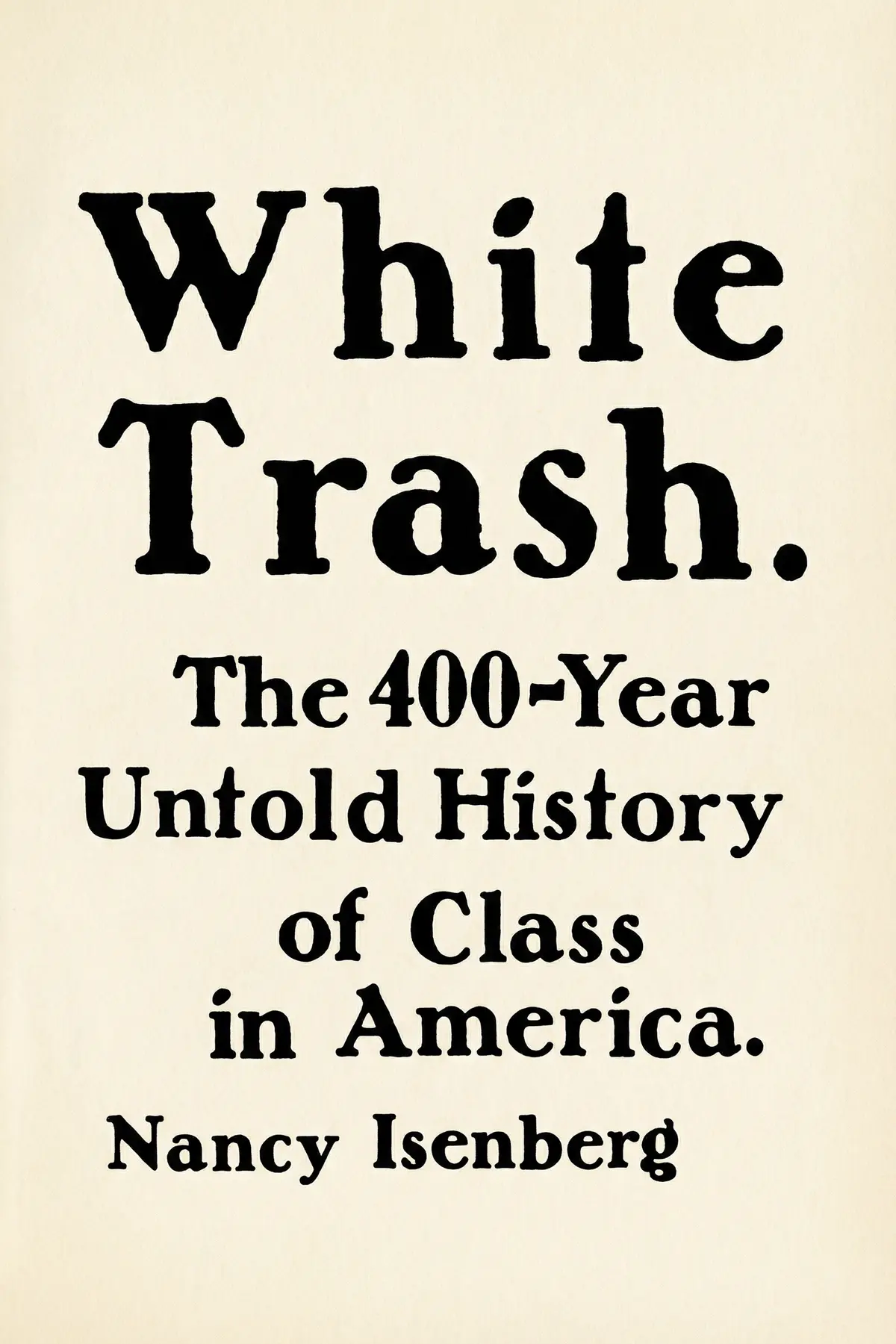
After the 2016 US presidential election, commentators argued over why so many white voters chose as they did, and some frustrated Democrats spoke of a white trash vote. Historian Nancy Isenberg’s answer, in White Trash, is that the scorn behind that phrase is as old as the country. America, she argues, was a class society from its very first colonies, built partly by the poor that England wanted to be rid of.
Her book follows those poor whites across four centuries: tobacco field workers, frontier squatters, Confederate deserters, sterilized young women, Depression migrants and the fans who made a Mississippi boy named Elvis a star. One thread holds it together. Each era explained the poverty of its lowest whites as a matter of land, blood or breeding, and rarely as a matter of opportunity, while also turning those same people into symbols of the American spirit.
Hold on to that thread and today’s arguments about class, rural voters and who deserves help start to sound familiar, because the country has been having them since the 1600s.
1 min 41 sec
The colonies are often pictured as a fresh start for ordinary people. The way England actually filled them, and the crop that paid for Virginia, tells a very different story about who was meant to rise.
1 min 40 sec
Benjamin Franklin and Thomas Jefferson both spoke warmly of equality and both had plans to spread property widely. Look at who their plans left out, and what they blamed for poverty, and a different picture appears.
1 min 49 sec
Polite society spread lurid rumors about the poor families who pushed west into the backwoods. Within a few decades, two of the most famous men in the country were proudly claiming to be one of them.
1 min 52 sec
Slavery divided the nation, but each side also told a story about its poor white citizens. One story held an army together, and the other could not stop hungry Southerners from rioting and deserting.
1 min 56 sec
In the early twentieth century, respected doctors, scholars and a sitting president talked about improving the American breed. The laws that followed reached into the most private decisions of poor families.
1 min 52 sec
When respectable families lost their jobs and their farms, the old explanation for poverty stopped making sense. What the government built, and what one sociologist found, changed the argument about who was to blame.
1 min 50 sec
A boy born in a narrow Southern shotgun shack won the whole country’s affection, and racing that grew out of bootleggers outrunning the police became a national sensation. Yet the same decades produced a very different picture of poor whites.
1 min 07 sec
Isenberg’s history reads like a relay of names for the same people. The indentured servant became the squatter, the squatter became the mudsill, the mudsill became the hillbilly and the hillbilly became trailer trash. The labels changed with each century. The habit beneath them barely moved: those at the top explained the poverty below them as something in the soil, the blood or the genes, and sometimes praised the poor as the truest Americans in the same breath.
That history gives you a way to hear the news. When someone describes a group’s hardship as part of its nature, ask what the people in it actually lack, the question H. Odum asked of the South. When a politician or a television show romanticizes rural roots, watch whether the warmth reaches the people or only the style. And remember the Tennessee Valley Authority, evidence that when the state invested in poor regions, their prospects changed.
The talk of a white trash vote in 2016 was never new. It was the latest round of an argument the country began with its first shipload of the poor.
Americans often describe their country as the place that left Europe's class system behind. Historian Nancy Isenberg argues the reverse. From the 1600s, when England shipped its convicts, orphans and poor across the ocean to build its colonies, the United States has had a white underclass, and its elites have kept finding reasons to blame that underclass for its own condition. Isenberg follows that thread through the founders' plans for a property-owning society, the frontier squatters of Kentucky and Tennessee, the class quarrel inside the Civil War, the eugenics laws that sterilized poor women, and the Great Depression, when public agencies and new research showed that poverty could be reversed. She ends with the strange double life of white trash in popular culture, from Elvis Presley and NASCAR to the mockery of television comedies and the career of Bill Clinton. Readers get a long view of class in America that makes recent arguments about rural and working-class white voters easier to understand, and a sharper ear for the old claim that some people are poor by nature.
Readers puzzled by recent arguments about rural and working-class white voters who want the long history behind them.
Students and teachers of American history looking for class, not only race or region, as a lens on the nation's past.
Anyone curious how ideas like good breeding shaped laws, science and popular culture.
Nancy Isenberg is an American historian who has held the T. Harry Williams professorship in American history at Louisiana State University. Her biography Fallen Founder: The Life of Aaron Burr was a finalist for the LA Times Book Prize in biography, and she coauthored Madison and Jefferson with Andrew Burstein. White Trash, published in 2016, became a New York Times bestseller, and that same year she received the Walter and Lillian Lowenfels Criticism Award from the Before Columbus Foundation. She has also written for Salon.com.

Listeners find the work captivating and accessible, commending its superior historical research and thoroughly documented facts. They also describe it as a sociological treasure that offers deep reflections on social ideologies. However, reactions to the writing are varied, as some consider it well-crafted while others characterize it as plodding prose. The tempo is also criticized for being redundant and uninteresting; while some listeners feel it provides a far greater understanding, others contend it fails to sufficiently explain its content.
Nancy Isenberg has crafted a stunningly thorough examination of the social philosophies that shaped our nation from its very inception. By focusing on the "waste people" and "mudsills" often ignored in standard history books, she provides a sociological gem that challenges the myth of a classless America. To be fair, the level of detail regarding early colonization can be dense, yet it feels necessary to dismantle our preconceived notions. I was particularly fascinated by the evolution of slurs like "clay-eaters" and "lubbers" through the centuries. This isn't just a book about poverty; it's a deep dive into how elites systematically marginalized the white poor. Every chapter feels like a revelation.
Show morePicked this up because I was tired of the shallow political commentary regarding the "white working class" and wanted something with real historical teeth. Isenberg delivers a tour de force that examines everything from indentured servitude to the chilling Supreme Court rulings on eugenics. The chapter on Buck v. Bell was particularly haunting, showing how deeply the desire to "weed out" the unproductive was woven into our legal system. It is a dense, challenging read that requires your full attention, but the payoff is a total reevaluation of American exceptionalism. This is the kind of history that makes you feel queasy because it rings so true to our current social divide.
Show moreWow, what a wake-up call regarding the "democracy of manners" that we all fall for during every single election cycle. I never realized how far back the tradition of politicians "playing the fiddle" with the poor goes, only to ignore them once the votes are cast. Isenberg’s research into the 1500s and the idea of America as a giant workhouse for England’s "waste people" changed how I view our origin story. The book is packed with well-documented information that makes it impossible to look at class the same way again. It’s a sociological gem that should be required reading for anyone interested in the real history of the United States.
Show moreEver wonder why we are so obsessed with class while simultaneously pretending it doesn't exist in our modern democracy? This book forced me to look at my own family history and the subtle demarcations that my mother always pointed out when I was growing up. Isenberg strips away the Disney-fied version of Pocahontas and the romanticized "American Dream" to reveal a much grittier reality of breeding and land ownership. The way she traces these attitudes from 16th-century English workhouses to modern trailer parks is truly eye-opening and deeply unsettling. Some might find the academic tone a bit much, but the historical weight of the research is undeniable for anyone seeking the truth.
Show moreTruth is, the historical study presented here is excellent even if the pacing occasionally stumbles into academic tedium. I was particularly drawn to the analysis of pop culture, specifically how shows like "The Honeymooners" or films like "Deliverance" reinforce class stereotypes. Isenberg is at her best when she is lifting rocks to reveal the uncomfortable beliefs of the Founding Fathers regarding "social detritus." While some of the connections between the 1800s and today felt a bit stretched, the overall argument remains incredibly persuasive. It’s a thought-provoking look at how the poor have been used as political pawns for centuries and how little that has changed over time.
Show moreAs someone who grew up in a rural area where terms like "redneck" and "hillbilly" are tossed around daily, this book gave me a much-needed context. It’s fascinating and heartbreaking to see how these labels originated as a way to describe "rubbish" humans who were seen as literal waste. Isenberg does a great job documenting the physical toll of poverty, from the "hook-wormed" faces of the past to the caricatures we see on reality TV today. My only gripe is that the writing can be a bit repetitive, hammering the same themes in every chapter. Still, it’s a necessary read for anyone trying to understand the deep-seated anger in America today.
Show moreI struggled to stay invested in this one because the prose felt incredibly plodding and repetitive after the first few chapters. While the historical study is clearly well-documented, the narrative voice lacks the engagement needed to keep a casual reader hooked for 400 years of history. Isenberg makes strong points about Benjamin Franklin and Thomas Jefferson’s less-than-charitable views on the lower classes, but the delivery is dry. Frankly, the middle section on the eugenics movement felt like it circled back to the same three points far too many times. It is an informative read, but you really have to push yourself through the slower sections to find the insights.
Show moreThe sheer breadth of information here is impressive, yet the book suffers from a lack of consistency in its character focus. Because it spans four centuries, people like Richard Hakluyt or Andrew Jackson appear and vanish before you can really grasp their full impact on the class structure. I appreciated the sections on how "white trash" identity was weaponized in politics, but the writing often felt more like a series of lectures than a cohesive book. It provides a far greater understanding of the terminology we use for the poor, but it doesn't always explain the economic "why" behind their situation. A solid resource, but not exactly a page-turner for a rainy weekend.
Show moreWhile the research is clearly top-tier, the actual experience of reading this book was a bit of a slog due to the plodding prose. Nancy Isenberg obviously knows her subject inside and out, but she doesn't always translate that knowledge into an engaging story. The sections on the Civil War as a class struggle were interesting, but she seemed to gloss over the racial elements in a way that felt slightly lopsided. I appreciated the photographs and the focus on "white niggers" and "low-downers," as it highlighted a history I never learned in school. It’s an okay book if you’re a history buff, but the casual reader might find it a bit too repetitive.
Show moreThis felt like a missed opportunity to actually hear from the people being discussed rather than just reading what elites thought of them. The book is filled with what Franklin and Jefferson had to say, but where are the voices of the "squatters" or the "crackers" themselves? I found the prose to be incredibly dry and the organization of the chapters felt more like a data dump than a historical narrative. It fails to sufficiently explain the systemic causes of poverty, focusing instead on the insults used to describe it. For a book about the poor, it feels ironically detached from the actual experience of living in poverty. It was honestly a chore to finish.
Show moreIsenberg argues that America has been a class society since its first colonies, when England sent its poor, orphans and convicts to build them. Across four centuries, elites explained the poverty of the lowest whites through land quality, ancestry or genetics instead of lack of opportunity. At the same time, figures like the frontier squatter were celebrated as embodiments of the American spirit, giving poor whites a central and contradictory role in national culture.
Isenberg describes eugenics as old class prejudice returning in scientific form after the Civil War. Theodore Roosevelt urged Anglo-American women from good families to have up to six children. Intelligence tests mostly reflected literacy gaps, and malnutrition diseases like hookworm and pellagra were treated as signs of bad stock. Until 1931, 27 states had sterilization laws, and some young, lower-class white women were sterilized.
When one in five American workers was jobless in 1932 and middle-class families fell into poverty, blaming the poor’s genes became harder. Programs like the Tennessee Valley Authority and the Resettlement Administration demonstrated that public investment could help people and whole regions recover. The sociologist H. Odum found that elite prejudice against white trash came from a wish to blame the poor, and that the South’s problems could be reversed with resources and training.
It suits readers trying to understand why class and poor white voters became such a heated topic after the 2016 election, and students of American history who want class treated as a central theme. It also speaks to anyone interested in how popular culture, from Elvis Presley and NASCAR to television comedies, has both celebrated and mocked working-class white Americans.
The book suggests listening closely when a group’s hardship is described as part of its nature, and asking instead what resources, training and opportunities its members lack, as H. Odum did. It also invites skepticism toward celebrations of rural or working-class style that sit beside contempt for the people themselves, a double message Isenberg traces from frontier squatters to Bill Clinton.
Michael Axworthy
Johny Pitts
Tom Standage


Ishmael Beah

bell hooks




William J. Bernstein
AUDIO SUMMARY AVAILABLE
Get the key ideas from White Trash by Nancy Isenberg, plus 5,000+ more nonfiction titles.









