
16 min 12 sec
Available in: English
 ไทย
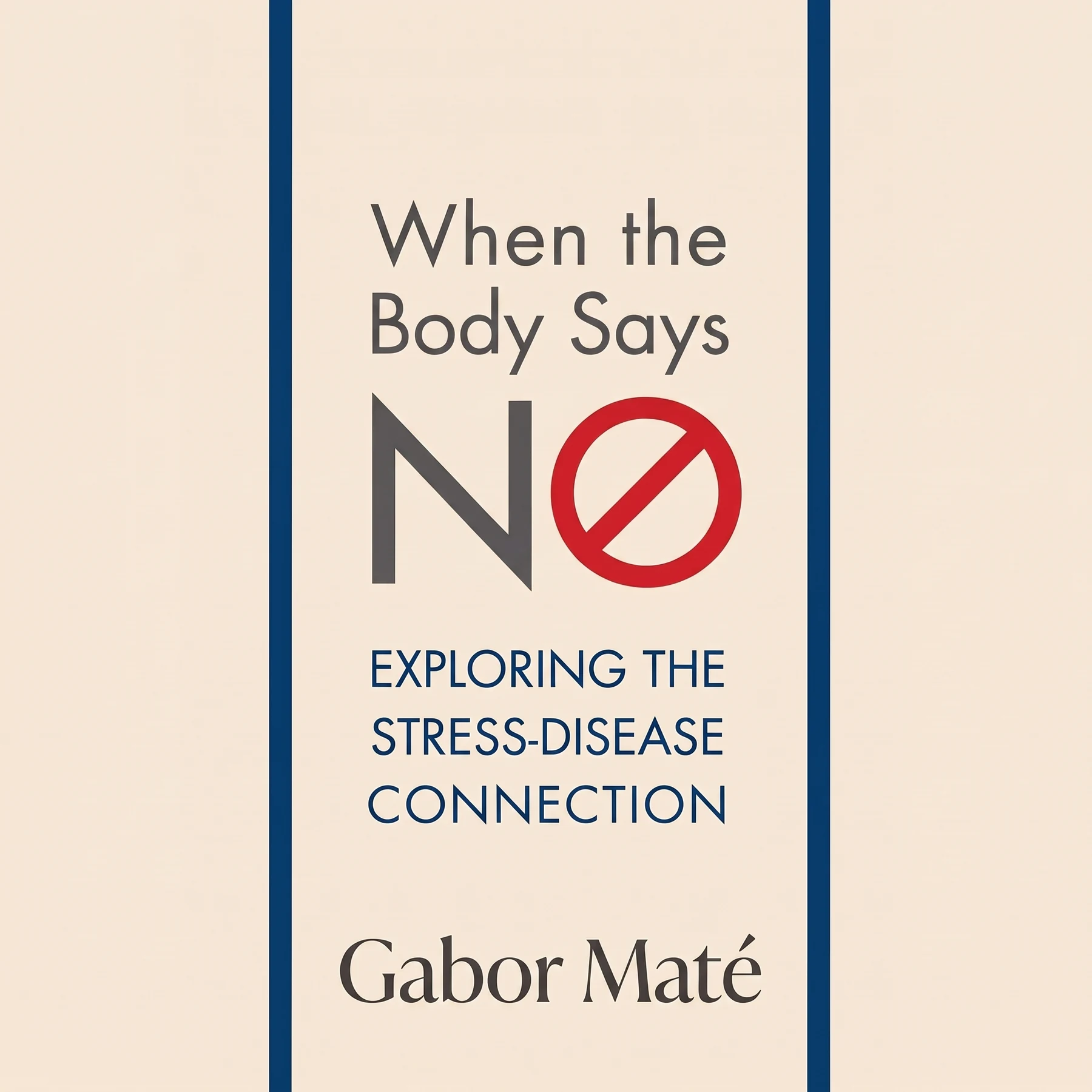
EnglishไทยWhen the Body Says No: Exploring the Stress-Disease Connection
By Gabor Maté
Gabor Maté shows how chronic stress and repressed emotions can weaken immunity and feed illness. He explains how habits like constant niceness and never saying no take shape, and how honest feeling supports recovery.
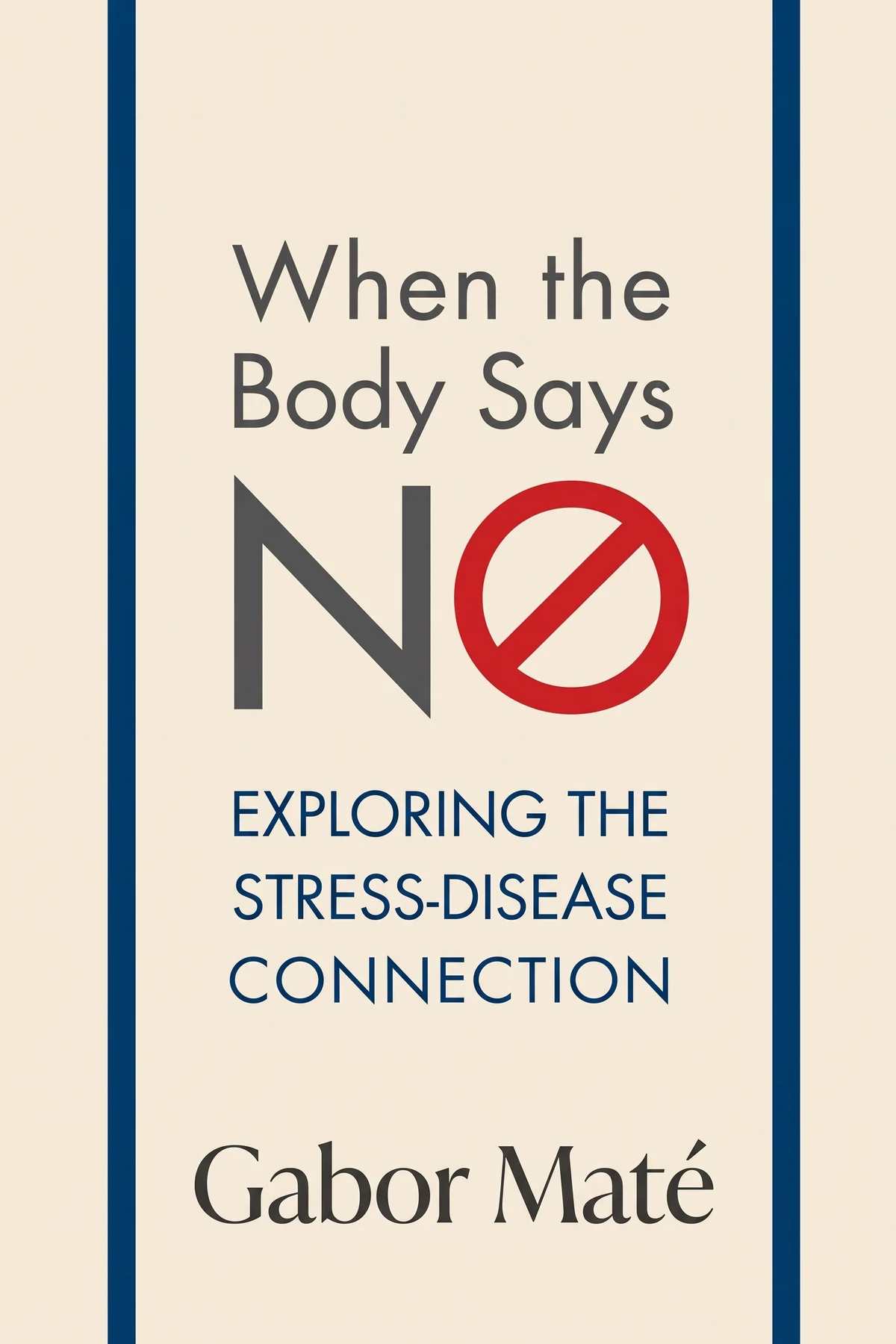
Table of Content
1. Introduction
1 min 06 sec
If you are the person who keeps working while sick, cares for everyone and never complains, Gabor Maté has an uncomfortable finding for you. In When the Body Says No, the family doctor reports that job strain predicts heart disease more strongly than high blood pressure, high cholesterol and smoking combined, and that work stress helps raise those other risks too.
Drawing on his patients and on a young field called psychoneuroimmunology, Maté argues that mind and body cannot be treated apart. His throughline is easy to state and hard to live: when we push feelings down and keep putting others first, the stress does not disappear. It moves into our hormones, our gut and our immune system, and sometimes the body refuses on our behalf.
Follow his cases, from a woman screaming in pain on a holiday afternoon to a baseball star who played with broken fingers, and you learn to read your own warning signs before illness reads them for you.
2. Treat chronic stress as a real health risk
1 min 32 sec
Exam season weakened a group of medical students in a way none of them could feel, and the loneliest suffered most. One patient’s lifelong habit of looking after others hints at what decades of that strain can do.
3. Learn what a sense of threat does to your body
1 min 42 sec
The same lost job can feel like a disaster to one person and a nuisance to another. What decides the difference, and what the body does next, explains why caregivers heal more slowly than they should.
4. Spot the people-pleasing that confuses your immune system
1 min 40 sec
A woman cooks an entire holiday dinner she has no plan to eat, then collapses in pain before she can leave. A study of her disease suggests the trouble may start long before any diagnosis.
5. Break the helplessness that keeps you stuck
1 min 55 sec
Within a few months, one woman faced a son leaving rehab, a husband’s cancer and a diagnosis of her own. Maté argues that the events mattered less than the way she had learned to endure them.
6. Understand how old wounds can make pain louder
1 min 47 sec
A simple balloon test showed some people feeling far more pain than others from the identical stimulus. Brain scans revealed what was different, and a short course of group sessions pointed to a way back.
7. See the cost hidden behind constant niceness
1 min 56 sec
Hospital technicians learned to predict a grave nerve disease from a patient’s manner, and they were nearly always right. A baseball legend’s story shows what that manner looks like, and what it hides.
8. Trace your coping style back to childhood
1 min 45 sec
Some babies barely react when their mother leaves the room, yet grow tense when she returns. A classic experiment explains why, and why those first patterns can follow a child into adolescence.
9. Make room for the feelings you avoid
1 min 36 sec
A man with cancer could not understand his illness, because he had always looked on the bright side. Maté’s reply turns a popular habit upside down, and two melanoma studies back him up.
10. Conclusion
1 min 13 sec
Maté’s book asks something hard of the people who cope best. The strength that lets someone cook a holiday meal she will not eat, nurse a husband who shames her or play with broken fingers can be the very habit that leaves the body defending itself alone. A perceived threat becomes cortisol, cortisol reaches the immune cells, and feelings that never reach words can still reach tissue. None of this, he insists, is a verdict of fault. It is information.
The book supports a few concrete changes. Notice each yes you give while meaning no, and treat the resentment as a symptom. When pain or illness comes, look at your history and current pressures alongside the scans, and consider psychological support part of the care.
Anger needs particular handling. Maté describes a paradox: swallowing it harms the body, but so does screaming or hitting, which he sees as a way of escaping the real feeling. His advice is to sit calmly and let the rage pass through you without acting on it.
The body says no when we will not. The work is learning to say it first.
About this book
What is this book about?
Many capable people pride themselves on pushing through: ignoring pain, swallowing anger, looking after everyone else first. Gabor Maté, a family doctor and palliative care physician, argues that this strength can carry a hidden medical cost. Drawing on psychoneuroimmunology, the study of how emotions shape the body's chemistry, he shows how a perceived threat travels from the brain to cortisol to the immune cells, and what happens when that alarm never switches off. Through his patients' stories and a range of studies, Maté links emotional repression, blurred boundaries and learned helplessness to autoimmune disease, multiple sclerosis, gut disorders, ALS and cancer. He is careful to say that no personality trait causes disease, though such traits may add to genetic vulnerability. He traces these coping styles back to the first years of life, when attuned care teaches a child how safe the world is. Readers get a clearer way to read their own warning signs, a case for honest negative thinking over forced positivity, and practical advice on handling anger without either swallowing it or lashing out.
Book Information
Who it's for
Pushing through illness
People who push through illness, look after everyone and rarely voice their own needs.
Living with serious illness
Patients and caregivers living with autoimmune disease, chronic pain or cancer who want to understand the role of stress.
Parents and professionals
Parents and professionals curious how early childhood shapes adult health.
About the Author
Gabor Maté
Gabor Maté was born in Budapest in 1944 and moved to Canada in 1957. After earning a degree from the University of British Columbia and teaching high school English for a few years, he studied medicine. He ran a family practice in East Vancouver for more than twenty years and served as medical coordinator of the Palliative Care Unit at Vancouver Hospital. His other books include Scattered Minds and a title drawn from his work with people living with addiction, which is called In the Hungry Ghosts. His books have appeared in more than thirty languages. He received the Order of Canada in 2018.
Ratings & Reviews
Ratings at a glance
What people think
Listeners find this book to be a transformative and eye-opening experience, filled with deep scientific evidence and studies that make it essential for everyone. They appreciate its look at the connection between stress and disease and emotional well-being, with one listener remarking on how it explains the mind-body-emotion interplay. The prose is well-received, as one listener points out its accessibility for non-medical readers.
Top reviews
Narongrit
Wow. This book hit me like a ton of bricks. Maté’s exploration of how our inability to set boundaries manifests as physical illness is nothing short of revolutionary for the average reader. I’ve spent years suppressing my own anger, and seeing the link to autoimmune issues was the wake-up call I didn't know I needed. To be fair, some of the medical jargon in the middle can get a bit dense, but the patient stories kept me grounded and engaged throughout. It is a profound look at the mind-body-emotion interplay that most Western doctors completely ignore during standard consultations.
Show moreEleanor
After hearing Maté on a podcast, I finally dove into this work. The deep dive into 'Type C' personalities—those of us who are 'too nice' and never say no—was like reading a biography of my own life. The way he connects childhood trauma to adult physiological responses is both haunting and deeply enlightening. It's a heavy read, and the stories of Gilda Radner and others are tragic, yet they offer a vital path toward self-acceptance. This book doesn't just explain illness; it provides a framework for understanding how to live more authentically before the body forces a stop.
Show moreYuwadee
Picked this up during a health scare and it changed my entire outlook on recovery. Instead of viewing my illness as a random malfunction, I started looking at the chronic stress I’ve ignored for a decade. Frankly, it’s a relief to see a doctor acknowledge that our emotions aren't just 'in our heads' but are deeply woven into our cellular biology. This should be essential reading for every medical student and anyone dealing with a chronic diagnosis. It offers a holistic approach that feels much more complete than the standard pill-for-an-ill model we are used to.
Show moreNarong
Everything clicked into place for me once I reached the chapters on the immune system's intelligence. The book explains how our physiological defenses can become confused and attack the self when our boundaries are consistently violated by outside demands. It’s a life-changing perspective that focuses on the interplay between the mind and the body rather than treating them as separate silos. I found the writing style incredibly empathetic and easy to follow, even when the topics got quite heavy. This is a must-read for anyone who struggles with being a people-pleaser at the expense of their own health.
Show moreTom
Ever wonder why 'nice' people seem to get sick more often than those who are vocal about their needs? This book explores that exact phenomenon through the lens of psychoneuroimmunology, showing how emotional repression acts as a physiological toxin. Maté is a master at making complex biological processes feel personal and urgent. Personally, I feel more equipped to handle my own health after reading this, as it gave me the permission I needed to prioritize my own well-being. It is a powerful, enlightening, and ultimately healing piece of work that everyone should have on their shelf.
Show moreElan
As a nurse who sees chronic inflammation every day, I found this perspective incredibly refreshing. We spend so much time treating the symptom that we completely ignore the life story of the person sitting on the exam table. Maté makes psychoneuroimmunology accessible to those without a medical degree, which is a feat in itself. Look, I don't agree with every single conclusion regarding causality, but the overall message about the mind-body connection is impossible to ignore. It’s a bit repetitive in the second half, but the core message remains vital for modern healthcare.
Show moreNitaya
The chapter on ALS was heartbreaking, yet it provided a strange sort of clarity. Maté argues that the body eventually rebels when we fail to express our emotional truth, effectively saying 'no' when we cannot. While the book is undeniably enlightening, it does feel repetitive toward the end, as if the same three points are being hammered home with different names. Still, the scientific background on the endocrine system and cortisol levels is fascinating and well-researched. It serves as a necessary reminder that our emotional well-being is not a luxury but a requirement for physical health.
Show moreEthan
In my experience, doctors rarely ask about your home life or your childhood, but Maté proves why they should. He presents a compelling argument for a holistic approach to healthcare that bridges the gap between the psychological and the physical. Gotta say, the section on Ronald Reagan was particularly insightful regarding emotional poverty and its long-term effects. My only criticism is that the book can be a bit dry during the deep dives into cellular studies, though the information remains vital for understanding the stress-disease connection. It’s a dense read but worth the effort for the insight.
Show moreAnawin
Truth is, I was skeptical of the 'personality leads to cancer' idea initially. However, Maté backs up his claims with enough scientific studies and clinical observations to make even a hardened skeptic pause. It’s not about blaming patients, but about empowering them to understand the hidden stressors that might be hindering their healing process. The book could have been about fifty pages shorter without losing much impact, as the case studies begin to blend together after a while. Nevertheless, the underlying science of how stress affects our hormones and immunity is solid and eye-opening.
Show moreYanin
Actually quite dangerous and scientifically questionable. While Maté is a compassionate writer, his thesis leans too heavily into anecdotal evidence that borders on victim-blaming for serious conditions like ALS and cancer. The suggestion that personal 'repressive' traits are a primary cause for terminal illness ignores the massive role of genetics and environmental toxins. I was looking for hard data but found mostly Freudian-style interviews that felt more like haranguing patients than objective medical study. Correlation is not causation, and this book fails to make that distinction clear for the vulnerable people reading it.
Show moreQuestions about this book
What is the main idea of When the Body Says No?
Gabor Maté argues that mind and body are one system, and that chronic stress, especially the stress of repressing emotions and always putting others first, weakens and confuses the immune system. Drawing on psychoneuroimmunology and his own patients, he links this pattern to conditions such as rheumatoid arthritis, multiple sclerosis, irritable bowel syndrome, ALS and cancer, while stressing that no personality trait causes disease on its own.
How does stress affect the body according to Gabor Maté?
Maté describes stress as a response to a perceived threat to survival. The brain triggers a chain of hormones, CRH then ACTH, that leads the adrenal glands to release cortisol. Cortisol suppresses immunity and speeds the heart, which helps in short emergencies. When stress becomes chronic, high cortisol can damage tissue and the heart, and studies of Alzheimer’s caregivers showed weaker immune cells and slower wound healing.
Does When the Body Says No blame people for their illness?
No. Maté explicitly rejects blame, of yourself or of your parents. He argues that understanding the roots of an illness lets you take responsibility and stop being a passive victim of it. He also states that no personality trait causes ALS, cancer or other diseases, though traits such as extreme dutifulness, combined with genetic vulnerability, may make someone more susceptible.
What does Gabor Maté mean by the power of negative thinking?
He does not mean pessimism. He means accepting all of reality, including the painful parts, so you can decide how to respond. Constant positive thinking, he argues, can become a way of burying bad feelings, which raises stress. He cites melanoma research in which emotional repression was linked to relapse, and a UCLA study where patients given group therapy had fewer deaths six years later.
How can I apply the ideas in When the Body Says No?
Start by noticing when you agree to things you resent and when you tolerate situations only because leaving feels impossible. Treat stress and personal history as part of any health problem, and consider psychological support alongside medical care. For anger, Maté advises neither swallowing it nor lashing out, but sitting calmly and letting the feeling pass through you.
Readers also enjoyed

ADHD an A-Z: Figuring It Out Step by Step
Leanne Maskell






Alcoholics Anonymous
Alcoholics Anonymous World Services


A Liberated Mind: How to Pivot Toward What Matters
Steven C. Hayes

AUDIO SUMMARY AVAILABLE
Listen to When the Body Says No in 15 minutes
Get the key ideas from When the Body Says No by Gabor Maté, plus 5,000+ more nonfiction titles.
- 5,000+ titles
- Listen as much as you want
- 7-day free trial
- Cancel anytime









