


15 min 25 sec
Available in: English
 ไทย
EnglishไทยWhen Breath Becomes Air: Pulitzer Prize Finalist
A young neurosurgeon looks for the meaning of life through literature and the brain, then faces terminal cancer. He finds that meaning lives in human bonds and in meeting death with integrity.
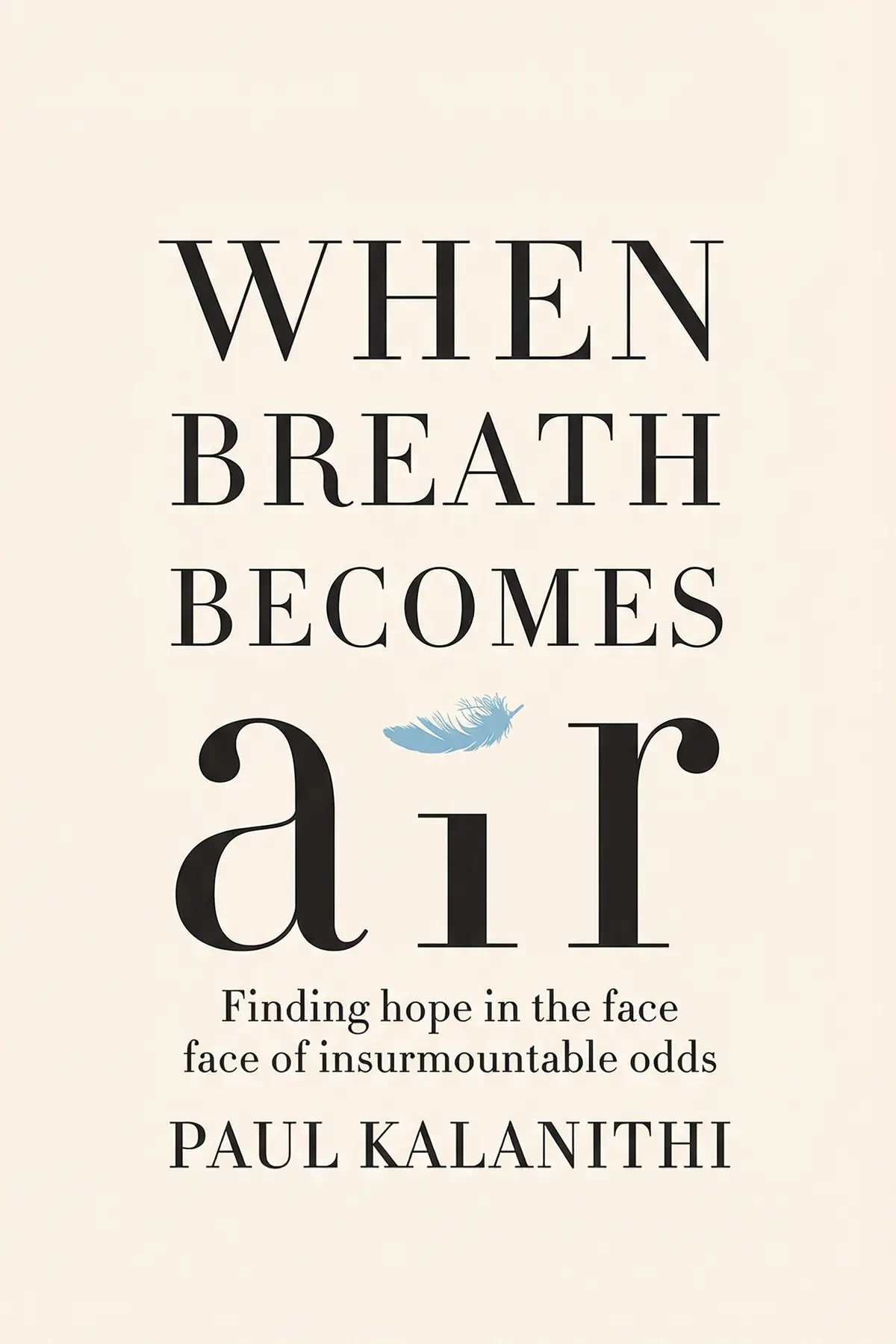
Table of Content
1. Introduction
55 sec
Most people postpone the question of what makes a life worth living, assuming there will be time later. In When Breath Becomes Air, Paul Kalanithi, a neurosurgeon finishing his training at Stanford, had to answer it early: terminal cancer arrived just as his career was about to begin. His conclusion, drawn from literature, the operating room and his own dying, is that meaning lives in our bonds with other people, and that a short life can still be a whole one.
That idea runs through every stage of his story, from a teenage reading list to a hospital bed at 37. Along the way come hard cases from neurosurgery, where keeping someone alive and doing right by them are not always the same thing. What remains is a sharper sense of what to protect in your own days, and a way of thinking about death that makes it less of a stranger.
2. Look for meaning in both stories and science
1 min 51 sec
A teenager in love with Camus and Orwell picked up a strange novel the summer before college. One idea in it sent him toward the brain, and toward a question he would spend his life trying to answer.
3. Let close contact with death sharpen your sense of life
1 min 46 sec
Two small discoveries at Yale, one on a dissecting table and one in a delivery room, showed a medical student how close together beginnings and endings can sit, and what that closeness does to a person.
4. A saved life is not always a success
1 min 55 sec
A boy with a headache, a tumor in the worst possible place and a young surgeon who had to make the call. Then a patient rescued from death, and a doubt that would not go away.
5. Protect your humanity when exhaustion takes over
1 min 45 sec
Hundred-hour weeks, energy drinks at midnight and naps in a parked car. A frightened patient paid the price, and the guilt that followed sent Kalanithi back to the reason he became a doctor.
6. Good intentions need skill behind them
1 min 52 sec
Years after a seemingly perfect operation, news about a former patient forced Kalanithi to rethink what doctors owe the people who trust them, and why kindness alone falls short when the stakes are this high.
7. Choose what matters when time runs short
2 min 05 sec
Weight loss, back pain and a doctor who blamed overwork. Then a blurred scan that a neurosurgeon could read instantly, and a run of decisions about career, writing and a child that no training had prepared him for.
8. A life can be complete without being finished
2 min 06 sec
A father too weak to stand at his daughter’s birth, a final choice about a breathing machine and a manuscript left unfinished. Lucy Kalanithi explains why she still sees the ending as whole.
9. Conclusion
1 min 10 sec
Kalanithi set out as a young reader trying to learn what gives life meaning, and he found his answer twice. The first time it came through Eliot and the brain. The second time it came on a hospital bed, with his daughter nearby. The answer never changed. Meaning sat in the bonds between people, and it lasted only as long as he could take part in them, which is why he chose to let go when it slipped away.
Lucy believes the book fulfilled his wish: to help others see death as part of life, and to show that integrity and meaning remain possible while dying. That matters for the healthy, too.
His story supports a few plain practices. When you are worn out, check whether the people in front of you still feel seen, the way he caught himself rushing a frightened patient. When your work shapes other lives, treat getting better at it as part of caring. And when a choice depends on time you cannot measure, follow Emma’s advice and put what truly matters first.
Kalanithi never finished his book. He finished the life it describes, and it was whole.
About this book
What is this book about?
Most of us assume there will be time later to work out what makes a life worth living. Paul Kalanithi never had that luxury. A lover of literature turned neurosurgeon, he was months from finishing his training at Stanford when scans showed cancer spread through his body. His memoir follows one question across his whole life. As a student he looked for an answer in Eliot and in the science of the brain. As a doctor he met it in the anatomy lab, the labor ward and the operating room, where a saved patient was not always a success and good intentions failed without skill. As a patient he had to answer it for himself: what to do with an unknown amount of time, whether to have a child, and when to let go. Readers get an honest account of medicine at its most demanding and a clear view of what one man decided mattered most. They also come to see death as part of life that can be faced with integrity, by the person dying and by those who love them.
Book Information
Who it's for
Patients and caregivers
Readers facing serious illness, or caring for someone who is, who want an honest account of dying with purpose.
Clinicians and medical students
Doctors, nurses and students in medicine wrestling with exhaustion, hard calls and what they owe patients.
Professionals rethinking their time
Professionals rethinking how they spend their time and what they would keep if it ran short.
About the Author
Paul Kalanithi
Paul Kalanithi (1977 to 2015) was an American neurosurgeon, neuroscientist and writer. He studied English literature and human biology at Stanford, then history and philosophy of science and medicine at Cambridge, and graduated from Yale School of Medicine in 2007. He completed his neurosurgery residency at Stanford in 2014 and received the American Academy of Neurological Surgery's highest award for research. Diagnosed with lung cancer in 2013, he died in March 2015 at 37, while writing this memoir.
Ratings & Reviews
Ratings at a glance
What people think
Listeners find this memoir to be a captivating and fast-paced experience, featuring superb prose and a poignant narrative that brings them to tears. This work provides a fascinating look at existence, as one listener points out that it aided their appreciation for the beauty of life. Listeners characterize the account as an incredible tale of bravery that lingers long after, while one listener highlights its exploration into the depths of humanity.
Top reviews
Saovapa
Wow. This is one of those rare memoirs that forces you to pause and re-examine your own mortality without feeling like a chore. Kalanithi captures the brutal reality of a stage IV lung cancer diagnosis just as his career as a neurosurgeon was hitting its peak. I found myself sobbing by the time I reached Lucy’s epilogue, which provides a much-needed grounding to Paul’s more philosophical musings. It’s a quick read, yet the emotional weight it carries is immense, exploring the depths of humanity and the search for meaning in the face of inevitable decline. While some might find his literary references a bit much—who really reads Wittgenstein to a baby?—they felt authentic to a man who spent his life bridging the gap between biology and literature. It’s a beautiful, heartrending testament to a life cut short.
Show moreCarter
Finally got around to reading this modern classic, and I can say the hype is entirely justified. This book is a gut punch that stays with you long after you’ve finished the final page. Paul’s writing is sharp and evocative, particularly when he describes the grueling nature of neurosurgery and the physical toll of his chemotherapy. I’m not gonna lie, I had to stop several times just to catch my breath because the prose is so dense with emotion and intellectual curiosity. It offers a unique perspective on the beauty of life, focusing on quality of time rather than just quantity. If you haven't read it yet, do yourself a favor and buy a copy, but make sure you have a box of tissues nearby for the ending. It's an amazing story of courage.
Show moreGioia
The chapter on Lucy’s perspective at the end of the book is what truly broke me. Kalanithi’s journey from a brilliant neurosurgeon to a patient fighting for every breath is a story of incredible courage and intellect. He manages to weave together science and philosophy in a way that feels natural, even when he's discussing the most harrowing aspects of his decline. This is a quick read, but the themes of purpose and legacy are explored so deeply that it feels much longer in your mind. To be fair, his privileged background is evident throughout, yet it doesn't take away from the universal tragedy of a young father facing death. This book is a masterpiece of the human spirit that explores the very depths of humanity.
Show moreArm
This book is absolutely heartrending and brilliant in its simplicity. Paul Kalanithi had such a unique voice, bridging the gap between the clinical world of neurosurgery and the soft, vulnerable world of a dying man. I was particularly struck by his decision to have a child despite his diagnosis, a choice that feels both brave and incredibly tragic. The prose is elegant and spare, never wasting a word as he races against time to finish this memoir before the end. In my experience, very few books manage to be this intellectually stimulating while also making you cry uncontrollably. It’s an amazing story of courage that will stay with me for a long time. It makes you understand the beauty of life in a whole new way.
Show moreHarper
Not what I expected, but exactly what I needed to read right now. Kalanithi doesn't offer easy answers or platitudes about 'fighting' cancer; instead, he offers a meditation on how to live with integrity when you know the end is near. The transition from the doctor who holds life in his hands to the patient who can barely walk is described with such clarity and lack of self-pity. Personally, I found his obsession with finding a 'calling' very relatable, even if I’ll never be a brain surgeon. The way he discusses the depths of humanity through the lens of neurology is just fascinating. It’s a profound little book that packs a massive punch. I honestly think everyone should read this at least once to gain some perspective on their own life.
Show moreKai
As someone who appreciates a good medical memoir, I found this deeply compelling, though I understand why some readers might find the tone slightly detached. Kalanithi takes us through his rigorous training at Stanford and Yale, eventually reaching the point of chief resident before everything unravels. The shift from being the one delivering bad news to being the one receiving it is handled with surgical precision. Frankly, the middle section drags slightly with all the quotes from classical poetry, which can feel a bit elitist at times. However, the raw courage he shows in confronting his own expiration date makes those intellectual shields understandable. It’s a brilliant exploration of what happens when a healer becomes the broken one. The writing is sharp, academic, and ultimately very moving.
Show moreJoy
Ever wonder how a doctor deals with their own terminal illness? Kalanithi provides a fascinating, if sometimes overly academic, answer to that question in this memoir. The book focuses heavily on his identity as a physician and how that identity is stripped away by his diagnosis. I appreciated the honesty about his marriage struggles during the treatment, which made him feel much more human than the 'super-doctor' persona established in the first half. Look, it’s not always a comfortable read, and the prose can be a bit heavy on the 'Tuesdays with Morrie' sentimentality, but the core message is vital. It’s a story about finding value in the time we have left, no matter how short that may be. A solid, thought-provoking read for anyone interested in medical ethics.
Show moreMadison
After hearing so many people talk about this, I expected to be more moved than I actually was, but it’s still a very solid four-star read. The writing style is definitely elevated, which fits his background in literature, though it sometimes feels like he’s trying a bit too hard to prove his intellectual worth through constant quotes. I loved the descriptions of the operating room; those scenes were vivid and gave a great sense of the high stakes he dealt with daily. The book really shines when it tackles the moral weight of being a doctor. While I found some of the philosophical tangents a bit dry, the ending is undeniably powerful and beautifully written by his widow. It's a poignant reminder that we are all just living, breathing organisms.
Show moreSelin
Picked this up on a whim and finished it in a single afternoon because I just couldn't put it down. The narrative is driving and urgent, likely because the author knew his time was running out as he wrote it. While I found the constant quoting of T.S. Eliot and other poets a bit distracting from the actual story, his insights into the doctor-patient relationship are invaluable. It’s a tragic story of a promising career cut short, yet it feels strangely hopeful by the end. The epilogue is the perfect closing note, providing the grounded, emotional reality that balances out Paul's more abstract thoughts. Definitely worth the read, even if it leaves you feeling a bit raw and questioning your own purpose in the world.
Show moreZoe
Truth is, I have mixed feelings about this one despite its massive popularity. While I admire the author’s resilience and his passion for medicine, the narrative often feels more like a CV than a raw look at the human experience of dying. He spends a lot of time reminding us of his academic pedigree—Stanford, Yale, top of his class—which can come across as a bit narcissistic. I wanted more of his internal world and his relationships, but instead, we got a lot of name-dropping and obscure literary quotes that felt a bit pretentious. The chapter written by his wife after he passed was the highlight for me, as it finally brought the emotional vulnerability that the rest of the book lacked. It’s a decent read, but I didn't find it as groundbreaking as everyone says.
Show moreQuestions about this book
What is When Breath Becomes Air about?
It is Paul Kalanithi’s memoir of his life and illness. A lover of literature who became a neurosurgeon, he spent years asking what makes life meaningful. Near the end of his Stanford residency, he learned he had terminal cancer. The book follows his training, his hardest cases as a surgeon and his final months as a patient, a husband and a new father, ending with his death at 37.
What is the main message of When Breath Becomes Air?
Kalanithi came to believe that meaning lives in human relationships, a view shaped by T. S. Eliot and by his study of the brain. His medical work and his own illness tested that belief. His wife Lucy writes that the book shows death as part of life, and shows that a person can live with integrity and meaning even while facing it.
What did Kalanithi learn as a neurosurgeon?
He learned that a surgery is rarely a clean success or failure. He saved a trauma patient who could never speak or eat alone again, and he doubted it had been right. He also came to see technical skill as a moral duty after learning that Matthew, a boy whose tumor he removed, was worsening because of brain damage from the operation.
How did Kalanithi decide how to spend his remaining time?
Not knowing how long he had troubled him most. He told his doctor, Emma, that decades would mean continuing neurosurgery while a year or two would mean writing. Her advice was that he concentrate on the things that mattered most to him. He and Lucy also chose to have a child, freezing his sperm before treatment, and their daughter Cady was born in July 2014.
Who should read When Breath Becomes Air?
It suits anyone facing a serious diagnosis or caring for someone who is, people in medicine dealing with long hours and hard decisions, and readers who want to think clearly about what deserves their time. It offers no formula. Instead it gives one honest life, from the anatomy lab to a final choice about breathing support, and what that life revealed.
Featured in
Readers also enjoyed

A Promised Land
Barack Obama


A River in Darkness: One Man’s Escape from North Korea
Masaji Ishikawa

A Spy Among Friends: Philby and the Great Betrayal
Ben Macintyre


A Year in the Life of William Shakespeare: 1599
James Shapiro



Agent Sonya: The Spy Next Door
Ben Macintyre
AUDIO SUMMARY AVAILABLE
Listen to When Breath Becomes Air in 15 minutes
Get the key ideas from When Breath Becomes Air by Paul Kalanithi, plus 5,000+ more nonfiction titles.
- 5,000+ titles
- Listen as much as you want
- 7-day free trial
- Cancel anytime









