

A Long Way Gone: Memoirs of a Boy Soldier
Ishmael Beah
 English
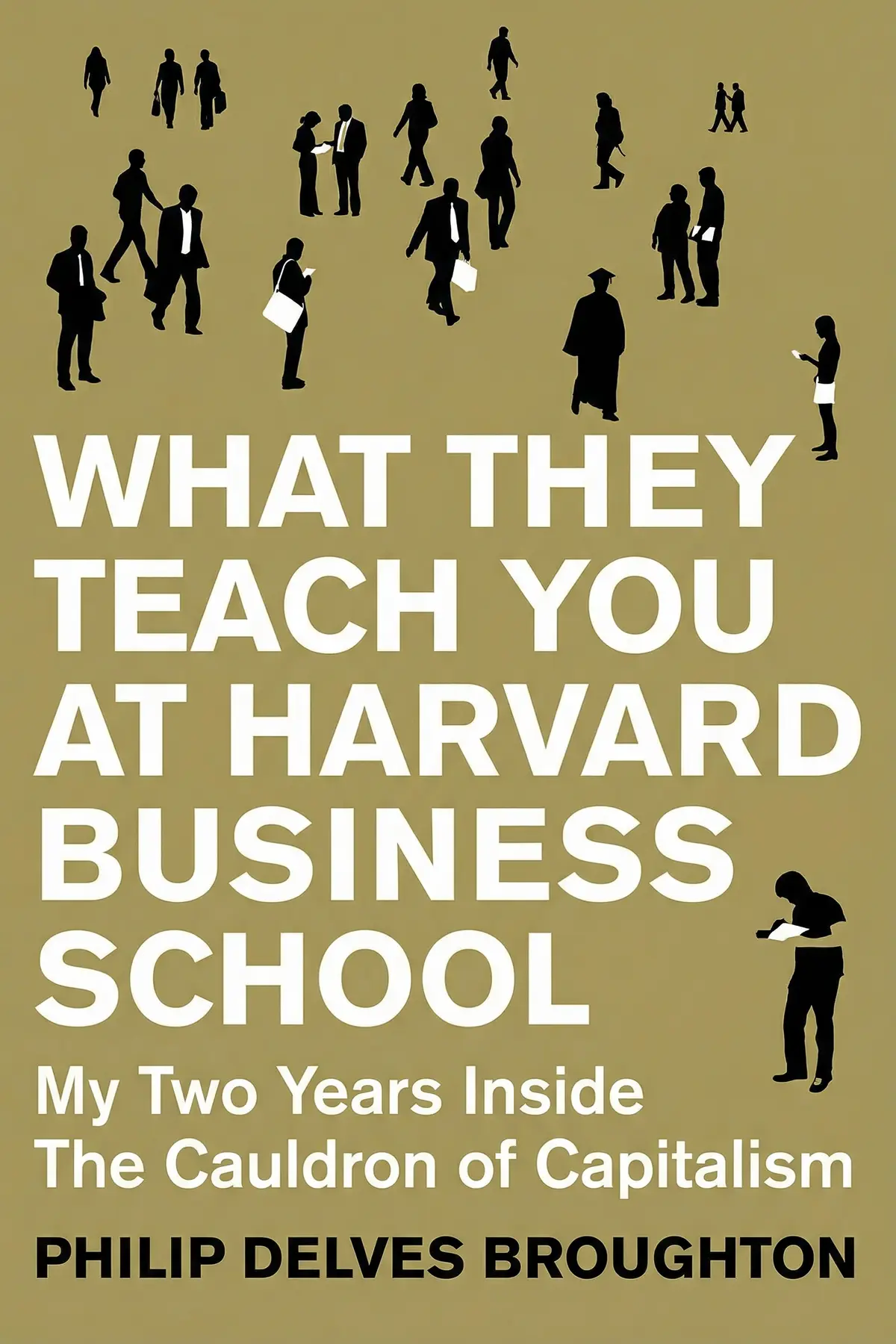
A journalist's inside account of two years in Harvard's MBA program. It explains core business ideas such as risk, valuation and negotiation, and questions a culture that pushes graduates toward status, money and long hours.
1 min 05 sec
Many capable people feel shut out of business because nobody taught them its language, and Philip Broughton was one of them. In What They Teach You at Harvard Business School, the former Daily Telegraph correspondent describes starting Harvard’s MBA program in 2004 without ever having used Excel. Within months he had learned what he counts among his biggest lessons. Risk covers the bad thing that might happen, and it also covers the good thing you might never reach.
His memoir runs on two tracks. Harvard gave him real tools for thinking about money, customers and negotiation. Its culture, meanwhile, kept steering gifted people toward status, huge salaries and the same few jobs. Broughton’s answer is to keep the tools and refuse the script. Follow him through the case studies, a failed startup and a job hunt that went nowhere. You get the core ideas of an MBA in plain words, plus a clearer view of what reaching the top costs and when to stop climbing.
1 min 54 sec
He arrived among accountants, managers and founders without ever having opened a spreadsheet, on a campus that felt sealed off from the world. The way he handled being the outsider is something any newcomer can borrow.
1 min 44 sec
A feudal landlord, a struggling toolmaker, a timber firm and a restaurant chain taught Broughton how companies really work. By the end of the term he believed he could fix almost any business, which was its own warning sign.
2 min 01 sec
Most of us only count what could go wrong. Harvard taught Broughton to count something else too, and he soon found himself applying it to his son’s babysitter.
1 min 44 sec
Two acronyms carry most of the negotiation theory Harvard teaches. In a mock deal over a tractor company, Broughton also saw how the theory looks once real competitors start playing to win.
1 min 41 sec
Broughton and his best friend took a startup to investors in Boston and Silicon Valley, and every meeting started well. The way those meetings ended shows what founders usually get wrong.
1 min 41 sec
A banker classmate called the school a factory for unhappy people. Broughton’s account of club titles, bought cars and 90-hour weeks explains why, and why the comparison game never has a winner.
2 min 05 sec
He graduated from the world’s most famous business school without a job offer. Two years later, the financial crash put his classmates’ world under a harsh light and gave his own choice new weight.
1 min 08 sec
Broughton went to Harvard to understand business and left with a sharper sense of what he wanted from it. He credits the school with improving how he handles numbers, judges risk and organizes his work. He also stays uneasy about whether it teaches people to lead ethically, and the crash gave that unease a public face.
The book’s value lies in keeping both judgments in view. The tools travel well. Count the cost of the good thing you never tried. Price any opportunity by its risk as well as its return, and walk into a negotiation knowing your fallback. The culture does not have to come with them. When an employer asks for unlimited devotion, or a peer’s salary starts setting your standard, you are on the curve Broughton warns about.
Use the case habit on your next decision by asking what the customer wants and where the cash goes. Then put his graduation question to your own plans before someone else answers it for you. The degree taught him to put a price on almost anything. He had to work out on his own what was worth pricing.
Business can feel like a closed club with its own vocabulary, and the best-known door into that club is Harvard Business School. Philip Broughton, a journalist who had never used Excel, walked through it in 2004 and recorded what he saw over the next two years. His memoir shows what the MBA actually teaches. There are case studies on Black & Decker, Butler Lumber and Benihana, lessons on opportunity cost, valuation and borrowing, and negotiation tools such as BATNA. It also follows his failed attempt to fund a podcast startup and a job hunt that ended without an offer. Beneath the lessons runs a harder question. Broughton watched classmates chase status, huge salaries and 90-hour weeks. He heard a classmate call the school a factory for unhappy people, and he later saw Harvard alumni in top roles during the 2008 financial crisis. Readers get a plain-language tour of core business thinking and an honest look at what reaching the top costs. They also get one question worth asking of any career: how much is enough?
Career switchers thinking about an MBA who want to know what it really teaches and what it costs.
Young professionals feeling the pull of banking, consulting and 90-hour weeks.
Curious readers who want core business ideas such as risk, valuation and negotiation explained in plain words.
Philip Broughton was born in Bangladesh and grew up in the United Kingdom. He studied classics at Oxford, then worked for about ten years as a journalist at The Daily Telegraph, with postings in New York and Paris, before he earned an MBA at Harvard Business School. He also wrote The Art of the Sale and has contributed to the Financial Times, The Wall Street Journal and Bloomberg News. He worked with Stephen A. Schwarzman on the memoir What it Takes.

Listeners find this memoir to be a compelling and stimulating account that provides an exhaustive, step-by-step report on the Harvard Business School experience. While opinions vary on the author’s skeptical tone, listeners value the inclusion of concrete business concepts, and one listener specifically noted how useful the segments on valuation and cash flow forecasting were. Furthermore, they find the examination of work-life balance and the moral challenges within high-level corporate environments to be deeply thought-provoking. Listeners also mention that the book offers an exceptional perspective on the program's intensity, serving as an uncommon and perceptive glimpse into "the lives of the few and the privileged."
Finally got around to reading this, and I found the exploration of elite corporate culture absolutely fascinating. Broughton provides a rare, insightful look at 'the lives of the few and the privileged' that most of us will never see firsthand. The anecdotes about students buying cars to hide their assets for hardship funds are just mind-blowing. It really makes you wonder about the moral compass of the people running our financial institutions. Despite the heavy themes, the prose is engaging and moves quickly through the two-year program. I especially liked the focus on the alumni network as the ultimate asset. If you want to understand the hubris and the drive behind the world's most famous business school, this is the book to read.
Show moreThe way Broughton breaks down complex financial concepts like 'juicing the returns' is worth the price of admission alone. Most memoirs about graduate school are just navel-gazing, but this one actually takes the time to explain the curriculum. I found the chapters on decision trees and the root of valuation to be genuinely educational for a layperson. Beyond the academics, the book serves as an ominous warning about the exclusivity of success. He doesn't hold back on the social dynamics, from the intense study groups to the weirdly Maoist public apologies. It’s an authentic, blow-by-blow account that doesn't try to sugarcoat the experience. This is a must-read for anyone who thinks an MBA is a magic ticket to happiness.
Show morePicked this up because I was curious about the actual curriculum at HBS, and it delivers on that front. I appreciated how Broughton breaks down concrete business concepts like valuation and cash flow forecasting. It isn't just a dry textbook, though; it’s a provocative window into the competitive nature of the program. Look, the ethical pressures of elite corporate culture are real, and this book does a great job of highlighting that tension. One of the most interesting parts was the joint course with the Kennedy School, which forced students to weigh profit against social consequences. Even if the author is a bit of a skeptic, his detailed account of the case study method is incredibly helpful for any prospective student.
Show moreAfter hearing so much about the prestige of an MBA, this memoir served as a necessary reality check. The author enters as a bit of an outsider—older than his peers and already a father—which gives him a unique perspective on the 'gilded gates' of the Harvard network. He paints a picture of a factory for unhappy people who are constantly measuring themselves against the curve. I found the section on 'juicing the returns' and the mechanics of debt to be surprisingly clear and well-explained. It’s not just a business book; it’s a morality play about what we sacrifice for success. Some might find him too cynical, but I think his skepticism regarding the monoculture of consulting and finance is refreshing and honest.
Show moreAs someone considering a career pivot, Broughton's struggle with his own identity was surprisingly relatable. He captures that feeling of being adrift while everyone else seems to have a clear five-year plan for making bank. The way he describes the 'three Ms' dominating the classroom culture gave me a good laugh, but it also highlighted the lack of diversity in thought. I loved the quotes from his various classmates, like the Russian entrepreneur Oleg, who provided a grounded contrast to the arrogance of the younger students. It’s a thoughtful meditation on whether a degree can actually provide a 'more interesting life' or if it just adds more anxiety. Definitely worth a read for the perspective on work-life balance alone.
Show moreNot what I expected from a business book, but in a good way. Instead of a 'how-to' guide, it’s an engaging memoir about the disconnect between academic theory and real-world ethics. Broughton’s skepticism about capitalism might rub some the wrong way, but it provides a necessary foil to the hyper-ambitious atmosphere of HBS. I was particularly struck by the discussions on the 'discipline of debt' and how it shapes corporate behavior. To be fair, he does come across as a bit of a hero in his own story for choosing family over a high-paying internship. However, his writing style is so polished that even the more judgmental parts are a pleasure to read. It’s a deeply thought-provoking look at the cost of entry into the global elite.
Show moreEver wonder what goes on behind the ivy-covered walls of the world's most famous business school? This book gives you the answer, and it’s not always pretty. Broughton details the crushing pressure of the grading curve and the constant performance required in class discussions. In my experience, most people talk about Harvard as a dream, but he shows the reality of the six-figure debt and the uncertainty of the job hunt. The inclusion of actual interview questions and case study themes makes it feel concrete rather than just abstract complaining. While I didn't always agree with his pessimistic take on his classmates, the book succeeded in making me think about my own career goals. It’s a solid 4-star read for anyone interested in the machinery of prestige.
Show moreIs it just me, or does the author seem incredibly bitter about his experience? Philip Delves Broughton writes well, but the tone is so judgmental and pessimistic that it’s hard to stay engaged. He enters HBS wanting a career change and then acts shocked when the industry doesn't bow down to his 'varied background.' The truth is, he spends more time critiquing his classmates—those 'over-optimistic buffoons'—than reflecting on his own lack of drive. While the exploration of work-life balance is a valid theme, it feels like a case of sour grapes. It’s an interesting look at the 'three Ms' (Mormons, military, and McKinsey), but the author's ego gets in the way of the narrative.
Show moreReading this in the current economic climate feels like looking into a time capsule of the pre-2008 financial world. The author captures a specific moment when hedge fund managers were the kings of the universe. However, I found myself losing sympathy for a British journalist who chooses an expensive MBA and then complains about the financial pressure. It is a classic first-world problem. The sections on the Harvard grading curve and the pressure to be 'brash and loud' are enlightening, but the book’s relevance has faded significantly since its publication. It’s a decent memoir if you want to see the hubris of elite circles, yet it lacks the timelessness of a great business text.
Show moreThis book was a massive disappointment for me. Everything is so descriptive but there are zero actual insights to be found in the entire first half. Frankly, I realized after reading just thirty pages that I was wasting my time on a redundant narrative. I skipped around to see if the pattern changed, but it remained a tedious blow-by-blow of his daily schedule without any real substance. To be fair, the writing isn't terrible, but the content is just fluff for anyone looking to actually learn business. I strongly recommend anyone with common sense to skip this one and find a book that actually teaches you something useful.
Show moreIt is journalist Philip Broughton’s memoir of his two years in Harvard’s MBA program, which he started in 2004. He explains what the school teaches through case studies on firms such as Black & Decker, Butler Lumber and Benihana. He also questions a culture that, in his view, pushed graduates toward status, high salaries and long hours, and he asks what Harvard had taught the alumni in power during the 2008 crash.
He singles out risk. That includes opportunity cost, the gain you lose by not acting, and the habit of judging investments by risk-adjusted returns. He came to see finance as a question of valuation, rooted in forecasting cash flows. He also learned that accounting figures can be shaped to look better than reality, that customers’ wants come first in marketing, and that negotiators should know their best alternative to a deal.
No. He writes that he failed to land a summer internship and had no job offer at graduation, partly because he lacked the banking and consulting background recruiters wanted. After feeling for a while that he had wasted the degree, he chose not to take work he would not enjoy. Instead he put his energy into writing and his family, and he applied the business degree in ways that suited him.
It suits people considering an MBA who want an insider’s view before committing, and career switchers who feel outside the language of business. Young professionals drawn to finance or consulting will find a frank account of the pressure and the trade-offs. Anyone curious about how elite business culture shaped the leaders around the 2008 financial crisis will also find it useful.
Use his tools on everyday decisions. Before acting, weigh what you lose by doing nothing, and price small risks by how much damage they could cause. Before a negotiation, write down your best alternative and look for the range where both sides can agree. Above all, decide how much is enough for you, so that your career is not measured against the endless curve of other people’s success.
Ishmael Beah

James Herriot


Barack Obama


Masaji Ishikawa

Ben Macintyre

Robin Ryan


AUDIO SUMMARY AVAILABLE
Get the key ideas from What They Teach You at Harvard Business School by Philip Delves Broughton, plus 5,000+ more nonfiction titles.









