


13 min 47 sec
Available in: English
What I Learned Losing a Million Dollars
A futures trader who lost $800,000 explains why small losses turn into disasters and how a written plan and a fixed exit point keep pride, false patterns and crowd panic out of your money decisions.
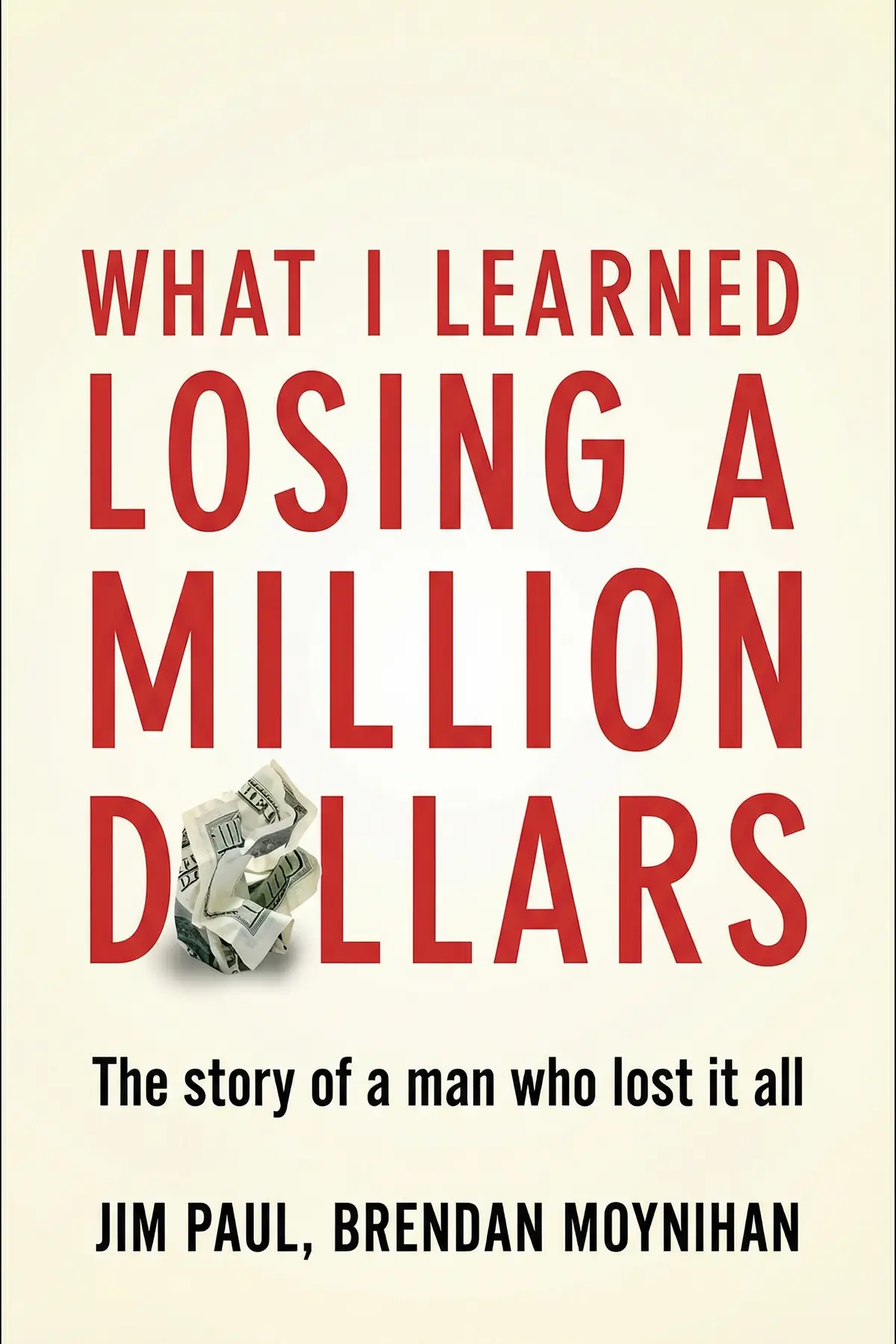
Table of Content
1. Introduction
1 min 04 sec
Most people who want their money to grow study how to win, yet the investors who kept their fortunes agree on almost nothing except how not to lose. In What I Learned Losing a Million Dollars, futures trader Jim Paul and his co-author Brendan Moynihan, a former Wall Street trader and risk manager, build a whole method on that single point of agreement. Paul earned the right to teach it the hard way. He went from making $248,000 in one day to being fired, his assets seized and his savings gone.
The book’s argument is that there are countless ways to make money but only one way to keep it: understand how losses grow, and decide before you act how much you are willing to lose. Without that decision, pride, false patterns and the pull of the crowd take over. Paul’s story shows why a small loss swells into a disaster, and how a written plan and a fixed exit stop it from happening to you.
2. Spot the confidence that turns winners into losers
1 min 51 sec
A trader known by everyone on the exchange floor, fresh from his best day ever, made a bet so sure of itself that he talked his own assistant into it. What followed took months, and it was entirely avoidable.
3. The one rule every great investor agrees on
1 min 29 sec
Read enough investing advice and the experts start to cancel each other out. Paul went looking for the single point where the wealthiest investors stop arguing, and it was not about making money at all.
4. Treat a bad trade like a rotten apple
1 min 38 sec
A shopkeeper throws out spoiled fruit every week without losing sleep. Traders facing a far smaller loss often do the opposite, and the reason has more to do with their pride than with their analysis.
5. Spot the gambler's hunch before markets punish it
1 min 49 sec
After six heads in a row, almost everyone feels tails is due. That harmless feeling at a coin toss becomes expensive in a market, where the game never actually ends and you can keep betting again and again.
6. Keep your head when the crowd goes wild
1 min 43 sec
Calm, polite people scream at referees every weekend. The same force once pushed the price of a single flower to a decade of wages, and it can reach you without any crowd in the room.
7. Write the plan before the money moves
1 min 34 sec
One investment bank was teased inside the industry for being slow and fussy. Its traders had a short answer to the critics, and the habit behind it is one any investor can copy with a pen.
8. Decide your exit before you ever enter
1 min 26 sec
A trader buys timber at $30, certain it will reach $50, and his friends agree it will bounce back. The price has other ideas, and his real error happened before he bought a single piece of wood.
9. Conclusion
1 min 13 sec
Jim Paul’s million-dollar lesson is that his ruin was never one decision. It was a first mistake followed by months of chances to stop, each one refused because stopping meant admitting he was wrong. Pride kept him in. The feeling that the market was due to turn kept him hopeful. For a while, a crowd of friends and clients kept him company. A better forecast for soybean oil would not have saved him; a rule set before he bought could have.
That is why the richest investors, who argue about nearly everything else, agree on not losing money. Making it depends on your own style. Keeping it depends on how you behave when you are wrong.
Begin with an honest look at how you make financial decisions today. Notice when you act on impulse, when you follow what others are doing, and when you have no written guidelines to check against. Then, for every investment, write down why you are buying and the point at which you will sell, before the money leaves your account.
The greengrocer throws out a rotten apple without a second thought. Learning to do the same with a bad trade is worth more than any tip.
About this book
What is this book about?
Jim Paul once made $248,000 in a single day. Not long after, he had lost $800,000 on soybean oil, half of it borrowed from friends, and his manager had fired him and seized his assets. What I Learned Losing a Million Dollars is his attempt, written with former Wall Street trader Brendan Moynihan, to understand how a confident, successful trader could hold a losing position for months while the evidence piled up against him. The authors notice that the great investors disagree on almost everything except one rule: do not lose money. So Paul studies loss itself. He looks at why people take market losses personally, how the gambler's sense that a streak must end leads traders astray, why markets behave like a horse race with no finish line, and how crowds, from soccer stadiums to the Dutch tulip mania, push people into choices they later regret. The answer is practical. Write a plan before you invest, base it on facts rather than hunches or tips, and set the point at which you will get out before you ever get in. Readers learn to recognize the moment when ego starts making their financial decisions, and how to stop it.
Book Information
Who it's for
Investors hoping stocks recover
Individual investors who hold falling stocks and hope they will come back.
Market pros wanting discipline
Traders and finance professionals who want a method for keeping ego and crowd panic out of decisions.
Struggling to cut losses
Founders and managers who find it hard to admit a costly mistake and walk away.
About the Author
Jim Paul
Jim Paul (1943 to 2001) spent twenty-five years in the futures industry as a retail broker, floor trader and research director. He served on the Board of Governors and Executive Committee of the Chicago Mercantile Exchange, and he also headed the International Energy Unit at Morgan Stanley Dean Witter as first vice president. Brendan Moynihan worked on Wall Street for over two decades as a trader and risk manager before joining Bloomberg News in 2007, where he is an editor-at-large covering the economy and Wall Street. He also wrote Trading on Expectations.
Ratings & Reviews
Ratings at a glance
What people think
Listeners find this work highly educational, as one review points out its technical analysis of psychological frameworks. Furthermore, it is especially useful for those in trading, with one listener suggesting it warrants several readings to fully absorb the core lessons. In addition, listeners value the author’s detailed examination of the psychology behind financial failures, and one review emphasizes the significance of depersonalizing wins and losses. Described as simple to follow and apply, the book is considered practical by listeners who say it assists them in handling capital and investments more efficiently.
Top reviews
Anong
Finally got around to reading this classic after years of seeing it on every trader’s must-read list. Truth is, most investment books are just lists of patterns that don't work in the real world. This one is different because it focuses entirely on how you lose money through your own ego and psychological blind spots. Jim Paul’s story of his rise and fall is both a warning and a masterclass in human nature. The core message of depersonalizing losses—treating them as business expenses rather than personal failures—is something every person managing money needs to internalize. I found the section on the Five Stages of Loss particularly insightful because it maps perfectly onto how I felt during my last major drawdown. It is a practical, easy-to-digest guide that I plan on revisiting every year to keep my hubris in check. Highly recommended for anyone serious about the markets.
Show morePornthip
As someone who has blown up an account before, this book hit me like a ton of bricks. Most authors want to tell you how smart they are, but Paul is brave enough to show you exactly how stupid he was. The distinction he makes between discrete and continuous events is a total game-changer for how I view risk management. If you don't have a defined exit point before you enter a trade, you are essentially gambling with your emotions rather than speculating with a plan. I love that this isn't another get rich quick manual; it’s a how to stay in the game survival guide. The advice is easy to implement and the technical evaluation of the losing mindset is spot on. I’ve started applying his five steps to my own workflow and the mental clarity it provides is worth every penny of the investment.
Show moreLook
Technical analysis and charts mean nothing if your head isn't right, and that is exactly what this book addresses. I’ve read dozens of investing guides, but this is the first one that forced me to look in the mirror and acknowledge my own biases. The way Paul describes personalizing a position—where your ego won't let you admit you're wrong—is the single most important lesson any trader can learn. Not gonna lie, I’ve made every mistake mentioned in these pages, especially the one about converting a short-term trade into a long-term investment just to avoid booking a loss. The practical steps for formulating a plan and establishing controls are clear and easy to follow. It is a technical evaluation of the human mindset that is absolutely essential for anyone who wants to manage their own money effectively.
Show moreJom
The first half is a wild ride through the trading pits of Chicago, and I found Jim Paul’s autobiography surprisingly candid. It’s rare to find an author willing to admit that their success was largely a mix of luck and gaming the system rather than pure genius. However, the transition into the second half—the more analytical business book portion—is a bit clunky and repetitive in places. While the advice on creating a plan and establishing controls is solid, the writing style becomes much more stilted compared to the lively storytelling of the opening chapters. I also chuckled at the dated reference to Steve Jobs being "done for" at NeXT, which shows how much the world has changed since this was written. Still, the fundamental lesson about separating your self-worth from your net worth is timeless and worth the cover price for the psychological shift it provides.
Show moreGung
Ever wonder why you hold onto a losing trade for too long even when you know it's a dog? This book explains the why better than almost anything else I've read on the subject. Jim Paul explores how we internalize losses and view being wrong as a character flaw rather than a market reality. To be fair, the storytelling by Moynihan can feel a bit child-like at times, but there is a certain charm to the unpretentious way he describes these complex psychological traps. The chapter on crowd-like behavior was particularly illuminating, showing how easily an individual can get swept up in the groupthink of a bubble. My only real complaint is that it gets a little redundant toward the end. You could probably get most of the value by reading the first 100 pages and the summary chapter.
Show moreLucas
Nassim Taleb wasn't kidding when he recommended this as one of the best books on finance. Most books focus on winning, but this one realizes that avoiding ruin is the actual secret to long-term success. The narrative of Jim Paul’s life provides a visceral context for the rules that follow in the later sections. It’s fascinating to see how his parents pulling him off a baseball team to work as a caddy might have fueled his lifelong obsession with proving himself through money. Personally, I found the analysis of psychological disorders versus normal emotions very helpful for distinguishing between when I’m just nervous and when I’m actually self-sabotaging. It is a short, punchy read that doesn't waste time with complex formulas, focusing instead on the only thing that really matters: the person behind the keyboard.
Show moreMoon
Picked this up on a whim after hearing about the caddy story and how it shaped the author's view of success. It is a remarkable look at candor; you don't often see successful people admit to being such a gambler in their early years. The book does a great job of identifying the warning signs of a slide into biased positions. While the examples from the nineties are a bit hilariously out-of-date now, the underlying psychological truths haven't aged a day. I particularly liked the section on external versus internal losses and how we should strive for the former. My main gripe is the price tag—it is a very slim volume for the cost. However, if it prevents you from making even one emotional mistake in the market, it pays for itself a thousand times over.
Show moreRafael
It’s an okay read, but maybe a bit dated for the modern market environment. Frankly, the entire thesis could have been summed up in a long-form essay or a single lecture rather than stretching it out over 160 pages. I struggled with the structure because the lessons learned feel scattered across various chapters, making it hard to find specific points later for reference. For example, the distinction between investors, traders, and speculators is a great framework, but it is buried in a lot of repetitive fluff about human endeavor. If you are a complete beginner, there is definitely value here in learning about the dangers of FOMO and crowd-following. However, if you've already read a lot of trading psychology books, you likely won't find much new information here that hasn't been covered better elsewhere by more contemporary authors.
Show moreNiramai
Part 1 is definitely more engaging than Part 2, though I know many people suggest skipping the biography. I actually think the story of the fancy business guy is essential for seeing the ego in action before you read the theory. However, once Moynihan switches to the fact-based view, the book loses its momentum. The information is spread thin, and I found myself wishing for a simple list of bullet points rather than the meandering chapters on mental processes. The model of different market participants—bettors versus gamblers—is excellent, but it is hard to stay motivated when the prose becomes so dry. It’s a decent book for someone looking to understand the psychology of failure, but the structure is definitely a bit of a mess. I would recommend it to beginners, but experienced traders might find it repetitive.
Show moreSamroeng
This didn't live up to the hype for me, despite the glowing recommendations from some big names in finance. Look, the first half is just an autobiography of a guy who seems quite unlikable, obsessed with money and status to an unhealthy degree. While it is intended to demonstrate hubris, I just found it tedious to read about him cheating on aptitude tests and schmoozing his way up the ladder. By the time he lost the million, I was actually feeling a bit of schadenfreude. Then the second half shifts into a disorganized mess of psychological theories that feel like a poorly structured speech. The writing is stilted and the Big Ideas are mostly common sense wrapped in fancy jargon. For a thirty dollar book, I expected a much more polished and professional approach to the subject matter.
Show moreQuestions about this book
What is What I Learned Losing a Million Dollars about?
It tells how futures trader Jim Paul went from making $248,000 in a day to losing $800,000 on soybean oil, and what he learned afterward. With Brendan Moynihan, he argues that the great investors disagree on how to get rich but agree on one rule: do not lose money. The book explains why losses grow, through pride, false patterns and crowd behavior, and how to prevent it.
Why did Jim Paul lose so much money?
Paul was so confident in his reading of the soybean oil market that he went past official position limits and kept holding as prices fell from political unrest, grain sanction threats and bad weather. Clients and fellow traders walked away, but he held on for months, losing about $20,000 a day, until his manager dismissed him and took his assets. Admitting the mistake felt worse to him than the losses themselves.
What does the book mean by markets being like a horse race with no finish line?
A normal bet, like a horse race or blackjack hand, ends, so a wrong call costs you once. A market never ends, so you can keep placing new bets indefinitely, like a race that pauses every 100 meters for fresh wagers. That makes it easy to pile up losses. The authors’ answer is to create your own finish line by setting an exit point before you invest.
How can I apply the lessons of What I Learned Losing a Million Dollars?
Write a plan before investing: your time frame, your rules and the facts your decisions will rest on, such as trading volume or price-to-earnings ratios. Then decide in advance the most you will lose, as a dollar figure, an indicator or a date, and get out when you hit it. Also examine your habits honestly and notice when impulse or the crowd is steering you.
Who should read What I Learned Losing a Million Dollars?
It suits investors and traders who struggle to sell losing positions, people tempted by investment crazes and hot tips, and anyone whose pride makes it hard to admit a costly error. Its examples come from futures trading, but its core lesson about treating losses calmly, like a grocer discarding a rotten apple, applies to any decision with money at stake.
Readers also enjoyed


AUDIO SUMMARY AVAILABLE
Listen to What I Learned Losing a Million Dollars in 15 minutes
Get the key ideas from What I Learned Losing a Million Dollars by Jim Paul, plus 5,000+ more nonfiction titles.
- 5,000+ titles
- Listen as much as you want
- 7-day free trial
- Cancel anytime









