
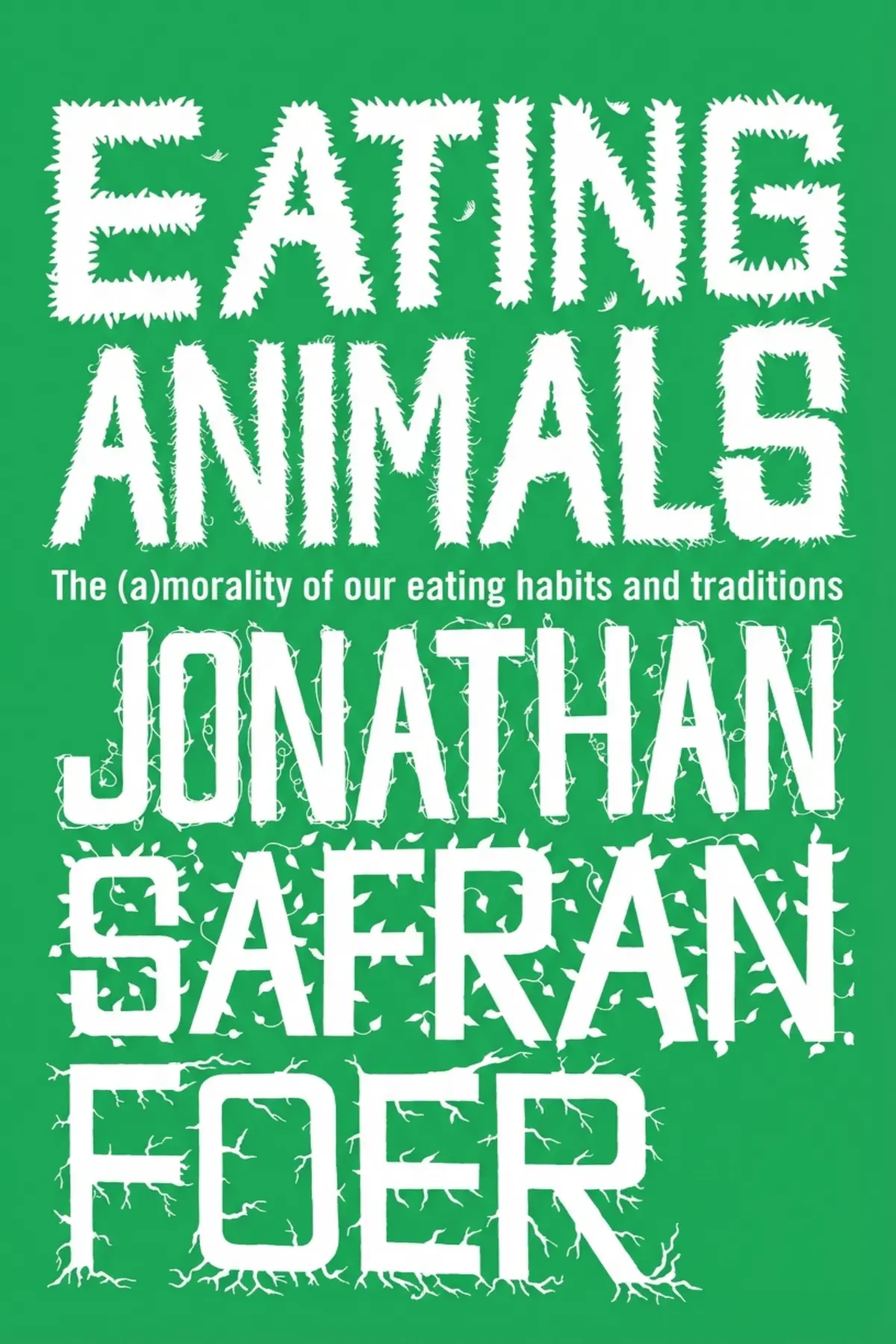
Eating Animals
Jonathan Safran Foer
 English
 ไทย
Foer explains why climate change feels unreal even to people who accept it, why industrial animal farming deserves far more attention, and why skipping animal products before dinner is one of the quickest personal responses available.
1 min 07 sec
If climate change leaves you anxious but unsure what would actually help, Jonathan Safran Foer offers a surprisingly small place to start: what you eat before dinner. In We Are the Weather, the novelist points out that agriculture, driven mostly by industrial animal farming, produces 24 percent of harmful greenhouse gas emissions. Fossil fuels produce 25 percent. Yet most climate campaigns barely mention food.
Foer’s argument runs in two parts. First, the crisis fails to move us because it is a shapeless story told to brains built for nearby danger. Second, once we stop waiting to feel the threat and reason our way to it, one of the fastest steps anyone can take is to drop meat and dairy at breakfast and lunch. On the way come a Yale study on why faceless victims get ignored, a brain scan showing we treat our future selves as strangers, and a polio trial with two million volunteers. What you gain is a clear sense of which efforts count, and a daily habit that does.
1 min 46 sec
The great social movements are remembered through a single scene and a single face. Climate change has neither, and a study from Yale found that people offer more sympathy and money when they can clearly picture a specific victim, which this crisis does not have.
1 min 43 sec
A parent will sprint across a playground to catch a falling child, yet shrug at a threat to that same child’s whole future. A brain scan from UCLA helps explain the strange difference.
1 min 46 sec
Recycling, hybrid cars and organic food feel like the responsible choices. Foer argues that a source of pollution nearly as large as fossil fuels has been left out of the conversation, partly on purpose.
1 min 47 sec
Farms bring to mind cows in a green field. Behind the modern version sit burning forests, methane, and nitrous oxide, which traps 310 times more heat than carbon dioxide. From the 1960s to the late 1990s, both surged beyond the previous 2,000 years.
1 min 47 sec
Going fully vegetarian sounds like the obvious answer, but leaving dinner open might make the habit of eating less meat easier to keep. Foer proposes a narrower rule that is easier to keep and, by one research center’s measure, does more.
1 min 41 sec
It is popular to say that individuals are powerless because corporations do most of the polluting. A walkout at Google and the race to stop polio suggest that ordinary people decide more than they think.
1 min 42 sec
Some of the harm from climate change can no longer be prevented, and that fact tempts many people to give up or dream of Mars. Foer argues it creates a stronger duty to act.
1 min 09 sec
Foer’s book is, in the end, an argument against waiting. We wait to feel alarmed, and the story is too shapeless to alarm us. We wait for our brains to grasp the future, and they treat it like a stranger. We wait for leaders and companies, forgetting that walkouts and vaccine volunteers have moved them before. Meanwhile the ice keeps melting and forests keep burning to make room for feed.
His alternative asks for less heroism than most people fear. Having no children, cycling 30 kilometers to work and never eating steak again would freeze almost anyone in place. Foer points instead to small acts that add up: two fewer flights a year, sharing a car with a neighbor, leaving the bacon and eggs out of the breakfast roll. Above all, he asks that meat and dairy wait until dinner, a rule that by the Johns Hopkins research leaves a smaller footprint than the average vegetarian’s.
You can begin tomorrow morning. One breakfast changes nothing on its own, but millions of people deciding through reason that breakfast is where their part begins could change a great deal.
Most people accept that climate change is real, yet very few change how they live. Jonathan Safran Foer argues that the problem lies partly in us. The crisis has no clear hero, villain or victim, and human brains evolved to react to danger in front of them, not to threats years away. He then turns to the information we are given. Campaigns focus almost entirely on fossil fuels, while agriculture, driven mostly by industrial animal farming, produces nearly as large a share of greenhouse gases. Factory farming burns forests for feed and grazing land and releases methane and nitrous oxide, gases that trap far more heat than carbon dioxide. Foer's proposal is practical: no meat, eggs or dairy at breakfast and lunch, with dinner left open. He cites research suggesting this beats the average vegetarian diet on carbon footprint. He pairs it with the case for grassroots pressure and government policy working together, using the polio vaccine as his model. The book ends on a moral argument: some damage can no longer be stopped, and that makes acting more urgent, not less.
People who accept climate change but feel numb, guilty or unsure which actions matter.
Meat eaters curious about cutting back without giving up their favorite dinners.
Activists and organizers weighing personal choices against corporate and government pressure.
Jonathan Safran Foer, born in 1977, is a novelist whose books include the bestsellers Everything Is Illuminated and Extremely Loud and Incredibly Close, as well as Here I Am. He has also written two nonfiction books. The first, Eating Animals, was also a bestseller and grew out of his thinking about fatherhood and about what to feed his first son. They are Eating Animals and We Are the Weather.
Jonathan Safran Foer
Listeners find the writing both skillful and eye-opening, with one noting the inclusion of deeply moving statistics. The storytelling is compelling, and one listener mentions that it explores half a century of global history. The work also emphasizes practical impact, with one review highlighting how people can take concrete steps to help the Earth. However, its accessibility earns varied responses, as some find it effortless to get through while others feel differently.
Foer has a way of making the abstract feel visceral and immediate. This book isn't just a collection of dry facts; it is a heart-wrenching look at our collective responsibility toward the future. I was particularly moved by the statistics regarding methane emissions from livestock, which are far more damaging than most people realize. The idea that we can start saving the planet at breakfast by simply avoiding animal products until dinner is incredibly empowering. It makes a massive, terrifying problem feel manageable for the average person. Frankly, the narrative style—which weaves in half a century of global history—kept me engaged from the first page to the last. This is an essential read for anyone who wants to take real action today.
Show moreThis isn't your typical dry science book about global warming, and that is exactly why it works so well. Foer focuses on the gap between 'knowing' something and actually 'believing' it enough to act. The historical context provided is brilliant, showing how humanity has made massive sacrifices in the past to survive. It’s a wake-up call that doesn't just scream at you but asks you to look in the mirror. I found the 'facts' section in the middle to be incredibly illuminating and terrifying all at once. If you feel paralyzed by the scale of the ecological crisis, please read this. It turns a global catastrophe into a series of small, daily choices we can actually control.
Show moreWow, I wasn't expecting a book about the weather to leave me so deeply moved and reflective. The way Foer connects our current crisis to the stories of our ancestors and the legacy we leave for our children is stunning. He doesn't just give you a list of things to do; he asks you what kind of person you want to be. I’ve already started the 'no meat before dinner' challenge and it feels great to finally be doing something tangible. The heart-wrenching statistics about the Amazon and factory farming are impossible to ignore once you've read them. This is a brave, poetic, and deeply necessary book for our time. Everyone should read this and then talk about it with their families.
Show moreAfter reading this, my morning routine has completely changed for the better. Foer makes a compelling argument that individual choices, especially what we put on our plates, are the most immediate tools we have. The statistics are staggering—cows would be the third-largest greenhouse gas emitter if they were a country! I appreciated his honesty about how difficult it is to be perfect, even if some critics call it hypocrisy. The book feels like a conversation with a friend who is just as worried and confused as you are. It’s a quick read, but the emotional weight of his letter to his children will stay with me for a long time. Change is hard, but this book makes it feel possible.
Show moreSafran Foer approaches the environmental crisis through the lens of human psychology rather than just policy, which I found refreshing. He understands that humans are not rational creatures who change just because we see a graph. The stories about his grandmother and the history of WWII added a necessary layer of humanity to a subject that often feels cold. Not gonna lie, some parts are a bit slow, but the overall impact is strong. It challenges the reader to stop waiting for a hero and to start being the change through something as simple as a meal. The focus on individual impact is a great starting point for those of us feeling overwhelmed by corporate greed.
Show moreTruth is, the formatting of this book makes it a remarkably quick and engaging read despite the heavy subject matter. I enjoyed the essay-style chapters and the directness of the fact-based sections. Some people might find Foer’s personal interjections annoying, but I found them quite humanizing. We are all hypocrites in some way when it comes to the environment, and he is just brave enough to put it in print. The book highlights how we’ve moved from the first flight to the moon in less than a century. It reminds us that we are capable of radical transformation when we actually commit. It's a call to action that starts in the kitchen, and I think that’s a powerful place to begin.
Show moreEver wonder why we have all the facts about the environment but still refuse to change our habits? That is the core question Foer tries to answer here. While the historical analogies, like the construction of Liberty ships during WWII, were fascinating, the book frequently goes off on strange tangents. Some of the comparisons to the Holocaust felt a bit misplaced and even tasteless to me. Look, the 'no animal products before dinner' rule is a great, practical tip that I’ve started implementing myself. However, the structure of the book is erratic, jumping from anecdotes to rants without much flow. It is a thought-provoking meditation, but it definitely needed a tighter edit to avoid being so repetitive.
Show morePicked this up because I loved Eating Animals, but this one is a bit of a mixed bag for me. On one hand, the information about how animal agriculture drives deforestation and methane levels is absolutely eye-opening. On the other hand, the prose is so repetitive that I felt like I was reading the same three points over and over again. Foer’s struggle with his own diet is honest, I suppose, but it also makes the book feel a bit unfocused and apologetic. I liked the 2/3 vegan suggestion because it's realistic for most families. Still, I wish there had been more discussion on how to organize for larger political changes. It’s an okay read, just don't expect a structured scientific analysis.
Show moreI really wanted to like this book, but it felt more like a personal diary than a coherent call to action. Jonathan Safran Foer spends so much time discussing his own internal guilt and his occasional hamburger cravings that the actual science of climate change gets pushed to the background. To be fair, the message about animal agriculture is vital, yet the writing is so meandering and repetitive that I lost interest by the halfway mark. He admits he still eats meat because he likes it, which makes his 'preaching' feel incredibly hypocritical and self-serving. Instead of focusing on systemic change or political pressure, we get 200 pages of the author wrestling with his own soul. It is far too self-indulgent for such a serious topic.
Show moreWhile the central message is undeniably vital, the execution is deeply flawed and often frustrating. Foer’s writing style in this one is just too experimental for my taste, especially the long section where he interviews his own soul. It comes across as pompous and vain rather than relatable or enlightening. He spends pages and pages on metaphors about the war and Jan Karski, which are interesting, but they don't always connect back to the climate in a meaningful way. If you’re looking for a book full of actionable science and policy ideas, this isn't it. It's mostly just JSF talking about JSF. I support his goals entirely, but the delivery here actually does the environmental movement a disservice.
Show moreJonathan Safran Foer argues that climate change fails to move people because it is a vague, distant story and human brains respond to immediate danger. He says we must act through reason instead. He identifies industrial animal farming as a major and overlooked cause of emissions, and proposes cutting animal products at breakfast and lunch as one of the fastest steps an individual can take.
He gives two reasons. Meat carries strong habit and cultural meaning, so leaving dinner open makes a lasting reduction easier to keep. And he cites a study from the Center for a Livable Future at Johns Hopkins, where researchers found that people who avoid animal products at breakfast and lunch have a lower carbon footprint than the typical vegetarian, whose diet still includes milk, cheese and eggs.
Foer reports that agriculture produces 24 percent of harmful greenhouse gas emissions, close to the 25 percent from fossil fuels, with most of it coming from industrial animal farming. Burning forests for feed and grazing accounts for 15 percent of carbon dioxide emissions, as much as all cars and trucks. Livestock also release methane and nitrous oxide, which trap far more heat than carbon dioxide.
No. Foer argues that individual and collective action from below must work alongside policy from above, such as a carbon tax and government research funding. His model is polio: President Franklin Roosevelt funded the research that let Jonas Salk develop a vaccine, and two million volunteers tested it. He also cites roughly 20,000 Google employees whose strikes changed company policy within a week.
Start by planning breakfasts and lunches without meat, eggs or dairy while keeping dinner as usual. Foer also suggests small, doable changes that add up, such as taking two fewer flights a year or sharing car journeys with a neighbor. Check whether green habits like recycling actually do much, and add your voice to collective pressure for climate policy.
Carl Safina
Mark Kurlansky
Richard A. Oppenlander
William McDonough
James Salzman
AUDIO SUMMARY AVAILABLE
Get the key ideas from We Are the Weather by Jonathan Safran Foer, plus 5,000+ more nonfiction titles.









