

13 min 31 sec
Available in: English
Uptime: A Practical Guide to Personal Productivity and Wellbeing
A practical guide to judging your days by whether they match your intentions, with tools for setting priorities, using your best hours, beating procrastination, working well from home or office and protecting rest.
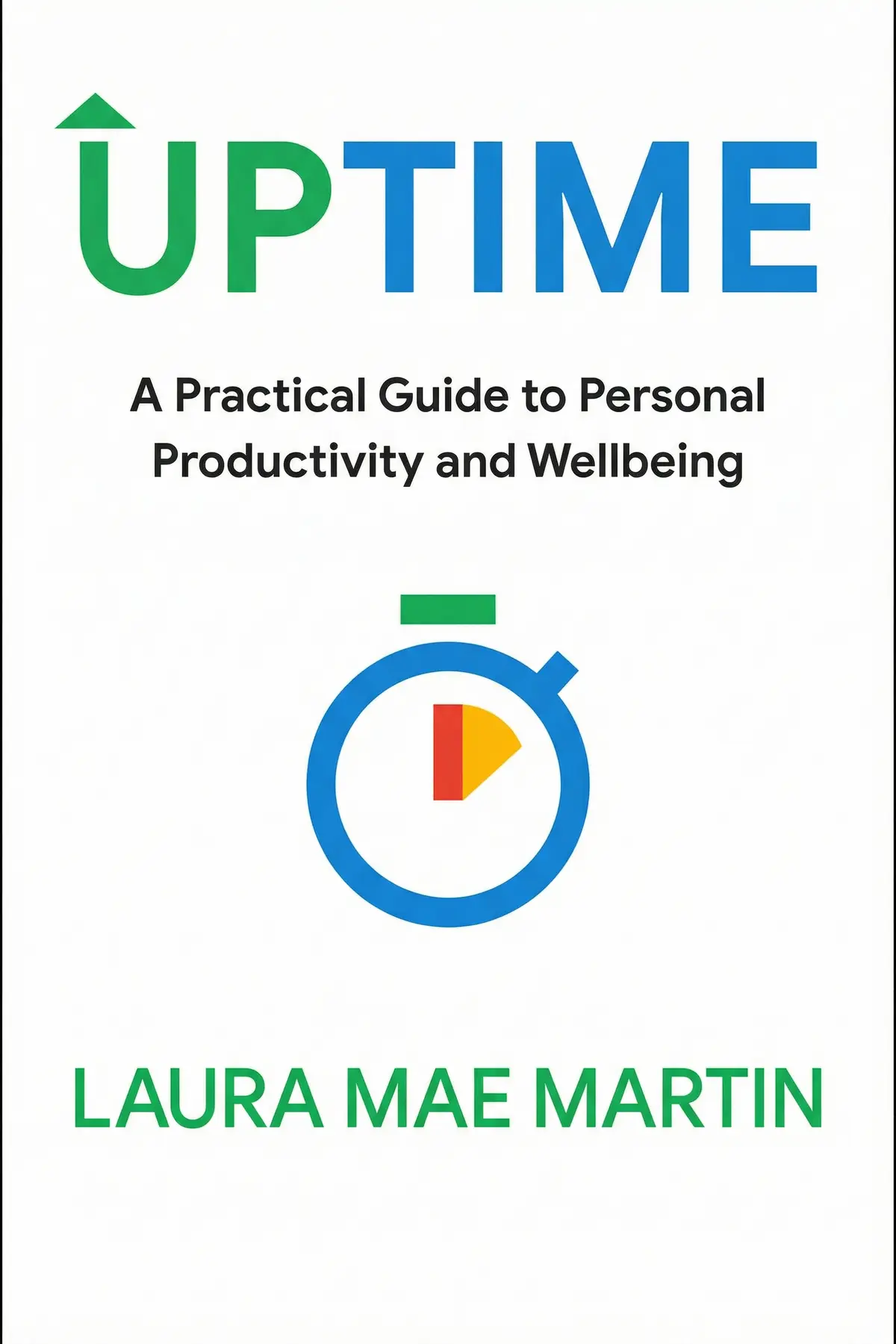
Table of Content
1. Introduction
1 min 01 sec
If your days are packed but you finish them unsure that any of it mattered, Laura Mae Martin offers a different scorecard. In Uptime, the productivity expert who has served as Google’s executive productivity advisor argues that a whole day on the couch, popcorn in hand and episodes lined up, can count as productive, as long as rest is what you set out to do. Productivity, in her view, is measured by how closely your actions match your intentions, whatever the number of boxes ticked.
She calls that state uptime: steady output and well-being that come from deliberate choices at work and at home, instead of running on autopilot. Her book is a toolkit for reaching it. It moves from deciding what deserves your effort, to when and where to do it, to the daily systems and personal routines that keep it going. By the end you will have a short list of priorities, a polite way to refuse everything else, and a schedule built around the hours when your mind works best.
2. Pick three priorities and say no to the rest
2 min 01 sec
A stranger on the street asks you one simple question about your life, and most busy people would stall before answering. Martin builds her whole system on that answer, including a graceful way to turn down work you don’t need.
3. Do your hardest work in your power hours
1 min 42 sec
The same task can go well or badly depending on nothing more than the hour you start it. Martin explains how to find your strongest stretch of the day, and why a planned break belongs right beside it.
4. Beat procrastination and start the task you keep avoiding
1 min 59 sec
Everyone has one job that sits on the list for weeks, and willpower rarely moves it. Martin’s fix starts with working out why a task stalls, then tailoring your approach with small tactics, one of them named after Swiss cheese.
5. Make home and office each work for you
1 min 55 sec
Splitting the week between a kitchen table and a shared office can leave both halves feeling wasted. Martin shows how to give each place the right kind of work, and how a simple desk lamp can protect your focus.
6. Six habits that give your workday more room
2 min 02 sec
The most productive people you know have exactly as many hours as you do. Martin’s six habits, from an early-morning rule to a laundry trick for email, show where their extra time really comes from.
7. Routines that keep a full life calm
1 min 45 sec
Plenty of people run their jobs well and still feel home life slipping out of control. Martin closes with small personal routines, including one evening a week without screens and a calm first half hour each morning.
8. Conclusion
1 min 06 sec
Martin’s book closes on the idea it opened with: productivity means aligning your actions with your intentions. A day of episodes and popcorn and a day of focused work can both be uptime, because what makes them productive is that you chose them. Everything in between is machinery for making that choice real: three priorities and a polite no, hard work placed in your power hours, a corner of the house that tells your brain what mode it is in, and evenings and mornings that give something back.
The question you ask at the end of the day changes too. It becomes whether your hours matched your intentions, however many tasks you finished.
Two moves will get you started. Write down your three priorities, and test the next request you receive against them before you say yes. Then watch your energy for a few days, find your power hours, and guard them for the work that matters most, with a planned break written into the calendar beside them. Once you can see where your best hours are going, rest stops looking like a lost day. It becomes part of how good work gets done.
About this book
What is this book about?
Many people end full days unsure that any of it mattered. Laura Mae Martin, who has served as Google's executive productivity advisor, argues that the usual scorecard is the problem. Counting finished tasks rewards busyness. She measures productivity by how closely your actions match your intentions, and she calls that state of focused work and steady well-being uptime. Her approach moves in a clear order. First comes deciding what deserves effort: three priorities, a polite way to refuse the rest, and a list funnel that narrows a master list into weekly and daily plans. Then come when and where: power hours for demanding work, a calendar rebuilt from zero, tactics for the task you keep avoiding, and ways to split work sensibly between home and office. The last part covers daily systems and personal life: boundaries, evening planning, leaner meetings, email handled like laundry, memory attachments, a weekly evening without devices and a calm first half hour each morning. Readers get small, concrete tools they can try one at a time, and a way to see rest as part of good work.
Book Information
Who it's for
Workers with full days
Office and hybrid workers whose days are full but who rarely feel they did what mattered.
Early-career and overbooked
Early-career professionals who struggle to say no and keep losing their best hours to meetings and email.
Close to burnout
Anyone close to burnout who wants rest to count as part of doing good work.
About the Author
Laura Mae Martin
Laura Mae Martin has worked at Google in a range of roles, including sales, product operations, event planning and executive coaching, and she has served as the company's executive productivity advisor. She also writes a weekly newsletter on productivity and shares practical tips on social media, which makes her a working guide to how busy professionals can get more done without wearing themselves out.
Ratings & Reviews
Ratings at a glance
What people think
Listeners find the book beneficial, with one mentioning it is packed with functional methods for completing work. This guide is simple to digest and offers a new perspective on efficiency, as one listener noted it completely changed how they handle their schedule and daily responsibilities. They value the practical advice and wellness advantages, while one review emphasizes its concentration on general health.
Top reviews
Bae
Ever wonder why you're always busy but never productive? This book answers that question by focusing on 'Power Hours' and the importance of chronological task management. I actually went back to my daily list after reading this and restructured everything to match my peak energy levels. It’s not just about doing more; it’s about doing the right stuff at the right time. The advice on blocking out even one hour a week for deep work made an immediate difference in how much control I feel over my schedule. Martin’s style is very straightforward and concentrated, which I appreciated. No fluff, just a chef’s kiss of productivity excellence that is easy to implement right away.
Show moreBam
Picked this up on a whim and was immediately struck by the practical email scripts provided for setting boundaries. The author includes specific phrasing for how to 'buy yourself time' when a request hits your inbox, which is a total game-changer. These templates alone are worth the price of the book. I’ve already started using the 'let me think about this' approach instead of reflexively saying yes to every meeting. It’s amazing how much mental space clears up when you share your thought process rather than just reacting. The advice is down-to-earth and wise, focusing on keeping your life about what actually matters to you. Truly a transformative read for anyone drowning in notifications.
Show moreIngrid
Finally got around to reading this, and it’s easily the most actionable productivity guide I’ve encountered recently. The way Martin breaks down the 'twenty-second rule' for distractions is brilliant and so easy to apply to a home office. I love that she doesn't just focus on work, but on how these habits improve your overall health and stress levels. My approach to task management has been completely transformed by her 'Power Hour' concept. I used to feel guilty for not being 'on' all the time, but now I understand how to manage my energy peaks. It’s an easy read that manages to be both professional and deeply personal. Highly recommend for any busy professional.
Show morePacharapol
The chapter on dynamic routines was exactly what I needed to hear this month. It’s a powerful reminder that we should be adjusting our tasks based on feedback and changing needs rather than sticking to a rigid, failing plan. I’ve started being much more mindful about checking up on my routines and saying, 'Hey, this isn't working anymore.' Martin’s advice on putting things more than twenty seconds away if you don't want them to interrupt you is so simple yet effective. The book hits all the main points of productivity while staying very concentrated and straightforward. It’s not a long, drawn-out academic text, which makes it much easier to actually finish and use.
Show moreFilm
In my experience, the biggest obstacle to getting things done is simply not knowing when you're going to do them. This book solves that by teaching you how to slot tasks effectively based on time estimates. I loved the section on making meetings more productive—especially the part about requiring agendas. Martin’s scripts for declining speaking requests or travel were incredibly helpful for someone like me who struggles with people-pleasing. The whole philosophy of 'Uptime' is about being intentional with your time so you can actually enjoy your 'Downtime.' It provides a refreshing take on the genre by prioritizing wellbeing just as much as output. This is a must-read for anyone looking to reclaim their schedule.
Show moreKenji
As someone who has struggled with burnout for years, I found Martin’s focus on energy management incredibly refreshing and necessary. Most productivity guides just tell you to grind harder, but 'Uptime' takes a more holistic approach that incorporates sleep and nutrition. The book is divided into logical sections that help you identify your unique style before diving into specific techniques for focus. I particularly liked the strategies for minimizing distractions and setting intentional goals. While some of the advice on saying 'no' felt a bit repetitive after the second chapter, the overall emphasis on wellbeing makes it stand out. It’s a practical guide that recognizes you are a human being, not a machine.
Show moreLandon
To be fair, the title 'Uptime' is a bit of a buzzword that doesn't feel central to every single chapter, but the content remains solid. I picked this up because of the author’s position at Google, expecting high-level tech hacks. What I got was a very grounded reminder that everything on a to-do list needs a specific time slot to actually happen. A huge part of the value here is learning to accurately estimate how long tasks take. I’ve been guilty of overstuffing my day, and this helped me realize why that fails. It’s similar to other self-help books from the last decade, yet the specific Google-tested workflows give it an extra layer of credibility that I found useful.
Show morePla
After hearing so much about Laura Mae Martin’s work, I had high expectations for 'Uptime.' The book is a guide for optimizing personal productivity, and it delivers several very clever strategies for managing attention. I particularly appreciated the section on 'maintaining' your uptime, which offers tips for keeping motivation high over the long haul. While I did find the content somewhat familiar, the way it’s packaged makes it feel more accessible than some of the drier productivity manuals out there. The real-life examples and case studies help illustrate how to apply the principles to a standard workday. It’s a good, solid read that helped me tighten up my daily routines and minimize unnecessary distractions.
Show moreIsaiah
Frankly, if you've read Dave Allen or Cal Newport, you've already read most of this book. Martin uses concepts that are nearly identical to the 'mind sweep' or 'deep work' philosophies, just rebranded for a modern audience. While the 'brain dump' terminology is catchy, it doesn't change the fact that this is largely a regurgitation of older productivity classics. To be fair, her focus on energy management is a nice addition, but it’s not enough to make the book feel truly original. I found the sections on saying 'no' particularly tedious as they stretched a single piece of advice across multiple chapters. It’s a decent primer for a total beginner, but veterans of the genre won't find much new ground here.
Show moreYongyut
Look, there is no denying that Laura Mae Martin is an expert, but this book feels heavily skewed toward the corporate elite. Throughout the chapters, there’s a recurring theme of paying money to save time, which ignores the reality of many readers. She frequently references her exclusive training sessions for top-level Google executives, adding a layer of unaddressed privilege that made it difficult to connect. While the advice on work hour boundaries is logically sound, it’s much easier to implement when you have the seniority she describes. The book assumes a level of professional autonomy that just isn't accessible to the average employee. If you aren’t a high-level manager, large portions of this guide might feel more like a glimpse into a different world than a practical manual.
Show moreQuestions about this book
What is the main idea of Uptime by Laura Mae Martin?
Martin argues that productivity should be judged by how well your actions match your intentions, not by how many tasks you finish. She calls the resulting state of focused work and well-being uptime. To reach it, she suggests choosing three priorities, doing demanding work in your power hours, arranging your workplaces for focus, running the day on simple systems, and treating planned rest as part of being productive.
What is the list funnel method in Uptime?
The list funnel narrows everything you could do into what you will do today. A main list holds every personal and work task. Each week you pick the most pressing or priority-related items for a weekly list. Each day you narrow again into a daily list with time set for each task. For a health priority, that means moving from exercise three times a week to the exact workout today.
How does Uptime suggest beating procrastination?
First, work out why a task makes you hesitate: it may be too big, too vague or just dull. Then pick a matching tactic. The Swiss cheese method breaks a big task into small first steps. Stopping partway through gives you an easy place to restart. Time estimates make a task’s size clear. Meetings or deadlines with other people add outside pressure to finish.
How can I apply Uptime to hybrid work?
Martin advises giving each place the work it suits. If you focus best at home, put long blocks of hard work on home days and lighter tasks on office days; if the office suits you, reverse it. Tell your team where you are and in what mode, agree on communication habits, and keep separate hot spots for work and not spots for rest.
Who should read Uptime?
It suits professionals whose days feel busy but scattered, hybrid workers trying to split home and office time well, and people who find it hard to refuse requests. It also fits readers worried about burnout, since Martin treats breaks, a weekly evening without devices and a calm first half hour each morning as part of a productive life.
Readers also enjoyed


AUDIO SUMMARY AVAILABLE
Listen to Uptime in 15 minutes
Get the key ideas from Uptime by Laura Mae Martin, plus 5,000+ more nonfiction titles.
- 5,000+ titles
- Listen as much as you want
- 7-day free trial
- Cancel anytime









