
14 min 13 sec
Available in: English
 ไทย
EnglishไทยUntangled: Guiding Teenage Girls Through the Seven Transitions into Adulthood
By Lisa Damour
A psychologist's map of seven normal transitions teenage girls pass through, from withdrawal and mood swings to romance and self-care, with specific words and limits parents and teachers can use at each stage.
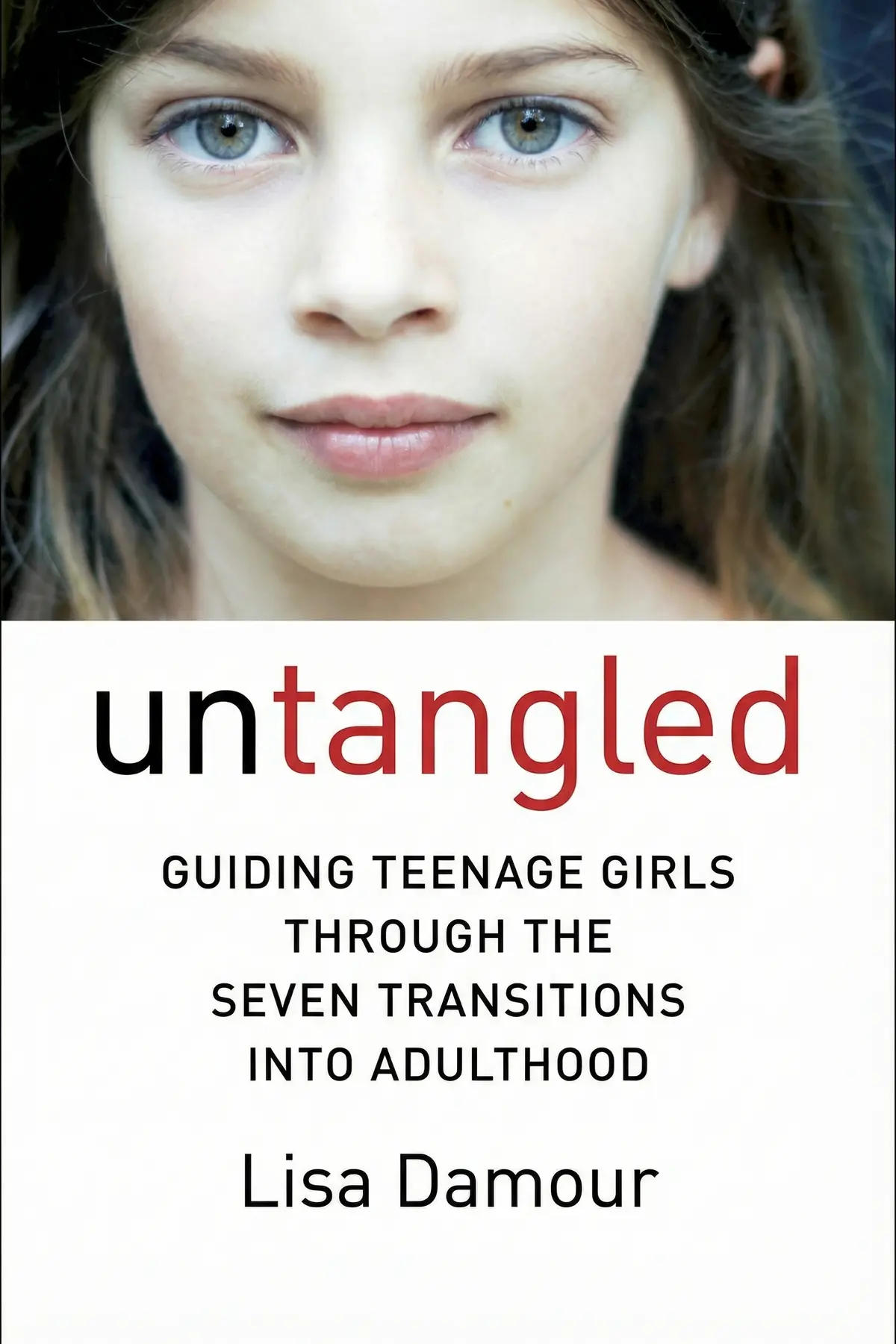
Table of Content
1. Introduction
55 sec
If your daughter has gone from chatty to closed-door almost overnight, the first thing worth knowing is that this is usually a sign of growth. In Untangled, clinical psychologist Lisa Damour argues that the slammed doors, sharp words and sudden tears of the teenage years follow a pattern: seven normal transitions every girl passes through on her way to adulthood.
Each transition looks alarming from the outside. Each one also has a job to do, from rehearsing independence to learning what her own feelings are telling her. Damour’s case is that parents and teachers help most when they recognize which stage they are watching, and then respond with steady warmth and firm limits, without panic.
What follows is a map of all seven stages, with the exact kind of words to use when she is cruel, rebellious, falling for someone or in over her head at a party.
2. Read her closed door as practice for independence
1 min 27 sec
The daughter who used to follow you around now answers with a shrug and a shut door. Damour sees something hopeful in that retreat, and a simple family ritual that keeps the bond alive through it.
3. Help her be liked and strong at once
1 min 31 sec
Some girls are kind but overlooked, others are powerful but resented. A third kind manages both popularity and kindness, and even many adults never learn her trick.
4. Be the parent she can blame at a party
1 min 33 sec
Being the relaxed, friendly parent feels generous. Damour argues it can leave a girl with no way out of a situation she wants to escape, and she explains what to offer instead.
5. Turn her mood swings into better decisions
1 min 34 sec
A calm breakfast becomes a shouting match over a pair of jeans in fifteen minutes. A study of faces shows why teenagers feel everything louder, and one question helps them use it.
6. Answer eye-rolling with fair, firm and friendly
1 min 36 sec
Black lipstick, sarcasm and pointed questions about your own habits can feel like an attack. Damour links them to a new mental skill and gives a calm script for the rude moments.
7. Protect her future without banning her phone
1 min 29 sec
One impulsive photo can follow a girl for years, and slipping grades can quietly become a pattern. Damour shows where to hold the line and which tempting shortcut parents should refuse.
8. Talk about romance before the first date
1 min 27 sec
Romantic hopes can appear years earlier than most parents expect, and the media is ready to fill the silence. Two simple questions reveal what your daughter believes a relationship should be.
9. Raise a daughter who will call when she slips
1 min 29 sec
Food, sleep and alcohol are the talks many families avoid until it is too late. Damour adds one closing sentence that makes every other piece of advice more likely to work.
10. Conclusion
1 min 12 sec
Untangled turns a confusing stretch of family life into something closer to a map. The closed door, the cruel remark, the black lipstick, the scream over a pair of jeans: each belongs to one of seven transitions, and each is doing work, teaching a girl to stand apart, belong, feel, question, face consequences, love and look after herself. Damour accepts that every girl moves at her own pace. What she asks of adults stays the same: understand what is happening, then help her make better decisions inside it.
The habits that follow are small. Keep a regular family meal even when the talk is thin. When she is angry, ask what the feeling is telling her before she acts on it. Let yourself be the strict parent she can blame when she wants to leave a party. And trade the generic question about her day for a specific one, like how her art project is coming along, because teenage girls tend to resent vague, prying questions and respond to real interest.
Beneath every stage sits one message she needs to hear: she can make a mistake and still call home.
About this book
What is this book about?
The years between childhood and adulthood can turn a cheerful girl into a stranger who hides in her room, snaps at her mother and screams over unwashed jeans. Many parents read this as a crisis. Clinical psychologist Lisa Damour reads it as development. In Untangled, she describes seven transitions every girl goes through on the way to womanhood: pulling away from her family, joining a tribe of friends, riding strong emotions, testing authority, acting out and learning consequences, discovering romance, and learning to care for herself. Each one looks alarming from the outside, and each one has a purpose. For every stage, Damour explains what is happening, sometimes down to the changes inside the teenage brain, and what adults can do about it. She offers concrete moves: keep regular family dinners, validate anger while ruling out cruelty, be the strict parent your daughter can blame at a party, answer rudeness with fair, firm and friendly questions, and talk about relationships before the first date. Readers get a calmer way to see the teenage years and practical words for the hardest moments.
Book Information
Who it's for
Parents of adolescent girls
Parents of girls around ten to eighteen who feel shut out, snapped at or worried by sudden changes.
Educators, coaches and mentors
Teachers, coaches and mentors who want calm, specific words for teen conflict, rebellion and peer pressure.
Wondering what's normal
Adults who want to understand what normal teenage development looks like before deciding something is wrong.
About the Author
Lisa Damour
Lisa Damour, PhD, is an American clinical psychologist who focuses on adolescent development and mental health. She contributes to the New York Times and CBS News, appears regularly on CBS Mornings and hosts the Ask Lisa podcast. A three-time New York Times bestselling author, she also wrote Under Pressure and The Emotional Lives of Teenagers. She has worked with UNICEF and consulted for Pixar on the film Inside Out 2.

Ratings & Reviews
Ratings at a glance
What people think
Listeners consider this work exceptionally easy to read and educational, packed with useful suggestions and actionable guidance rooted in research. Parents of girls in their pre-teen and teenage years find it especially valuable for its lucid descriptions of emotional growth, which aid in decoding their daughters' behaviors and choices. The prose is widely praised, with one listener highlighting the author’s background as a professional adolescent psychologist; ultimately, the book offers a sense of comfort that helps parents feel less overwhelmed and "less insane."
Top reviews
Kiattisak
This book is a total lifesaver for anyone currently white-knuckling it through the middle school years. Lisa Damour lays out seven distinct transition phases that help you understand why your once-sweet daughter is suddenly acting like a stranger. Personally, the most eye-opening part was the section on 'externalization,' where the author explains how girls dump their emotional trash on their parents just so they can feel better themselves. It’s a relief to know that when she’s being wretched to me, it’s actually a sign she feels safe enough to unload her stress. The tone is incredibly soothing and practical without being condescending to the parent or the child. I found myself highlighting entire pages of advice on how to handle social media drama and school pressure. If you feel like your relationship with your teen is becoming a tangled mess, this is the manual you didn't know you needed.
Show moreNaomi
As someone who is terrified of the upcoming teenage years, I found this book to be an essential anchor. It’s not just another dry academic text; instead, it feels like sitting down for coffee with a very wise, very calm friend who happens to be an expert in adolescent development. The seven phases—from parting with childhood to entering the romantic world—gave me a way to categorize behaviors that used to just look like chaos. I loved the concept of talking to a girl’s 'mature side' instead of just lecturing her, which only leads to more power struggles. Frankly, it’s a bit of a reality check regarding how much the internet has changed the landscape for our kids today. It made me realize I need to calm down and stop trying to fix every single problem my daughter encounters. Highly recommended for any parent who wants to maintain a connection while their daughter seeks autonomy.
Show moreSumalee
Ever wonder why your child suddenly views you as the enemy even when you’re just trying to help? This book explains that phenomenon with such clarity that I felt like Dr. Damour had been eavesdropping on our dinner conversations. The focus on communication is brilliant, particularly the advice to ask, 'Do you want my help or do you just need to vent?' That one simple question has already saved us from three potential arguments this week alone! I also appreciated the discussion on 'growth mindset' and how to praise effort rather than just results. The book is realistic about the dangers of the modern world, including social media and peer pressure, but it doesn't lean into fear-mongering. Instead, it empowers parents to set firm boundaries while remaining an emotional safe harbor. It’s easily the most informative parenting book I’ve read in a decade.
Show moreWoramet
Wow. I finally feel like I have a manual for the 'teenager' language that I clearly didn't speak until now. Damour breaks down the transition from childhood to adulthood into manageable chunks that make the transition feel less like a catastrophe and more like a natural, if bumpy, progression. I’ve been struggling with power struggles over homework and screen time, but the advice here to avoid battles where the teen holds all the power was a total lightbulb moment for me. The 'Shame vs. Repair' section is also vital; it taught me how to address bad judgment without making my daughter feel like she’s a bad person. It’s a very collaborative approach that values the daughter's growing maturity. Every mother of a daughter needs a copy of this on her shelf, period. It’s the only book that’s actually made me feel like I can do this.
Show moreCholada
I've been parenting for over twenty-seven years, and yet I still found myself reaching for this book like a life raft in a storm. Even with multiple kids, every child is different, and the world our daughters are growing up in now is vastly different from the one I navigated with my oldest. The constant notifications and photoshopped images create a level of stress that is hard to fathom. This book does an excellent job of shining a light on those modern challenges while providing timeless psychological wisdom. The anecdotes from the Laurel School’s Center for Research on Girls were particularly relatable and helped ground the advice in real-world situations. It’s a mix of comforting and sobering, reminding us that while the teen years are vexing, they are also a beautiful time of growth. I’ve already recommended this to three other moms in my neighborhood.
Show moreMaya
After hearing so many people rave about this, I finally sat down and read it cover to cover. It is absolutely an excellent resource. Dr. Damour’s perspective as an adolescent psychologist is exactly what I needed to stop taking my daughter's mood swings so personally. She explains that these 'tempestuous' behaviors are actually signs of a healthy, developing brain. The advice on how to handle schoolwork by moving out of the role of 'homework supervisor' was terrifying but necessary to hear. I also found the discussion about porn and the 'altered romantic landscape' for today's teens to be incredibly important, if a bit scary. This book is informative, practical, and filled with the kind of insights that make you say, 'Oh, that’s why she does that!' It’s a must-read if you want to stay sane while raising a young woman.
Show moreZoe
Picked this up after my twelve-year-old daughter slammed her bedroom door for the third time in one hour. Truth is, I was looking for a magic wand, and while this isn't that, it is a very solid roadmap for navigating the adolescent minefield. Damour is a practicing psychologist, and it shows in her realistic anecdotes that feel like they were pulled directly from my own living room. I particularly appreciated the distinction between 'normal' teenage sass and actual red flags that require intervention. My only minor gripe is that some of the advice felt a bit common-sense if you've already read a lot of parenting blogs, but having it all in one cohesive framework is still valuable. The chapter on 'Caring For Herself' toward the end was easily the most useful part of the entire book for me. I’m definitely keeping this on my nightstand for the next few years.
Show moreGabriel
The chapter on 'Joining a New Tribe' was exactly what I needed to read right now. My daughter has been pulling away from us and gravitating toward her friends, and I was taking it so personally until I read this. Look, parenting today is rough with the constant hum of the internet and the pressure to be perfect, and this book actually acknowledges that. Damour’s writing is clear-eyed and calm, which helped lower my own heart rate significantly. I did think some of the scenarios felt a little 'best-case-scenario' in terms of how teens would actually respond to her suggested scripts. Real teens are often much saltier than the girls in her examples! However, the underlying logic is sound and the psychological insights are top-notch. It’s a great guide for anyone trying to understand the paradox of kids having less freedom but more autonomy than we ever did.
Show morePong
Honestly, the most valuable part of this book wasn't just the advice for my daughter, but the way it helped me manage my own anxiety. I realized I was hovering far too much and trying to solve problems that she actually needed to solve herself to grow. The author is very fair to both parents and girls, never taking sides but instead showing how the relationship can evolve. I loved the section on 'tears' and how they provide emotional relief; it changed how I react when she gets upset. To be fair, some of the sections on risky behavior felt a little bit brief, and I would have liked more depth on handling extreme defiance. Still, for a general guide to the adolescent years, it’s remarkably comprehensive and easy to read. It definitely helped me untangle some of the knots in our communication.
Show moreThawee
Not what I expected given all the massive hype on my Facebook groups. To be fair, the information is solid and the writing style is very approachable for a busy parent, but I didn't feel like I learned much that was truly groundbreaking. I’m the mom of two girls, 14 and 16, so I’m already deep in the trenches, and a lot of these 'phases' were things we'd already figured out through painful trial and error. The chapter on 'Harnessing Emotions' was good, but I felt it dragged on a bit too long in places. Also, as a teenager mentioned in a different review, some of the phone-checking advice feels a little intrusive and might actually damage the trust you're trying to build. It’s a decent resource for parents of younger girls, but if you’re already several years into the teen journey, you might find it a bit repetitive.
Show moreQuestions about this book
What is the main idea of Untangled by Lisa Damour?
Damour argues that teenage girls pass through seven normal transitions on the way to adulthood: withdrawing from family, joining a tribe of friends, riding strong emotions, testing authority, acting out and learning consequences, discovering romance, and learning to care for themselves. Behavior that looks alarming is usually development. Adults help most by understanding each stage and guiding girls toward better decisions.
Why does my teenage daughter spend all her time in her room?
According to Damour, withdrawal around age eleven is the first transition. Your daughter consciously wants privacy, and at a deeper level she is preparing for adult independence, much like training wheels before riding alone. Damour suggests keeping regular family time such as shared dinners, which studies she cites link to better mental health and grades, even when the teen claims to dislike her parents.
How should parents respond when a teenage girl is rude or rebellious?
Damour links rebellion to new abstract thinking, which lets teens spot contradictions in adult rules. Most rebellion stays symbolic, like sarcasm or unusual clothes. When she is rude, say you dislike her tone but want to hear her complaint, and ask her to explain exactly what is wrong. Avoid shaming her and follow the three Fs: fair, firm and friendly.
Should parents of teenagers try to be cool and relaxed about rules?
Damour warns against it. A parent who acts like a friend loses respect and takes away a useful excuse. If friends know you tolerate occasional drinking or pot, your daughter cannot use the threat of punishment to leave a party she feels unsafe at. Being willing to play the bad guy gives her a way out without losing face.
How can I apply Untangled with my daughter this week?
Start a regular family meal. When she is upset, validate the feeling and ask what it is telling her before she reacts. Replace a vague question like how was your day with a specific one about her life, such as a project she is working on. And tell her plainly that everyone makes mistakes and she can always come to you for help.
Featured in

Readers also enjoyed






AUDIO SUMMARY AVAILABLE
Listen to Untangled in 15 minutes
Get the key ideas from Untangled by Lisa Damour, plus 5,000+ more nonfiction titles.
- 5,000+ titles
- Listen as much as you want
- 7-day free trial
- Cancel anytime









