

13 min 20 sec
Available in: English
The Emotional Lives of Teenagers: Raising Connected, Capable, and Compassionate Adolescents
By Lisa Damour
A practical guide for parents who find their teen's moods baffling. It explains why adolescent feelings run so hot and shows how to help a teen express hard emotions, calm them and grow stronger through them.

Table of Content
1. Introduction
59 sec
If living with a teenager feels like a cycle of slammed doors, one-word answers and the same curfew fight every weekend, the problem may lie partly in the story you tell yourself about their feelings. In The Emotional Lives of Teenagers, clinical psychologist Lisa Damour argues that strong emotion is rarely a sign that something is broken. Feelings carry useful information, painful ones help young people grow, and a teen who falls apart at home is often a teen who feels safe there.
That is the case this book makes: teenage emotions are a skill to build, and parents can teach it by helping their teen both voice feelings and calm them down. Damour explains the brain rebuilding behind the mood swings, why you suddenly embarrass your child, and how to listen like a newspaper editor. Her tools are small enough to try at dinner tonight, and the goal is a closer relationship as well as a calmer house.
2. Treat your teen's feelings as useful information
1 min 49 sec
Many parents assume a teenager’s emotions get in the way of good choices. Damour thinks that belief backfires, and she explains why even a sensible teen can act recklessly once friends are watching.
3. Let painful feelings do their growing work
1 min 52 sec
The instinct to rescue a hurting teen is strong and loving. Damour argues it can also take something important away, and she redefines what good mental health actually looks like.
4. Understand your teen's embarrassment and stay close through it
1 min 57 sec
Your jokes, your haircut and even the hobbies you share now seem to cause your child real pain. Two processes explain it, and one simple rule can make the outbursts easier to live with.
5. Turn the curfew fight into a productive argument
1 min 41 sec
Having the same argument every weekend feels like failure. Damour reads it as a sign that both sides are doing their jobs, and she points to a new mental ability that can make those fights fairer.
6. Get a quiet teen talking and really listen
2 min 01 sec
Asking a sullen teenager what is wrong usually ends the conversation. Damour explains where teens tend to open up, and why the way you respond matters more than the questions you ask.
7. Calm overwhelming feelings with sleep, distraction and realism
1 min 54 sec
Some emotions grow so large that talking about them no longer helps. Damour offers three ways to turn the volume down, including one where a well-meaning parent’s first impulse may point the wrong way.
8. Conclusion
1 min 07 sec
What Damour offers parents is a new role. The teenager who slams a door, sobs over a small setback or argues about curfew for the fifth weekend in a row is not malfunctioning. They are building an adult brain and an adult self, and learning how to feel strongly without being ruled by it. The parent’s task is to coach that skill.
That coaching can start small. Plan for risky moments while your teen is calm, and ask what they will do when the mood around them turns. When they are hurting, let the feeling stay instead of rushing to cheer them up. When they talk, often from the passenger seat, write the headline back to them and help them find a more exact word than upset. And when emotions overwhelm, check the basics first: enough sleep, a healthy distraction, and an honest view of what is likely to come next.
The tears at your kitchen table are a sign of trust. Damour’s advice is about answering that trust well, so the teen who leaves home knows how to carry big feelings and still wants to come back and talk.
About this book
What is this book about?
Slammed doors, one-word answers and the same curfew argument every weekend can leave parents tired and unsure whether something is wrong. Clinical psychologist Lisa Damour argues that much of the strain comes from three common beliefs: that emotion is the enemy of good judgment, that painful feelings should be avoided, and that intense teens are unstable. She replaces each one with a calmer and more useful view. Damour explains what is happening underneath the moods: a brain being rebuilt at high speed, a teen pulling their identity apart from their parents', and a healthy push against authority. She treats emotional regulation as a skill with two halves, expressing feelings and reining them in, and gives parents concrete ways to support both. Readers get tools they can try the same evening: planning for risky moments while a teen is calm, offering three options during an outburst, talking side by side in the car, listening like an editor writing a headline, protecting sleep and swapping false cheer for honest realism. The goal is a teen who handles strong feelings well and a parent who stays close throughout.
Book Information
Who it's for
Exhausted parents of teens
Parents of teenagers worn down by mood swings, silence and repeated arguments.
Parents of preteens
Parents of children nearing adolescence who want to understand what is coming.
Professionals who support teens
Teachers, coaches and counselors who support teens through emotional ups and downs.
About the Author
Lisa Damour
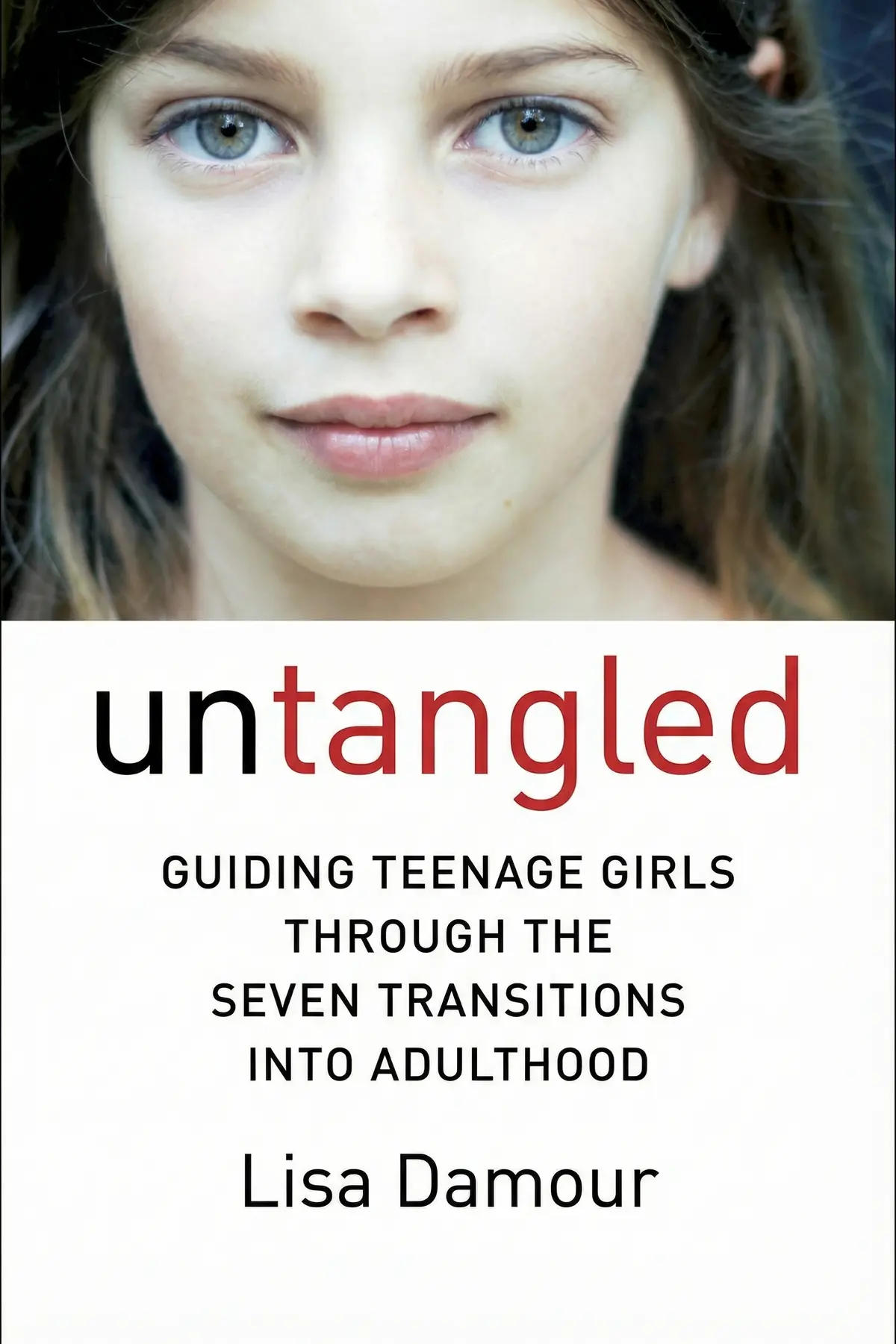
Lisa Damour, PhD, is an American clinical psychologist who specializes in adolescent development and mental health. She writes for the New York Times, contributes to CBS News, appears regularly on CBS Mornings and hosts the Ask Lisa podcast. Three of her books have been New York Times best sellers: Untangled, Under Pressure and The Emotional Lives of Teenagers. She has also worked with UNICEF and advised Pixar on the film Inside Out 2.
Ratings & Reviews
Ratings at a glance

What people think
Listeners find the material articulately written and easy to follow, delivering actionable guidance and a research-backed perspective on the inner workings of teen minds. They praise its clarity and consider it essential, with one listener highlighting that it serves as a required lecture for parents of children and adolescents.
Top reviews
Wararat
As a middle school counselor, I find myself constantly looking for resources that bridge the gap between clinical theory and actual kitchen-table reality. Damour hits the nail on the head here by redefining mental health not as a lack of distress, but as the ability to have appropriate reactions and manage them effectively. Her distinction between 'hot' and 'cold' reasoning is a total game-changer for parents who wonder why their normally logical child suddenly makes impulsive choices in social settings. The writing is accessible, though some might find the scripts a bit formal for their specific household dynamic. Truth is, even if you don't use her exact words, the underlying philosophy of empathy and validation is what matters most. It’s a scientifically-grounded guide that feels like a warm cup of tea for an exhausted parent’s soul.
Show moreTaweesak
Picked this up after a particularly rough Tuesday involving slammed doors and a lot of silence. What I love about Damour’s approach is that she doesn't tell you how to stop the emotions; she tells you how to sit with them. The advice about 'managing, not banishing' discomfort really shifted my perspective on my daughter’s anxiety. I will say, it does feel quite similar to her previous books, and at times it feels like she’s just swapping out 'girl' for 'boy' without fully diving into the unique pressures teen boys face today. However, the practical scripts—especially the one about asking if they want help or just want to vent—are absolute gold. This isn't just theory; it’s a manual for staying connected when your kid is trying their hardest to push you away.
Show moreHugo
Finally, a roadmap that doesn't treat my teen like a problem to be solved but rather a human undergoing a massive, necessary biological rewiring. The chapter on the 'massive rewiring' of the teen brain helped me understand why my son’s logic vanishes the moment his friends enter the room. Damour explains the science behind the prefrontal cortex versus the limbic system in a way that actually makes sense for non-scientists. I particularly appreciated the section on why kids become so chatty late at night when we’re exhausted; it helped me stop viewing it as an annoyance and start seeing it as a vital window of connection. Not gonna lie, I cried a little reading the section on how we should cherish these late-night meetings because the end of high school arrives so quickly. This is essential reading for anyone raising kids in the digital age.
Show moreNong
Wow, this was exactly the perspective shift I needed as the mother of three. Dr. Damour has this incredible way of making you feel less alone in the chaos of raising adolescents. One of my favorite takeaways was the idea that being 'useful' is a reliable path to self-esteem—it’s so simple but we often forget it in our rush to over-schedule our kids with 'success' instead of service. The advice on effective apologies was also eye-opening; it’s a skill I realized I need to model better myself. The book is well-written, compassionate, and deeply rooted in clinical experience. It offers a sense of calm for parents who feel like they are drowning in their child's intense mood swings. Highly recommend this for any parent group or book club looking for scientifically-backed strategies.
Show morePia
Ever wonder why your kid seems to lose their mind only when they're around friends but can be perfectly rational during a quiet dinner? The explanation of 'hot' versus 'cold' reasoning in this book was worth the price of admission alone. It helped me realize that my daughter isn't 'crazy'—her brain is just functioning exactly as a teen brain is designed to function. I’ve already started using the 'I’m going to describe the situation from your perspective' technique, and the results were immediate. My teen actually stopped arguing and listened because she felt heard for the first time in weeks. It’s a scientifically-grounded guide that manages to be both intellectual and incredibly heart-centered. Every parent of a pre-teen needs to get their hands on this before the storm hits.
Show moreNiramai
Gotta say, I was skeptical about another parenting book, but Damour won me over with her pragmatic approach to technology. Instead of just demonizing phones, she encourages us to learn what our teens actually enjoy about being online. That shift in perspective helped me have a real conversation with my son about social media without it devolving into a lecture. I did find the pacing a bit slow in the middle chapters, and some of the gender-related content felt like it was trying a bit too hard to be 'fashionably PC.' However, the overall message of helping kids manage discomfort rather than avoiding it is vital. It’s a solid resource that provides a sense of clarity when you’re dealing with the emotional upheavals of the teenage years. Definitely worth a spot on the bookshelf for the long haul.
Show moreWanphen
I’ve been highlighting almost every page of this since I started it last week. The section on how 'externalization' is actually a form of communication was a massive 'aha' moment for me. It turns out that when my teen makes me feel what they are feeling, they are actually trying to tell me something they can't put into words yet. Damour’s advice is compassionate and practical, providing actual scripts that feel usable in the heat of the moment. I especially loved the quote about how it’s 'hard to be sad and useful at the same time'—it’s such a poignant reminder of what our kids really need. This book provides a much-needed roadmap through the intensity of adolescence, making the journey feel a little less treacherous for both parent and child. Truly a must-read.
Show morePing
While I appreciated the scientific grounding regarding adolescent brain development, this book felt a bit like a repeat of her earlier work. If you’ve read Untangled or Under Pressure, you might find yourself skimming through sections that feel nearly identical to her previous advice. I found her suggestions for boys to be a bit underwhelming and occasionally a little too focused on socialization rather than biological differences. Frankly, some of the dialogue she suggests feels a bit too 'therapy-speak' for my house; my son would roll his eyes into the back of his head if I asked him to 'describe the situation from his perspective' in that specific way. There are definitely some 'nuggets' here worth saving, particularly the section on the importance of teenagers being useful to others to build self-esteem. It's a solid four-star read: helpful if it's your first Damour book, but perhaps skippable if it isn't.
Show moreFang
The chapter on gender and emotion was a bit polarizing for me, but the rest of the book is undeniably practical. Damour’s central thesis—that mental health is about 'right feelings at the right time'—is a breath of fresh air in a culture that seems obsessed with constant happiness. I found the section on risky behavior particularly useful; focusing on safety rather than morality seems much more likely to actually resonate with a skeptical teenager. My only real gripe is that the book can feel a bit 'WASP-y' in its communication style, as if every conflict can be resolved with a calm, well-worded question. In reality, parenting is often much messier than these scripts suggest. Still, having a framework to fall back on during a crisis is incredibly helpful, and her focus on empathy is a great reminder for all of us.
Show moreOrathai
To be fair, the writing is accessible and Damour clearly has a lot of experience, but I found this deeply frustrating. It felt like she took her previous books about girls and just sprinkled in a few references to boys to broaden her market reach. My biggest issue is the 'fuzzy teddy bear' style of parenting she advocates for, which feels completely ineffective for kids who are being genuinely disrespectful or abusive. Shutting down the WiFi or taking the car keys is sometimes the only language a teenager understands, yet she seems to think every situation can be handled with a soft-voiced inquiry about their feelings. There’s also a noticeable lack of mention regarding Cognitive Behavioral Therapy (CBT), which has actual proven outcomes for the issues she describes. If you're looking for a book that affirms your 'gentle parenting' instincts, you'll love it, but for those of us dealing with real defiance, it’s mostly wishy-washy fluff.
Show moreQuestions about this book
What is the main idea of The Emotional Lives of Teenagers?
Lisa Damour argues that strong teenage emotions are normal and useful. Feelings carry information, painful ones help teens grow, and intense moods at home often mean a teen feels safe. Parents help most by supporting emotional regulation, which she splits into two halves: expressing feelings in healthy ways and calming them when they become overwhelming.
Why does my teenager find me so embarrassing?
Damour links it to separation-individuation, the process of building an identity apart from the parents. Anything about you that doesn’t fit the teen’s new self becomes painful, and so does anything you share with them, such as a love of sports. She says this phase passes, and suggests giving your teen three options during outbursts: be friendly, explain calmly what is wrong, or take some space.
How can I get my teenager to talk to me?
Damour advises letting the teen lead and skipping direct questions about what is wrong. Many teens open up while walking, riding in the car or texting. When they talk, avoid fixing the problem or telling your own story. Instead, act like an editor and sum up their message in a headline, then help them name the feeling more precisely.
How much sleep do teenagers need according to Lisa Damour?
Damour says teenagers still need eight to ten hours of sleep a night, because their brains and bodies are developing. Too little sleep makes unpleasant emotions feel sharper. She recommends turning screens off at least an hour before bed, encouraging exercise to improve sleep, and cutting or moving commitments that keep a teen from getting enough rest.
Who should read The Emotional Lives of Teenagers?
It suits parents of teenagers dealing with mood swings, silence or constant power struggles, and parents of younger children who want to prepare. Its tools are simple to try, from planning for risky situations while a teen is calm to replacing false reassurance with honest realism when a teen is anxious about a big change.
Featured in

Readers also enjoyed





Alcoholics Anonymous
Alcoholics Anonymous World Services

A Liberated Mind: How to Pivot Toward What Matters
Steven C. Hayes



AUDIO SUMMARY AVAILABLE
Listen to The Emotional Lives of Teenagers in 15 minutes
Get the key ideas from The Emotional Lives of Teenagers by Lisa Damour, plus 5,000+ more nonfiction titles.
- 5,000+ titles
- Listen as much as you want
- 7-day free trial
- Cancel anytime









