

15 min 12 sec
Available in: English
Unfair: The New Science of Criminal Justice
Shows how hidden mental shortcuts distort every stage of American criminal justice, from snap labels and false confessions to tired judges and vengeful sentencing. It also explains what a system built on scientific evidence could do instead.
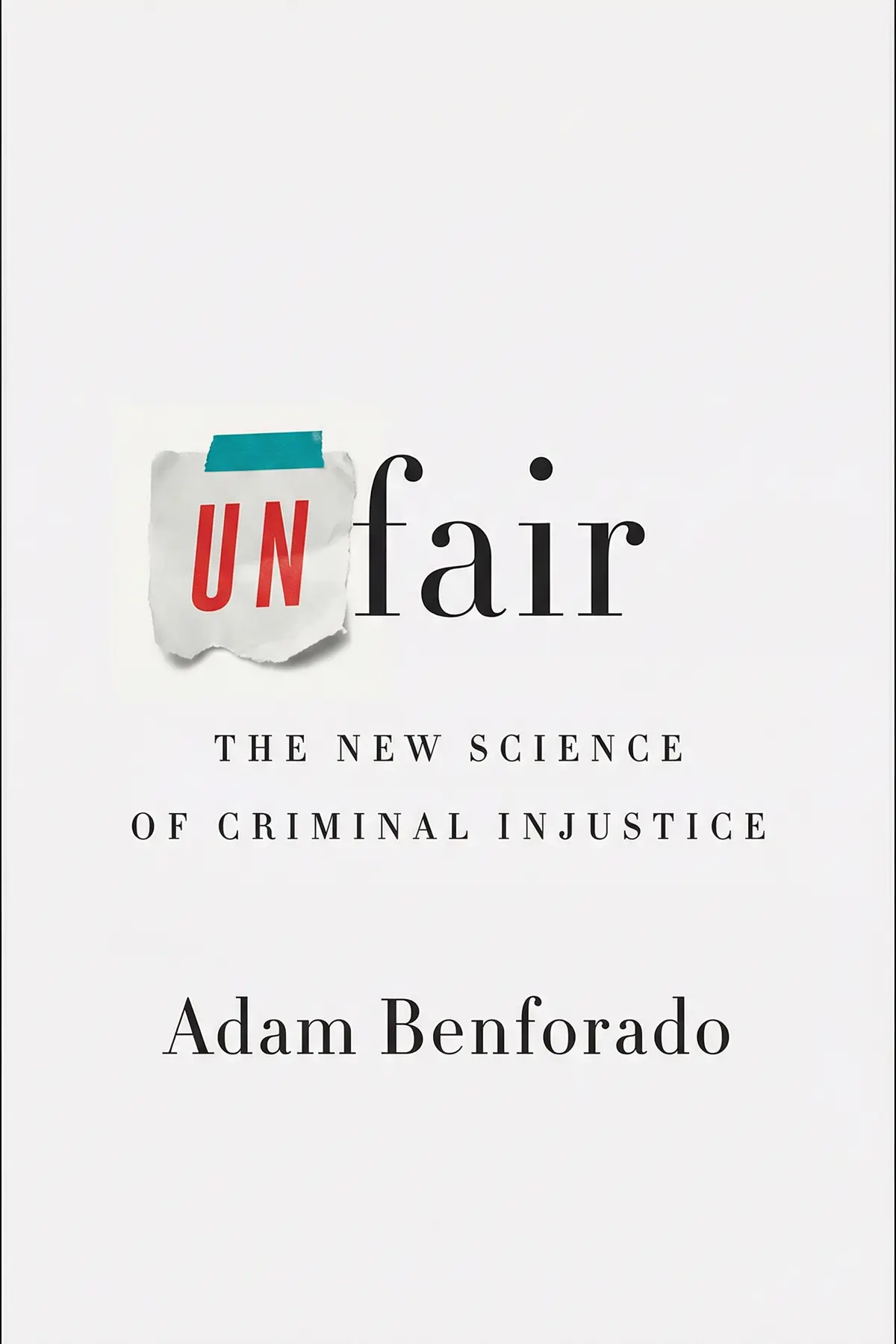
Table of Content
1. Introduction
1 min 03 sec
Most of us assume a courtroom is where careful people weigh the facts and reach a fair verdict. In Unfair, lawyer and law professor Adam Benforado argues that everyone in the system, from suspect to judge, runs on a brain full of hidden shortcuts. He starts with a Virginia schoolteacher, 40 and happily married, who in 2000 developed sexual urges that led him to collect child pornography and try to molest his stepdaughter. A scan for severe headaches found a large brain tumor. Once it was removed, the urges vanished. So who committed the crime, the man or the tumor?
Benforado’s case is that American justice assumes people see, remember and judge objectively, and that psychology and neuroscience show they do not. Fairness will come from redesigning the system around that evidence. Along the way you learn why a vomit stain cost a reporter his life, why parole can hinge on a judge’s last meal, and one wording change that makes people more lenient.
2. Catch the snap label before it costs a life
1 min 34 sec
Rescuers, police and hospital staff all looked at the same injured man and saw the same thing. Each of them was wrong, and the reason lies in how two parts of the mind divide their work.
3. See the brain and the room behind a crime
1 min 34 sec
Most people are sure they could never do serious harm to a stranger. A damaged brain region, or a calm voice telling you to continue, can make that certainty look fragile.
4. Learn how innocent people come to confess
1 min 33 sec
An Illinois man’s DNA did not match the evidence and he had an alibi, yet he admitted to a murder. What happens in interrogation rooms explains it, and so does a strange study about Fidel Castro.
5. Treat confident witnesses and lie detectors with caution
1 min 50 sec
A woman who saw her attacker face to face for a long time still chose the wrong man. Fear, time and a misplaced faith in experts all distort what courts treat as solid evidence.
6. Spot the excuse that lets good people cut corners
1 min 16 sec
Most students who admit lying and stealing still describe themselves as ethical. A prosecutor who hid evidence used the very same mental move, and it took him nine years to face it.
7. Spot how a judge's lunch break sways rulings
1 min 46 sec
The Supreme Court decided one video could mean only one thing. Ordinary Americans disagreed, and Israeli parole records reveal something even more uncomfortable about the people we trust to be neutral.
8. Tell revenge apart from punishment that works
1 min 44 sec
Locals once sedated a shark before killing it, purely because of who its victim had been. That odd kindness exposes the motive driving harsh sentences, and the prison numbers show what it costs.
9. Design decisions that resist your own bias
1 min 48 sec
Asking jurors whether they are biased may make them more biased. Benforado looks to baseball, cameras and a single change of wording for ways to make judgments fairer without relying on good intentions.
10. Conclusion
1 min 04 sec
Benforado’s tour of the courts turns up few villains. The passersby on the curb, the detectives, the frightened witness, the judge worn down by the end of the day: each was an ordinary mind doing what minds do. That is unsettling, and also hopeful, because predictable errors can be planned for.
You do not need a courtroom to use this. When a label about someone forms fast, look for what you have not seen. When you hear yourself say a shortcut harms no one, slow down. Save heavy decisions for when you are fresh. And when you want someone to weigh a risk calmly, state it as a percentage, the way the clinicians who read 20 percent were half as likely to keep Mr. Jones confined.
The schoolteacher’s tumor raised the question of who really commits a crime. Benforado’s answer reaches further: since all of us carry hidden bias, fairness cannot rest on anyone’s good intentions and has to be built into the system itself.
About this book
What is this book about?
We like to believe courts are places where careful people weigh facts and reach fair verdicts. Adam Benforado, a lawyer and law professor, argues that this belief is the problem. Suspects, witnesses, detectives, prosecutors, jurors and judges all think with brains that jump to conclusions, misremember, excuse themselves and crave revenge, and the US justice system is built as if none of that were true. Benforado draws on psychology and neuroscience to follow the system step by step. A reporter dies because rescuers mistake him for a drunk. An Illinois man confesses to a murder his DNA does not match. A woman confidently identifies the wrong man, who then spends 30 years in prison. Israeli parole judges grant release far more often after a food break. Locals sedate a shark before killing it because its victim was a pedophile. Readers get a clear picture of where human judgment fails and why, plus Benforado's case for reform: admit bias instead of denying it, rely less on human faculties, use cameras and data, and replace vengeance with rehabilitation. Along the way come habits anyone can use, from questioning quick labels to stating risks as percentages.
Book Information
Who it's for
Believers in impartial courts
Readers who trust courts to be objective and want to see where human judgment fails.
Recruiters and team managers
Managers, recruiters and team leads who judge people quickly and want to catch their own bias.
Law, psychology, policy students
Students of law, psychology or policy curious about the science behind criminal justice reform.
About the Author
Adam Benforado
Adam Benforado is a lawyer, writer and professor at Drexel University. He studied at Yale College and Harvard Law School, clerked for a federal appeals judge and worked as an attorney at Jenner and Block. His essays and opinion pieces have appeared in The New York Times, the Washington Post and Boston Review. Unfair, his first book, became a New York Times bestseller and a number one bestseller on Audible. His second book, A Minor Revolution, was due from Crown in February 2023.
Ratings & Reviews
Ratings at a glance

What people think
Listeners find the material engrossing and expertly crafted, noting its deep investigation and sharp analysis of the legal process. They appreciate the intellectually stimulating approach, with one listener highlighting the vivid inclusion of psychological principles and another calling attention to the specific remedies proposed for reform. However, reactions are varied concerning the work's trustworthiness, and listeners share a deep sense of unease regarding the systemic biases found within the courts.
Top reviews
Kenji
Wow. This book completely shattered my faith in the "objectivity" of our legal system. Benforado uses psychological research to show how easily our brains are tricked into unfair judgments, specifically highlighting how things like a suspect's facial features or even the camera angle of a confession can sway a jury. The story about the man whose criminal behavior was linked to a brain tumor was particularly haunting and made me rethink everything I thought I knew about "free will" and culpability. It’s a dense read but the conversational tone keeps it from feeling like a dry textbook. Every citizen should read this before they get called for jury duty.
Show moreSau
Ever wonder why our courtrooms still function like they did in the Middle Ages? This book explores the psychological shortcuts—like "narrow bracketing"—that lead to devastating results for innocent people. Not gonna lie, the section on false confessions was a tough read because it proves how easily an interrogation can break a perfectly healthy mind. I loved the big-picture thinking here, especially the ideas about using technology to minimize human error during lineups. It’s an essential, thought-provoking critique that manages to offer hope through actionable solutions rather than just listing grievances.
Show moreJeeranan
Finally got around to reading this and it is a complete game changer for anyone interested in social justice. The way the author connects physical environments to behavior—like how the presence of trees can change a person's perception of safety—is just brilliant. He doesn't just complain; he offers real, concrete suggestions for rectification that seem so logical you wonder why we aren't already doing them. The analysis of the plea-bargain system was especially enlightening, showing how it essentially bullies people into giving up their right to a trial. This isn't just a book about law; it's a book about the flaws of being human.
Show moreKamol
As someone who works in social services, I’ve seen the "revolving door" of prison firsthand, but this book gave me the scientific framework to understand it. Benforado’s look at how brain damage and environmental factors influence criminality is groundbreaking stuff that challenges our obsession with retribution. Personally, I found the discussion of "virtual trials" to be the most intriguing part of the book, even if it feels like science fiction right now. It is a fascinating, well-written journey through the mind of the investigator, the juror, and the prisoner alike. Highly recommended for anyone who wants a more humane justice system.
Show moreOak
After hearing so much about the systemic issues in the US, I found "Unfair" to be an eye-opening deep dive into the why behind it all. The author, a law professor, focuses heavily on "System 1" versus "System 2" thinking, explaining how we jump to conclusions without even realizing it. I appreciated the concrete suggestions for reform, like virtual trials to eliminate physical appearance bias, though some ideas felt a bit too futuristic for our current political climate. My only real gripe is the lack of specific endnotes for his claims. It is frustrating to see a bibliography at the end of a chapter without knowing which study supports which specific fact.
Show moreUdom
Picking this up as a legal professional was a humbling experience that forced me to confront my own hidden prejudices. Benforado’s critique of the adversarial system is sharp, especially regarding the corruption of witness memory and the predatory nature of plea bargaining for the poor. The data on how holding a gun or wearing a mask changes human perception was fascinating, even if it was a bit frightening to consider the implications for daily policing. While the writing is clear and the arguments are persuasive, the "introductory fluff" at the start of some chapters felt a little unnecessary. Still, it provides a much-needed scientific lens on a system that often relies on gut feelings.
Show moreIsabella
The chapter on memory was absolutely chilling and changed the way I view eyewitness testimony forever. We like to think of our brains as video cameras, but Benforado proves they are more like a game of telephone, easily influenced by a detective's body language or a suggestive question. I was impressed by the breadth of the research, covering everything from the "disgust" response in judges to the impact of solitary confinement on the brain. It is a well-written indictment of our current processes. I do wish there was more focus on how to implement these changes in a system that is so resistant to reform.
Show moreLucas
Benforado makes a compelling case for reform by blending hard science with vivid storytelling about the failures of our courts. I was particularly struck by the data showing that most people can't actually detect lies through body language, even though our entire jury system is based on that assumption. Frankly, the book is a bit of a downer because it shows how deep these biases run, but the final chapters on reform are genuinely inspiring. It's not a perfect book—the lack of specific footnotes is a valid criticism—but the insights into human psychology are too important to ignore. It really makes you question everything you see on TV crime dramas.
Show moreSaovapa
Not what I expected, though the research is clearly there in the background. While I found the insights into judicial bias and the "physiognomy" of defendants fascinating, the book felt more like an overview than a truly deep academic dive. To be fair, the writing style is very accessible for the general public, but for someone wanting to verify specific data points, the sourcing is a mess. It is basically a list of books at the end of each section, which makes it hard to use as a reference for debate. It’s a good starting point for learning about criminal injustice, but it lacks the rigorous authority I was hoping for.
Show moreAna
Truth is, I found this incredibly frustrating despite the important subject matter. Benforado makes massive, sweeping claims about the legal system being "medieval," yet he fails to provide direct citations for his most startling facts within the text itself. As a reader, I shouldn't have to go on a scavenger hunt through a massive bibliography to find out where he got his numbers on traumatic brain injuries among prisoners. The storytelling also felt a bit disjointed, with some chapters starting with rambling anecdotes that didn't quite land for me. It is an interesting topic, but the execution felt sloppy for a law professor.
Show moreQuestions about this book
What is the main idea of Unfair by Adam Benforado?
Benforado argues that the US criminal justice system assumes people perceive, remember and decide objectively, while psychology and neuroscience show they do not. Victims get mislabeled, innocent suspects confess, eyewitnesses misidentify strangers, judges rule differently when tired, and punishment is driven partly by revenge. His solution is to admit these biases and rebuild the system around scientific evidence, relying less on unaided human judgment.
Why do innocent people confess to crimes, according to Unfair?
Benforado points to grueling interrogations such as the Reid Technique, where pressure rises until suspects feel resistance is pointless. Many later say they confessed to escape the abuse, trading long-term punishment for short-term relief. Suspects are usually promised leniency for confessing and harsher sentences for holding out, and 90 to 95 percent admit guilt. Juries then believe confessions because people assume others mean what they say.
Do judges really rule differently after lunch?
A study Benforado describes followed eight experienced Israeli judges who handled about 40 percent of the country’s parole requests. Rulings in the prisoner’s favor were much more frequent early in the day and just after a food break, while denials bunched up late in the day. Benforado explains that mentally tired judges fall back on the easiest option, keeping the status quo by denying parole.
How can I apply the ideas in Unfair in everyday life?
The book supports several habits. Question fast labels about people and ask what evidence is missing. Treat the thought that a shortcut harms no one as a warning sign. Schedule important decisions for when your mind is fresh. And if you want someone to judge a risk more leniently, express it as a percentage, since clinicians shown a 20 percent probability were less likely to keep a patient confined.
Who should read Unfair?
It suits anyone who assumes courts are neutral and wants to understand how bias enters at every stage, from the street to the prison cell. Law and psychology students get a research-based tour of the system’s weak points. Professionals who judge people for a living, such as managers or interviewers, will find lessons about snap judgments, self-justification and decision fatigue that apply well beyond the courtroom.
Readers also enjoyed


Acting with Power: Why We Are More Powerful Than We Believe
Deborah Gruenfeld



Afropean: Notes From Black Europe
Johny Pitts

Age of Propaganda: The Everyday Use and Abuse of Persuasion
Anthony Pratkanis



All About Love: New Visions
bell hooks
AUDIO SUMMARY AVAILABLE
Listen to Unfair in 15 minutes
Get the key ideas from Unfair by Adam Benforado, plus 5,000+ more nonfiction titles.
- 5,000+ titles
- Listen as much as you want
- 7-day free trial
- Cancel anytime









