

12 min 29 sec
Available in: English
U Thrive: How to Succeed in College (and Life)
Shows students why feeling good comes before good grades, and how friendships, a growth mind-set, regular movement, clear talents and deliberate practice help them thrive in college and in the careers that follow.
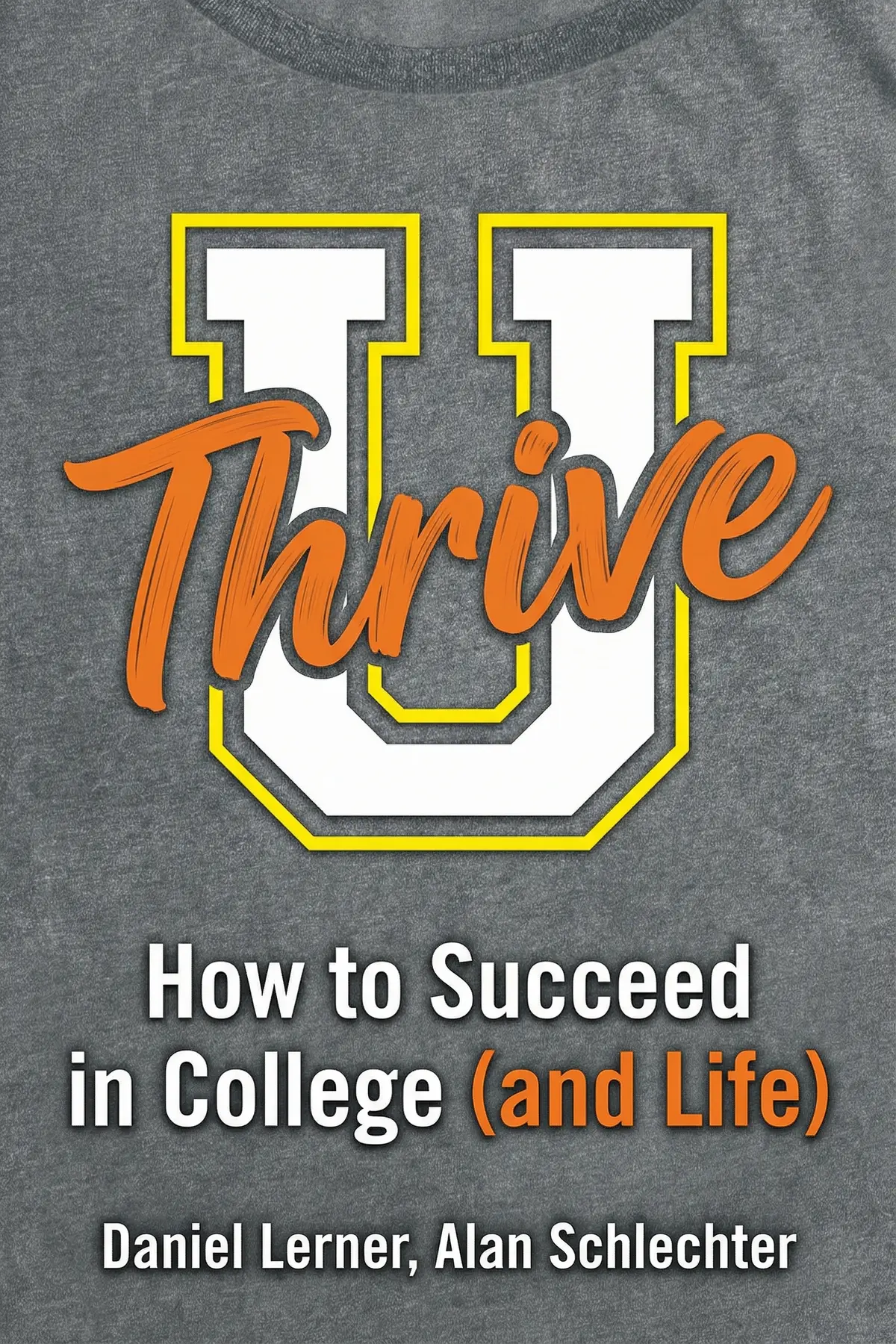
Table of Content
1. Introduction
1 min 00 sec
Starting college can feel like a test you must pass before you are allowed to enjoy anything, so the usual plan is to work hard now and be happy later. In U Thrive, two New York University instructors, Daniel Lerner and Alan Schlechter, argue that the plan runs in the wrong direction: a good mood comes first, and better performance follows it. In one experiment they describe, doctors given a small lift in spirits diagnosed a case 20 percent faster and more accurately than doctors given nothing.
That reversal carries the whole book. Thriving in college, and in the working life after it, comes from looking after the person doing the work: their mood, their friendships, their response to criticism, their body and their sense of what they do well. Excellence then grows from practice built on that base. Ahead are habits for the first hard semester, from what to do when stress makes you want to hide to a thirty-second trick before an exam.
2. Feel good first and the grades follow
1 min 43 sec
College acceptance and an admired career are supposed to make people happy. Freshmen and lawyers tell a different story, and a Cornell experiment with a bag of treats suggests where the usual plan goes wrong.
3. Lean on friends when stress hits hardest
1 min 45 sec
When pressure builds, the urge to hide in your room feels like self-protection. A study of hurricane survivors shows why that instinct may be the worst choice a stressed student can make.
4. Turn red ink into a study plan
1 min 37 sec
Two students get the same disappointing grade. One sinks, the other improves, and the difference comes down to how each hears the teacher. A two-word habit helped one of them switch sides.
5. Move more to learn and think better
1 min 46 sec
An Illinois high school that already ranked near the top in math and science wanted to climb higher. It found its lever in an unexpected place, far from any classroom or textbook.
6. Find the talent that makes time disappear
1 min 47 sec
A high school baseball captain lost all motivation in his first college year. His way back, and a famous athlete’s early rejection, show how to tell what you are truly good at.
7. Practice deliberately to reach real excellence
1 min 49 sec
Hard work alone does not make someone excellent. A real estate agent with a stack of notebooks and a photographer’s assistant show two different ways to make every hour of practice count.
8. Conclusion
1 min 02 sec
U Thrive asks students to reverse the order they were taught. Instead of trying to earn happiness through grades, build the conditions that make good work likely: a decent mood, people around you, an open response to criticism, a body that moves and practice aimed at what you do well. The doctors who saw a bag of treats did not suddenly know more medicine. They simply worked better because they felt better.
The authors’ simplest tool fits into the minutes before any test. Before an exam or a tense social moment, close your eyes and spend thirty seconds on a calm, cherished memory. It primes the brain toward the positive and makes the challenge a little easier to face. Pair it with two other moves from the book. See a friend in the week you most want to hide, and thank the next person who marks up your work. Then let the hours that seem to vanish point you toward the skills worth months of deliberate practice.
In this book, happiness is not the finish line of college. It is the starting position.
About this book
What is this book about?
Most students are taught a simple sequence: get into a good school, earn top marks, land a respected job, and happiness will follow. Daniel Lerner and Alan Schlechter, who both teach at New York University, argue that this sequence runs backward. Freshmen rate their own well-being at barely half of what it could be, and lawyers, holders of one of the most admired jobs, report being the least happy white-collar workers. The authors start from the opposite end. A positive mood improves performance, so the work of thriving begins with looking after yourself. They show why stressed students who withdraw from friends make things worse, how a growth mind-set turns red ink into guidance, and why moving your body helps your brain learn. They also explain how to spot your real talents through the experience of flow and how to build excellence through deliberate practice and apprenticeship. Readers get a set of small, concrete habits for the hardest semesters: seeing friends when stress peaks, thanking teachers for criticism, taking five-minute movement breaks and spending thirty seconds on a happy memory before an exam.
Book Information
Who it's for
First-years overwhelmed by campus
First-year students who feel anxious, isolated or overwhelmed by a new campus.
Students hurt by criticism
Students who take bad grades and criticism personally and want a calmer way to use feedback.
Parents, teachers, young professionals
Parents, teachers and young professionals looking for simple habits that support both well-being and performance.
About the Author
Daniel Lerner
Daniel Lerner is a clinical instructor at New York University and teaches at the University of Pennsylvania. A strengths-based coach and speaker in positive and performance psychology, he works with musicians, athletes and executives, and speaks to students and business leaders worldwide. Alan Schlechter is a clinical assistant professor at NYU Langone Medical Center and also leads outpatient psychiatry care for children and teenagers at Bellevue Hospital, focusing on some of New York's most vulnerable families. He also teaches at New York University.
Ratings & Reviews
Ratings at a glance

What people think
Listeners find this book an ideal selection for the graduation season and value its meticulous research, with one listener highlighting it as superb supplemental material for introductory psychology classes. The work earns high marks for its exceptional prose, storytelling, and entertainment quality, while one listener characterizes it as one of the standout titles within the positive psychology canon.
Top reviews
Hannah
If you have a high school senior about to head off to campus, you should buy this book for them immediately. It is the perfect choice for graduation season because it balances practical advice with high-quality storytelling and interesting psychological insights. Not gonna lie, I wish I had read something like this before my own freshman year to help manage the inevitable stress. The authors clearly care about their students, and that passion shines through in every chapter and every suggested exercise. It is a refreshing take on the self-help genre that feels specifically tailored to the unique challenges of the modern college experience. I found the narrative flow to be very engaging and much more helpful than a standard textbook.
Show moreBae
After hearing so much buzz about the NYU Science of Happiness course, I finally dove into the textbook version of their curriculum. Personally, I think the authors managed to create something that is both entertaining and deeply rooted in careful psychological research. They tackle serious issues like depression and willpower with a lightness that makes the information feel accessible rather than overwhelming or clinical. The storytelling is top-notch, and it provides a clear roadmap for anyone looking to build a more resilient mindset during their college years. It is easily one of the best books I have encountered in the positive psychology canon and would make a fantastic graduation gift. I highly recommend it for any student who feels overwhelmed by the transition to campus.
Show moreFrida
Finally got around to reading this after my academic advisor recommended it, and it is easily one of the most engaging psych books available. I must admit, many books on happiness feel like they are just fluff, but this one is backed by real-world studies and data. The way Lerner and Schlechter explain the PERMA model makes it feel applicable to daily life rather than just a theoretical concept. I appreciated the entertainment value provided by the anecdotes, even if they occasionally felt a little over-the-top for a college audience. It is a carefully researched guide that offers genuine value for anyone entering a major life transition like starting a university program. The writing style is fast-paced and keeps you interested from start to finish.
Show moreChamlong
Does the average freshman really need to be told how to handle a dream internship audition or how to pick a dress-for-success outfit? The truth is that the storytelling elements make the heavy psychological concepts much easier to digest during a busy semester. While I cringed at the Beastie Boys and Dead Poets Society references, the 'Takeaway' sections at the end of each chapter are genuinely helpful. It serves as a solid guide for navigating the emotional highs and lows of campus life without feeling like a dense, boring textbook. I think the authors have a unique voice that bridges the gap between clinical research and the chaotic reality of being a student. This is a must-read for anyone looking to improve their mental well-being.
Show moreRatchada
This book belongs at the very top of the positive psychology canon for its accessibility, research, and genuine warmth. Honestly, the way they integrate the science of happiness into relatable stories makes this an essential read for students and parents alike. I particularly loved the section on discovering your unique signature strengths to combat the inevitable stress of a new environment. The authors have created a masterpiece of storytelling that transforms complex academic theories into actionable steps for a better life. It is an excellent gift for graduation season and provides a roadmap that is both aspirational and deeply grounded in reality. I will definitely be recommending this to everyone I know who is heading off to college soon.
Show moreAnucha
Gotta say, the section on grit and mindset really hit home for me as a sophomore struggling with a heavy course load. The authors suggest practical exercises that actually help you visualize your goals instead of just offering vague, motivational platitudes found elsewhere. While some of the slang is a bit goofy, the core message about physical well-being and positive attitude is incredibly powerful. I found the VIA character strengths assessment to be particularly eye-opening for my own personal development journey this year. This is an excellent resource for anyone wanting to thrive in a high-pressure environment without losing their sanity in the process. It offers a great balance of academic theory and actionable life tips.
Show moreSuphan
While some might find the tone a bit over-the-top, the research presented here is actually very thorough and well-documented throughout the book. In my experience, it is rare to find a book that manages to be this entertaining while still citing serious psychological studies on happiness. I found the breakdown of the VIA strengths to be a great way to think about my own future career path. There are moments where the authors try a little too hard to be 'one of the kids,' but the advice is sound. It is a helpful guide for navigating the social and academic pressures that come with being a first-year student at a university. This would be a great supplemental text for any introductory psychology class.
Show moreElias
The actual science presented by Lerner and Schlechter is incredibly solid, but the delivery is a bit of a mixed bag for me. Truth be told, the chapters on the PERMA model and grit provide some of the best supplemental reading for an introductory psychology course. However, the forced 'hip' tone and the references to ZebraKid and twerking at NYU make the reading experience feel somewhat awkward. I struggle to believe that a twenty-year-old would respond well to being told their willpower is like a 'hot-mess Lindsay Lohan.' The information is valuable, but you have to dig through a lot of cringey attempts at relatability to find the useful nuggets. It is worth a read if you can ignore the outdated pop-culture references.
Show moreWachira
Was this book written by an algorithm trying to sound like a nineteen-year-old from ten years ago? To be fair, the intentions of the NYU professors are probably good, but the execution is painfully skin-crawling. Using phrases like 'chillaxin' or making jokes about Flamin' Hot Cheetos answering a 911 call feels patronizing rather than relatable. I found the advice about willpower and mindset to be pretty derivative of better books like Angela Duckworth’s 'Grit' or the usual TED Talk circuit. It is hard to take the research seriously when it is wrapped in such a desperate, 'cool dad' aesthetic that feels outdated already. I would recommend looking elsewhere for more mature and professional advice on navigating university life.
Show moreOksana
Look, I really wanted to like this because the authors have such impressive credentials at NYU and Bellevue Hospital. However, the content quickly descends into a pastiche of every self-help cliché that has existed since 'The Power of Positive Thinking' came out. Frankly, the attempts at youthful language—like the weird Lindsay Lohan analogies and talk of 'hitting the sack'—are completely mortifying to read. It feels like being cornered by a middle-aged parent who desperately wants to prove they are still 'rad' and 'down with the kids.' While the science of happiness is a noble pursuit, this delivery is far too insipid and dated for any actual college student to take seriously. The cringe factor here is incredibly high throughout the entire text.
Show moreQuestions about this book
What is the main idea of U Thrive?
Daniel Lerner and Alan Schlechter argue that success does not create happiness; happiness helps create success. A positive mood improves performance, as a Cornell experiment with doctors suggests. From there the book shows students how to thrive by keeping close friends during stress, adopting a growth mind-set toward feedback, moving their bodies, following their real talents and building excellence through deliberate practice and mentors.
Why does U Thrive say exercise matters for college students?
Movement, the authors explain, leads the brain to produce a protein called BDNF that acts on the frontal lobes, which support learning. They describe Naperville Central High School in Illinois, which got students sitting less and moving more, then rose to sixth in the world in math and first in science. Even five-minute movement breaks, dancing or a homemade standing desk help.
How does U Thrive suggest handling bad grades and criticism?
The book contrasts a fixed mind-set, which makes failure feel permanent, with a growth mind-set, which treats a bad grade as a pointer to skills that need work. A student named Jocelyn, who felt attacked by feedback, learned to see teachers as allies who want her to improve. Her most useful habit was simply saying thank you whenever a teacher gave advice.
Who should read U Thrive?
It is written mainly for college students, especially those starting out and feeling stressed, lonely or unsure of their direction. Parents and teachers who support students will also find it useful. Young professionals can apply the same ideas at work: protecting their mood, staying connected during pressure, welcoming feedback, moving during the day and practicing their chosen skills deliberately.
What quick tip does U Thrive offer before an exam?
Before an exam, a midterm or a stressful social situation, the authors suggest closing your eyes and spending thirty seconds thinking about a cherished, peaceful memory. This primes the brain in a positive way and makes the challenge a little easier to handle. It fits the book’s wider argument that a positive state of mind comes before good performance.
Readers also enjoyed

59 Seconds: Change Your Life in Under a Minute
Richard Wiseman





A Guide to the Good Life: The Ancient Art of Stoic Joy
William B. Irvine


A High-Performing Mind: Strengthen Your Mind and Live Your Best Life
Andrew D. Thompson
AUDIO SUMMARY AVAILABLE
Listen to U Thrive in 15 minutes
Get the key ideas from U Thrive by Daniel Lerner, plus 5,000+ more nonfiction titles.
- 5,000+ titles
- Listen as much as you want
- 7-day free trial
- Cancel anytime









