
10 min 44 sec
Available in: English
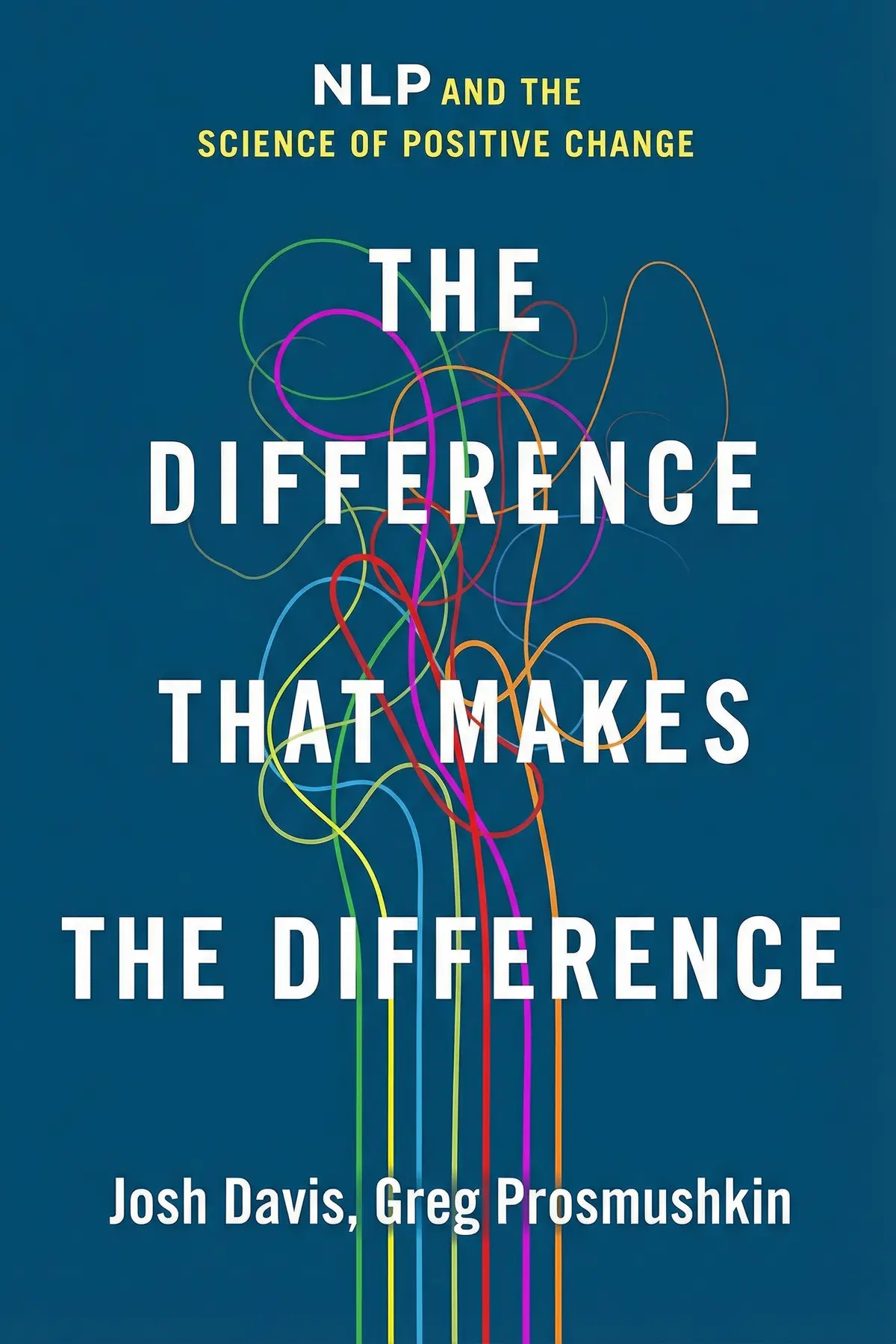
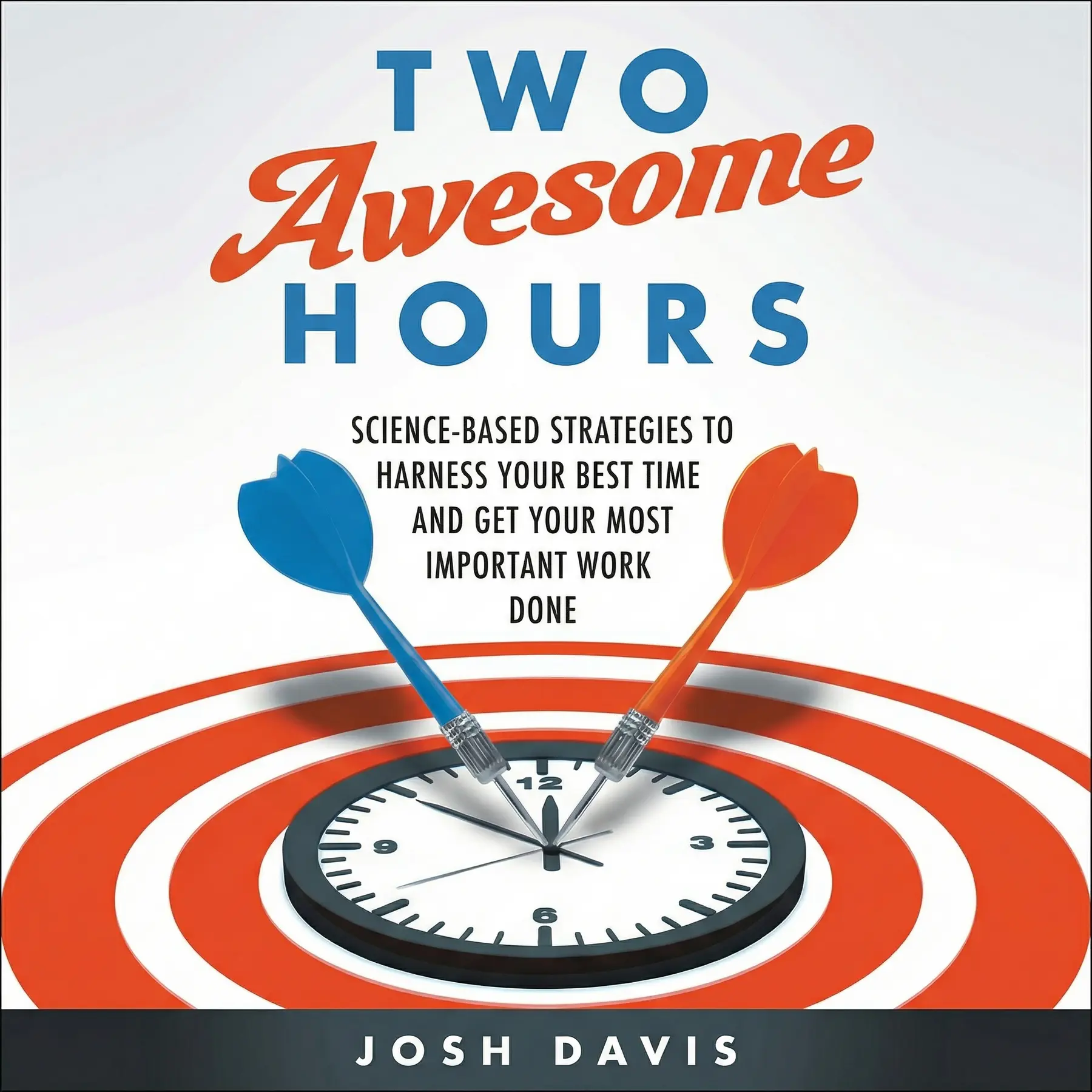
Two Awesome Hours: Science-Based Strategies to Harness Your Best Time and Get Your Most Important Work Done
By Josh Davis
Shows how to stop losing whole days to email and small tasks by setting up a few conditions, from task timing to exercise, food, light and noise, that give you two focused hours daily.
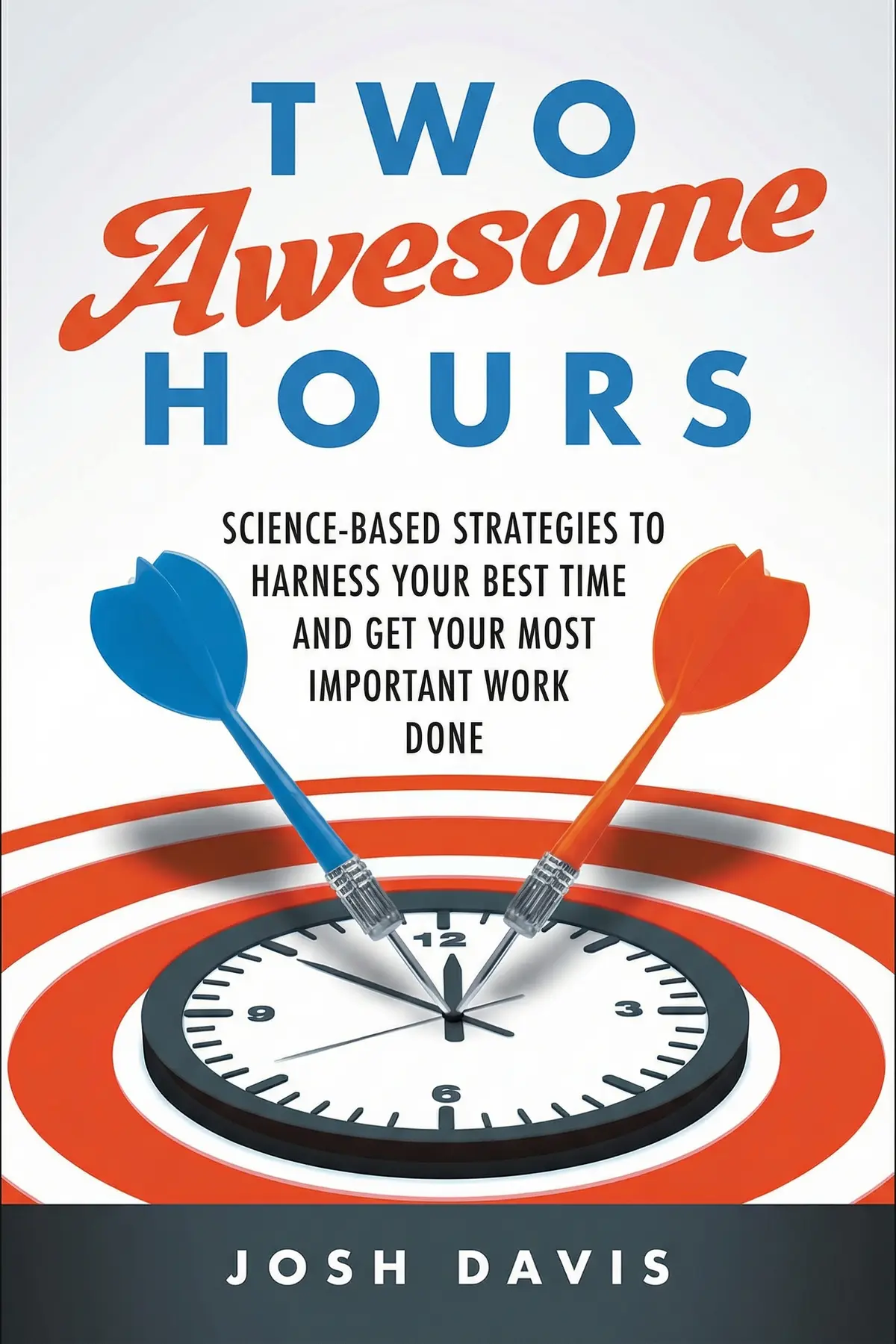
Table of Content
1. Introduction
59 sec
A full day of email, meetings and quick questions can end with the one task that mattered still untouched. In Two Awesome Hours, psychologist and neuroscientist Josh Davis argues that more effort is the wrong answer to that problem. What works is arranging a few simple conditions so that at least two hours each day run at your true peak.
His case rests on how brains and bodies actually behave. Attention drifts by design, mental energy runs down with use, and a workout or the right meal can change how well you think afterward. Davis turns this into five strategies, from noticing the small moments when you pick your next task to adjusting the light and noise around your desk.
Each one is cheap, and most can be tried tomorrow morning. By the end, you will know when to schedule your hardest work, what to eat before it, and why a short walk can rescue a stalled afternoon.
2. Catch the moment between tasks
1 min 44 sec
A consultant sat down to write the report that mattered most and somehow ended up in his inbox instead. The reason had little to do with discipline, and it happens to almost everyone several times a day.
3. Spend your sharpest thinking on what matters most
1 min 45 sec
Some of the most tiring parts of a workday look harmless on a to-do list. Knowing which ones drain you, and when to do them, decides whether anything is left for the work you care about.
4. Let your wandering mind sharpen your focus
1 min 47 sec
Fighting every distraction feels like the responsible thing to do, yet it may be working against the way your brain was built. A study from California suggests that drifting off, done right, can improve your hardest thinking.
5. Fuel your thinking with exercise, fat and water
1 min 39 sec
Two simple lab tasks, one with confusing color words and one with a target on a screen, showed something surprising about what a workout does above the neck. Your lunch plays a part as well.
6. Set up a room that guards your attention
1 min 41 sec
Many people believe a little background chatter or music does no harm. Research on office talk and a lighting experiment in the United Kingdom suggest your surroundings shape your output more than you might expect.
7. Conclusion
1 min 09 sec
Davis’s argument takes some guilt out of the workday. Distraction is how a healthy brain behaves, tiredness after a run of small decisions is real, and a stalled afternoon may say more about your lunch or your lighting than about your character. None of this asks for a new personality. It asks you to arrange the day so that a couple of hours fall under the best conditions you can give them.
Timing is the place to begin. Put your most important task first, before the inbox, and treat every finished task or interruption as a chance to choose your next move. Give that block the best fuel available: some exercise beforehand, a meal with some fat in it, water within reach. Then protect it with a quiet room, good light and a clear desk.
When your focus collapses anyway, Davis’s advice is to leave the desk and move. Strolling around the block by the office, or climbing a staircase a few times in both directions, may be all it takes to get your mind back. Two hours, set up well, can carry the work that makes the rest of the week count.
About this book
What is this book about?
Many workdays feel packed yet end with nothing important finished. The inbox, the meetings and the quick questions from colleagues absorb the hours, and the task that would actually move things forward waits for tomorrow. Psychologist and neuroscientist Josh Davis argues that the fix is to arrange a handful of simple conditions so that at least two hours each day run at your peak, instead of trying to force yourself to focus all day long. He builds five strategies on research about how attention, mental fatigue and the body work. You learn to spot the moments when you choose your next task, to keep draining activities away from your best thinking, to accept that the brain is built for distraction and even let the mind wander on purpose, to time demanding work after exercise and the right food, and to adjust noise, light and clutter around your desk. The result is a practical, low-cost plan for getting your most important work done, with steps you can try the very next morning.
Book Information
Who it's for
Workers swamped by email
Office workers whose days fill with email and meetings while their most important task never gets started.
Students and early-career professionals
Students and young professionals who want a simple, research-based routine for their hardest thinking.
Losing focus by afternoon
Anyone whose focus fades by afternoon and who wants to know how exercise, food and their desk affect it.
About the Author
Josh Davis
Josh Davis holds a PhD from Columbia University, where he studied psychology and neuroscience, and he has taught on the faculty of Barnard College of Columbia University. He founded and directs the Science-Based Leadership Institute and previously held senior roles at the NeuroLeadership Institute and other leadership development organizations. His research has covered embodied cognition and emotion regulation, and he has worked with clients such as Goldman Sachs, Hasbro and IDEO on productivity, communication and behavior change.
Ratings & Reviews
Ratings at a glance
What people think
Listeners find the work exceptionally written and accessible, valuing the useful guidance and solid perspectives shared. The book also receives acclaim for its clear, actionable strategies, with one listener pointing out how it uses the mind-body connection to achieve a calmer lifestyle. Furthermore, listeners believe the content is highly valuable, with one review noting its effectiveness in helping grasp how to make deliberate task selections.
Top reviews
Thitima
This book completely reframed my approach to a heavy workload by focusing on just two high-quality hours of performance. We often feel pressured to be 'on' for eight hours, but Davis proves that is biologically impossible and counterproductive. By following the five simple strategies—especially the one about leveraging the mind–body connection—I have found myself much more capable of handling competing priorities. The writing is straightforward and the tips are easy to digest during a busy week. Personally, I think this is one of the few productivity books that actually understands how the human brain functions. It’s a short read that delivers a massive amount of value for your time.
Show moreAna
After hearing so much about the toxic 'hustle' culture, it was incredibly refreshing to read something that prioritizes biological needs over raw efficiency. Josh Davis explains that we only need two awesome hours to be at our most productive, which takes a huge weight off my shoulders. The strategy regarding 'decision points' is worth the price of the book alone because it helps you reclaim your day from autopilot mode. Even for someone like me, who has read every self-help book under the sun, there were new gems here. The mind-body connection insights were particularly enlightening. Highly recommended for anyone who wants to achieve their goals without losing their sanity in the process.
Show moreSumalee
Finally, a productivity guide that doesn't treat humans like cold, unfeeling machines designed only for the relentless pursuit of commerce. By recognizing that our consciousness is essentially a thin layer of awareness floating on a complex bag of biological processes, we can finally stop punishing ourselves for not being perfect robots. Davis offers five strategies that are quite powerful because they leverage our natural neuropsychology rather than fighting against it. I particularly loved the insight that effectiveness is not the same thing as efficiency. My only gripe is that the tone can occasionally veer into the typical 'hustle' tropes I usually try to avoid. Still, it is a very practical and insightful read.
Show moreAva
The chapter on workspace environment changed how I look at my desk clutter and the lighting in my office. Davis makes a compelling case for how our physical surroundings influence our thought processes in ways we rarely acknowledge. It’s a well-written book with practical advice that is worth every penny if you actually implement the suggestions. I started managing my mental energy rather than just my time, and I’ve noticed a significant shift in my output. While some of the science is a bit dense for a casual read, the easy-to-implement ideas at the end of each chapter make it accessible. It is a solid addition to any professional's library.
Show moreJeeranan
What struck me most was the emphasis on conscious task choices and the power of managing your energy peak. Instead of trying to do more, faster, and better, Davis suggests we simply find the right block of time for our most important work. This subtle shift in perspective helped me stop fighting distractions and start working with my natural rhythms. The book is well-backed by research, but it doesn't read like a dry academic paper. I did find a few sections to be a bit obvious, particularly the parts about workspace setup. Regardless, the core message is vital for anyone struggling with the modern culture of constant busyness. It’s a very smart, helpful little book.
Show moreSam
As a freelancer working from a home office, I am always on the hunt for productivity hacks that actually stick to my ribs. The concept of 'decision points'—those moments where we transition between tasks—was the most interesting takeaway for me. It is a straightforward idea, yet we so often miss the opportunity to consciously choose our next move. However, I must say that much of the content felt like a retread of ideas I have seen in dozens of other self-help books over the years. It is well-written and easy to read, but if you have a lot of control over your environment already, the impact might be minimal. It’s a decent primer but not a game-changer.
Show moreZanya
Is it possible to optimize your brain by just changing how you view your lunch break or your morning commute? Josh Davis argues that it is, focusing heavily on the mind-body connection to facilitate a less stressful work life. I appreciated the sections on why daydreaming and letting your attention wander isn't necessarily a failure of willpower. It is refreshing to see a productivity expert embrace the natural human propensity for distraction rather than just telling us to fight it harder. To be fair, though, the middle chapters felt a bit redundant. I found myself skimming the endnotes more than the actual text because the core arguments were repeated so frequently.
Show moreSara
To be fair, the science presented here is well-documented, even if the delivery feels a little thin at times. I read this for my work literary circle and we had a great discussion about the 'witch’s brew' of chemicals that dictate our daily moods. The advice on using food and exercise at specific times to support cognitive goals was a highlight for many of us. However, for those of us with strictly managed corporate schedules, some of these tips are easier said than done. It is a good book to read if you are feeling burnt out, but don't expect it to solve every systemic issue in your workplace. It’s a helpful, if somewhat familiar, guide.
Show moreSau
Look, the core message is great, but the book itself could have been a long-form article. It drags in parts, even though it is relatively short. Davis provides several strategies that are quite powerful if you actually apply them, yet the narrative surrounding these tips feels a bit bloated for such a slim volume. I did find the similarities to Charlotte Mason’s writings on education and atmosphere to be quite fascinating. The focus on providing the right psychological and biological conditions for performance is a strong point. It is a decent, well-written book with good insights, but it lacks that 'wow' factor that makes a 5-star read for me. It’s just okay.
Show moreWei
Maybe I expected too much from the title, but this took me much longer than two hours to get through and it certainly wasn't awesome. While the science-backed explanations regarding our mental energy are clearly researched, the actual advice felt like common sense repackaged for a corporate audience. Frankly, the book managed to drag in several sections despite its relatively short page count. I was hoping for revolutionary tactics, but instead, I found oft-repeated suggestions about avoiding distractions and managing workspace clutter. If you are already a fan of literary fiction or deep-dive psychology, you might find this a bit too simplistic and dry for your taste. It just didn't click for me.
Show moreQuestions about this book
What is the main idea of Two Awesome Hours?
Josh Davis argues that you do not need to be productive every minute of the day. Instead, you can set up simple conditions that give you at least two hours of peak effectiveness daily. His five strategies are recognizing decision points, managing mental energy, working with distraction instead of fighting it, using the link between body and mind, and shaping your workspace so it supports focus.
What are decision points in Two Awesome Hours?
Decision points are the moments when a task is finished or interrupted. At these moments you can consciously choose what to do next instead of drifting into routine. Davis gives the example of a consultant named Doug who answered a dozen emails out of habit instead of writing his important monthly report. Noticing these moments helps you make fewer impulsive choices about your time.
Does Two Awesome Hours say mind wandering is good for work?
Yes, in the right doses. Davis cites a 2012 University of California study finding that letting the mind wander now and then improved performance on tasks such as creative problem solving. He suggests doing an easy, unrelated task like tidying your desk after a stretch of hard thinking, or letting yourself drift and then calmly returning to the task once you notice.
How do food and exercise affect productivity according to Josh Davis?
Davis describes studies in which people solved mental tasks faster and ignored distractions better after exercise, so he suggests doing important work right after a workout. Carbohydrates improve focus briefly, but other executive functions may decline within an hour, while certain fats may still help as long as three hours after eating. Dehydration increases fatigue and makes focus harder, so drinking water also helps.

Readers also enjoyed




AUDIO SUMMARY AVAILABLE
Listen to Two Awesome Hours in 15 minutes
Get the key ideas from Two Awesome Hours by Josh Davis, plus 5,000+ more nonfiction titles.
- 5,000+ titles
- Listen as much as you want
- 7-day free trial
- Cancel anytime









