

12 min 32 sec
Available in: English
Tubes: A Journey to the Center of the Internet
By Andrew Blum
Shows that the internet is a physical system of cables, exchange hubs and data centers, and explains how direct connections, business deals and undersea lines decide how fast it works and why it sometimes fails.
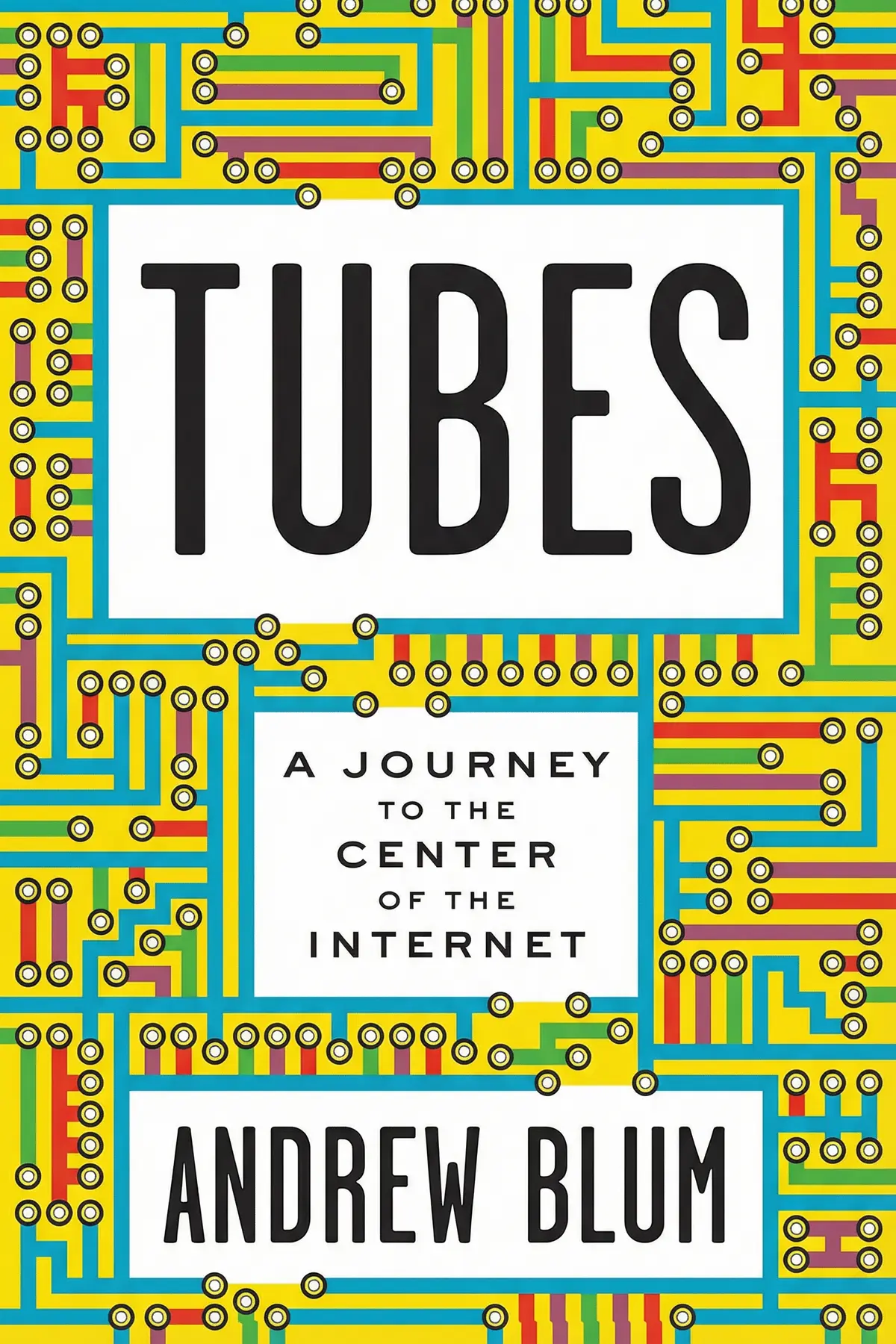
Table of Content
1. Introduction
1 min 02 sec
Most of us picture the internet as a cloud with no address, yet every email you send travels as pulses of light through glass cables and buildings you could walk up to and touch. In Tubes, journalist Andrew Blum sets out to find those places. His reporting makes a plain case: the internet is a physical thing, built from cables, hubs and data centers that link thousands of separate networks into one.
Where those pieces sit, and how the people who own them choose to connect, decides how fast your pages load and what happens when something breaks.
That matters even if you never touch a router setting. It explains why one site appears instantly while another crawls, why a quarrel between two companies once silenced government email for days, and why an earthquake under the sea could take a whole region offline. By the end, the word cloud will sound like a polite cover story, and you will be able to sketch the real map yourself.
2. Trace your connection past the blinking router
1 min 37 sec
The little box with green lights feels like the place your internet comes from. Blum shows it is only the final step of a chain that runs through famous cities and under the oceans.
3. See how one shared language made networks grow
1 min 56 sec
For years the early networks could not understand each other, and finding someone on a different one was close to hopeless. A single rule, made mandatory in 1983, changed the growth curve almost overnight.
4. Learn what makes some websites load almost instantly
1 min 53 sec
With more than 35,000 networks online, you might expect a slow, tangled mess. Blum explains why the crowding actually speeds things up, and what a search for NASA reveals about it.
5. See how a business dispute can cut off your email
1 min 46 sec
A direct cable between two networks only exists because someone agreed to it. In 2008, two companies stopped agreeing, and some of the most important offices in the United States went silent for days.
6. Picture the cables that tie the continents together
1 min 35 sec
The idea of linking continents with cables on the sea floor goes back 150 years, to the first telegraph lines. One earthquake in 2006 showed how much depends on them, and how far the damage can travel.
7. Know where your photos and emails actually live
1 min 32 sec
Every picture you upload goes somewhere with walls, power and guards. Blum follows the cloud down to the ground and finds buildings that keep growing, and keep their secrets.
8. Conclusion
1 min 11 sec
Blum’s reporting replaces a fog with a map. The internet that seemed to float everywhere and nowhere turns out to have addresses: a router on a shelf, a fiber line under the street, an exchange building in Frankfurt or Tokyo, a cable across the floor of the Luzon Strait, a village-sized data center in Oregon. Its speed comes from short, direct paths between networks. Its weak points are the same physical things, plus the handshake deals among the few people who decide which routers get connected.
That map is useful in ordinary moments. When a site loads slowly, think about how many steps lie between you and it, and whether its owner connects directly to the big networks. When your work depends on staying online, remember the three days of silence after Sprint and Cogent parted ways, and keep a second route if you can. And before you upload something you care about, picture the drive it will actually sit on, then decide whether you also want a copy within reach.
The cloud was always a building with a locked door. Knowing that is where understanding what you rely on begins.
About this book
What is this book about?
Most people use the internet all day and still have no idea where it is. Ask where the connection comes from and the answer usually stops at the router blinking in the corner. Journalist Andrew Blum set out to follow the chain past that box and find the places where the internet physically exists. What he describes is a network of networks. It began in 1969 as a few university systems with about 5,000 users, took off once a shared language called TCP/IP became mandatory in 1983, and now counts more than 35,000 networks. They meet in huge exchange buildings, link up through direct cable deals between a small group of operators, cross oceans on fiber laid along the seabed, and store our photos and emails in data centers the size of villages. Readers get a clear mental map of the system they depend on. It explains why some sites load almost instantly, how one pulled connection once cut off government email for three days, why a single earthquake could take a region offline, and where the cloud actually keeps your data.
Book Information
Who it's for
Professionals online all day
Professionals who use the internet all day but cannot explain where it physically comes from.
Founders and website owners
Founders and site owners who want to understand why connections, hosting and outages behave as they do.
Curious about infrastructure
Curious readers interested in infrastructure, technology history and the hidden buildings behind everyday life.
About the Author
Andrew Blum
Andrew Blum is a journalist whose articles have appeared in Wired, Vanity Fair and the New York Times. He writes about travel, art, design, architecture, technology and infrastructure, which makes him well suited to treat the internet as a built place. Tubes is described as the earliest full-length book on the physical networks of the global internet, and it has been translated into nine languages.
Ratings & Reviews
Ratings at a glance
What people think
Listeners find the work absorbing and skillfully composed, with one highlighting its non-technical language. The book delivers an educational look at the internet's infrastructure, presenting a totally fresh viewpoint, and listeners value its historical context. They characterize the story as an intriguing journey that helps clarify complex topics. Although listeners feel the material is easy for non-experts to follow, they point out a lack of technical detail, and the more reflective portions receive mixed feedback.
Top reviews
Bo
It is rare to find a book that makes the mundane mechanics of our modern world feel so genuinely vital and interesting. This book completely changed the way I look at my computer and the world around me. Blum has this incredible ability to take something as banal as a fiber optic cable and make it feel like a vital artery of civilization. The book is written in non-technical language, which was perfect for me because I don't have a background in computer science. I loved learning about the history of how these networks were physically laid out and the people who maintain them. It felt like a fascinating trip around the world that actually taught me something useful. The internet isn't just a virtual space; it’s a human world made of glass and steel. I highly recommend this to anyone who wants a better understanding of modern life. It is an informative overview of a hidden world.
Show moreThawee
Finally got around to reading this, and I’m struck by how much we take the physical infrastructure of our lives for granted. Andrew Blum’s journey to the center of the internet is part travelogue and part history, and it works beautifully. He moves from his own backyard to the ocean floor, showing us the tangible pieces—the tubes and routers—that make binary code possible. I found his observations about the psychological and sociological aspects of connectivity to be really insightful. It’s a delightful read that manages to be both engaging and informative without requiring an engineering degree. Even the sections that others called flowery worked for me because they captured the sheer scale of the achievement. It’s a wonderful book that provides a much-needed physical reality to our digital existence. I am looking forward to reading his more recent work on the weather. This book is a must-read for any curious mind.
Show moreAurora
As someone who isn't a tech genius, I found this journey into the plumbing of the web to be incredibly enlightening and accessible. Blum’s architectural background really shines through as he describes the massive server farms and the hidden wires that run under our streets. It’s a fascinating trip that makes a very complex subject feel understandable for the average person. I especially liked the story about the squirrel—it’s a funny, relatable starting point for a very ambitious project. The book is well-written and offers a perspective that you just don't get from standard tech reporting. He reminds us that behind every email and video stream, there is a massive, physical machine humming away in a warehouse somewhere, which is a perspective we often ignore in our wireless world. This remains a truly eye-opening experience for any modern reader. It offers a completely different perspective on our daily digital habits.
Show moreChan
Picked this up because I’ve always been curious about the physical side of our digital world, and Blum delivers some vivid imagery. The chapters on the cable landing stations in Cornwall were genuinely fascinating and gave me a new appreciation for the infrastructure beneath our feet. I love the idea that the Cloud is actually just a bunch of tubes and wires inside nondescript buildings. While some reviewers find his style a bit too poetic, I thought it helped humanize a subject that could have been dry. There are some minor annoyances, like his obsession with literary quotes, but the overall journey is engaging enough to overlook them. It’s a great way to understand the tough subject of global connectivity without getting bogged down in jargon. This is definitely a book for people who want to know how things work on a grand scale. You will never look at a Wi-Fi router the same way again.
Show morePalm
After hearing so much about the Cloud, it was genuinely refreshing to see someone map out the actual concrete and fiber. Andrew Blum takes a completely different perspective by focusing on the locations where the internet actually resides. He treats the OSI layers like a spiritual quest, and while that might make network engineers roll their eyes, it makes for an entertaining story. I particularly enjoyed the comparison between the openness of Facebook’s facilities and the paranoid secrecy surrounding Google’s data centers. It makes you realize how fragile and robust this system is at the same time. The writing is polished and the pacing is generally good, though it does drag a bit in the middle sections. If you can handle a little bit of grad-student pretension, there is a lot of valuable information here. It’s a thought-provoking look at the infrastructure we use every single minute. I am glad I took the time to read it.
Show moreSamuel
Ever wonder why your internet signal lags or where those packets actually travel when you click send? This book provides a decent look behind the scenes, focusing heavily on the physical plumbing rather than the code. It is clearly written for everyday people who think of the web as a magical, invisible cloud. However, as someone with a basic understanding of networking, I felt the book stayed too much on the surface throughout the chapters. Blum focuses on the macro-geography—the big cables and the warehouses—while ignoring the underlying chip architectures that actually make the system hum. Look, it’s a pleasant read if you want to know about the history of ARPANET, but it isn’t particularly informative for techies. If you want a more comprehensive guide to the underlying technologies, you might find yourself wishing he had spent more time in the server rooms and less time looking at the scenery. It is a solid follow-on to Where Wizards Stay Up Late.
Show moreHang
Not what I expected when I picked this up, though I suppose that’s partially on me for wanting a technical manual. Blum writes with the eye of an architecture critic, which makes the descriptions of server farms and exchange points quite vivid. He manages to make the physical reality of the internet feel tangible and heavy. Yet, I found myself getting bored with the constant flowery language used to describe giant rural warehouses. Is it really necessary to imbue a sense of cosmic mystery into what is essentially electric information transfer? That is probably okay for most casual readers. The sections on the secrecy of Google were intriguing, but he gets a bit over-dramatic about their privacy protocols. It lacks the same level of rigorous historical detail found in other pop-science volumes. It’s a light, breezy read that works better as a travel memoir than a technical science book.
Show moreSuphan
Personally, I think this book sits in a weird middle ground where it’s too literary for engineers and too niche for casual readers. Blum is a talented writer, and he can certainly turn a phrase when describing a giant squid of fiber optic cables. But the lack of maps or charts made it difficult to visualize the connections he was describing across the globe. Why mention a DNS issue in Melbourne affecting New York without showing us the path? The book is more concerned with the wonder of connectivity than the actual mechanics of how it functions day-to-day. I appreciated the insight into the different cultures at Facebook and Google, but these felt like brief highlights in a narrative that often felt lost. It's a fine book for a weekend read, but don't expect to come away with a master's degree in internetworking. The truth is, I wanted more data and less fluff.
Show moreLek
To be fair, the premise that a squirrel chewing on a wire justifies a global travelogue felt a bit thin from the start. Andrew Blum takes us on a journey that feels more like a series of expensive vacations than a rigorous investigation into infrastructure. He visits these fascinating sites like the data centers in The Dalles, but then complains when Google won't let him roam around like a lost toddler. The writing is undeniably stylish, yet it’s hampered by an unwarranted self-indulgent tone that prioritizes his feelings over the actual mechanics of the system. I was hoping for a deep dive into how data packets are transformed into light, but instead, I got descriptions of digital Kathmandus. The repetition of certain similes was distracting and made the whole endeavor feel unpolished. It’s an ambitious attempt that ultimately fails to provide any meaningful technical analysis for the reader. This was a disappointing experience overall.
Show moreRatchada
Blum’s constant need to turn every mundane piece of hardware into a spiritual revelation made this an incredibly frustrating and tedious read. The factual information about routers and switchboards was actually quite interesting, but it was buried under piles of non-stop poetic waxing about physical geography. I understand the internet is vast, but I don't need a literary reference to Emerson every time the author sees a fiber optic cable. Frankly, the childlike whimsy got old within the first forty pages and felt more like a pretentious travelogue than a serious investigation. If you're looking for cold, hard technical facts about packet switching or network protocols, you are better off reading a specialized textbook or a much more grounded history. This book tries too hard to be art when it should have been informative. It completely missed the mark for me, and I won't be looking for more of his work.
Show moreQuestions about this book
What is the main idea of Tubes by Andrew Blum?
Blum argues that the internet, which feels invisible, is a real physical system. Your router connects to fiber cables that run to larger hubs in cities such as Frankfurt, London and Tokyo, to undersea cables between continents, and to data centers that store everything online. Together these pieces link thousands of separate networks into one worldwide web.
Why do some websites load faster than others according to Tubes?
Speed depends largely on how directly networks are connected. When two networks have a cable running straight between their routers, data skips long detours. Blum’s example is Google and NASA: because they are directly linked, NASA’s site loads almost instantly from a Google search. Exchange points such as ECIX and Equinix exist so hundreds of networks can connect this way.
What is peering on the internet?
Peering is an agreement between two networks to plug a cable directly from one router to the other, so data travels a shorter path. Operators arrange these deals at gatherings such as NANOG. Peering can also come to an end: after Sprint and Cogent severed their connection in 2008, the New York courts, NASA and the US Department of Justice were unable to exchange email with one another for three days.
Where is the cloud physically located?
In data centers full of hard drives. Blum notes that Facebook reported more than six billion photo uploads a month in 2011, and that facilities such as the one in The Dalles, Oregon, grow to the size of villages to hold that much data. Because they store so much personal information, they are well protected and often kept secret.
Who should read Tubes?
It suits anyone who relies on the internet but has never pictured how it works, from office workers to founders running websites. It is especially useful for readers curious about technology history, from the 1969 university networks to TCP/IP in 1983, and for those wondering how undersea cable breaks, such as the 2006 Taiwan earthquake, can knock whole regions offline.
Readers also enjoyed








AUDIO SUMMARY AVAILABLE
Listen to Tubes in 15 minutes
Get the key ideas from Tubes by Andrew Blum, plus 5,000+ more nonfiction titles.
- 5,000+ titles
- Listen as much as you want
- 7-day free trial
- Cancel anytime









