

14 min 50 sec
Available in: English
To Dye For: How Toxic Fashion Is Making Us Sick
By Alden Wicker
Shows how the dyes, coatings and finishes in everyday clothing can harm skin, hormones and immunity, why the rules lag so far behind, and which buying and washing habits reduce your exposure.
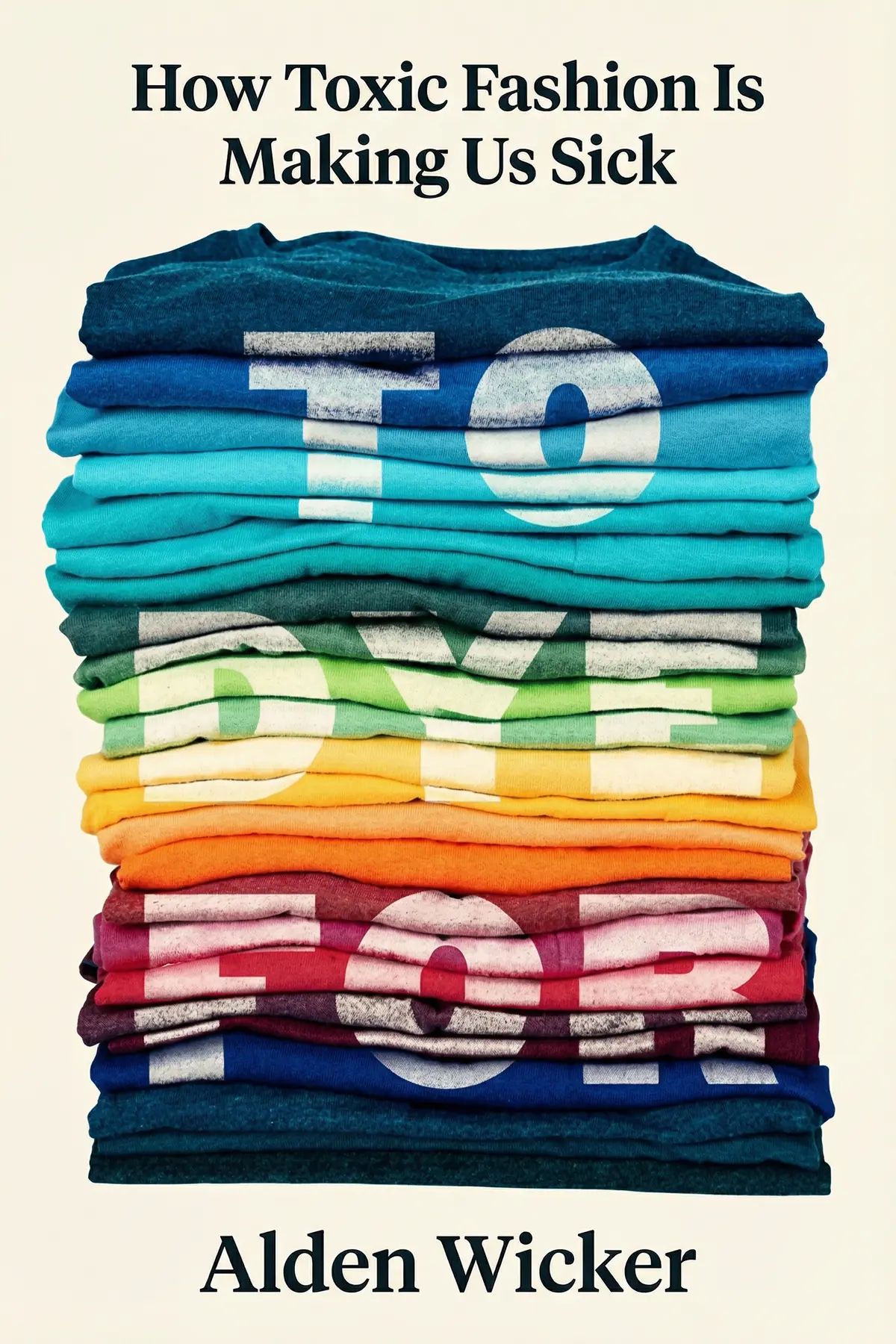
Table of Content
1. Introduction
1 min 01 sec
Most people choose clothes for fit, price and color, and never ask what the fabric was soaked in. In To Dye For, investigative journalist Alden Wicker shows why that question matters: in 2011, hundreds of Alaska Airlines flight attendants developed rashes, thyroid problems, hair loss and exhaustion soon after they were given new uniforms. Their story opens her inquiry into an industry that uses countless chemicals with almost no limit on how much can remain in a garment.
Wicker’s argument is simple. Fashion’s chemicals are invisible, poorly tested and lightly regulated, and the rules usually arrive only after people are already sick. That leaves the burden on two groups: the workers who dye the fabric and the shoppers who wear it. From airline cabins to the dyehouses of India, her evidence leads to a short set of habits that cut your family’s exposure, and to the questions worth putting to the brands you buy from.
2. What sick flight attendants reveal about your wardrobe
1 min 54 sec
An airline blamed accidental contamination and offered money for dry cleaning. The real explanation was more troubling, and it suggests the problem was never limited to one company’s uniforms.
3. Learn how clothing chemicals reach your lungs
1 min 38 sec
A nurse tried new soaps and cleaners for her son’s worsening eczema, and nothing worked. What finally helped points to a route of exposure most parents never consider.
4. Understand why fashion's rules come after people are harmed
1 min 52 sec
Mercury in hats and arsenic in dresses sound like ancient history. A town in New York and a cover-up in the plastics industry suggest the old pattern never really ended.
5. Learn how hormone disruptors in fabric threaten fertility
1 min 59 sec
Fertility is falling fastest among younger women, and sperm counts have dropped sharply even as men live healthier lives. Some scientists suspect something in our wardrobes is part of the reason.
6. Understand chemical sensitivity before it takes over daily life
1 min 50 sec
One attendant can no longer walk into a grocery store without trouble. Another needed surgery after surgery. Their stories show how an immune system trained to protect us can turn against us.
7. See who pays the real price for bright colors
1 min 37 sec
A strict environmental law can keep a river clean while the people beside it get sick. Inside the dyehouses, even the factory owners may not know what is in the vats.
8. Shop, wash and buy secondhand to cut exposure
1 min 49 sec
You do not need to throw out your closet or pay luxury prices. A few changes at the checkout, the washing machine and the yard sale lower the chemical load you carry home.
9. Conclusion
1 min 10 sec
Wicker’s book changes what a piece of clothing is. A dress or a uniform stops being only a matter of style and becomes a chemical product, made under weak rules by workers who take the heaviest dose, and worn against the skin of people who rarely suspect it. The flight attendants matter because they made a hidden pattern visible: same clothes, same day, same symptoms. The rest of us live inside the same experiment, just too scattered to notice it.
Her guidelines are simple and practical. The next time you buy something new, choose natural fibers when you can and run it through a wash with fragrance-free detergent before it touches your skin. She advises choosing natural fibers like cotton over synthetics, and Karly Hiser’s son found relief only once he wore homemade organic cotton underwear. And when a brand will not say what is in its fabric, treat that silence as information and spend your money where the answers are.
History shows the rules arrive after the damage. Asking questions now is how you avoid becoming the evidence.
About this book
What is this book about?
Most people judge clothes by fit, price and color. Few ask what the fabric was treated with. Investigative journalist Alden Wicker argues that they should. In 2011, hundreds of Alaska Airlines flight attendants fell ill after receiving new uniforms, and thousands more at other airlines later reported similar reactions. Their cases opened a wider investigation into an industry that uses countless chemicals with almost no limits on what stays in a finished garment. Wicker traces the problem from mercury-poisoned hatmakers and arsenic-green dresses to PVC executives who hid cancer deaths. She links hormone-disrupting chemicals such as PFAS and phthalates to rising fertility problems, explains how clothing can trigger chemical sensitivity and autoimmune disease, and follows the trail to dyehouses in India, where workers take the heaviest dose. Readers get a clear picture of how fashion's hidden chemistry reaches the body, why certification and regulation leave gaps, and a set of practical habits: what to buy, which fibers to choose, how to wash new clothes and when to send something back.
Book Information
Who it's for
Parents of unwell children
Parents of children with eczema or unexplained skin and breathing problems.
Wary of new clothes
Uniform wearers and anyone who suspects new clothes are making them unwell.
Shoppers wanting safer fashion
Shoppers who want to buy fashion that is safer for themselves and for the workers who make it.
About the Author
Alden Wicker
Alden Wicker is an award-winning investigative journalist who covers sustainable fashion and the effects of the clothing industry. Her reporting has appeared in The New York Times, Wired, Vox and Vogue. She founded EcoCult, a platform offering fact-checked information on safe and sustainable fashion and buildings, and she has visited factories, spoken on panels and appeared as an expert on NPR's Fresh Air, the BBC and NBC.
Ratings & Reviews
Ratings at a glance

What people think
Listeners describe the book as extensively researched and accessible, with one person highlighting how it clarifies technical jargon. Beyond the commended writing style, listeners find the narrative to be both intriguing and enlightening. Additionally, they value its advice on avoiding dangerous chemicals, with one review emphasizing the straightforward reporting of its results.
Top reviews
Tim
Wow. I will never look at my favorite workout leggings the same way again after finishing this investigative masterpiece. Alden Wicker manages to turn dense chemical jargon into a fast-paced narrative that feels more like a corporate thriller than a dry industry report. The chapters documenting the plight of flight attendants and their toxic uniforms were particularly gut-wrenching to read. It is terrifying to realize that while we obsess over what we put in our bodies, we rarely consider what we put on them. The lack of ingredient labels on our clothing is a massive regulatory failure that this book exposes with surgical precision. While the findings are distressing, I appreciated the practical tips at the end for mitigating exposure. This is essential reading for anyone who wears clothes—which is everyone.
Show moreAhmed
Ever wonder why your skin breaks out in hives for no apparent reason despite using the 'cleanest' detergents on the market? This book provides the terrifying answer. Wicker exposes how the fashion industry treats our skin as an open door for PFAS, azo dyes, and formaldehyde. What struck me most was the discussion on how no one is testing for the synergistic effects of these chemical cocktails. We are essentially walking chemistry experiments for brands that prioritize profits over public health. The writing style is engaging and urgent, making it hard to put down even when the subject matter makes you want to throw out your entire wardrobe. It’s an honest, haunting report that finally gives a voice to those suffering from 'mysterious' autoimmune issues.
Show moreSook
Picked this up after seeing a viral TikTok about the author’s television interview being canceled by lawyers at the last minute. If the big fashion brands are this scared of the information in these pages, you know it’s something you need to read. The truth is, our clothes are being treated with chemicals that are banned in other products, yet we wear them against our largest organ all day. Wicker’s reporting on the flight attendants who lost their careers due to uniform-induced disabilities is heartbreaking. This isn't just a book for 'crunchy' moms; it's a legitimate industry exposé. It is a wake-up call for consumers and a demand for government regulation. Easily one of the most important books I’ve read this year.
Show moreHazel
To Dye For is the 'Silent Spring' of the fashion world. Before reading this, I was dimly aware that fast fashion was bad for the planet, but I had no idea it was directly making us sick. Wicker explains how wrinkle-resistant and waterproof coatings are essentially poisoning our bloodstreams. The book is fascinating and eye-opening, especially the sections on how children are more susceptible to these toxins. I appreciated that the author didn't just dump a bunch of problems on us; she actually offered a path forward. She emphasizes that the burden should be on the industry and government, not just the individual shopper. It’s an empowering read that makes you want to join a revolution. Truly a must-read for the modern consumer.
Show moreYulia
After hearing about the legal pushback this book faced, I knew I had to see what the fuss was about. This is a courageous piece of journalism. Wicker doesn't just scratch the surface; she digs deep into the systemic issues of how clothes are dyed and processed. The book is distressed in the best way possible—it makes you angry, as it should. It’s high time we realized that 'affordable' fashion comes with a hidden cost to our health. From autoimmune issues to reproductive troubles, the links she draws are compelling. It’s a quick read despite being heady with information. This book provides the evidence we need to demand better transparency from the brands we trust. An absolute game-changer for the industry.
Show morePraepimon
As someone who works in the fashion industry, Wicker’s deep dive into textile toxicity was both necessary and deeply disturbing. She does a phenomenal job breaking down complex chemical formulas into something the average reader can actually digest without a PhD. However, I have to agree with other readers that the book gets quite repetitive in the middle sections. I felt like I was reading the same anecdotal evidence about skin rashes over and over again. To be fair, the research is top-notch, and her trip to India provides a much-needed global perspective on the human cost of our cheap dyes. I just wish the editing had been a bit tighter because the core message is too important to be buried in redundant chapters. Still, a solid four stars for the sheer amount of eye-opening data presented here.
Show moreRatthapong
Wicker does a great job of awakening readers who know very little about the 'black box' of textile manufacturing. I was particularly fascinated by the history of toxic dyes and how little has changed since the Victorian era, despite our supposed technological advancements. The book is well-researched and easy to follow, even when it delves into the specifics of endocrine disruptors and neurological disorders. I did find the tone a bit western-centric at times, and I would have liked more focus on the colonial history that created these global supply chains. Nevertheless, the call to action is powerful. It successfully causes you to rethink everything in your closet. It’s a heady, informative read that stands above the usual 'sustainable fashion' books that only focus on carbon footprints.
Show moreTariq
Finally got around to this after hearing so much buzz in the sustainability community. The book is incredibly thorough—perhaps a bit too thorough in parts—but the level of detail is necessary to prove just how unregulated the industry is. I was shocked to learn that over 40,000 chemicals are used commercially, yet so few have been tested for human safety. Wicker’s writing is smooth and accessible, making even the most complex industry jargon easy to grasp for the 'Average Joe.' My only gripe is the repetition of the flight attendant case; while moving, it started to feel like filler by the third mention. Overall, it’s an honest reporting of findings that will definitely change how I shop for my family in the future.
Show moreSirichai
The subject matter is undeniably important, but the execution felt a bit uneven to me. On one hand, the investigative journalism regarding the garment factories in India is stellar and heartbreaking. On the other hand, the book feels like it could have been cut in half without losing any of the major points. I found myself skipping ahead toward the end because the narrative kept circling back to the same arguments about synthetic materials. Also, as a scientist, I felt the tone was occasionally a bit too reactionary. Not every synthetic fiber is a death sentence, and I think a bit more nuance was needed to balance the alarmism. It’s a conversation-starter for sure, but it lacks the objective polish I was expecting from such a hyped title.
Show moreLuckana
Frankly, I found this to be more of an alarmist manifesto than a serious scientific inquiry. I returned the audiobook about ten minutes in after the author went on a crunchy diatribe about her all-natural lifestyle. It felt like the content was heavily filtered through a lens of general chemophobia rather than objective data. While I don't doubt the textile industry has massive issues with pollution and worker abuse, the writing here relies too much on anecdotes. Where are the peer-reviewed longitudinal studies? Reviews noting that it’s light on hard science and heavy on 'vibes' were unfortunately spot on. I’d rather look up the specific case of the Delta flight attendants on my own than sit through hours of reactionary rhetoric. Not for me.
Show moreQuestions about this book
What is To Dye For by Alden Wicker about?
It is an investigation into the toxic chemicals used to dye, coat and finish clothing. Wicker starts with flight attendants at Alaska Airlines and other carriers who fell ill after receiving new uniforms, then traces the history of poisonous fashion, the health effects of chemicals like PFAS and phthalates, the conditions of dyehouse workers in India, and the steps shoppers and lawmakers can take.
Can clothing really affect fertility?
Wicker reports that some scientists link falling fertility to hormone-disrupting chemicals used in fashion, including PFAS and phthalates. She cites sperm counts dropping by more than half over four decades and a 37 percent rise in US women seeking treatment for low egg supply between 2004 and 2011. Even parts per billion during pregnancy can permanently alter a developing embryo.
How can I reduce toxic chemicals in my clothes?
Wicker suggests avoiding ultra-fast-fashion and knockoffs, buying from brands committed to transparency, and looking for certifications such as bluesign and Oeko-Tex. Choose cotton, wool and silk over polyester and nylon, be wary of wrinkle and stain resistant fabrics, wash new clothes in fragrance-free detergent, skip dry cleaning, consider secondhand, and return anything with a strong chemical smell.
Why do clothing safety labels not fully protect shoppers?
Most chemicals used in textiles have no official limit on how much can remain in a garment, and regulators tend to ban substances only after decades of study. Certification also has gaps: Wicker notes that Oeko-Tex tests a supplier’s fabric once a year, so a dyehouse can pass and then switch to a cheaper chemical afterward.
Readers also enjoyed








AUDIO SUMMARY AVAILABLE
Listen to To Dye For in 15 minutes
Get the key ideas from To Dye For by Alden Wicker, plus 5,000+ more nonfiction titles.
- 5,000+ titles
- Listen as much as you want
- 7-day free trial
- Cancel anytime









