Alexander Hamilton
Ron Chernow
 English
 ไทย
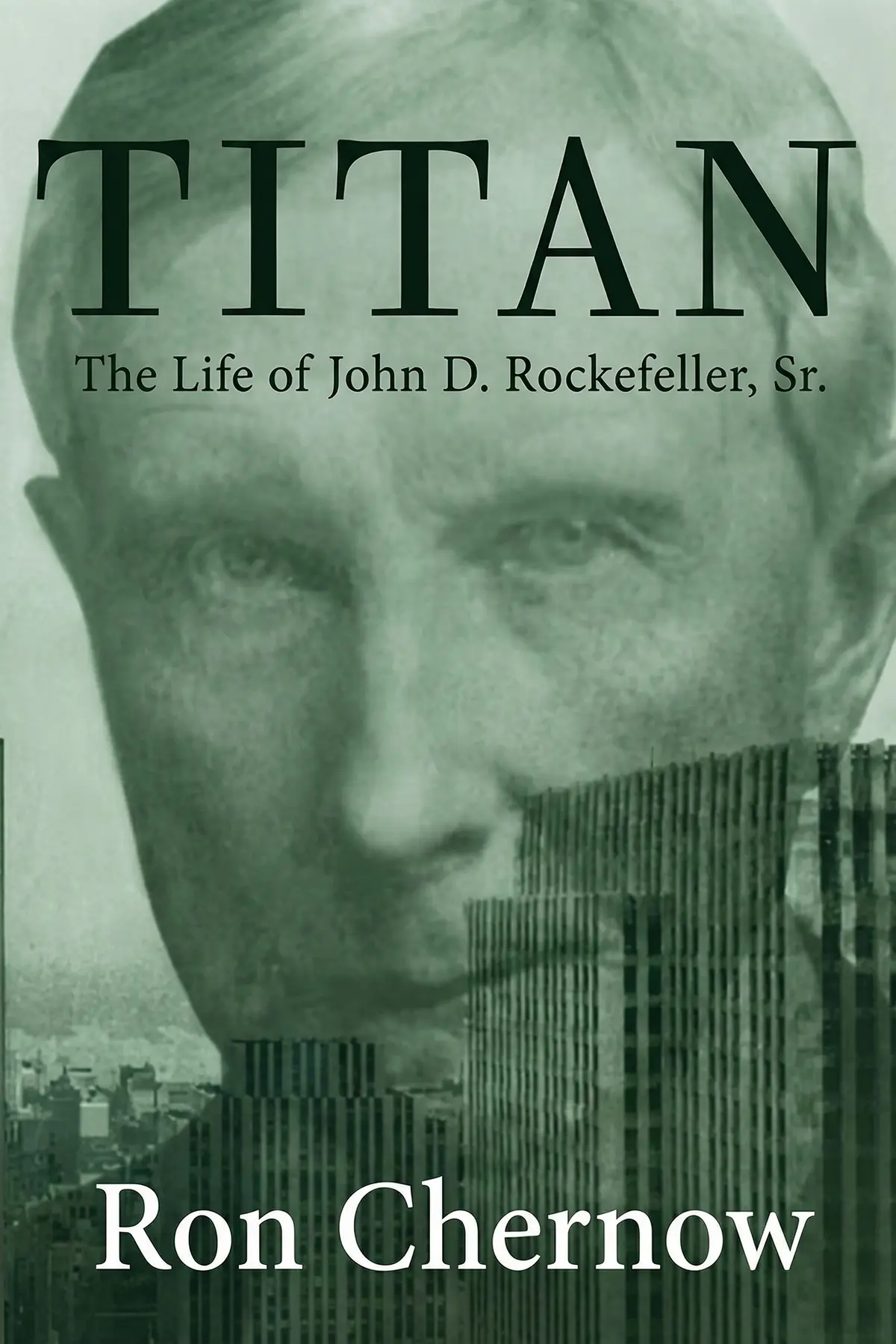
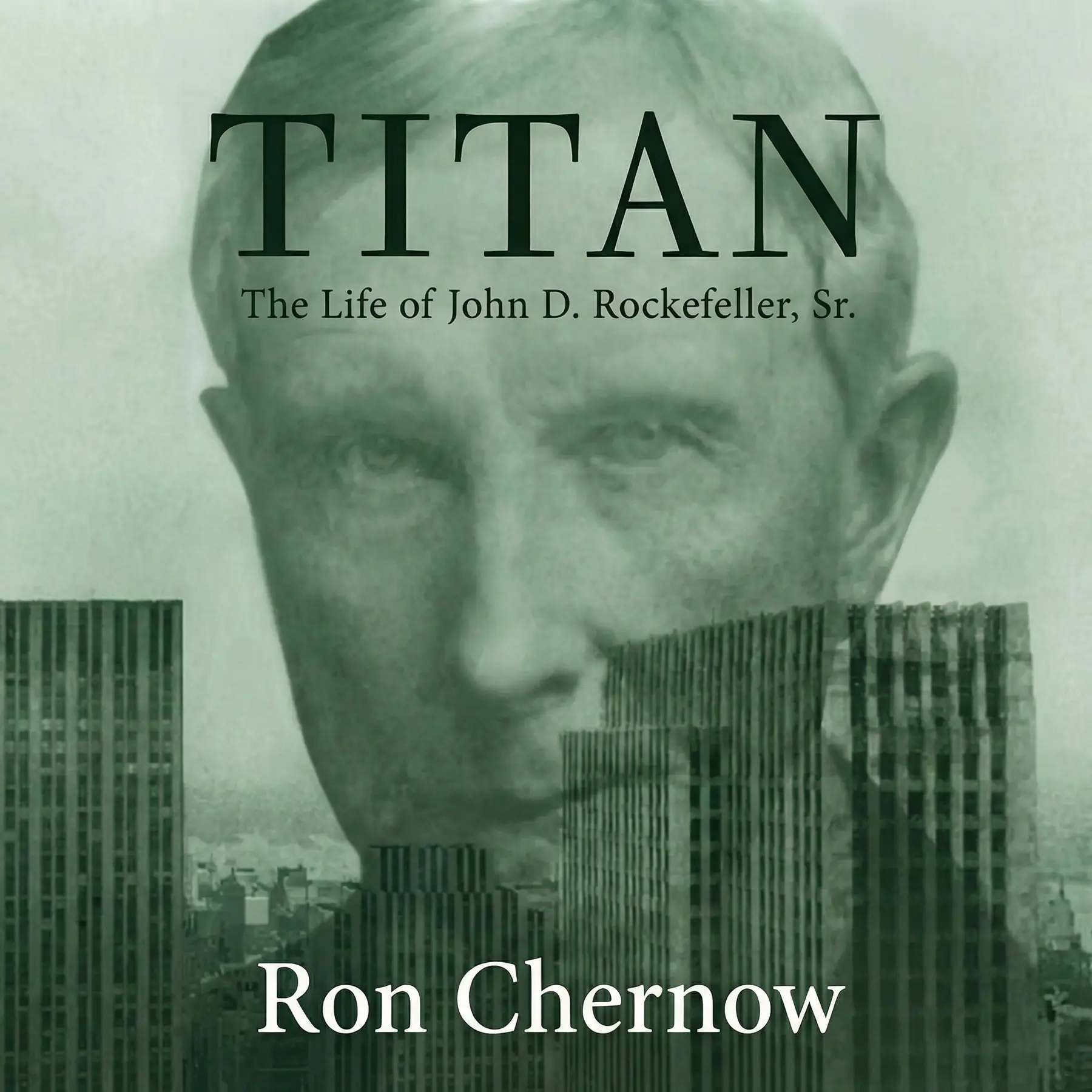
Ron Chernow's life of John D. Rockefeller explains how a disciplined young bookkeeper built the Standard Oil monopoly, why its breakup made him richer, and how he turned his fortune into lasting philanthropy.
1 min 03 sec
Most people file John D. Rockefeller under one word, villain or saint, and miss how his fortune actually worked. In Titan, biographer Ron Chernow shows that the 1911 court ruling that broke up Standard Oil was meant as a punishment, yet it pushed Rockefeller’s wealth toward a billion dollars. That twist captures a strange life.
The son of an often absent salesman went from keeping books at 16 to controlling 90 percent of American refining by 38, through rebates, takeovers and price wars. The same thrift and order later helped build the University of Chicago, a medical institute whose researchers won 16 Nobel prizes, and hundreds of Southern high schools. Chernow’s Rockefeller is one man with one discipline, aimed first at oil and then at giving. By the end, you will be able to explain how his monopoly was built, why courts and critics failed to bring him down, and what his philanthropy bought.
1 min 59 sec
A salesman father who vanished for months, a mother who handed out chores and a strict church shaped a boy who went to work at 16 with something to prove. The question is what exactly he was proving.
2 min 02 sec
Oil was cheap and margins were thin, so freight costs decided which refiners survived. One promise to a railroad changed the math, and within seven years no refiner in the country could match him.
1 min 56 sec
He worked in a bare office, treated his staff generously and preferred open fields to mansions. Yet the same man flattened rivals at home and abroad until critics pictured his company as a sea creature.
2 min 00 sec
Every day, piles of letters asked America’s richest man for money. The rule he adopted for saying yes produced a university, hundreds of schools and a research center with a remarkable record of prizes.
1 min 57 sec
A widely read attack barely troubled him, and illness pushed him out of the business. Then a magazine reporter went digging into his family and found the one story he had tried hardest to keep buried.
2 min 28 sec
Two presidents and the Supreme Court set out to end Standard Oil, and in 1911 they succeeded. What happened next to Rockefeller’s fortune surprised everyone who had cheered the verdict.
2 min 05 sec
In his last two decades Rockefeller lost his wife, handed his fortune to his son and changed his wardrobe. Something else changed too, and it was the thing he had never managed to buy.
1 min 16 sec
Chernow’s Rockefeller does not split into a good half and a bad half. The teenage bookkeeper at Hewitt and Tuttle became the man who won rebates from a railroad, and then the man who chose organizations to fund the way he had once chosen refineries to buy. One habit of order ran through it all. That is also why the effort to punish him failed. The courts could take apart his company, yet his shares survived intact, and the near billion that followed let him found a charity devoted to public health and medical education, building on the schools and research he had already funded.
His story offers a way to read power in any era. When a business comes to dominate, look at who controls the path to market, as Rockefeller did with shipping. When a giant is broken up, ask who still holds the pieces. And when great wealth turns generous, keep both ledgers open: 800 Southern high schools and 16 Nobel prizes sit beside price wars, smear campaigns and the strikers killed at Ludlow.
He came to rest in Cleveland, close to Strongsville, the prairie town where a 16-year-old once went looking for his first job.
John D. Rockefeller is often remembered in one word, villain or saint. Ron Chernow shows a single man who was both, driven by the same habits of thrift, order and faith from his first bookkeeping job to his last gift. The story runs from a childhood of constant moves and an absent father, through the 1868 railroad deal that gave Rockefeller his first edge, to Standard Oil's control of 90 percent of American refining and most of the world market. It follows the critics who attacked him, from Henry Demarest Lloyd to Ida Tarbell, whose reporting exposed his father's double life. It also follows the legal fight that ended with the Supreme Court breaking up the company in 1911. Then comes the twist. The breakup left Rockefeller richer than ever, and he used that fortune to launch the Rockefeller Foundation, adding to earlier giving that had backed the University of Chicago, a medical institute later linked to 16 Nobel prizes, and 800 Southern high schools. Readers get a clear account of how a monopoly is built and defended, and a balanced way to weigh great wealth against the good and harm it does.
Readers of business history who want to see how the Standard Oil monopoly was actually built and broken.
Founders and managers curious how supply deals, pricing and scale can crush rivals or protect a company.
People weighing big philanthropy who want to see both the good it does and the reputation it buys.
Ron Chernow was born in Brooklyn, New York, in 1949. He studied English literature at Yale and at Cambridge, then published over sixty articles in national publications as a freelance journalist. His first book, The House of Morgan, earned the National Book Award for Nonfiction in 1990. Titan became a national bestseller and reached the final round for a National Book Critics Circle Award. He later received the 2011 Pulitzer Prize for Biography for Washington: A Life. His Alexander Hamilton inspired the Hamilton musical, where he served as historical consultant.
Listeners find this biography of John D. Rockefeller Sr. to be essential for aspiring business people, praising its meticulously researched details and thorough examination of his history. The prose is masterfully written, and listeners value how the narrative integrates intricate story elements to help them understand the multifaceted scope of Rockefeller’s remarkable existence. Listeners describe the work as captivating, with one listener noting how it provides lessons from an exceptional figure. Although the size draws varied responses, with several listeners finding it very long, the biography’s narrative flow, character depth, and accessibility receive high praise.
This massive tome is a masterclass in biographical writing, capturing the sheer scale of the Gilded Age through the lens of its most successful—and reviled—figure. Chernow manages to balance the extreme contradictions of John D. Rockefeller, showing how he could be both a ruthless monopolist and a devoutly religious man who genuinely believed his wealth was a gift from God. The research into his childhood, specifically the influence of his "flim-flam" father Devil Bill, explains so much about his drive for order and secrecy. While the book is undeniably long, every chapter provides essential context for how the American economy was transformed. It is a must-read for anyone interested in business history or the psychological roots of extreme ambition. I found the sections on the creation of the University of Chicago particularly enlightening, as they show a side of him that often gets overshadowed by his predatory business practices. Truly an excellently researched piece of literature.
Show moreRockefeller remains one of the most polarizing figures in history, and Chernow captures every shade of gray with surgical precision. This isn't just a business book; it’s a psychological profile of a man who believed his ability to make money was a divine mandate. The contrast between his personal frugality—tracking every penny in a little red book—and his massive charitable donations is staggering. Chernow avoids the trap of making him a caricature, showing us his humor, his devotion to his wife Cettie, and his eventual role as a relaxed, dime-giving elder. The prose is elegant and the level of detail is simply extraordinary, making it feel like you are sitting in the room during the most important board meetings in history. This biography is a masterpiece of character development. I honestly didn't think I'd be this interested in the oil industry, but I couldn't put it down. Highly recommended for any serious history buff.
Show moreWow, I finally finished this 800-page beast and I feel like I've lived three lifetimes alongside JDR. Chernow is the gold standard for biographers, and this might be his best work because the subject is so inherently elusive. The way he describes Rockefeller’s 'iron will' and 'extreme deliberation' makes the man feel almost superhuman at times. I loved the bits about his rivalry with Carnegie and Morgan, as it placed him within the larger context of the robber barons. The book successfully humanizes a man who was often described as a 'desiccated fossil' by the press. Personally, I found the details about his early days as a clerk in Cleveland to be the most inspiring part of the story. It shows that his success was built on a foundation of discipline that started long before he ever saw a drop of oil. A brilliant, multifaceted look at an extraordinary life.
Show moreIs it possible to admire a man while simultaneously feeling disgusted by his business tactics? Chernow makes a compelling case for Rockefeller as a multifaceted figure who was much more than a simple corporate villain. The narrative dives deep into the rise of Standard Oil, illustrating how JDR used railroad rebates and secret deals to crush the competition. However, the book shines brightest when it explores the impact of Ida Tarbell’s investigative journalism on his public image. The truth is, his later philanthropic turn felt like a genuine attempt to fulfill a religious duty rather than just PR. My only gripe is that the middle sections on corporate restructuring dragged a bit too long for my taste. Despite that, the storytelling is top-notch and provides lessons from an exceptional figure that still apply to modern tech giants. It’s a dense read but rewarding for those who want to grasp the complexity of the American dream.
Show morePicked this up after finishing Chernow’s Hamilton and I wasn't disappointed, though the subject matter is significantly drier than a revolutionary war. Rockefeller is a tough subject because he was so guarded, yet the author peels back the layers to show a man obsessed with efficiency and ledger books. The relationship between Senior and Junior was the most fascinating part for me; it highlights the burden of carrying such a massive, controversial legacy. I appreciated how the book didn't just focus on the money but also on the Baptist roots that shaped his entire worldview. The chapters on the eventual breakup of the Standard Oil trust were particularly gripping and well-paced. Some readers might find the 800-page count daunting, but for budding business men, it’s practically required reading. It is a well-crafted look at how one family essentially built the infrastructure of modern America through sheer force of will.
Show moreAs someone who works in the corporate world, I found the chapters on the rise of Standard Oil to be a masterclass in strategic ruthlessness. Rockefeller didn't just want to win; he wanted to eliminate the very concept of competition, which he viewed as wasteful and chaotic. Chernow does a great job explaining the 'Protestant Ethic' that fueled this drive, showing how JDR saw his rivals' failures as divine retribution. The book is excellently researched, but I will say that the ending felt a bit drawn out as it moved into his retirement years. Not gonna lie, I skimmed a few of the parts about his medical issues and his various estates. However, the overall impact of the book is profound. It weaves complex bits of stories together to help you understand how a single person could exert so much influence over a nation’s laws and economy. A fascinating, if lengthy, journey.
Show moreNot what I expected from a biography of a billionaire; it felt more like a Greek tragedy at times, especially regarding his children. The section on his daughter Edith and her time with Carl Jung was an unexpected and surreal detour into the family’s private struggles with mental health. It’s clear that while Rockefeller could control the oil market, he couldn't always control the happiness of his own household. Chernow’s writing is well-crafted and keeps you engaged even when the subject matter turns to pipelines and freight rates. I was surprised by how much I ended up liking 'Junior,' who seemed to have a much more active conscience than his father. The book provides a balanced view of the 'Titan,' neither lionizing him nor completely tearing him down. It’s a long haul, but the insights into the Rockefeller Foundation and the founding of MoMA make it worth the investment. Definitely a must-read for those who love deep historical dives.
Show moreEver wonder how one man could become the wealthiest person in history without ever seeming to enjoy a single luxury? That’s the central mystery of Titan, and Chernow explores it from every possible angle. Rockefeller’s life was a series of paradoxes: he was a silent, secretive man who became the most famous face in the world. He was a ruthless capitalist who spent his final decades giving away his fortune to cure hookworm and fund education. The book is well-crafted, though it definitely requires patience to get through the slower sections on his later life in Florida. To be fair, the sheer volume of facts can be overwhelming, but they all serve to paint a convincing portrait of an evasive figure. It’s an essential read for anyone who wants to understand the roots of corporate power and the moral complexities of extreme wealth. I came away with a much deeper appreciation for his philanthropic legacy.
Show moreAfter hearing so much about the 'Robber Barons,' it was refreshing to read a book that treats Rockefeller as a human being rather than a caricature. Chernow does a brilliant job of exploring the psychological tension between JDR's Baptist faith and his desire to crush every competitor in his path. The inclusion of Ida Tarbell’s influence was a highlight for me, as it provided a necessary counter-perspective to Rockefeller’s own self-righteous view of his mission. Truth is, the man was a walking paradox: a frugality-obsessed billionaire who recorded every penny in a ledger while funding medical research that saved millions of lives. The book is definitely a commitment due to its length, but the character development is so strong that you almost forget how many pages you’ve turned. It's a nuanced look at how one man's need for order shaped the entire twentieth-century economy and the very nature of American capitalism.
Show moreTo be fair, Chernow is an incredible researcher, but this book desperately needed a more aggressive editor. I loved the early chapters about the rise of Standard Oil and the cutthroat tactics used to dominate refineries, but the narrative loses significant momentum toward the end. Do we really need a hundred pages detailing his obsession with golf and his habit of handing out dimes to strangers in Florida? It felt inflated with trivia that didn't serve the broader point. Additionally, the writing style occasionally feels a bit too formal, as if the author was reaching for a thesaurus when a simpler word would have worked better. If you’ve read The Power Broker, you might find the historical background here a bit thin by comparison. It’s still worth reading for the insights into his family life, but prepare for some very dry stretches. It’s an okay biography, just not a perfect one.
Show moreIt is a biography of John D. Rockefeller, who rose from a bookkeeping job at 16 to build Standard Oil, which by his late thirties controlled 90 percent of American refining. Chernow follows the rebates, takeovers and price wars behind that dominance, the journalists and courts that attacked it, and the huge philanthropy that grew beside it, ending with Rockefeller’s death in 1937 at 97.
His first edge came in 1868, when he promised the Lake Shore Railroad 60 carloads of oil a day in return for a rate of $1.65 a barrel instead of $2.40. Standard Oil, formed in 1870, then bought rival refineries, chose plants near transport hubs for even better terms, and undersold challengers such as the Empire Transportation Company. Abroad it cut prices and spread rumors about Russian kerosene.
Financially, no. The Supreme Court ruled the monopoly illegal on May 15, 1911, and ordered the company split up. But Rockefeller held so many shares in the separate companies that, once they traded on their own from December 1911, his fortune rose from millions to nearly a billion dollars. That money funded the Rockefeller Foundation, launched in 1913 with $100 million in its first year.
He helped found the University of Chicago with gifts of $600,000 and then $1.35 million in 1892. He gave $61 million in total to the Rockefeller Institute for Medical Research, later linked to 16 Nobel prizes. His General Education Board helped build 800 Southern high schools by 1910, and the Rockefeller Foundation and the $74 million Laura Spelman Memorial followed. Chernow notes the gifts also polished his public image.
It suits readers of business history who want to see how a dominant company was built and finally broken up, and founders curious about supply deals, pricing and scale. It also rewards anyone thinking about great wealth and giving, since Rockefeller’s story sets schools, medical research and a global foundation beside price wars, press attacks and the killing of strikers at Ludlow.


Ishmael Beah

James Herriot


Barack Obama


Masaji Ishikawa

Ben Macintyre


James Shapiro
AUDIO SUMMARY AVAILABLE
Get the key ideas from Titan by Ron Chernow, plus 5,000+ more nonfiction titles.