Alexander Hamilton
Ron Chernow
 English
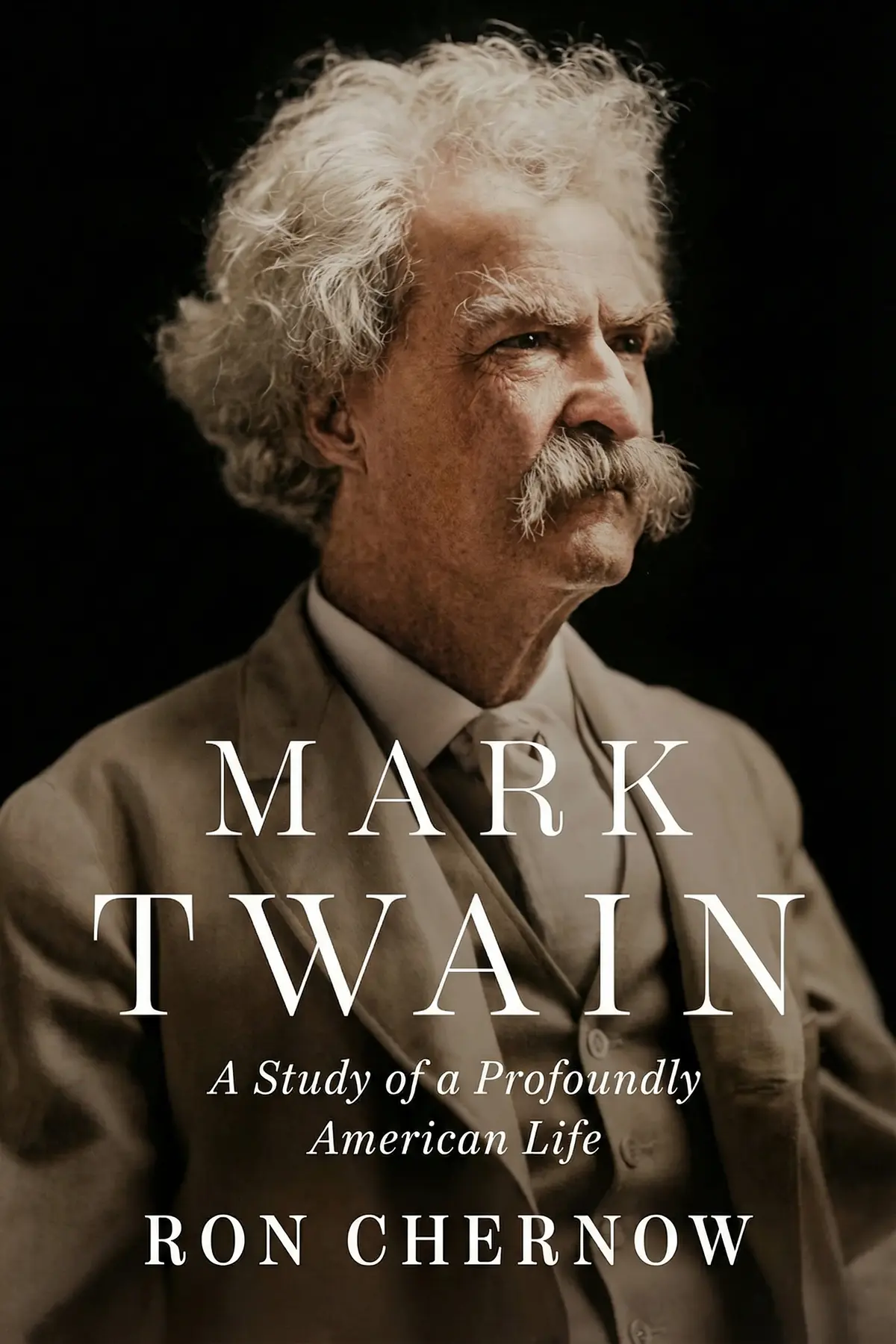
Ron Chernow follows Samuel Clemens from a Missouri river town to world fame, bankruptcy and grief. He shows how one man's ear for everyday speech changed American writing while his business follies nearly wrecked him.
1 min 07 sec
Almost everyone knows Mark Twain’s name, yet few could say why he still matters. The short answer is simple: his genius came from writing the way real Americans spoke, and his ruin came from wanting to be something else. In Mark Twain, Pulitzer Prize-winning biographer Ron Chernow follows Samuel Clemens across 1,174 pages, from a Missouri river town to world fame, bankruptcy and grief.
Chernow had a mountain of material. Twain wrote for more than 50 years and left hundreds of notebooks, thousands of essays and articles, and half a million words of autobiography, even though he mocked biographers for grasping only “the clothes and buttons of a man.”
Chernow’s portrait shows one restless appetite at work in both the joyful books and the disasters that darkened Twain’s last decades. Follow that appetite and you will see how a boy collecting river slang founded a national literature, and how chasing the wrong success can cost a gifted person almost everything.
2 min 04 sec
A barefoot troublemaker who hated school spent his youth on a muddy river, apparently going nowhere. Those idle-looking years produced the notebooks, the characters and even the name that would make him famous.
2 min 10 sec
His military career lasted two weeks and his silver mining came to almost nothing. Yet in rough frontier towns, standing in front of crowds, he found something far more valuable than ore.
2 min 20 sec
A photograph shown on a ship led to a marriage, a mansion and seventeen remarkable years. Chernow argues the woman behind that period mattered to the books as much as to the bank account.
2 min 16 sec
The Washington Post openly warned readers to avoid whatever Mark Twain was investing in. A child’s blanket clamp, a memory game and a miracle drink were only the warm-up to his costliest mistake.
2 min 14 sec
The writer who once sent a boy rafting toward an open horizon later imagined that same boy dying with a wasted life. Chernow shows what happened in between, and what it did to the jokes.
1 min 49 sec
He arrived and departed with the same comet in the sky. What he left between those two visits changed how an entire country’s writers allowed themselves to sound.
1 min 10 sec
Twain spent his life collecting other people’s words, and Chernow’s biography shows that this habit was both his gift and his lifeline. When the family went bankrupt, the voice paid the bills on a world tour. When the clamps, the memory game and the miracle drink collapsed, the notebooks were still there. His disasters came when he decided fame made him a master of any field, and the grief of his last years turned a joyful writer into a furious one.
You can carry something practical from his story. Keep a notebook of the phrases, scenes and people you meet, the way a young pilot wrote down the river slang for 12 feet of water. Try your ideas on real listeners and adjust until careful work sounds natural, as he did in frontier towns. And when a side scheme starts consuming the time your best work needs, remember the Paige Compositor, an expensive machine that could not finish a sentence.
Twain said biographers catch only a man’s clothes and buttons. What survives of him is something else: the sound of ordinary people talking, written down as if it mattered, because it did.
Most people know Mark Twain as the author of Tom Sawyer and Huckleberry Finn. Far fewer know the man behind the pen name: a barefoot boy from a slave-holding river town, a riverboat pilot with a notebook, a failed soldier, a frontier lecturer, a rich man's son-in-law, a bankrupt and finally a grieving, angry old man. Ron Chernow read through a huge archive to build this portrait. Twain left hundreds of notebooks, thousands of essays and articles, and half a million words of autobiography. Chernow traces how the river and the mining camps gave Twain his material, how live audiences sharpened his voice, and how a loving marriage carried him into his most productive years. He is just as clear about the other side. Twain wanted wealth more than literary rank, backed one useless invention after another and lost his wife's fortune by 1891. Then the deaths of his wife and two daughters deepened a gloom that had already settled over the writing of America's most joyful author. Readers come away understanding why Twain is called the father of American literature, and what his mistakes say about talent, money and loss.
Readers who loved Tom Sawyer or Huckleberry Finn and want the real life behind them.
Writers, speakers and teachers curious how a plain, spoken voice is built and tested.
Professionals tempted to chase side ventures who want a vivid cautionary tale about talent and money.
Ron Chernow, born in Brooklyn in 1949, studied English literature at Yale and Cambridge and wrote more than sixty articles for national publications. His first book, The House of Morgan, won the 1990 National Book Award for Nonfiction. His Rockefeller biography, Titan, was a bestseller, and Washington: A Life won the 2011 Pulitzer Prize for Biography. His Alexander Hamilton inspired the Hamilton musical, where he served as historical consultant.
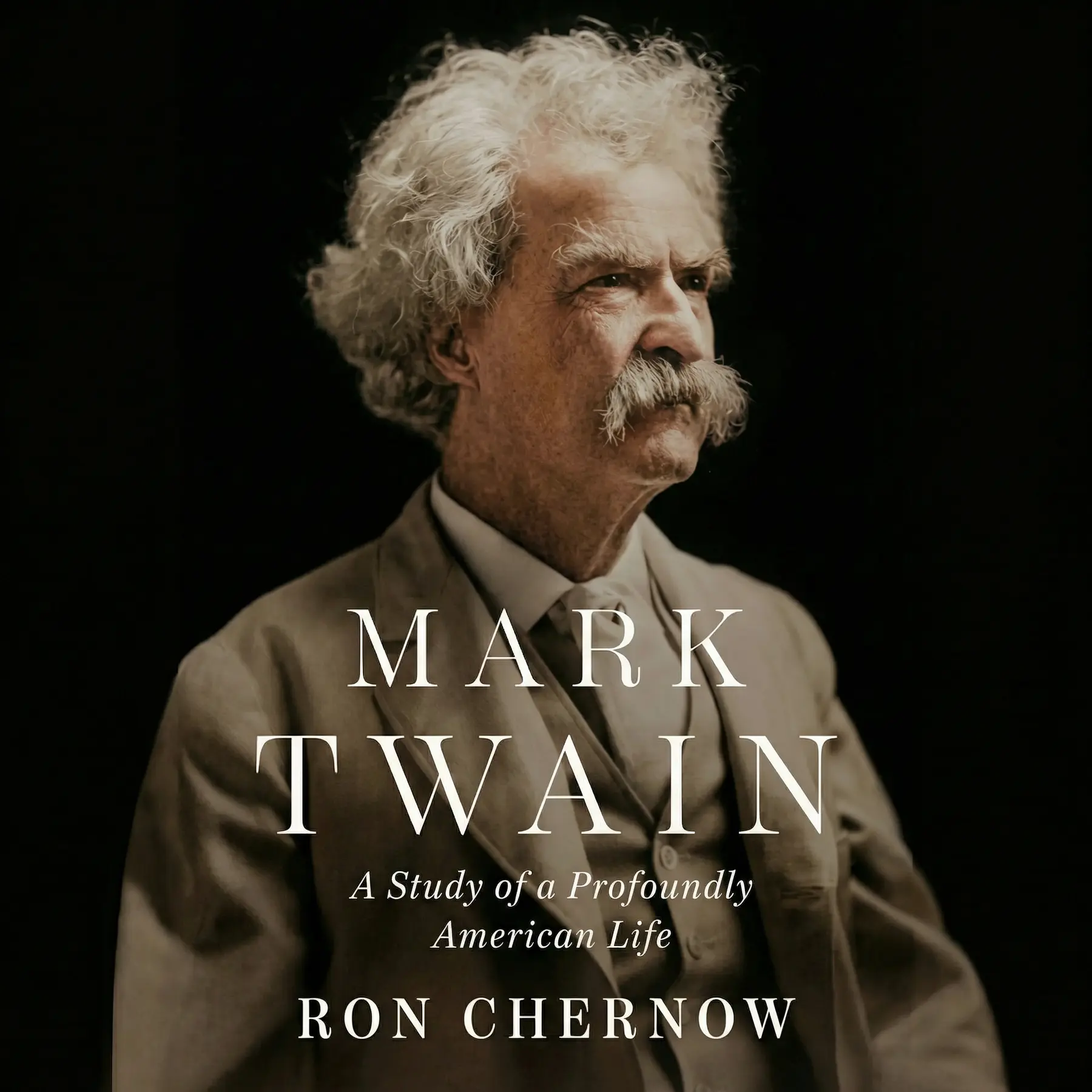
Listeners find this biography of Mark Twain remarkably thorough and well-documented, with superior writing and fascinating people throughout. Additionally, the book keeps the audience's attention from start to finish. However, the scale gets mixed reviews, as many find it too long at 1200 pages, and the tempo is criticized for being repetitive at times. While the work is very comprehensive, some listeners find it too detailed.
Ron Chernow has done it again by taking a legendary figure and peeling back the layers of myth to find the vulnerable, often infuriating man underneath. Frankly, I thought I knew Mark Twain, but this biography paints a far more complex picture of Samuel Clemens than the witticisms in the white suit suggest. The connection Chernow draws between Twain’s publishing efforts and his relationship with Ulysses S. Grant was particularly fascinating. It’s a massive undertaking at over 1,000 pages, but the prose is so elegant that the time flies by. You see the Gilded Age through the eyes of its greatest satirist. The research is deep and exhaustive. I was especially moved by the descriptions of his family life in Hartford; his devotion to Livy was the anchor of his chaotic life. This is easily the definitive biography of an American icon.
Show moreAfter hearing so much buzz about this, I finally dove in, and I’m just stunned by the scale of the research. Reading this felt like stepping onto a Mississippi steamboat alongside Sam Clemens himself. Chernow’s framing of Twain’s life between the two appearances of Halley’s Comet provides a poetic structure to a life that was otherwise quite messy. The way the author explores Twain’s transition from a young man in a slave-holding town to a national conscience is handled with incredible nuance. The writing is vivid and energetic. It’s rare to find a biography that captures both the humor and the deep melancholy of its subject so effectively. Yes, it’s a thick book, but every chapter adds a new layer to our understanding of the American identity. Absolutely essential reading for any fan of literature.
Show moreHow does a boy from a slave-holding river town become the most influential voice in American letters? Chernow answers this question with a staggering amount of detail and grace. Not gonna lie, I was worried about the length, but the author’s ability to weave Twain’s personal letters into the narrative makes it feel surprisingly intimate. You feel his excitement on the Mississippi and his crushing despair in the wake of his family’s health crises. The book brilliantly demonstrates how Twain’s identity was forged in the 'cultural crosscurrent' of Hannibal. It’s more than just a life story; it’s a history of 19th-century America. I loved the bits about his friendship with Helen Keller and his late-life political activism against imperialism. It’s a monumental achievement that honors the complexity of its subject. Chernow remains the king of the biography.
Show moreChernow’s ability to weave thousands of letters into a cohesive narrative is unparalleled in modern biography. This isn't just a collection of anecdotes; it's a deep psychological profile of Sam Clemens. The truth is, Twain was a deeply flawed man—selfish, impulsive, and often bitter—but Chernow makes you root for him anyway. The sections on his time in Nevada and San Francisco are riotously funny and perfectly capture the 'wild, uproarious energy' of the West. I was also impressed by the detailed account of his publishing house. Even though the business stuff is dense, it shows how desperately Twain wanted to be a tycoon. The book is a beautiful tribute to a man who basically invented the modern celebrity. If you have the patience for the page count, you’ll be rewarded with a masterpiece.
Show moreBeyond the white suit and the cigars, Chernow reveals a man plagued by grief and terrible investments. This biography is a masterclass in character study. It doesn't just focus on the literary triumphs like Huckleberry Finn; it dives into the domestic tragedies that shaped the author’s later pessimism. The death of his daughter Suzy and the struggles with Jean’s epilepsy are handled with such profound empathy. I appreciated how much space was given to his wife, Livy, who clearly acted as his moral and literary compass. Without her, Twain might have been a much darker, less disciplined writer. Some sections on his global speaking tours felt a bit long-winded, but the insights into his creative process made it worth the slog. It’s an intimate portrait of a man who was his own worst enemy.
Show moreThe final chapters paint a surprisingly dark picture of America’s favorite humorist, and that’s where this book really shines. Most people think of Twain as a jolly grandpa, but Chernow exposes the 'bottom of fury' that fueled his fun. Personally, I found the exploration of his later years—the loneliness, the cynicism, and his obsession with his 'angel-fish' club—to be the most revealing parts of the narrative. It’s a tragic arc. He went from being the most famous man in the world to a grieving father living in a self-imposed exile. The book is definitely long, and some of the financial details could have been trimmed. Still, the way Chernow contextualizes Twain within the Gilded Age is brilliant. You really understand why he was such a polarizing and yet beloved figure. It’s a heavy read but a rewarding one.
Show moreSam Clemens was a walking paradox—a skeptic who fell for every 'get rich quick' scheme in the book. This biography captures that duality perfectly. One moment he’s the world-wise satirist, and the next he’s a naive investor losing a fortune on a typesetting machine that never works. Gotta say, I appreciated how Chernow didn't shy away from Twain’s darker moods or his occasional lapses into racism. It makes the 'reconstructed' Twain of later years feel much more earned. The relationship with Livy is the heart of the book, and her role as his editor is fascinating. My only gripe is that the pacing stumbles in the middle when he’s traveling back and forth to Europe. A bit more focus on the writing of the major novels would have been nice. Overall, it’s a stellar, if slightly ponderous, work.
Show moreFinally finished this behemoth after three weeks of dedicated reading. It was a journey. While I found the Missouri secession error on page 66 a bit distracting, the rest of the book is an absolute treasure trove of information. Chernow’s background with the Grant biography really pays off here, as the scenes between the two men are some of the best in the book. The tragedy of Twain’s daughters, particularly Suzy’s death while he was away on tour, is written with such heartbreak that it stayed with me for days. It’s a very detailed look at a very loud life. Some might find the 1,200 pages a deterrent, but if you want to understand the man behind the mustache, there’s no better source. It’s a bit repetitive regarding his debts, but the prose keeps you moving.
Show moreIs it possible for a biography to be too thorough? In my experience with Chernow, he usually finds the right balance, but this one felt like it needed a much heavier editorial hand. While the detail is impressive, the pacing slows to a crawl during the endless descriptions of Twain’s failed business ventures and the Paige typesetter debacle. Furthermore, as a historian from the Midwest, I found it jarring to see the author claim Missouri seceded from the Union on page 66. That’s a significant factual blunder that makes me question other nuances regarding Twain’s early years in Hannibal. The book is well-written, and Chernow captures Twain’s voice beautifully when quoting his letters. However, the repetitive nature of Twain’s financial mismanagement became tedious after the first five hundred pages. It’s a good book, just incredibly overstuffed.
Show moreI wanted to love this, but 1,200 pages of financial mismanagement and domestic brooding is simply exhausting. Look, Chernow is a talented writer, but this book is bloated beyond belief. I felt like I was reading the same story of a failed business scheme over and over again. By the time we got to the 'angel-fish' years near the end of his life, the tone became quite unsettling and, quite frankly, a bit creepy. The author spends so much time on the minutiae of Twain’s daily schedule that the genius of his actual writing gets lost in the shuffle. I also noticed the historical error regarding Missouri’s secession, which is disappointing for a biographer of this stature. It lacks the tight narrative drive that made his Hamilton biography so compelling. It’s just too much information for the sake of information.
Show moreIt follows Samuel Clemens from his childhood in Hannibal, Missouri, through his years as a riverboat pilot, frontier writer and touring lecturer, to fame, marriage, bankruptcy and grief. Chernow shows how Twain’s ear for everyday American speech made him the founding father of American literature, while his faith in bad investments and the deaths of his wife and two daughters darkened his final decades.
It came from the river. While learning to pilot steamboats on the Mississippi from 1857, Clemens recorded crew slang in his notebooks. Mark twain was the call for water two fathoms, or 12 feet, deep. He later adopted the phrase as his pen name, and in time it became a brand bigger than the man himself.
Chernow describes him as a terrible entrepreneur who admired robber barons and chased wealth. He backed bed clamps for children, a memory board game and a drink called Plasmon that was really milk powder. His biggest loss was the Paige Compositor, a typesetting machine that could not even place periods. By 1891 he had spent his wife’s fortune, sold the family home and gone on a world lecture tour.
No one before Twain, this account holds, had tried to capture on the page how Americans actually spoke. Doing so freed American writers from formal British English. Ernest Hemingway traced all modern American literature back to Huckleberry Finn, and Lauren Michele Jackson describes Twain as the founder of a tradition that had matured by his death in 1910.
Three stand out in Chernow’s account. Gather material long before you know its use, as Twain did with his river notebooks. Test your voice on real audiences until careful work sounds natural, as he did on frontier lecture tours. And watch out when success in one field tempts you into another: his business ventures drained both his fortune and the time he once gave to writing.


Barack Obama


Masaji Ishikawa

Ben Macintyre

Virginia Woolf



James Shapiro
AUDIO SUMMARY AVAILABLE
Get the key ideas from Mark Twain by Ron Chernow, plus 5,000+ more nonfiction titles.