
15 min 16 sec
Available in: English
Time Smart: How to Reclaim Your Time and Live a Happier Life
Shows why feeling short of time damages happiness and health, and how to win back hours. Spot the traps that steal them, price them honestly, then find, fund and reframe your time.
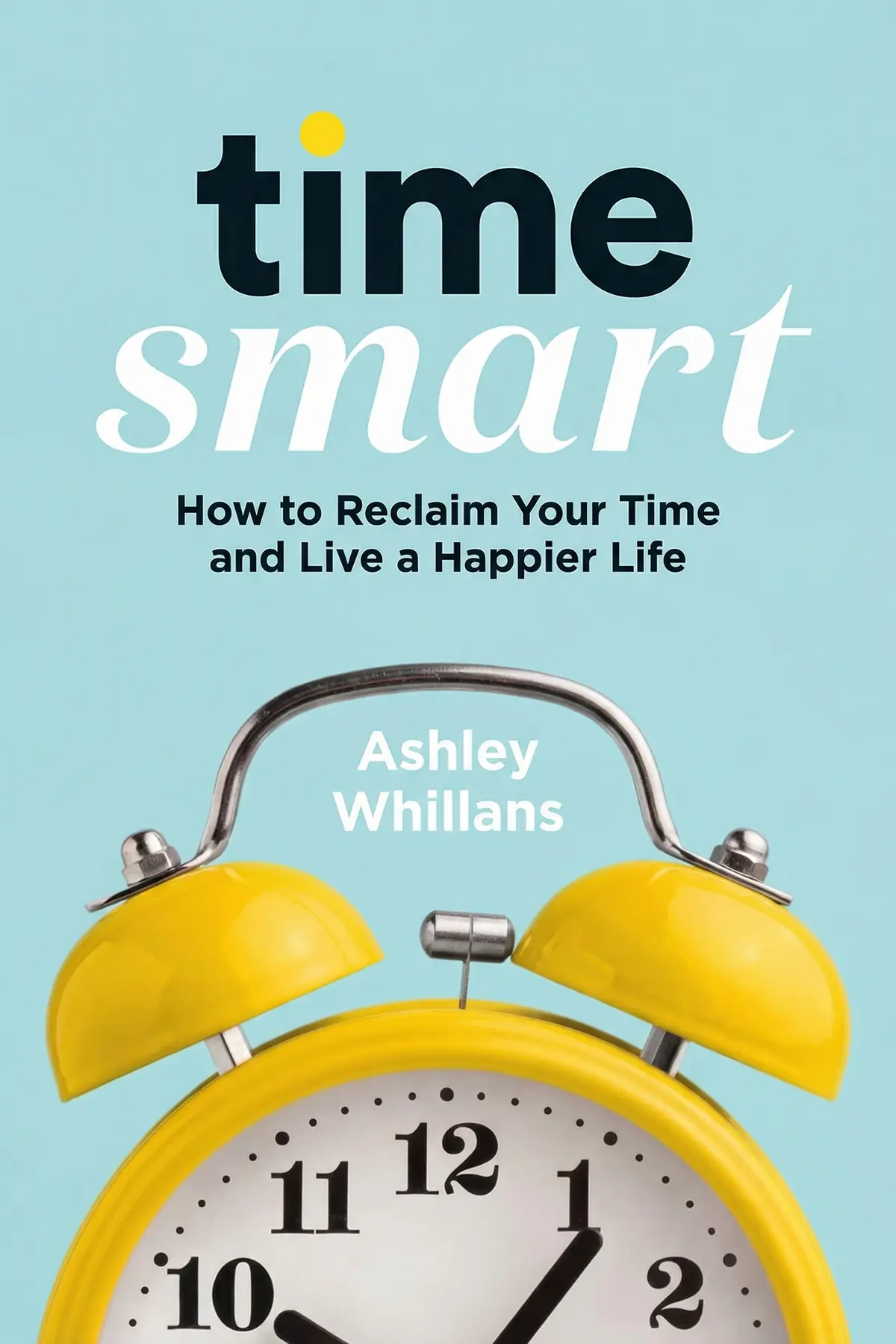
Table of Content
1. Introduction
57 sec
Four in five adults say they have more to do than time to do it. In Time Smart, Harvard Business School professor Ashley Whillans argues that this shortage does more damage than most people realize. In one study she cites, which covered 2.5 million Americans, time stress hurt happiness more than unemployment did.
Her case is that we spend and save money with care while our hours slip away unexamined, and that valuing time wisely makes people measurably happier. She calls the goal time affluence, the felt sense of having enough time for what you must do and what you want to do. Getting there starts with spotting the traps that steal time, then takes three moves: finding time, funding time and reframing time. Along the way you get a method for pricing a commute in vacation days, a test for which tasks to drop, and a better way to say no.
2. See what time poverty is really costing you
1 min 39 sec
Working hours have shrunk since the middle of the last century, yet people feel busier than any generation before them. Whillans explains why that feeling is far more costly than it looks, and what kind of problem it really is.
3. Spot the traps that shred your free time
1 min 52 sec
A free hour on a Saturday can vanish without a single plan being cancelled. Whillans names the habits and beliefs that splinter leisure, and one of them is something many people secretly feel proud of.
4. Put a price tag on every hour
1 min 55 sec
Saving fifteen cents a gallon sounds sensible until the same choice is measured in a different currency. Whillans offers a way to compare time and money directly, and some of the results are startling.
5. Find hidden hours in your ordinary day
2 min 09 sec
A college instructor made one small change to his phone and recovered more than a full day each year. A simple test, borrowed from tidying up a home, shows where your own spare hours are hiding.
6. Buying time beats buying things for happiness
1 min 53 sec
Paying someone else to cook or clean can feel lazy or indulgent. An experiment with forty dollars suggests the opposite, though the idea has drawn sharp criticism about who can really afford it.
7. Make the chores you can't avoid feel lighter
1 min 40 sec
Hotel cleaners changed nothing about their work except one idea, and their bodies responded. Whillans shows how the tasks you cannot drop or delegate can still become less of a drain.
8. Protect your time in the big decisions
1 min 59 sec
The most common way of turning down a request makes people trust you less. Whillans shows how to decline well, how to weigh career moves, and what organizations can do to give their people time back.
9. Conclusion
1 min 12 sec
Time Smart’s real claim is that most of the missing hours already exist. People work less than their grandparents did and still feel starved for time, because they guard every dollar and hand minutes away to alerts, detours and busyness worn like a medal. Whillans asks for a second set of books, one where a gas station detour is entered in hours and a cleaning service is entered in happiness as well as cost.
The practical start is modest. Log one ordinary day and mark every activity that brought neither pleasure nor meaning. Move one tempting app or inbox off your phone, as Davis did, and keep a short list by your computer for the next unexpected gap. Before any large decision, ask what it will cost in time. When you have to decline, leave busyness out of the reason.
Her target is a feeling, enough time for what you must do and what you want to do, and she chose it for reasons that have names: Marc and Paul. Most of us get gentler reminders that our hours are limited, and Whillans’s case is that we should count them anyway, the way we already count our money.
About this book
What is this book about?
Most people today work fewer hours than their grandparents did, yet four in five adults say they have more to do than time to do it. Ashley Whillans, a Harvard Business School professor who studies time, money and well-being, argues that this time poverty does real harm. People who feel it laugh less, feel less joy and are less healthy and productive. In one study she cites, time stress hurt happiness more than unemployment did. Her diagnosis is that we handle money carefully and hours carelessly. Notifications break leisure into what she calls time confetti, busyness passes for status, and small detours and long commutes quietly pile up into lost days. To make those costs visible, she converts time choices into happiness dollars. Her remedy rests on three moves: finding time by cutting activities that bring neither pleasure nor meaning, funding time by paying to escape tasks you dislike, and reframing the chores that remain. Readers get practical tools along the way, from a regimen checklist for unexpected free minutes to better ways of saying no and advice for managers who want less stressed teams.
Book Information
Who it's for
Hurried professionals
Professionals who work reasonable hours yet feel permanently rushed and distracted by their phones.
Those facing big choices
People weighing a job offer, a move or a longer commute who want to count the cost in time.
Bosses wanting calmer teams
Managers who want calmer, less stressed teams without simply asking them to work less.
About the Author
Ashley Whillans
Ashley Whillans is on the faculty at Harvard Business School, where her research examines how people's decisions about time and money shape their well-being, including the problem of time poverty. Born in Vancouver in 1988, she earned a BA, an MA and a PhD in social psychology from the University of British Columbia. A former actor, she has also given a TED Talk on work-life balance. Time Smart, published by Harvard Business Publishing in October 2020, is her first book.
Ratings & Reviews
Ratings at a glance
What people think
Listeners describe the book's guidance as beneficial and simple to digest, with one reviewer highlighting its foundation in scientific research. Furthermore, the tempo is well-regarded, with one person characterizing the style as conversational storytelling, and its utility for managing schedules is praised, as one listener points out it offers toolkits for reclaiming one's time. On the other hand, the core ideas get varied responses; while some consider them engaging, others feel the content lacks sufficient depth and weight. Perspectives on the reading experience also differ, with some finding the material enjoyable while others find it somewhat tedious.
Top reviews
Soontorn
The concept of 'happiness dollars' completely reframed my perspective on hiring a cleaning service. Whillans argues that our time has a literal monetary equivalent when it comes to personal joy. While some might find the math a bit cold, I found it incredibly liberating to see the data backing up my need for a break. Why do we feel so guilty about spending money to reclaim our weekends? This book provides the toolkit to stop that guilt in its tracks. I’m finally prioritizing my afternoon reading over mindless chores. It’s a short, punchy read that packs a significant psychological wallop.
Show moreJeeranan
Finally got around to doing the worksheets at the end of each chapter, and the insights into my 'idleness aversion' were startling. I always felt like resting was a sin, but Whillans uses behavioral psychology to show how that mindset actually destroys productivity. The Taylor vs. Morgan comparison was particularly eye-opening for my husband and me to discuss. We’ve since started implementing 'proactive time' in our morning routines to protect our focus. It isn't just about working less; it’s about making sure the time you do spend working actually counts for something. Highly recommended for the busy professional.
Show moreLaor
This book should be mandatory reading for every 'Type A' professional who thinks being busy is a personality trait. Whillans does a fantastic job dismantling the 'busyness as status' trap that keeps so many of us chained to our desks for no reason. The writing is conversational and moves quickly, which is a relief for a business-adjacent title from Harvard Press. I particularly loved the concept of 'proactive time' as a way to protect my focus from constant digital interruptions. It’s a wake-up call for anyone who inadvertently prioritizes their bank account over their mental well-being.
Show moreJack
After hearing Ashley Whillans on a podcast, I felt compelled to grab the full text to dive deeper into the science of 'time confetti.' Those tiny fragments of time lost to checking texts really do add up and ruin our ability to enjoy leisure. The book does a great job of explaining why we feel so frantic even when we aren't technically working. I didn't fill out every single worksheet, but the 'Yes... Damn!' effect is something I now identify daily. It’s a solid guide for anyone feeling overwhelmed by the digital tether of modern life.
Show moreGame
As someone who constantly prioritizes the hustle over my own sanity, this served as a necessary, albeit slightly uncomfortable, reality check. The way Whillans breaks down the trade-offs between time and money is fascinating from a behavioral psychology standpoint. I’ve started catching myself in 'time traps' I didn't even know existed, like choosing the cheaper, longer flight. This book isn't just about being efficient; it's about being intentional with the life you actually want to live. It’s a quick read, but I found myself taking pages of notes. My only gripe is that it feels geared almost exclusively toward corporate employees.
Show moreRatchada
Does anyone else feel like the term 'time poverty' was used a bit loosely here? While the '6 Time Traps' framework is intellectually satisfying, the language often blurs the line between 'busy by choice' and 'struggling to survive.' Personally, the research on how texting fragments our leisure—shredding it into 'confetti'—is brilliant and very relatable. I just wish the author had acknowledged that choosing time over money is a luxury many simply don't have. It’s a solid read if you can look past the slightly elitist undertones and focus on the actionable habit changes.
Show moreNum
Look, the core message here is vital, but the delivery occasionally feels more like an academic lecture than a lifestyle guide. Whillans is clearly brilliant, yet the repetition makes the middle chapters feel a bit tiresome to get through. I appreciated the data-backed approach to 'time traps,' especially the part about idleness aversion in American culture. However, a lot of the 'solutions' aren't revolutionary if you've ever read a productivity blog before. It’s a helpful resource for those who are truly clueless about their schedule, but others might find it a bit basic. The end-of-chapter summaries are the real MVP here.
Show moreBenjamin
To be fair, the research is solid, yet I couldn't help but feel like I was reading a very long version of 'just say no to your boss.' The advice to use vacation days and negotiate for remote work is great in theory, but it feels redundant in the post-2020 world. I did find the section on 'undervalued time' helpful, as I often spend hours hunting for a $10 discount. Realizing that my time is worth more than the coupon was a necessary wake-up call. It's a decent book, just don't expect it to reinvent the wheel if you’re already familiar with time management.
Show moreTantipat
Is it just me, or does this book assume everyone has a spare five grand to throw at their problems? The constant focus on 'outsourcing' grocery shopping or laundry feels remarkably out of touch with anyone not pulling a six-figure salary. Whillans is a Harvard professor, and it shows in her narrow view of what 'time poverty' looks like for the average person. If you're struggling to make rent, being told to value time over money feels like a slap in the face. It’s not that the science is wrong, but the application is for a very specific, privileged bubble.
Show moreBun
Not what I expected from a book that claims to help you manage your life better, especially since the author admits to being stressed while writing it. If the expert can't handle her own 'time confetti,' how am I supposed to trust these worksheets? The repetition of 'say no' and 'use your vacation days' felt like filler for a message that could have been a blog post. I did appreciate the section on technology traps, but the rest felt like a rehash of basic productivity tips. For a book about efficiency, it certainly took its time getting to the point. Total waste of my afternoon.
Show moreQuestions about this book
What is the main idea of Time Smart by Ashley Whillans?
Whillans argues that people manage money carefully but let time slip away, and that this time poverty hurts happiness, health and productivity. She cites a study of 2.5 million Americans in which time stress harmed happiness more than unemployment. Her goal is time affluence, the feeling of having enough time for what you must and want to do, reached by spotting time traps and then finding, funding and reframing time.
What is time confetti?
Time confetti is Whillans’s name for leisure that technology breaks into small, nearly useless pieces. In her example, 21 notifications can shatter a free hour into fragments of five or six minutes. She sees this as one of the biggest drivers of time poverty, and suggests fixes such as removing email from your phone or using apps that block email and social media at set hours.
What are happiness dollars in Time Smart?
Happiness dollars, written h$, convert the happiness from a time choice into the income that would produce the same lift, based on a benchmark where an extra $10,000 of household income raises life satisfaction by half a point. In these terms, outsourcing chores is worth h$18,000, socializing more than h$5,800 and a vacation h$4,400. Simply valuing time over money is worth about h$2,200 a year.
Is Time Smart only useful for wealthy people?
Some readers criticized the book as tilted toward the wealthy, because many solutions involve paying for services like Uber or housekeepers. Whillans acknowledges that people short of cash will probably not put time first, but she offers strategies that cost nothing, such as logging your day, cutting activities with no pleasure or meaning, and reframing chores. She also presents a study in which low-income African women benefited from time-focused choices.
How do you say no without hurting relationships, according to Whillans?
Whillans treats saying no as an investment in future time, but warns against claiming you are too busy. People take time excuses personally and trust you less afterward. She suggests giving no excuse at all, saying your energy is low, or citing money, which tends to land better because it seems outside your control.
Featured in
Readers also enjoyed



AUDIO SUMMARY AVAILABLE
Listen to Time Smart in 15 minutes
Get the key ideas from Time Smart by Ashley Whillans, plus 5,000+ more nonfiction titles.
- 5,000+ titles
- Listen as much as you want
- 7-day free trial
- Cancel anytime









