

15 min 36 sec
Available in: English
 ไทย
EnglishไทยThis Is How They Tell Me the World Ends: The Cyberweapons Arms Race
A New York Times reporter traces the secret global trade in software flaws, showing how spy agencies hoarded them, how the weapons leaked, and why patching and disclosure now protect ordinary people.
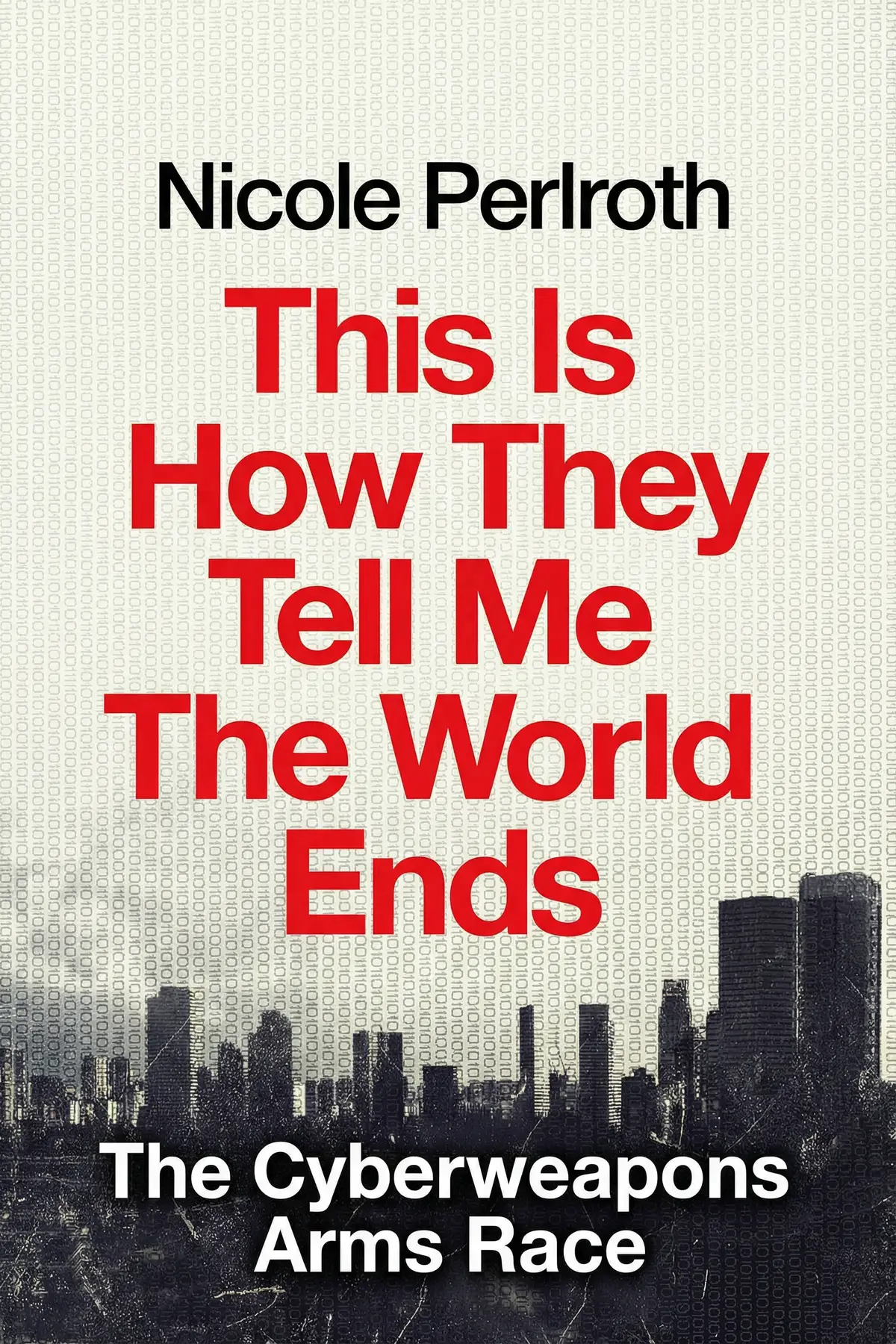
Table of Content
1. Introduction
1 min 01 sec
Most of us postpone software updates and assume our devices are safe enough. In This Is How They Tell Me the World Ends, longtime New York Times cybersecurity reporter Nicole Perlroth shows why that is a risky bet. Just before Christmas 2015, Russian hackers hidden inside the networks that ran Ukraine’s infrastructure cut electricity and heat across the west of the country for six hours, in deep winter. A year later they darkened Kiev. No nation had ever taken over another’s grid like that.
Perlroth traces the road to that moment. Governments, with the United States in front, spent years buying secret software flaws and hiding them so they could spy, rather than letting them be fixed. Since the whole world now runs on the same chips and code, those weapons leak and come back. Her reporting explains the market behind the headlines, why every unpatched device is an open door, and what a defense-first policy would look like.
2. Understand the hidden flaw that opens any device
1 min 41 sec
Strong encryption was supposed to keep messages private. Then a leak revealed that the world’s top spy agency had found a way around it, and that American taxpayers had helped pay for it.
3. Learn why secret markets for hacking tools are risky
2 min 00 sec
Two young hackers at a Florida convention refused to say a single word about their customers. Their silence pointed to a trade where nobody can check prices, promises or what happens to the goods.
4. A cyberweapon never stays where you aim it
1 min 50 sec
A digital attack built to slow Iran’s nuclear program worked for years without anyone noticing. Then it turned up on tens of thousands of machines in over a hundred countries, and outsiders started picking apart how it was made.
5. Spot who really profits from digital spying
1 min 55 sec
After one famous attack, nearly every country wanted cyberweapons of its own. A leak from an Italian firm showed who was buying, and the customer list included governments known for crushing dissent.
6. Install the update now, and know why
1 min 50 sec
One former NSA hacker was warned at an airport to stay silent. He spoke anyway, and a Chinese break-in at Google later pushed tech giants to start paying people they used to sue.
7. Understand the blackout that served as a warning
2 min 04 sec
A White House summit cut one country’s cyberattacks dramatically, for a while. Another rival chose a different message, planting itself inside the systems that keep water and electricity flowing.
8. See how leaked spy tools put whole towns at risk
1 min 56 sec
In 2016 an anonymous group claimed to have the NSA’s own hacking arsenal and began giving it away. What followed included WannaCry, which spread to 150 countries within 24 hours, and a wave of ransomware that later held over 600 American towns and cities hostage.
9. Conclusion
1 min 19 sec
Perlroth’s story is an arms race with a twist: the weapons were designed to stay hidden, and some that surfaced, like Stuxnet and EternalBlue, ended up being turned against their makers and the wider world. For decades the United States put offense first, finding and stockpiling flaws, while its companies rushed products out and patched later and its grids, hospitals and towns stayed exposed. Experts agree no network can be made perfectly secure. Perlroth argues it can still be made much harder to break.
Her proposals are modest and concrete. Test security repeatedly before a product ships or a system goes online, as Norway and Japan require for communications, finance, transport and electricity; after Japan did so in 2005, attacks fell by half. Restore and strengthen the national cybersecurity coordinator role eliminated in 2018. Cap how long an agency may keep a zero-day secret, and alert the public when it is handed over.
For one person, the lesson is smaller and immediate. Each update is a lock arriving for a door someone else has already found. Fit it today, because someone should do something, and part of that something is yours.
About this book
What is this book about?
Most people assume their phones and laptops are reasonably safe, and that software updates can wait. Nicole Perlroth, who covered cybersecurity for the New York Times for a decade, shows why that assumption is dangerous. At the center of her story is the zero-day, a hidden flaw that lets an intruder in unseen, and the secret market where hackers sell such flaws to the highest bidder. Perlroth follows that market from early bug hunters who were sued for reporting problems to intelligence agencies with huge budgets that bought flaws and kept them secret. She tells how Stuxnet, the weapon built to slow Iran's nuclear program, escaped onto the open internet, how brokers sold spying tools to governments with poor human rights records, and how stolen NSA tools fed ransomware attacks on hundreds of towns. Readers get a clear map of how the cyberweapons race works, who profits from it, and what Perlroth thinks would make the world safer, from strict security testing to time limits on hidden flaws.
Book Information
Who it's for
Curious about security warnings
Professionals who handle company devices or data and want to understand the threats behind security warnings.
Responsible for connected systems
Founders and managers responsible for connected systems, from office networks to factory equipment.
Curious how cyberattacks connect
News readers curious how hacking, spying and ransomware attacks on cities are connected.
About the Author
Nicole Perlroth
Nicole Perlroth spent ten years as a cybersecurity reporter at the New York Times. She covered some of the most serious digital attacks of that period, including North Korean hackers who targeted Hollywood, Russian intrusions into nuclear power plants and Iranian operations against gas companies. This Is How They Tell Me the World Ends was her first book.
Ratings & Reviews
Ratings at a glance
What people think
Listeners consider this book an essential read that is meticulously researched and written in accessible language, creating the atmosphere of a gripping spy thriller. The text serves as a broad introduction to cybersecurity with a focus on devastating cyber warfare, and listeners value the way it details various exploits extensively without becoming overly technical. Though listeners admit the material is frightening, they ultimately find it to be quite enlightening.
Top reviews
Harper
This book reads more like a high-stakes espionage thriller than a dry piece of investigative journalism. Nicole Perlroth somehow takes the invisible, complex world of zero-day exploits and turns it into a pulse-pounding narrative that is impossible to put down. It's frankly terrifying to realize how much of our infrastructure relies on code that is fundamentally broken. I was particularly struck by the descriptions of how the US government essentially birthed this underground market only to lose control of it to adversaries like Russia and China. The level of research here is astounding, yet the language remains accessible for those of us who aren't tech-savvy. My only small gripe is that the ending felt a bit abrupt compared to the sprawling history of the first half. Still, this is essential reading for anyone with a smartphone.
Show moreTuck
Picked this up because I wanted to understand more about cybersecurity, and I ended up with a permanent sense of digital dread. The way Perlroth tracks the evolution of hacking from teenage pranks to global weaponization is masterfully done. She has a real talent for taking dense, technical concepts and explaining them through the lens of human stories and geopolitical consequences. Gotta say, the section on the Jeep Cherokee being remotely hijacked was the moment it all clicked for me—this isn't just about data theft; it’s about physical safety. While the book is quite long and repetitive in a few places, the information is too vital to ignore. I’m definitely thinking twice before I update my 'smart' appliances now.
Show moreWissanu
Wow, I haven't felt this anxious after reading a book in a very long time. Perlroth has managed to write a non-fiction account of cybersecurity that feels exactly like a high-budget spy movie. The way she describes the underground markets where vulnerabilities are traded like stocks is simply mind-blowing. It really highlights the hubris of the Western intelligence community and how their own tools are now being used against them by Iran and North Korea. Truth is, I used to think 'hacking' was just about passwords, but now I see it's about the very fabric of our modern society. My only criticism is that I wish there were more actionable solutions offered at the end, but maybe there just aren't any.
Show moreVilaiporn
Not what I expected at all, but in the best possible way. I thought this would be a dry technical manual, but it’s actually a sweeping geopolitical drama. The stories about Pegasus and the targeting of journalists and activists really brought the stakes home for me. It’s one thing to hear about 'cyberwar' in the abstract, but it’s another thing to see the human cost of these tools being sold to authoritarian regimes. Perlroth’s prose is sharp and she doesn't pull any punches when criticizing both foreign actors and US policy. Some might find the tone a bit too alarmist, but given the facts she presents, I think a bit of alarm is probably justified. Easily one of the best non-fiction books I've read this year.
Show moreHannah
After hearing so much hype about this book, I finally sat down with it and was floored by the level of access Perlroth must have had to write this. She manages to pull back the curtain on a world that most of us will never see, and she does it without getting bogged down in jargon. The way she explains how a single line of code can be more powerful than a nuclear missile is just brilliant. It really changed my perspective on why our government seems so worried about foreign tech companies. The narrative is fast-paced and the storytelling is top-notch, making it feel more like a thriller than a report. Highly recommended for anyone who wants to understand the new frontline of global conflict.
Show moreWei
Ever wonder why your toaster needs an internet connection? After finishing this, you'll probably want to go back to analog everything. Perlroth provides a comprehensive, eye-opening introduction to the cyber arms race that is currently happening right under our noses. The focus on 'Zero Days'—those unpatched software vulnerabilities that sell for millions—is both fascinating and deeply disturbing. It’s not just about hackers in hoodies anymore; it’s about state-sponsored warfare capable of shutting down power grids or disabling a nation’s defense systems. I've been interested in tech for a while, but the depth of detail regarding the Stuxnet attack was new to me. It makes you realize that the next world war won't be fought with traditional bombs, but with clicks.
Show moreChamlong
To be fair, this is probably one of the most important books of the decade, even if it’s a bit of a dense slog at times. Perlroth is an incredible reporter, and she clearly knows the 'cyber' beat better than almost anyone at the New York Times. The sheer volume of names, agencies, and acronyms can get overwhelming if you aren't paying close attention, which makes the middle section feel a bit repetitive. However, the core message is clear and frightening: we are far more vulnerable than we think. I appreciated the nuance she brought to the discussion of the NSA and how 'defensive' tools often become offensive weapons in the wrong hands. It’s a 5-star topic with 3-star pacing, so I’m settling on a 4.
Show moreJib
The chapter on the Soviet-era typewriters with magnetic coils was absolutely wild and set the stage perfectly for the rest of the book. Personally, I love history, so seeing how we got from physical bugs to digital zero-days was the highlight for me. Perlroth does a great job of showing how the internet was never built with security in mind, and we’re all paying the price for that convenience now. The writing is punchy and direct, which helps when the subject matter gets a little technical. It's a massive book, but it moves quickly once you get into the rhythm of her reporting style. If you care about privacy or just want to know how the world actually works behind the screens, you need this.
Show moreOksana
Frankly, this book is a bit of a nightmare for anyone who likes to sleep soundly. I found myself checking my phone settings every twenty pages while reading about the 'zero-click' exploits that can infect your device without you even touching a link. The detail she goes into regarding the Shadow Brokers and the leak of NSA tools is exhaustive and, quite honestly, pretty embarrassing for our intelligence agencies. It’s a bit long-winded in the later chapters and could have used a tighter edit to keep the momentum going. Still, the insight into the 'Internet of Things' and how our infrastructure is essentially a house of cards is worth the time. It’s a sobering look at our digital reality.
Show moreLillian
Look, I wanted to love this, but the unrelenting gloom-and-doom eventually started to feel a bit exhausting. While I don't doubt the accuracy of Perlroth's reporting—she’s a top-tier journalist—the book feels like it’s trying to scare you on every single page. By the time I got to the third or fourth example of a power grid being compromised, I felt more numb than enlightened. There is a lot of great information here, especially about the history of the NSA, but the narrative often circles back to the same 'we're all doomed' sentiment without much variation. It’s a great resource for facts, but as a reading experience, it can be a bit of a downer. I'd recommend reading it in small chunks.
Show moreQuestions about this book
What is the main idea of This Is How They Tell Me the World Ends?
Nicole Perlroth argues that governments, especially the United States, built a cyberweapons arms race by buying secret software flaws called zero-days and hiding them for spying. Because every country now uses the same hardware, software and internet, those weapons escape and return. Stuxnet spread to over a hundred countries, and leaked NSA tools powered ransomware such as WannaCry.
What is a zero-day?
A zero-day is a flaw in hardware or software that has not been made public, so the company that makes the product has had zero days to fix it. Someone who exploits it can get in without being detected, for example reading passwords, emails and card details through a browser, copying files or recording keystrokes.
How did leaked NSA tools lead to ransomware attacks?
In 2017 a group called the Shadow Brokers released 20 NSA exploits, including EternalBlue, which targeted Microsoft software. Many machines ran old or pirated Windows and were never patched. WannaCry, traced to North Korea, used EternalBlue code to reach 150 countries in 24 hours, and Russia’s NotPetya also grew from it. Between 2019 and 2020, more than 600 American towns and cities were hit by ransomware.
What does Perlroth recommend to improve cybersecurity?
She calls for putting defense ahead of offense. Products and systems should be tested for security repeatedly before release, as Norway and Japan require for key sectors; Japan saw attacks fall by half after 2005. She also urges restoring the national cybersecurity coordinator role, limiting how long agencies can keep zero-days secret, and publishing advisories when flaws are disclosed.
Who should read This Is How They Tell Me the World Ends?
It suits readers who want to understand why cyberattacks keep growing, from professionals responsible for company systems to anyone curious about spying, hacking and ransomware. Its most practical lesson for individuals is simple: install verified software updates promptly, since every unpatched flaw is a possible way in for criminals or hostile governments.
Readers also enjoyed

A Warning
Miles Taylor



AI 2041: Ten Visions for Our Future
Kai-Fu Lee

Abolish Rent: How Tenants Can End the Housing Crisis
Tracy Rosenthal


Abortion: Our Bodies, Their Lies, and the Truths We Use to
Jessica Valenti


Adults in The Room: My Battle With Europe’s Deep Establishment
Yanis Varoufakis
AUDIO SUMMARY AVAILABLE
Listen to This Is How They Tell Me the World Ends in 15 minutes
Get the key ideas from This Is How They Tell Me the World Ends by Nicole Perlroth, plus 5,000+ more nonfiction titles.
- 5,000+ titles
- Listen as much as you want
- 7-day free trial
- Cancel anytime









