

14 min 48 sec
Available in: English
This Could Be Our Future: A Manifesto for a More Generous World
Shows how the belief that money should guide every decision took hold, what it has cost culture, workers and trust, and offers a four-part method for weighing choices against a wider set of values.
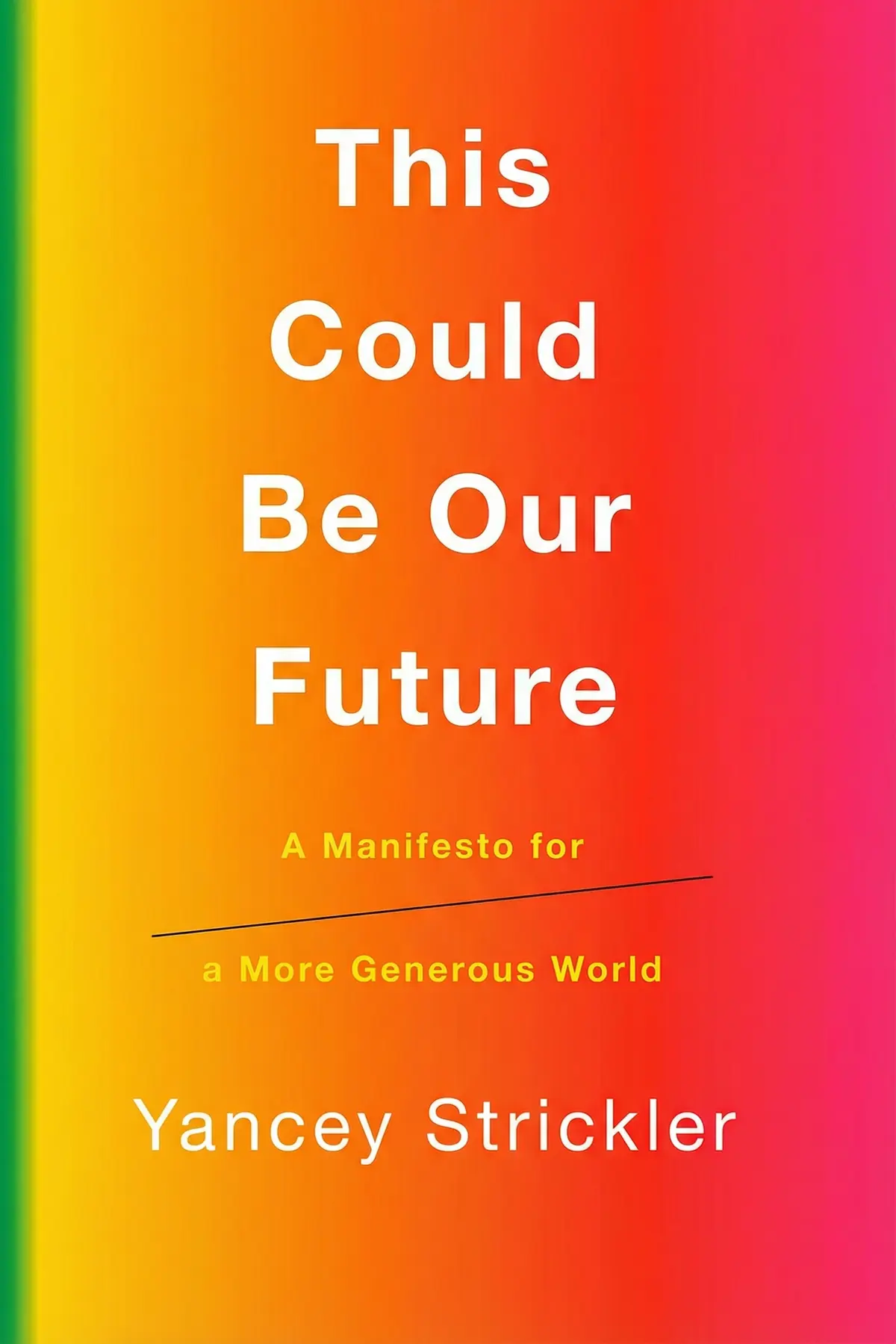
Table of Content
1. Introduction
54 sec
If every choice at work and at home seems to come down to what pays most, you may assume that is simply how the world runs. In This Could Be Our Future, Kickstarter co-founder Yancey Strickler argues that it is not: the rule that money should decide everything is a human invention, and a fairly recent one. He calls it financial maximization.
His case is that this one idea has made the world more distrustful, more uniform and more unequal, and that a wider set of values can replace it without anyone becoming less rational. The evidence runs from a prisoner’s dilemma at a Cold War think tank to Adele’s concert tickets and basketball’s slow embrace of the three-point shot. Along the way, Strickler offers a four-part tool, borrowed from a Japanese lunch box, for testing your next big decision against far more than the paycheck.
2. Spot the money rule you never agreed to
1 min 45 sec
A website where strangers fund each other’s art sounded impossible to almost everyone in 2005. Their certainty reveals something about the rules we treat as natural, and about the one rule that shapes nearly every modern decision.
3. See through the logic that rewards betrayal
1 min 48 sec
Two prisoners would both be better off staying loyal. Yet a famous think tank concluded that the smart move is to turn on your partner, and that conclusion now sits behind decisions in boardrooms and governments.
4. Understand how money logic made culture sound alike
1 min 54 sec
One fairly ordinary country song held the top spot for eight months. The reason has little to do with the song, and it also explains the endless sequels at the cinema and the vanishing shops on city streets.
5. Recognize the playbook that drains companies
1 min 52 sec
Worker pay nearly doubled in one generation and barely moved in the next, while executive pay soared. Strickler describes a repeating four-stage pattern behind that split, and its last stage lands on ordinary towns.
6. Measure a good life with more than money
1 min 49 sec
By the logic of national accounts, the ideal citizen would drive an oversized car, fall seriously ill and keep getting divorced. That absurd portrait exposes a gap between what our numbers praise and what we know is good.
7. Weigh big decisions in four boxes
1 min 48 sec
A well-paid job at a company you disagree with looks like an easy yes to one part of you. Strickler’s lunch-box method gives three other parts of you a vote, and their answers often differ.
8. Win the long game by counting overlooked value
1 min 47 sec
Basketball players ignored a scoring rule for over twenty years because the odds looked bad. A pop star turned down easy money from resellers. Both show what happens when someone counts a kind of value others miss.
9. Conclusion
1 min 11 sec
Strickler’s book is, finally, an argument about what counts as sensible. For half a century the rational choice has meant the one that pays most, a standard drawn from a Cold War game and carried into radio playlists, film slates, city streets and paychecks. Money still matters in his account. It simply becomes one compartment among several, sitting beside the people around us, the person we want to become and the world we will hand on.
His examples suggest that this wider view can win on its own terms. Kickstarter grew without selling, Adele filled her shows with real fans, and basketball teams scored more once they valued the shot everyone had dismissed.
At your next real crossroads, whether a job offer, a move or a business call, sketch the four boxes and see which ones the obvious answer starves. When a metric at work declares something a success, ask what it fails to count. And give change the time it needs, remembering that a morning jogger once looked suspicious enough to report.
The world built around maximizing grew out of an idea, and ideas can be built differently.
About this book
What is this book about?
Most people assume the sensible choice is the one that pays most, in business and in private life. Yancey Strickler, a co-founder of Kickstarter, argues that this assumption is a recent invention. He calls it financial maximization and traces it to Milton Friedman's view of profit and to Cold War game theory, which taught leaders that betrayal is the rational move. Strickler follows the idea into radio playlists, Hollywood sequels, city streets and paychecks. He shows how it has narrowed culture, pushed wealth toward a small Maximizing Class and turned national success into a spending count that would reward illness and divorce. His alternative is Bentoism, named after the Japanese lunch box. It splits every decision into four compartments: your present self, your future self, the people around you and the world to come. Through Kickstarter's refusal to sell, Adele's anti-scalping tickets and basketball's slow embrace of the three-point shot, readers get a way to make choices that stay rational while counting more than money, and a reason to be patient while society catches up.
Book Information
Who it's for
Professionals weighing an offer
Professionals weighing a well-paid offer against their principles or their family's needs.
Leaders wanting long-term growth
Founders and managers who want to grow a company without stripping it for short-term profit.
Asking how inequality began
Readers uneasy about inequality and sameness in culture who want to understand where they came from.
About the Author
Yancey Strickler
Yancey Strickler is an American author and entrepreneur and a former music critic. He co-founded Kickstarter, the crowdfunding platform for creative projects, and served as its CEO, giving him firsthand experience running a company that refused to put profit above everything else. He has spoken at the Museum of Modern Art in New York City, the Sundance Film Festival and MIT. The World Economic Forum named him a Young Global Leader in 2015, and he appeared on Fortune's 40 Under 40 list.
Ratings & Reviews
Ratings at a glance
What people think
Listeners find the book highly accessible, with one mentioning that the final chapter is especially gripping. The subject matter earns high marks, as one listener notes that it provides tools for reshaping our future.
Top reviews
Suthee
Picked this up because I’ve been feeling burnt out by the 'grind' culture that seems to dominate every facet of modern life. Yancey Strickler offers a refreshing alternative to the usual corporate obsession with maximizing shareholder value. His concept of Bentoism—balancing 'Now Me' with 'Future Us'—is a practical framework that I’ve actually started using for my own career decisions. The prose is incredibly smooth and easy to digest, which is rare for a book that touches on economic theory. While some might call it idealistic, I think we desperately need this kind of optimism right now. The way he breaks down the shift since the 1970s really helped me understand why our current system feels so broken. It’s a compelling call to action that doesn't just complain about the problem but actually provides a vocabulary for building something better. Definitely a must-read for anyone looking for a more meaningful way to live and work.
Show moreMaksim
Finally got around to reading this manifesto, and the last chapter alone makes the entire journey worthwhile. It’s where everything clicks into place. Strickler doesn't just complain about the status quo; he provides actual tools for redrawing the roadmap of our lives. I’ve been thinking a lot about the 'Future Me' quadrant in my own life lately. It’s so easy to get caught up in immediate financial security that we forget about the legacy we want to leave behind. The book is remarkably readable and avoids the dry, academic tone you might expect from a topic like this. It felt like having a long conversation with a very smart, very hopeful friend. If you’re feeling cynical about the direction of the world, this might be exactly the antidote you need. It’s a bold vision for a society that values more than just the bottom line.
Show moreTawee
Wow. I didn't think a book about economic philosophy would make me think so much about the Chilean miners or the way we structure our neighborhoods. Strickler has a gift for making complex ideas feel personal and urgent. The way he challenges the idea of 'rational self-interest' is brilliant. He shows that we are actually hardwired for cooperation and long-term thinking, but our current economic incentives suppress those instincts. I found the sections on 'Future Us' to be particularly moving. It’s a reminder that our actions today ripple out for decades. The book is incredibly engaging, and I appreciated the lack of jargon. It feels like a genuine attempt to provide tools for reshaping our future rather than just another academic critique. Highly recommended for anyone who wants to believe a better world is possible.
Show moreNathan
The chapter on the 1970s shift toward financial maximization was a total eye-opener for me. It’s easy to assume the world has always been this way, but Strickler proves it was a conscious choice—which means we can choose something else. This book is a bold, necessary manifesto for a new era. I loved the emphasis on 'meaning' over just 'money.' The Bentoism tool is simple but profound; I've used it to evaluate my last three major projects. It’s rare to find a book that is both this readable and this transformative. Personally, I found the tone to be perfectly balanced—not too cynical, not too naive. He acknowledges the difficulty of the task but insists that we have the agency to change things. If you're looking for a book that will make you rethink your entire relationship with work and success, this is it. It’s a 5-star vision for the next thirty years.
Show moreSupachai
Ever wonder why we feel so hollow despite having more 'stuff' than ever before? This book dives into that void. Strickler traces our current predicament back to Milton Friedman’s 1970 essay and shows how that single-minded focus on profit has warped our values. I loved the connection he made to Maslow’s Hierarchy of Needs, suggesting that our society is stuck at the bottom of the pyramid when we should be aiming for self-actualization. The writing is punchy and direct. Some of the examples, like the mention of Taylor Swift and Adele as paragons of value-based decision making, felt a little out of place, but the overall message resonates. It's an important book for anyone in a leadership position who wants to look beyond the quarterly earnings report. It makes you realize that money is just one metric among many.
Show moreLaor
As someone who has always been skeptical of the 'shareholder value' mantra, this was a refreshing deep dive into how we got here. Strickler does a great job of explaining the cultural shift that happened in the 1980s. I found the statistics about college students' changing goals—from finding meaning to making money—to be particularly revealing. It confirmed a lot of what I’ve felt intuitively for years. The Bentoism framework is a clever way to visualize our responsibilities to our future selves and our communities. My only gripe is that it sometimes feels a bit too optimistic about how easily these changes can be implemented. Still, the truth is that we need these kinds of big-picture ideas to spark real conversation. It’s a solid 4-star read that will definitely change the way you look at your bank account and your life goals.
Show moreDylan
Yancey Strickler writes with a level of infectious optimism that is hard to find in economic literature these days. He’s not arguing that profit is inherently evil, but rather that it has become our only metric for success, which is a dangerous imbalance. The book is highly readable, and I found myself fly through it in just a couple of sittings. The anecdotes, from the Chilean miners to the evolution of Kickstarter, help ground the more abstract theories. I did think some sections were a bit repetitive, and the distinction between individual and corporate responsibility could have been sharper. However, the core message—that we can choose a different future—is powerful. It’s a great book for book clubs because it sparks so much debate about personal values and societal priorities. We need more of this kind of thinking in the mainstream.
Show moreSukit
This book offers a fascinating look at 'Bentoism,' a framework that I’ve already started applying to my weekly planning. It's essentially a SWOT analysis for your soul. Strickler argues we've been stuck in the 'Now Me' box for far too long, and it's killing our collective potential. Look, the writing isn't perfect, and he sometimes glosses over the harder questions of policy, but the shift in perspective he advocates for is vital. I liked the bit about how we’ve turned everything into a competition, like a never-ending dog show. It’s an exhausting way to live. This book provides a way out of that mindset. It’s accessible, thought-provoking, and ultimately very hopeful. A great read for anyone who feels like the current 'system' isn't working for them.
Show moreThanakorn
While I appreciate Strickler's diagnosis of our society’s obsession with profit, the actual solutions felt a bit thin. He argues convincingly that financial maximization is the root of many modern ills, from the death of local radio to the rise of consumer debt. However, the 'Bentoism' solution feels more like a personal productivity hack than a systemic fix for global capitalism. I also found it strange that a book about the year 2050 barely scratches the surface of the climate crisis. How can we talk about 'Future Us' without a rigorous plan for environmental sustainability? It’s a well-written manifesto, and I agree with the core sentiment, but it lacks the analytical depth I was hoping for. To be fair, it’s a quick and engaging read, but don’t expect a detailed economic roadmap. It’s more of a philosophical starting point than a finished plan for the future.
Show moreNing
Not what I expected from a tech founder, but unfortunately not in a way that felt grounded in reality. The author spends a lot of time cheerleading for a 'rosy' future without acknowledging the messy, difficult work required to get there. He oversimplifies complex economic issues, often conflating individual choices with massive corporate structures. For example, blaming individuals for Wal-Mart’s success while ignoring the structural factors that force people to shop there felt like a major oversight. The tone is very 'manifesto-lite'—heavy on inspiration but light on rigor. I found the fictionalized scenario set in 2050 to be particularly unconvincing and a bit like a fairy tale. Frankly, if you’ve read any serious critique of neoliberalism, you won't find much new here. It feels like it was written for people who have never questioned capitalism before.
Show moreQuestions about this book
What is the main idea of This Could Be Our Future?
Yancey Strickler argues that financial maximization, the belief that making the most money should guide every choice, is an invented idea rather than a law of nature. He traces it to Milton Friedman and Cold War game theory, and shows how it has fed distrust, cultural sameness and inequality. His alternative is to weigh decisions against a wider set of values, which he argues is just as rational.
What is Bentoism?
Bentoism is Strickler’s decision tool, named after the Japanese bento box with its separate compartments. It splits your values into four boxes: Now You, your present self-interest; Future You, the person you want to become; Now Us, the people around you; and Future Us, the world your children will inherit. Before a big choice, you consider how it affects each box instead of only the money.
How does Strickler say financial maximization affects culture?
He points to radio, where ownership limits were lifted until two companies bought half of American stations in a year and corporate stations now overlap by up to 97 percent in what they play. He notes that 61 percent of new Hollywood films are sequels, prequels or adaptations, and that rising rents have pushed small venues and shops out of New York.
How can I apply the ideas in This Could Be Our Future?
When facing an important decision, draw four compartments on a sheet of paper for your present needs, your future hopes, the people who depend on you and everyone’s future. Note how the choice affects each, then look for a path that serves as many as possible. At work, question metrics that count only money, the way GDP counts spending on illness and divorce as growth.
Readers also enjoyed



Adults in The Room: My Battle With Europe’s Deep Establishment
Yanis Varoufakis


1929: Inside the Greatest Crash in Wall Street History--and How It
Andrew Ross Sorkin

23 Things They Don’t Tell You About Capitalism
Ha-Joon Chang
A Little History of Economics
Niall Kishtainy

AUDIO SUMMARY AVAILABLE
Listen to This Could Be Our Future in 15 minutes
Get the key ideas from This Could Be Our Future by Yancey Strickler, plus 5,000+ more nonfiction titles.
- 5,000+ titles
- Listen as much as you want
- 7-day free trial
- Cancel anytime









