

14 min 43 sec
Available in: English
 ไทย
EnglishไทยThe World for Sale: Money, Power, and the Traders Who Barter the Earth's Resources
A reported history of the commodity traders who move the world's oil, grain and metals. It shows how a few secretive firms gained wealth and political power by dealing where banks and governments would not.
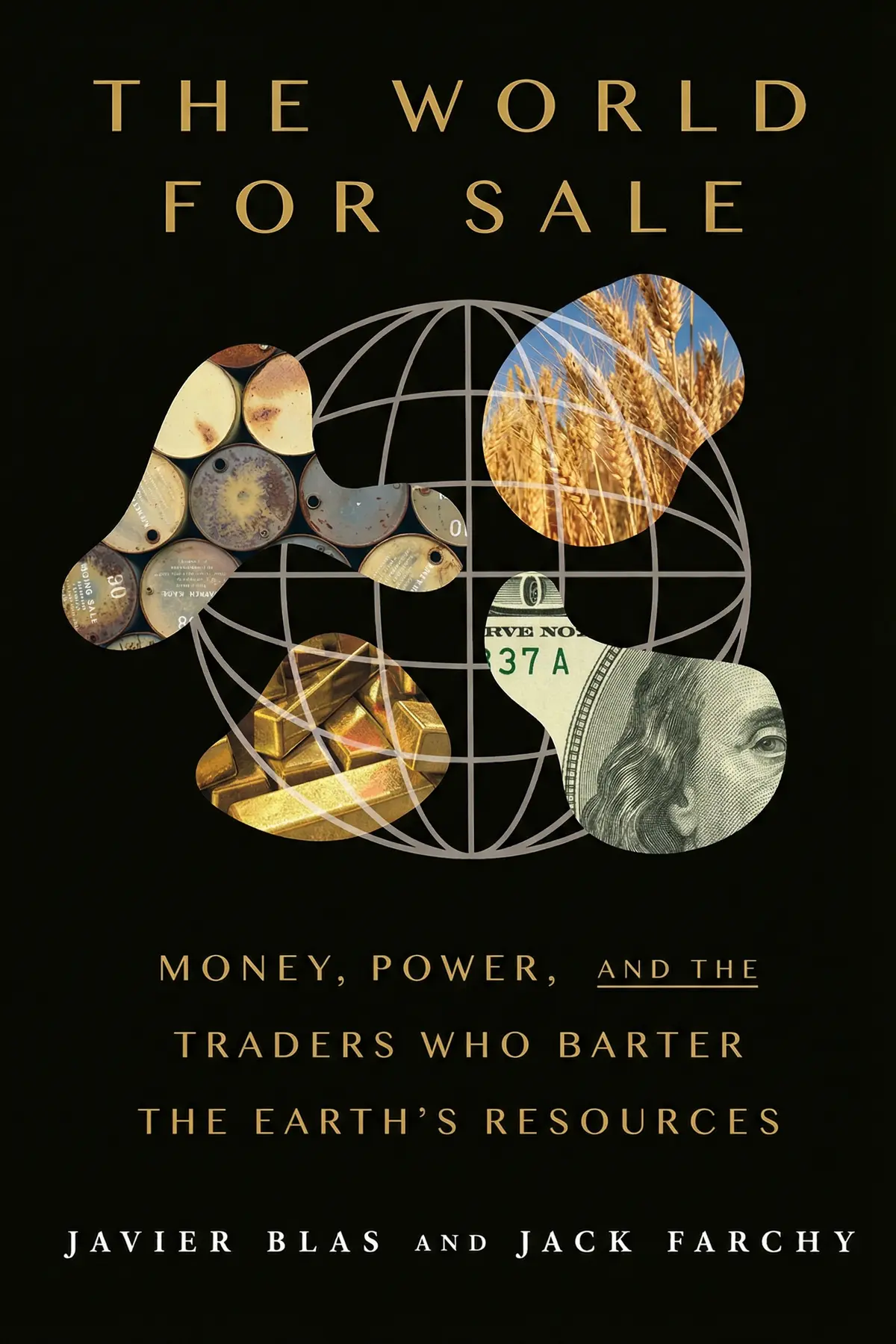
Table of Content
1. Introduction
1 min 02 sec
Every day, the oil, grain and metals that keep economies running pass through companies most people could not name. In The World for Sale, Bloomberg journalists Javier Blas and Jack Farchy tell the story of these commodity traders, a small group working from modest offices in Switzerland and Singapore. A recurring theme is that the traders’ edge came from bold risk-taking and a willingness to go where others would not. It was nerve: dealing with Cold War enemies, bankrupt governments and war zones that banks avoided.
The throughline is clear. By going where others would not, traders turned risk and secrecy into vast wealth and power over resources everyone depends on, and that power has carried real human costs. Follow it from a German fuel dealer in 1950s Moscow to a Swiss parking lot full of new billionaires, and the headlines about oil shortages, food prices and mining deals begin to show who stands behind them.
2. Trace today's commodity market to Cold War gambles
1 min 43 sec
A German fuel dealer who had once been held captive by the Soviets traveled to Moscow to buy oil, and shipping firms and business partners back home shunned him for it. His choice set the pattern for an entire industry that still runs the world’s supply.
3. Learn how Marc Rich became the lender of last resort
1 min 53 sec
A Caribbean nation had days of fuel left and an empty central bank. The call its minister made reveals how traders became bankers to countries the banks had abandoned, and what they took in return.
4. A founder's grip can break the empire he built
1 min 48 sec
The trader who rescued governments could not keep his own partners loyal. One failed bet on a single metal, and one team walking out together, ended his reign and gave the industry its best-known name.
5. Chaos is where the traders built their empires
1 min 52 sec
When the Soviet Union fell apart, most investors ran. A handful of trading firms rushed in, bartering fuel for sugar and metal for credit, and one ended up owning a luxury hotel to settle a debt.
6. Count the hidden costs of Africa's mining boom
1 min 47 sec
Money from resource deals helped one region’s economy grow fourfold in a decade. Yet the same deals ran through fixers, presidents’ friends and toxic cargoes, and the bill landed on people who never signed anything.
7. Understand the food crisis that handed traders record profits
1 min 52 sec
While a premier reassured farmers that the grain stores were full, his government was quietly alarmed. The firms it turned to kept the shelves stocked, and some of them also made fortunes betting on scarcity.
8. What one stock listing revealed about hidden fortunes
1 min 42 sec
Traders filled a Swiss parking lot before dawn to read a single document. What it disclosed about who owned the biggest trading house, and how much they were worth, changed how the whole industry had to operate.
9. Conclusion
1 min 04 sec
The World for Sale is, finally, the story of one bargain repeated over decades. A German fuel dealer accepts his neighbors’ scorn for Soviet oil. A trader diverts a cargo to save a refinery in Kingston. Another builds a hotel in Havana to collect a sugar debt. Each time, the reward for accepting risks others refused was access, and access became power over things everyone needs.
That power has two faces in the authors’ account. Traders kept struggling nations supplied and helped whole regions grow. They also propped up corrupt elites, profited from hunger and left damage wherever the rules were weak.
Knowing this changes how the news reads. When a country in crisis suddenly finds fuel, look for the trader who financed it and the long deal attached. When food or metal prices jump, remember that the firms moving the cargo may also be betting on it.
The world’s resources are always for sale, and the people selling them are rarely the names you already know.
About this book
What is this book about?
Every economy runs on oil, grain and metals, yet the companies that move them are almost unknown outside their industry. Javier Blas and Jack Farchy, two journalists who have covered commodities for years, set out to show who these traders are and how they came to hold so much power. Their story runs from a former prisoner of war buying Soviet oil in 1954, through Marc Rich rescuing Jamaica and then losing his own firm, to Vitol building a hotel in Havana, Glencore in the mines of Congo and the food crisis of 2008. The common thread is a willingness to deal with anyone, lend when banks refuse and stay where the risk scares others away. Readers get a clear picture of how firms like Glencore, Vitol, Trafigura and Cargill grew rich and influential, the scandals that followed them, and why the news about fuel shortages, food prices and mining deals so often leads back to the same few names.
Book Information
Who it's for
Professionals in commodity industries
Professionals in energy, mining, shipping or agriculture who want to know who really moves their markets.
Investors and founders
Investors and founders trying to read oil, food and metal price swings.
Curious about geopolitics
Curious readers of geopolitics who wonder how sanctioned or bankrupt states still get their fuel.
About the Author
Javier Blas
Javier Blas is a Bloomberg Opinion columnist writing on energy and commodities, and was previously chief energy correspondent at Bloomberg News. He earlier wrote for the Financial Times and the Spanish business daily Expansion. Jack Farchy is a senior reporter at Bloomberg News covering natural resources. He worked at the Financial Times as Moscow correspondent and commodities reporter, and speaks regularly about commodities on the BBC Radio 4 program Today.
Ratings & Reviews
Ratings at a glance
What people think
Listeners find this work educational and thoroughly investigated, with one listener mentioning how it clarifies the intricate systems of commodity trading. Furthermore, the prose is captivating, and listeners especially enjoy the intriguing accounts of traders and the political and economic context provided. The book also earns praise for its ease of use, with one listener describing it as highly accessible.
Top reviews
Oscar
This book is essentially a high-stakes thriller masquerading as a business history. Blas and Farchy have done an incredible job pulling back the curtain on a shadow industry that most of us never think about, yet it dictates the prices we pay at the pump and the grocery store. The stories about Marc Rich are legendary, but seeing the connective tissue between his early deals and the modern giants like Glencore and Vitol was truly eye-opening. I was particularly struck by the amoral nature of these traders—men who would fly into war zones or deal with sanctioned dictators just to keep the oil flowing. It’s well-researched and reads incredibly fast for a non-fiction title. The sheer audacity of diverting a tanker to Jamaica on a handshake is something you couldn't make up. If you want to understand how the global economy actually functions behind the scenes, this is mandatory reading.
Show moreTanyaporn
The chapter on the fall of the Soviet Union is worth the price of admission alone. It’s a chilling account of how a handful of opportunistic traders effectively asset-stripped a collapsing empire while the rest of the world looked away. Blas and Farchy manage to make commodities like aluminum and wheat seem as exciting as stolen diamonds. The writing style is engaging and punchy, keeping a brisk pace that never feels bogged down by dry statistics. I loved the focus on individuals like Ian Taylor and David Reuben. These aren't just corporate suits; they are true gamblers in every sense of the word. They took risks that would make a Wall Street hedge fund manager faint. It’s easily one of the most readable business books I’ve picked up in years. Highly recommended for anyone interested in the intersection of money and power.
Show moreAnawin
Wow. I never thought a book about wheat and zinc could be this addictive. Picked this up after hearing a podcast interview with the authors, and it exceeded my expectations. The sheer scale of the wealth involved is mind-boggling—billions of dollars made by individuals who thrive on volatility and chaos. I found the story of the Jamaican government’s near-collapse particularly moving, showing how these traders become lenders of last resort when the banks run away. The writing is sharp, clear, and devoid of unnecessary jargon. It’s a fascinating look at the men who literally 'sold the world' to the highest bidder. Truthfully, it changed how I look at global news. Now, when I see a coup or a revolution, I find myself wondering which trading house is already on the ground making deals.
Show moreIvan
Not what I expected at all—in a good way! I thought this would be a dry economics text, but it’s actually a sweeping epic about greed, risk, and the end of empires. The way the authors link the rise of China to the fortunes of these trading houses is brilliant. They show how these firms acted as the plumbing for the greatest economic expansion in human history. Every chapter has at least one 'I can't believe they did that' moment. From smuggling oil into apartheid South Africa to cornering the cobalt market in the Congo, the stories are just wild. It’s a fascinating, informative, and revealing read that makes you realize how fragile our global systems really are. Personally, I found the writing style perfectly suited to the subject matter—fast, aggressive, and direct. A must-read for the 21st century.
Show moreLeo
Ever wonder how raw materials actually move across the globe during a geopolitical crisis? This book provides a fascinating and informative look at the middlemen who make it happen. The authors, both veteran journalists, clearly know their subject matter inside and out. They explain complex market mechanisms like futures and contango without making the reader feel like they're in a boring lecture. I especially enjoyed the section on post-Soviet Russia and the 'wild east' of the 1990s. My only minor gripe is that the middle sections can feel a bit repetitive as one billionaire trader replaces another. However, the insight into how companies like Trafigura and Cargill operate is invaluable. It’s a complex web of influence that everyone should be aware of. To be fair, the level of detail is impressive, even if the names start to blur together by the end.
Show moreUdom
As someone who works in the energy sector, I found the deep dive into the 'Wild East' of post-Soviet aluminum markets absolutely gripping. It’s rare to find a book that manages to be this well-researched while maintaining the accessibility of a beach read. The authors explain the transition from the old-school world of secret handshakes to the modern era of public listings and ESG requirements. The shift from Marc Rich's private fiefdom to Glencore’s IPO is a perfect metaphor for how the world has changed. Look, the truth is that these companies are more powerful than many small nations, and this book proves it. While some of the technical trading descriptions were a bit brief, the overarching narrative about the shift in global power is spot on. It really helps you understand the complex web of commodity trading that keeps the modern world running.
Show moreMarasri
Finally got around to reading this, and frankly, I’m stunned by the sheer amoral audacity of these traders. The book is well-organized, moving chronologically through the major shifts in the industry from the post-WWII era to the rise of China. It’s quite informative, especially regarding the 'Seven Sisters' and how the independent traders broke their monopoly. My favorite part was the exploration of how information was the ultimate currency before the internet era. These guys knew what was happening in a port in Africa before the local government did. While the prose is mostly excellent, there were a few chapters where the focus on corporate restructuring felt a bit dry compared to the earlier tales of sanctions-busting and secret flights. Still, it’s a remarkably well-researched piece of investigative journalism that shines a light on a very dark corner of the global economy.
Show moreSarocha
After hearing about Marc Rich for years, it was fascinating to finally get the full context of his rise and fall. This book isn't just about one man, though; it’s about an entire breed of human being that views the world as a giant chessboard. The authors do a great job of explaining why these traders are necessary, even if their methods are questionable. They provide liquidity and market access to places that would otherwise be isolated. The readability here is high, and I appreciated the inclusion of the recent COVID-era oil price crash, which showed that the traders’ era isn't over yet. It’s a very good book for anyone who wants a peek behind the curtain of global capitalism. I do wish there were a few more maps or diagrams to help track the complex shipping routes, but that’s a small detail.
Show moreSirichai
To be fair, the stories are incredible, but I felt the authors were a bit too lenient on the ethical implications of these deals. We hear about traders bailing out the apartheid regime in South Africa or funding warlords in Africa, and while the authors call it 'amoral,' the narrative often leans into a 'cowboy' mythology that glamorizes the greed. The research is undeniably top-notch, and the political-economic context provided is helpful for a layperson. However, I found the structure a bit disjointed in the final third. It felt like a series of loosely connected anecdotes rather than a cohesive argument about the future of global trade. It’s informative, sure, but it left me feeling a bit cynical about the lack of oversight in these markets. A good read for the facts, but I wanted more critical analysis of the human cost.
Show moreDavid
While the research is undoubtedly top-notch, the narrative sometimes gets bogged down in repetitive lists of shell companies and corporate structures. I appreciated the insight into the commodities boom of the 2000s, but at times the book felt more like a collection of Financial Times articles than a unified story. It’s highly accessible, which is a plus, but I found myself wanting more depth on the environmental impact of these operations. The Trafigura toxic waste scandal in the Ivory Coast was mentioned, but it felt rushed compared to the pages spent on IPO valuations. It's a solid 3.5-star read that offers a lot of information, but it lacks the emotional core that makes for a truly great history book. Good for a flight or a weekend, but maybe not a permanent shelf-dweller for me.
Show moreQuestions about this book
What is The World for Sale about?
Javier Blas and Jack Farchy tell the history of the commodity traders who move the world’s oil, grain and metals. They follow firms such as Glencore, Vitol, Trafigura and Cargill from Cold War deals with the Soviet Union to Jamaica, post-Soviet Cuba, Congo’s mines and the 2008 food crisis, showing how a willingness to deal where others would not created huge wealth and political influence.
Who was Marc Rich in The World for Sale?
Marc Rich ran Marc Rich + Co, a trading house that supplied oil, metals and grain to unstable countries, often under sanctions. He rescued Jamaica with a diverted cargo of 300,000 barrels of oil. In the early 1990s a $172 million loss on zinc and anger over ownership led his senior traders to revolt, and the firm became Glencore International in 1994.
Do commodity traders cause high food prices?
The authors show traders profiting from food crises, for example Cargill earning over $1 billion in 2008 and Glencore gaining after Russia’s 2010 drought. But they place the deeper blame on the system, especially ethanol. ADM pushed for corn-based fuel for decades, and by 2011 ethanol absorbed one sixth of the corn grown worldwide, which squeezed food supplies.
What can readers learn from The World for Sale?
The book teaches readers to ask who finances and supplies a country in crisis, and on what terms, because those deals can shape an economy for years. It also shows that the same firms keeping markets supplied may be betting on prices, and that since Glencore’s 2011 listing, traders often own the mines and infrastructure behind the cargo.
Readers also enjoyed

A Splendid Exchange: How Trade Shaped the World
William J. Bernstein




Adults in The Room: My Battle With Europe’s Deep Establishment
Yanis Varoufakis


1929: Inside the Greatest Crash in Wall Street History--and How It
Andrew Ross Sorkin

23 Things They Don’t Tell You About Capitalism
Ha-Joon Chang
AUDIO SUMMARY AVAILABLE
Listen to The World for Sale in 15 minutes
Get the key ideas from The World for Sale by Javier Blas, plus 5,000+ more nonfiction titles.
- 5,000+ titles
- Listen as much as you want
- 7-day free trial
- Cancel anytime









