

15 min 51 sec
Available in: English
 ไทย
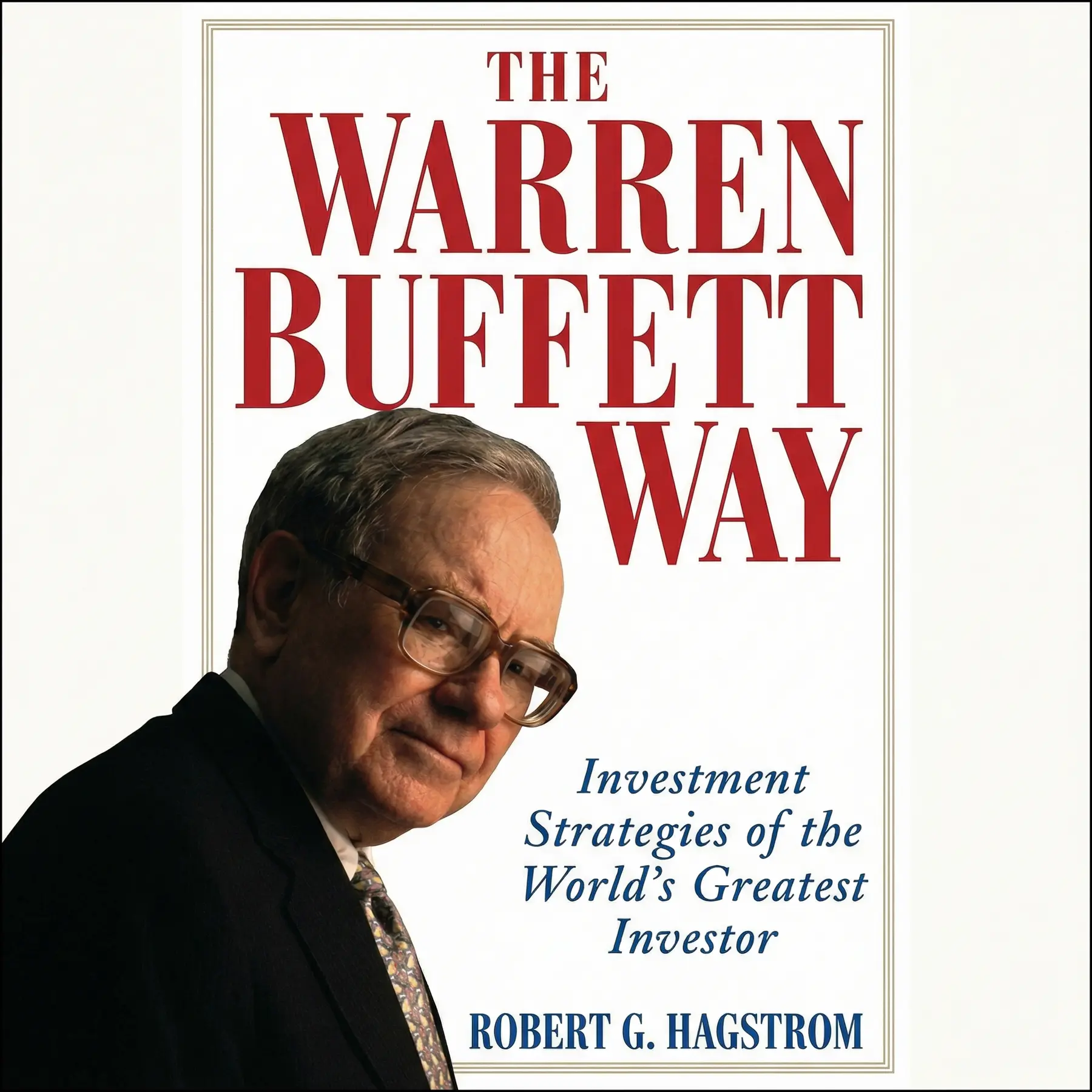
EnglishไทยThe Warren Buffett Way: Investment Strategies of the World's Greatest Investor
Shows how Warren Buffett picks investments with twelve plain checkpoints, resists the emotional traps that ruin most investors, and uses patient, slow thinking that ordinary people can learn and copy.
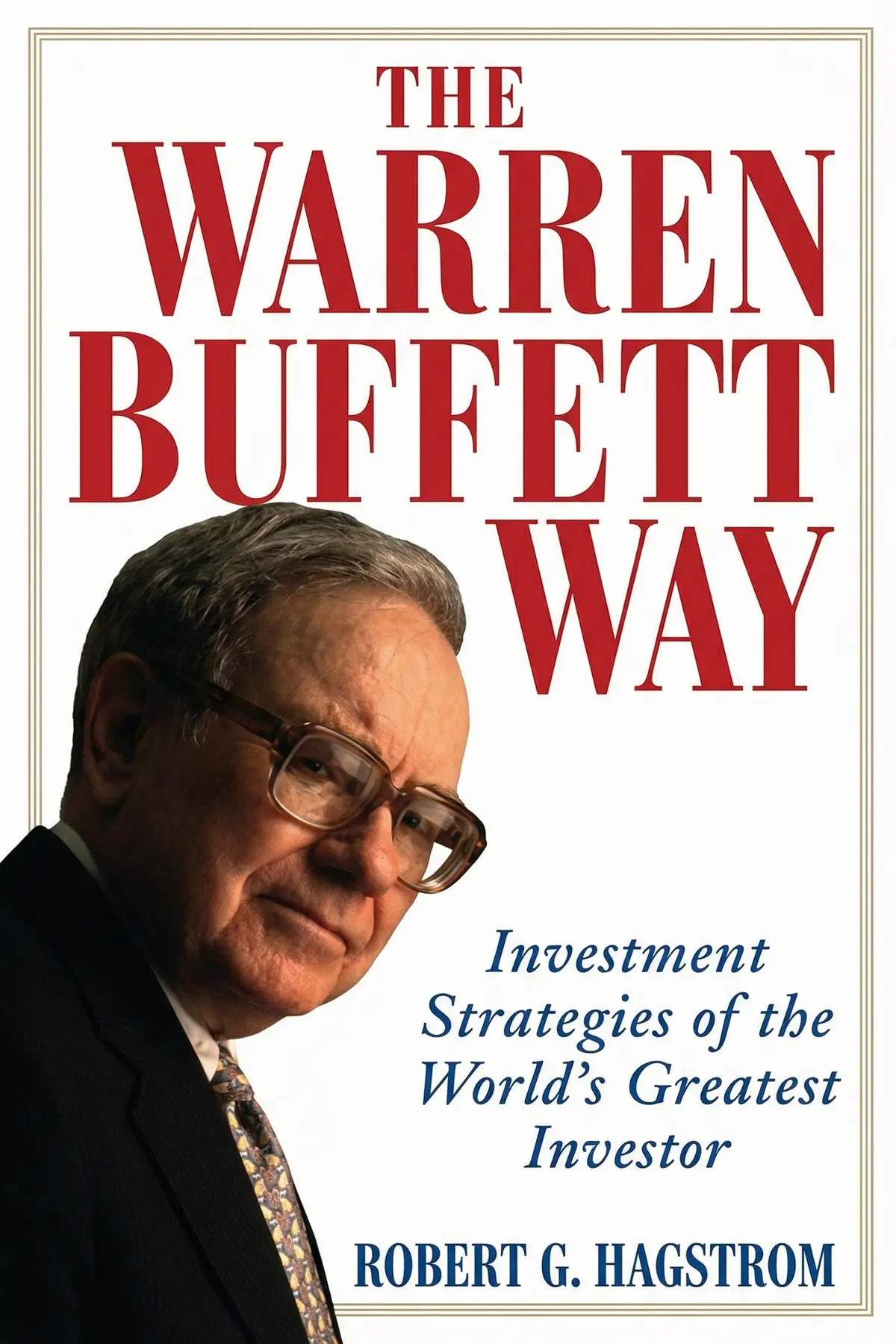
Table of Content
1. Introduction
1 min 01 sec
Most new investors assume the winners have something they lack: a gift for numbers, a lucky start, a feel for where prices go next. In The Warren Buffett Way, portfolio manager Robert G. Hagstrom reports that the investor his subtitle calls the world’s greatest credits none of those. Buffett points to sound business practice and time, and both can be taught.
That is the case Hagstrom builds. Buffett’s record rests on a method: a checklist for buying good businesses, a refusal to share the market’s moods, and the patience to think slowly while others react. The story runs from a five-dollar mistake at age eleven to a candy company Buffett nearly refused to buy, then to the twelve checkpoints he runs before investing, the mental traps that sink ordinary investors, and the reason rationality matters more than brains. By the end, any stock you own can be held up against the same questions Buffett asks.
2. Turn your first mistake into a lasting rule
2 min 06 sec
An eleven-year-old sold his first stock for a tiny profit and then watched it soar. What he decided that day shaped a partnership, an old textile mill and a fortune.
3. Pay a fair price for real quality
2 min 06 sec
A Los Angeles candy shop survived the Great Depression and wartime sugar shortages. Buying it meant breaking the rule that had made Buffett rich, and he almost said no.
4. Check the business and its managers first
1 min 54 sec
Most people buy a stock because of its chart or a tip from a friend. Six of Buffett’s twelve tests look at the business and its management rather than the figures, and half of those six are about people.
5. Judge a company on five years of numbers
1 min 48 sec
One brilliant year can make a weak company look like a winner. Buffett’s last six checkpoints are built to see through that, and to answer whether even a great business is worth today’s price.
6. Ignore the market's moods and keep your own
1 min 51 sec
Imagine a partner who offers to buy your shares every single day, sometimes at a wonderful price and sometimes at an insulting one. How you respond to him matters more than any forecast.
7. Stop checking your stocks every day
1 min 47 sec
A forgotten banknote in a winter coat and a habit of refreshing a price app share a hidden flaw. Both change how money feels, and that feeling pushes investors into choices they later regret.
8. Build patience to beat intelligence in investing
2 min 09 sec
Ivy League students failed a simple math question in large numbers, and the reason had nothing to do with brainpower. The same flaw explains why most investors miss the returns that patient ones collect.
9. Conclusion
1 min 09 sec
Hagstrom strips the mystery from Buffett without making him smaller. The boy who sold for five dollars, the partner who beat the Dow by 22 percent a year and the owner who turned down $125 million for a candy company are the same person, getting steadily better at a few teachable things. He learned to choose quality over cheapness, to test a business and its managers before looking at its price, to treat the market’s daily offers as moods, and to think slowly when slow thinking felt uncomfortable.
None of that calls for a genius. It calls for a stubborn temperament, and temperament can be practiced. Begin with your next decision. Before you buy anything, make sure you can explain the business in plain words and have looked at five years of its numbers. Review your holdings on a fixed schedule. And when a price swing tempts you, check whether anything about the business has actually changed, or only Mr. Market’s mood.
Buffett believes anyone can repeat what he did. The test begins with a single trade you refuse to rush.
About this book
What is this book about?
Warren Buffett is often treated as a freak of nature, a man whose results disprove the idea that nobody can beat the market. Robert G. Hagstrom takes a different view. Buffett himself credits sound business habits and time, and Hagstrom sets out to show that both can be taught. He starts with the people and decisions that shaped Buffett: a panicked first sale at age eleven, Benjamin Graham's hunt for bargains, Philip Fisher's case for quality, and Charlie Munger's push to buy See's Candies at a fair price instead of a cheap one. From there he lays out the twelve tenets Buffett checks before he invests, covering the business, its managers, its finances and its price. The second half turns to the investor's own mind. Using Graham's moody Mr. Market, behavioral finance and Daniel Kahneman's two systems of thinking, Hagstrom explains why emotion drives most market movement and why patience and rationality, which differ from raw intelligence, separate Buffett from the crowd. Readers get a clear checklist and a set of habits for making calmer, better informed investment decisions.
Book Information
Who it's for
New investors wanting checklists
New investors who buy on tips and charts and want a clear checklist instead.
Professionals reacting to swings
Professionals with savings in the market who keep reacting to every price swing.
Curious how Buffett thinks
Readers curious how Warren Buffett actually thinks, from his first stock to Berkshire Hathaway.
About the Author
Robert G. Hagstrom
Robert G. Hagstrom is a portfolio manager and the author of The Warren Buffett Way and The Warren Buffett Portfolio, both New York Times best sellers, as well as The Nascar Way. He has worked as a portfolio manager and has held senior roles at Legg Mason Focus Capital and EquityCompass. He was born in 1956.
Ratings & Reviews
Ratings at a glance
What people think
Listeners find the book a great listen, with one remarking that it is especially appropriate for beginner investors. Furthermore, the educational value is praised; one listener points out that it delivers a great combination of cool information about Warren Buffett. Nevertheless, the depth of analysis gets mixed reviews, with some listeners finding it essential for investment strategy whereas others argue it doesn't offer any real insight.
Top reviews
Jan
After hearing so many people cite this as the 'gold standard' for understanding the Oracle of Omaha, I finally dove in. Hagstrom does a phenomenal job distilling complex value investing principles into something tangible and digestible for the average person. I particularly appreciated how he weaves together the influences of Ben Graham and Philip Fisher, showing how Buffett merged their styles. While some might find the math a bit dense, the clarity on 'owner earnings' changed how I look at my own portfolio. It isn’t just about stock prices; it’s about the underlying business strength and management quality. This is a must-read for anyone tired of the day-trading noise. It provides a rock-solid platform from which to build further financial knowledge.
Show moreTippawan
Finally got around to reading this classic, and it absolutely lived up to the hype for me. The section on the 'focus portfolio' was a total eye-opener regarding why diversification might actually be a safety net for those who don't know what they are doing. Hagstrom argues that making just a few great decisions in a lifetime is better than making hundreds of mediocre ones. I loved the emphasis on turning off the stock market noise and focusing strictly on a narrow circle of competence. It’s a rational, level-headed approach to wealth building. Every serious investor needs this on their shelf to keep them grounded during market panics. The book makes it easier to respect the path Buffett has walked.
Show morePensuda
As someone who has struggled to find a consistent strategy, this book felt like a breath of fresh air. It really emphasizes the power of rational thinking and conservative principles in an age of gambling and meme stocks. The way it explains the importance of 'economic moats' and high-quality management is genuinely insightful. I particularly enjoyed the data-driven approach regarding the study of 12,000 portfolios, which proved that concentration often beats the market. It gave me the confidence to stop worrying about daily fluctuations and focus on the business itself. This book is a masterclass in long-term patience. If you only read one investment book this year, make it this one. It's a game-changer.
Show moreNum
Wow. This isn't just a biography; it's a blueprint for a completely different way of interacting with the world of finance. I used to check my brokerage app every ten minutes before reading this, which was exhausting. Now, I understand why 'turning off the market' is the most powerful move an investor can make. The book illustrates how Buffett survived every economic cycle by sticking to companies he understood inside his circle of competence. It’s incredibly empowering for the individual investor to realize they don't need a Wall Street degree to succeed. The information is presented in a way that makes it very easy for the reader to absorb. Highly recommended for anyone looking for clarity in a noisy world.
Show morePang
I've been interested in value investing for a while, and this book finally connected all the dots for me. It provides a great combination of historical context and actionable advice that feels relevant even decades after it was first published. The breakdown of how Buffett calculates intrinsic value is something I haven't seen explained this clearly elsewhere. It teaches you to look for businesses that will thrive regardless of the macro-economic environment or the next election. While it does lean heavily on Berkshire's past success, the logic holds up under scrutiny. It’s a foundational text for my strategy moving forward. The information provided is essential for anyone who wishes to walk the path of a rational investor.
Show moreZanya
Is this book the holy grail of finance? Not exactly, but it’s a rock-solid foundation for anyone starting their journey into value investing. The truth is, the market is a chaotic place, and Hagstrom provides a lens to see through the volatility. I found the case studies on specific Berkshire holdings like Coca-Cola and GEICO to be incredibly illuminating. However, be warned that the prose can get a bit repetitive as the author hammers home the same tenets. If you can get past the slightly dry tone, there is a wealth of cool information here. It is especially suitable for the self-investor who needs to learn about the importance of high-quality management and strategic moats before buying.
Show moreEmma
Picked this up because I wanted to understand the actual mechanics behind the Buffett legend. Frankly, I was impressed by the breakdown of the four steps: the business, management, financial, and value tenets. It's an excellent outline for a self-investor who needs a checklist before pulling the trigger on a stock purchase. My only gripe is that the book feels a bit dated in the current tech-heavy market landscape. Still, the core logic about buying businesses rather than tickers remains timeless and vital for long-term success. It is a strong educational tool that is easy to read and absorb. Despite some mixed reviews on deep insight, I found it very useful for refining my strategy.
Show moreSophia
The chapter on the psychology of investing alone makes this worth the price of admission. Hagstrom does a fine job explaining why most people fail because they follow the herd rather than their own logic. While I would have liked more specific details on the actual valuation formulas used, the conceptual framework is solid. It bridges the gap between being a fan of Buffett and actually understanding his process. Some parts feel like a love letter to Berkshire, but the underlying advice is sound and practical for any student of economics. Not gonna lie, I wish I had read this years ago before making some rookie mistakes. It provides a great combination of theory and real-world application.
Show moreJack
Look, this is a decent book, but I think people over-inflate how revolutionary it is. It serves as a great introduction for new investors, but experienced traders might find it lacks the 'secret sauce' they are looking for. The chapters on Graham and Fisher are historical gold, yet the application of those ideas feels a bit overly simplistic at times. I struggled with the writing style, which felt quite dry and academic throughout the middle sections, almost like a textbook. At points, the author repeats himself so much that it feels like he’s talking down to the reader. It’s certainly educational, but it didn't leave me feeling like I had discovered a hidden map to riches. It's a fine summary, but nothing more.
Show moreNuk
Don't bother if you already have a basic grasp of Berkshire Hathaway's history or have read the annual letters. To be fair, Hagstrom writes clearly, but the content feels geared toward an eighth-grade level. It is essentially a summary of public information without offering the deep-tissue analysis I was hoping for. The audio version is especially grueling to sit through because the narrator's pace is painfully slow and rhythmic. If you want real insight into the psychology of a billionaire, go straight to 'The Essays of Warren Buffett' instead. This felt like a surface-level retread that adds very little to the conversation for an experienced professional. It lacks the depth required for serious fundamental analysis.
Show moreQuestions about this book
What is the main idea of The Warren Buffett Way?
Robert G. Hagstrom argues that Warren Buffett’s success comes from habits anyone can learn, not from genius or luck. Buffett buys good businesses using twelve checkpoints, refuses to be swayed by the market’s emotional swings, and relies on patient, rational thinking. Hagstrom traces where those habits came from, including Benjamin Graham, Philip Fisher and Charlie Munger, and shows how they fit together into one method.
What are Warren Buffett's twelve investing tenets?
Hagstrom groups them in four sets. Three concern the business: simple to understand, consistent operating history, favorable long-term outlook. Three concern management: rational with money, candid with shareholders, willing to resist the crowd. Four are financial, judged on five-year averages: return on equity, owner earnings, high profit margins and rising market value. Two concern the market: whether the company is a good value and whether its price matches that value.
What is Mr. Market in The Warren Buffett Way?
Mr. Market is Benjamin Graham’s picture of an emotional business partner who offers to buy your shares every day. In good moods he offers a high price, in gloomy moods a low one. You can accept or ignore his offers, but you should never adopt his mood. Hagstrom uses the image to explain why most market movement is driven by emotion and why investors need psychological readiness.
Why did Warren Buffett buy See's Candies?
See’s was not a bargain by Benjamin Graham’s standards, and Buffett was reluctant. Charlie Munger, drawing on Philip Fisher’s belief in buying quality, persuaded him that the company’s excellence was worth a fair price. Berkshire Hathaway paid $25 million in 1971. Ten years later Buffett refused an offer of $125 million, and Berkshire still owns the company.
How can I apply The Warren Buffett Way to my own investing?
Start by only buying businesses you can explain simply and judging them on five years of results instead of one. Avoid checking your holdings every day, since Thaler and Benartzi found that a long-held investment looks more attractive only when it is not evaluated often. Before buying, do the slow research Buffett favors: annual reports, competitors, growth scenarios, management’s use of capital and conversations with people who know the company.
Featured in
Readers also enjoyed




AUDIO SUMMARY AVAILABLE
Listen to The Warren Buffett Way in 15 minutes
Get the key ideas from The Warren Buffett Way by Robert G. Hagstrom, plus 5,000+ more nonfiction titles.
- 5,000+ titles
- Listen as much as you want
- 7-day free trial
- Cancel anytime









