
14 min 21 sec
Available in: English
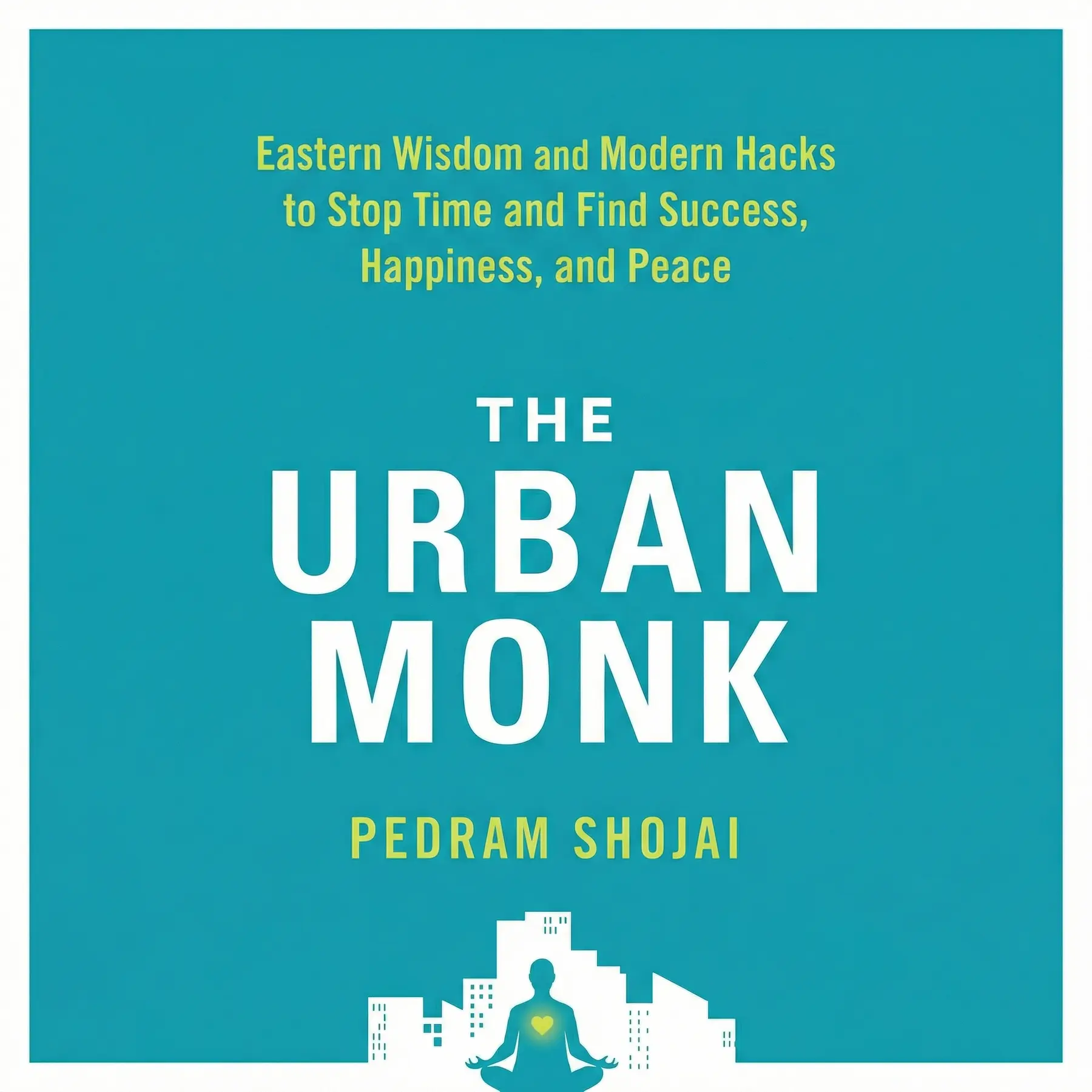
The Urban Monk: Eastern Wisdom and Modern Hacks to Stop Time and Find Success, Happiness, and Peace
Shows how to bring a monk's calm into a busy working life. Small ancestral habits, qigong and short meditations bring sleep, food, movement and attention back in line with basic human needs.
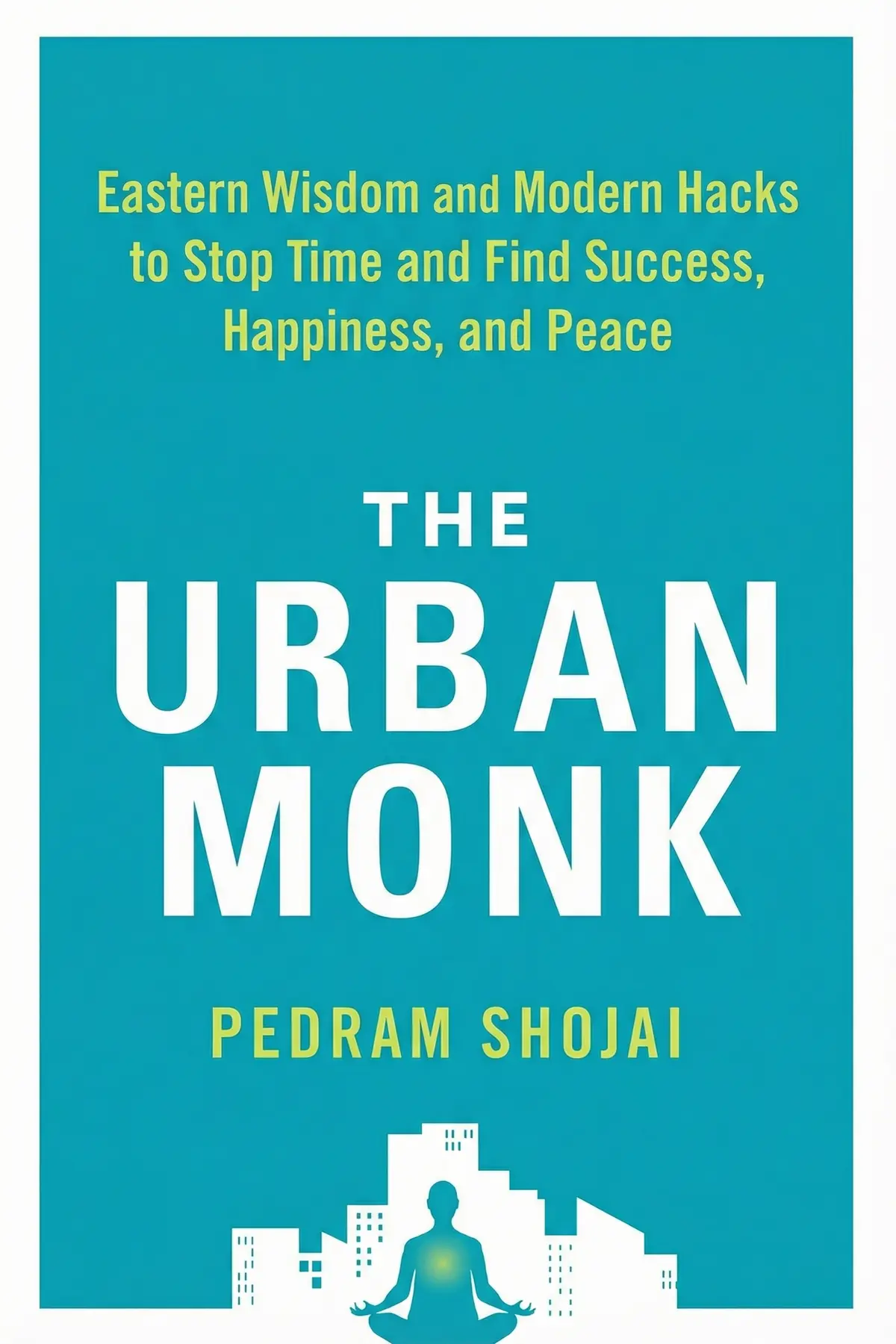
Table of Content
1. Introduction
58 sec
Most people who want more calm assume it takes a retreat, a mountain or weeks they do not have. In The Urban Monk, Pedram Shojai, a former Taoist monk, argues that you can build a monk’s peace inside an ordinary working life, starting with something as small as switching off screens after seven in the evening. His diagnosis is that modern routines no longer match what our bodies and minds need, and that is why we are tired, lonely, stressed and short of time.
Our ancestors met those needs without trying, and Eastern monks made meeting them a discipline. If you borrow from both, Shojai says, you can live like a monk in the middle of a city. Bring your daily habits back in line with basic needs, treat effort as practice, keep your energy moving and let meditation run beneath everything. The practices are small and specific, from chewing each bite twenty times to five calm minutes in a stuck checkout line.
2. Get back what your ancestors had for free
1 min 43 sec
We have better medicine and more comfort than any generation before us, yet we sleep badly and feel alone. Shojai finds the first fix in the evenings of people who lived long before any monastery existed.
3. Turn every hard task into kung fu
1 min 35 sec
Most of us picture monks sitting still in silent halls. The real picture involved heavy buckets, axes and painful training, and it changes how you might face the task you have been putting off all week.
4. Eat slowly and softly to need less food
1 min 43 sec
Most people eat too much and still miss the nutrients they need. Shojai’s fix costs nothing and needs no new diet plan, just a change in pace and a recipe idea from a monastery kitchen.
5. Get more energy by letting it flow freely
1 min 41 sec
Some people sleep well, eat well and exercise, yet still drag through the afternoon. Shojai thinks they are missing a second factor, one that has as much to do with old wounds as with the body.
6. Breathing and heart meditations that ease old pain
1 min 51 sec
Some hurts from years ago still drain energy every time they come to mind. Shojai describes a sequence of short practices that starts with the breath and ends somewhere most meditation guides never go.
7. Keep meditation running in the background all day
1 min 53 sec
A broken cash register and a lost client seem like very different problems. Shojai sees the same mistake behind the stress each one causes, and a different way of thinking about meditation that keeps it from starting.
8. Slow down time and find your purpose
1 min 42 sec
Weeks vanish and the bigger question of what it is all for gets pushed aside. Shojai answers both with two meditations, one beside running water and one that many listeners will find hard to sit through.
9. Conclusion
1 min 15 sec
The Urban Monk adds up to a reassuring claim: the calm people travel to monasteries for is made mostly of ordinary things done with attention. Darkness at night. A walk with friends. A hard task accepted, a slow bowl of soup, a few deliberate breaths in a stalled line. None of it asks you to leave your job or your city. It does ask for consistency, and Shojai warns that trying everything at once is a fast way to keep nothing.
His remedy is the 100-day gong. Choose one practice and do it every day for 100 days before you add the next. He reasons that a new behavior needs roughly that long to become a habit, and these practices only pay off for good once they are habits. A sensible first pick is whichever one meets your most painful need. If sleep is the problem, switch off screens at seven. If stress is, use the what-am-I-doing check-in. If your meals disappear in minutes, chew each bite twenty times.
Zen monks kept fetching water and chopping wood after enlightenment. The urban monk keeps going too, with the phone dark at seven and a hundred days of patience.
About this book
What is this book about?
Many people are drawn to Eastern spiritual practices, but their jobs, bills and families leave no room for a monastery or a month-long retreat. Pedram Shojai, a former Taoist monk, argues that they do not need one. In his view, modern people are tired, lonely, stressed and short of time because the way we live no longer matches what humans need. His fix borrows from two old sources. Our hunter-gatherer ancestors met their needs for sleep, movement, company and nature simply by living. Eastern monks added disciplines such as kung fu, qigong and meditation, which train effort, energy and attention. Shojai turns both into small hacks for city life: screens off after seven, slow chewing and soupy meals, standing desks, short qigong sessions, and meditations for stress, old hurts, lost time and purpose. Readers get a practical toolkit and a new way to see meditation, as a habit that runs all day in the background and not only as an emergency button. They also get a simple rule for making any of it last: one practice, every day, for 100 days.
Book Information
Who it's for
Busy office workers
Office workers who feel tired, wired and short of time but cannot get away to a retreat.
Qigong and meditation explorers
People curious about qigong, meditation and martial arts who want short practices they can do every day.
Screen-weary desk workers
Desk workers worn down by screens, rushed meals and evenings that end in poor sleep.
About the Author
Pedram Shojai
Pedram Shojai trained in China, where the Yellow Dragon Monastery ordained him as a priest. He is a Qigong master and a Doctor of Oriental Medicine, founded the Urban Monk brand and hosts a podcast of the same name. The Urban Monk became a New York Times bestseller, and his other books include The Art of Stopping Time, Inner Alchemy and Focus. His documentary series on wellness and health include Interconnected, Gateway to Health and Conscious Parenting, and he gives talks around the world on stress management and energy.
Ratings & Reviews
Ratings at a glance
What people think
Listeners find this book an engaging read filled with actionable guidance that encourages them to investigate its themes more thoroughly. Moreover, the material is straightforward and helpful for individuals with busy lives, providing a realistic, no-nonsense method for self-improvement. They also value its overarching message, with one listener noting its deep understanding of the spiritual path.
Top reviews
Suthee
This book arrived at exactly the right moment in my life when I felt completely drained by the modern grind. Pedram Shojai has a way of cutting through the noise with a no-nonsense approach that makes spiritual practice feel accessible rather than airy-fairy. I loved the emphasis on being a 'householder' who actually makes things happen instead of just retreating from the world. The chapters on energy and time management were game-changers for me, especially the idea that how you do one thing is how you do everything. Some might find the language a bit colorful, but I found his use of occasional cuss words refreshing and real. It’s a deep dive into what it means to live intentionally.
Show moreGoy
After hearing Shojai on a podcast, I decided to buy the book to see if his 'Urban Monk' philosophy was legit. Frankly, it’s one of the most practical health books I’ve read in years. It doesn't just tell you what's wrong; it gives you a roadmap to fix it. The emphasis on 'voting with our time' really hit home for me. We all complain about being busy, yet we spend hours on mindless distractions. This book teaches you how to reclaim that energy. It’s written in an easy-to-understand way that doesn’t require a degree in philosophy to grasp. Highly recommended for anyone who feels like they’re just 'passing time' rather than truly living.
Show moreIvan
Ever wonder why you’re constantly exhausted despite doing 'everything right'? This book answers that question by looking at the invisible stressors of our modern environment. I loved the focus on 'vibration' and life force, even if it sounds a bit 'woo' to some. The truth is, we are disconnected from the sun and nature, and Shojai provides realistic ways to bridge that gap without quitting your job. The final chapter gives a great push to actually start the work rather than just reading about it. It’s a deep, meaningful guide for anyone looking to find peace in the middle of a concrete jungle.
Show moreSamart
Finally got around to reading this after seeing Shojai in a few interviews, and I must say it lives up to the hype for the most part. The core message is about regaining your vitality in a world that treats us like zombies, and his advice on sleep and stress management feels incredibly relevant for a corporate worker like me. I appreciated the down-to-earth, almost blunt tone, even if his 'hip' persona feels a bit forced at times. While some of the stuff about GMOs and 'detoxes' felt like pseudoscience, the actual lifestyle shifts he suggests are solid. It's essentially a guidebook for staying sane in the city. Truth is, you probably know most of this already, but having it packaged this way provides a much-needed kick in the pants.
Show moreYuwadee
As someone who struggles with chronic stress, I found the section on the prefrontal cortex and blood flow fascinating. Shojai argues that we are effectively becoming zombies because we've lost our connection to nature and our own bodies. The book is filled with practical rituals to help you 'upgrade' your habits, and I've already started implementing the body scanning techniques. Look, it’s not perfect—there is definitely some 'woo-woo' regarding high-vibration foods and alchemy that I took with a grain of salt. But the overall message about stopping the 'drain' of our life energy is powerful. It’s a useful manual for anyone feeling overwhelmed by the 21st century.
Show moreSamira
Picked this up on a whim and was pleasantly surprised by how much of it actually stuck with me. The author’s voice is certainly unique; he uses 'crap' and 'shit' quite a bit, which makes it feel less like a dry textbook and more like a conversation with a friend. I particularly liked the idea that our 'now' determines our 'later' and the emphasis on not being a pawn in someone else's vision. There are some questionable claims about 'toxic' modern life, but the core advice to return to nature and simplify your rituals is sound. It’s a great guide for the urban dweller who is tired of feeling sick and uninspired.
Show moreKwan
Not what I expected, but in a good way. I thought this would be another boring meditation guide, but it’s actually more of a lifestyle overhaul. Shojai’s 'Urban Monk' is a survivor who thrives in chaos, which is a much more realistic goal than moving to a mountain top. The book covers everything from the info you ingest to the nutrients in your food. I did roll my eyes at the occasional mention of ayahuasca and the slight anti-science bent regarding GMOs. However, the sections on non-reactivity and creating a life that codes for your dreams were incredibly inspiring. It’s a strong, practical book for the modern era.
Show moreOscar
Is it a masterpiece of Eastern wisdom, or just a really well-marketed Pinterest board for wellness? To be fair, Shojai does a great job of distilling complex concepts into actionable steps for busy people who can't exactly run away to a monastery. However, the constant shouting-out of his own website and services started to feel like one long commercial. I also found the weird shift in pronouns—using feminine ones for the first half then switching to masculine for money talk—to be incredibly jarring and unnecessary. It's a decent read if you need a reminder to breathe and stop eating processed muffins, but don't expect deep spiritual enlightenment. It’s mostly recycled self-help with a 'Urban Monk' brand name slapped on top.
Show moreIsaiah
The chapter on money was where this book lost me a little bit, mainly because of the weird gendered language. Why switch to male pronouns specifically when talking about finances? It felt a bit dated and out of touch with the rest of the book's inclusive vibe. Aside from that, the advice is fairly standard: eat better, sleep more, and stop being a sucker for drama. It’s a quick read and Shojai is definitely an engaging 'cheerleader' for self-care, but I didn’t find much 'Eastern wisdom' that hasn't been covered in every other self-help book. It’s helpful as a refresher, but it’s definitely not a revolutionary text. In my experience, it’s a solid 3-star read.
Show morePla
Wow. I really wanted to like this, but it felt like being trapped in a room with a sanctimonious gym bro who just discovered meditation. The author spends half the book bragging about his credentials and the other half pushing 'detox' treatments that have zero scientific backing. It is a blatant attempt to funnel readers into his ecosystem of paid services. He contradicts himself constantly—promoting lean protein one minute and then acting like an ascetic the next. Also, the anti-GMO fear-mongering is just irresponsible. If you want actual Buddhist wisdom, look elsewhere. This is just 'new age' garbage wrapped in a 'hip' package to sell you a lifestyle you don't actually need.
Show moreQuestions about this book
What is the main idea of The Urban Monk?
Pedram Shojai argues that modern people are tired, lonely, stressed and short of time because our routines no longer match basic human needs. To fix this, he borrows from our hunter-gatherer ancestors, who met those needs naturally, and from Eastern monks, who made meeting them a discipline. The result is a set of small hacks, such as turning screens off at night, eating slowly, doing qigong and meditating, that fit an ordinary city life.
What is the 100-day gong in The Urban Monk?
The 100-day gong is Shojai’s rule for making change last. Instead of trying every practice at once, you pick a single one and do it every day for 100 days before you add another. He reasons that it takes roughly 100 days for a new behavior to become a habit. The practices only give lasting benefits once they are part of your life for good.
What does Shojai mean by meditation as an operating system?
Many people treat meditation like a help icon, something to click when stress overloads them. Shojai wants it to run all day in the background, shaping how the mind works and preventing overload. To build it in, pause through the day and ask what you are doing right now. Scan your thoughts and feelings, and let negative ones fade without fighting them. Repeated often enough, this check-in becomes a habit.
How does The Urban Monk suggest improving sleep and diet?
For sleep, Shojai recommends switching off devices after 7:00 p.m. and, if you can, using candles instead of electric light, because bright evenings trick the brain into staying alert. For diet, he advises chewing each bite ten to thirty times and eating until you feel half full. Then pause for five to ten minutes. He also suggests adding monk-style soups, stews and congee, which are full of slow-cooked vegetables.
Who should read The Urban Monk?
It suits busy professionals and parents who are drawn to Eastern practices but have no time for retreats. It also fits people who feel drained, sleep badly or feel stuck in stress about work. Readers who like short, concrete routines will get the most from it: qigong breaks, a standing desk, slow meals and meditations that take five to thirty minutes.
Readers also enjoyed

A New Earth: Awakening to Your Life’s Purpose
Eckhart Tolle


Aflame: Learning from Silence
Pico Iyer

59 Seconds: Change Your Life in Under a Minute
Richard Wiseman





A Guide to the Good Life: The Ancient Art of Stoic Joy
William B. Irvine
AUDIO SUMMARY AVAILABLE
Listen to The Urban Monk in 15 minutes
Get the key ideas from The Urban Monk by Pedram Shojai, plus 5,000+ more nonfiction titles.
- 5,000+ titles
- Listen as much as you want
- 7-day free trial
- Cancel anytime









