

14 min 01 sec
Available in: English
The Unfair Advantage: How You Already Have What It Takes to Succeed
By Ash Ali, Hasan Kubba
Shows would-be founders why a good idea and long hours are not enough. It also shows how to find the edges you already hold, from insight and expertise to timing and contacts, and build on them.
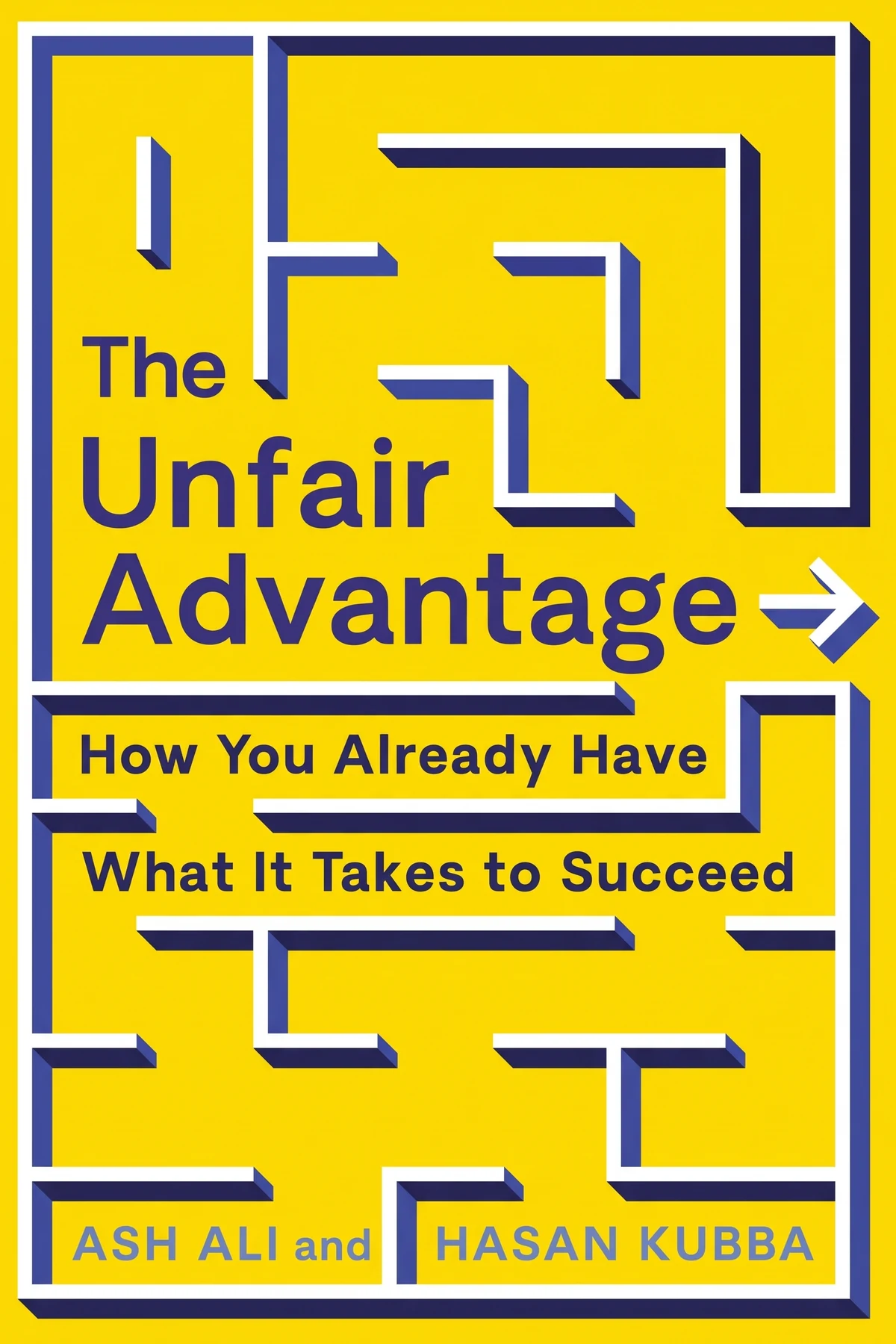
Table of Content
1. Introduction
1 min 01 sec
If you are planning a startup on the strength of a good idea and long hours, the odds are poor: nine in ten new companies fail, and the best idea does not always win. In The Unfair Advantage, entrepreneurs Ash Ali and Hasan Kubba argue that what tips the balance is an edge you probably already hold without noticing it.
That edge might be money or a well-connected family. It might just as easily be a talent for reading people, a problem you have lived with for years, the city you live in, or long practice in one field. The authors’ case is that every founder has some advantage, and that success comes from naming it, using it on purpose and adding hard work.
Their examples run from a billionaire raised among lawyers to a high school dropout from Birmingham, and from Nikola Tesla’s unpaid fee to bankers who rejected candidates over brown shoes. By the end you will have edges to test against your own life, and a clearer picture of the partner who could fill your gaps.
2. Find the edge you already carry
1 min 40 sec
One founder had wealthy parents and investors at the dinner table. The other grew up among gangs and left school early. Both built companies, and the second story says more about your own chances.
3. Start a company without a cash cushion
1 min 38 sec
Savings buy a startup time, and they buy its founder something harder to see. If your account is thin, the authors describe three ways to begin anyway, and none of them needs a rich uncle.
4. Three kinds of smart that pay off in business
1 min 31 sec
One of history’s great inventors did the work, sent the bill and never got paid. His story shows that the intelligence a founder needs is broader than anything a school report measures.
5. Spot the problem only you can see
1 min 31 sec
A founder’s daily irritation in front of the bathroom mirror became a company that a consumer giant later bought. Another founder spent nine months on a bicycle to learn what his own business looked like from the road.
6. Pick the right place and the right moment
1 min 56 sec
An investor who believed ideas decide everything compared his winners with his failures and found something else at the top. A cloud storage company that died in the 1990s shows what he meant.
7. Turn what you learn into expertise and allies
1 min 42 sec
A famous university gives more than a certificate, and the pattern among billion-dollar founders makes that plain. If you never went to one, the authors point to another reward of learning that is open to anyone.
8. Learn the codes that let you through doors
1 min 45 sec
Graduates with the right grades lost banking jobs over the color of their shoes. The rule seems absurd, yet the authors show how outsiders learn such codes and build the contacts that carry a founder further.
9. Conclusion
1 min 17 sec
The Unfair Advantage starts from a grim number, nine failed startups in every ten, and turns it into a personal audit of what you hold that tilts the odds. Ali and Kubba’s answer is that everyone holds something. For Spiegel it was a family that knew investors. For Ali it was a teenage habit of making money and the nerve to teach himself web design in 1998. For Walker it was razor burn. None of these replaced hard work, but each made the work count for more.
The step the authors leave with readers is about partnership. Almost nobody has every advantage, so a co-founder who brings what you lack improves your odds at once. A creative thinker gains from a technical partner. Someone happiest building the product gains from an outgoing partner who makes connections. Choose someone you trust and can work beside.
So write your own inventory: money, the kinds of intelligence you have, the problems you know from the inside, your place and your moment, what you have learned, your standing and your contacts. Mark where you are strong and where you are thin. The thin places tell you whom to look for. The strong ones tell you where to begin.
About this book
What is this book about?
Nine in ten startups fail, and many founders who fail had a strong idea and worked hard. Ash Ali and Hasan Kubba argue that the thing that usually sets winners apart from everyone else is an unfair edge, meaning some quality or asset that leaves one founder nearer to success than another. Some advantages are easy to see, like a wealthy family or a degree from Stanford. Many are not. The authors look at seven kinds: money, three forms of intelligence, insight into a problem, location, timing, education and expertise, and status and personal networks. They draw on cases from Snapchat, Stripe, Deliveroo, Dropbox and Huda Beauty, and on Ali's own path from high school dropout in Birmingham to serial founder and angel investor. Readers get a way to audit their own position honestly, practical routes around the advantages they lack, such as starting lean without savings or learning the social codes of an industry, and one clear piece of advice to close: find a co-founder whose strengths fill your gaps.
Book Information
Who it's for
Would-be founders
Would-be founders without money or famous degrees who wonder if they stand a chance.
Experts weighing a business
Professionals with years in one field thinking of turning that expertise into a business.
Founders facing early decisions
Early-stage founders deciding where to build, when to launch and what to look for in a co-founder.
About the Author
Ash Ali
Ash Ali co-founded Uhubs, a skills training platform for entrepreneurs and professionals, and sold his first internet business at 19. For more than twenty years he has worked with hundreds of startups as a consultant, adviser and investor. Hasan Kubba is an entrepreneur and startup strategist who runs a digital marketing business in London, invests in startups and mentors early-stage founders. His TEDx talk on startups and unfair advantages was voted the highest ever on the official TED subreddit.
Ratings & Reviews
Ratings at a glance

What people think
Listeners find that this guide offers worthwhile perspectives, with one listener noting how it provides a functional method for launching startups. They also praise its clear and accessible writing style.
Top reviews
Niphon
This was exactly the kick in the teeth I needed to stop comparing myself to others. The truth is, life isn't fair. We all know it, but we rarely talk about how to use that unfairness to our benefit. I loved how it emphasizes that even 'disadvantages' can be flipped into advantages depending on your niche. As someone from a developing country, I used to feel like I was starting ten steps behind everyone else. This book helped me realize that my unique perspective and location offer insights that 'insiders' might miss. The MILES framework is brilliant in its simplicity. It’s not about being lazy; it’s about being strategic with your energy. If you are feeling stuck or overwhelmed by the pressure to be a 'self-made' success, read this immediately.
Show moreChloe
As an entrepreneur struggling to find my footing, I found the MILES framework to be a total revelation. It’s a holistic approach that covers everything from money to social status. Most business books ignore the fact that having a safety net allows you to take bigger risks. Ash and Hasan don't shy away from that. They pull back the curtain on the myth of the 'lone genius' and show how connections and timing often do the heavy lifting. The writing is incredibly engaging and fast-paced. I finished it in two days. It is a breath of fresh air in a genre that is usually filled with empty platitudes. It’s practical, honest, and actually applicable to real-world scenarios. Highly recommended for anyone starting a venture.
Show moreMonthon
The authors really pull back the curtain on the success stories we see in the media. Not everyone starts from the same place, and this book finally admits it. It’s refreshing to hear successful people acknowledge that luck and timing played a huge role in their journey. The MILES framework is a great tool for self-reflection. It helped me identify my own hidden strengths that I hadn't considered 'advantages' before. The book is very well-written and avoids unnecessary fluff, which I appreciate. I particularly liked the section on 'Expertise' and how to build it even without a formal degree. It’s an empowering read that makes success feel much more scientific and less like a mysterious lightning strike. It is a must-read for any aspiring founder.
Show moreVimolwan
Picked this up on a whim and ended up feeling so much lighter. There is so much pressure on people in their twenties to achieve massive success instantly. This book is a reminder that everyone’s timeline is different because everyone’s 'unfair advantages' are different. It’s okay if you don't have the venture capital or the Ivy League degree yet. The authors show how to work with what you've got to build momentum. The stories are interesting, the advice is actionable, and the MILES tool is something I will keep referring back to. It’s an eye-opening book that changes how you view the world. Truly, it is one of the most grounded business books I have ever read. Don't let the title fool you—it's incredibly heart-centered and encouraging.
Show moreBenjamin
After seeing this recommended in a book club, I decided to finally give it a shot. I'm glad I did. It’s a refreshing departure from the standard 'follow your passion' advice that often leads to burnout. Look, the reality is that hard work is only one piece of the puzzle. This book acknowledges that the deck is often stacked, but it teaches you how to look at your own hand differently. I especially liked the section on how location and luck play into the success equation. My only gripe is that some of the examples felt a bit surface-level. I would have loved more detailed case studies of people using the 'Intelligence and Insight' portion of the framework to pivot. Still, it’s a very practical approach to startup life.
Show moreOksana
Finally, a business book that doesn't just yell at you to work harder while ignoring the systemic advantages some people have. In my experience, most successful entrepreneurs have a 'secret sauce' they don't like to talk about, usually involving family money or high-level connections. Ash and Hasan are incredibly honest about this. They break down success into the MILES framework, which makes the whole concept of an 'advantage' feel much more attainable and less like a dirty secret. The writing is punchy and accessible, making it an easy read for a weekend. Not gonna lie, I disagreed with a few points regarding what constitutes a 'learned' advantage versus a 'natural' one, but the overall message is empowering. It’s about leveraging what you have rather than complaining about what you don't.
Show moreOat
What exactly makes a startup succeed where others fail? This book argues it isn't just about who works the longest hours. I found the 'Reality-Growth Mindset' section particularly impactful. It’s about being brutally honest with yourself about your situation. The authors, having been through the ringer with companies like Just Eat, bring a lot of credibility to the table. They don't use much jargon, which is a relief. The layout of the book is great for skimming, with clear headings and summaries. I did feel the chapter on luck was a bit short, considering how much weight they give it in the success equation. Regardless, it is a valuable addition to any personal development library, especially for those in their early twenties trying to find their edge.
Show morePensri
Is it just luck, or is there a strategy to it? This book suggests it is a bit of both. I couldn't help but compare it to Malcolm Gladwell’s Outliers, but this feels much more applicable to the average person. Instead of just observing why people succeed, it gives you a tool—the MILES framework—to audit your own life. Personally, I realized that my education and status were advantages I was completely taking for granted. The tone is grounded and the authors come across as very relatable. My only minor criticism is that the writing can feel a bit unrefined in the anecdotal sections. However, the positive messaging and the 'count your blessings' vibe really helped me reframe my current career struggles. Definitely worth a read.
Show moreRuangrat
The concept is solid, but the execution feels a bit repetitive in the later chapters. To be fair, I appreciated the focus on 'unfair' advantages because it moves away from the toxic hustle culture that dominates most business books. However, did we really need the definition of a 'Unicorn' company repeated so many times? It felt like the book was trying to fill a page quota. The MILES framework—Money, Intelligence, Luck, Education, Status—is a useful mental model for a quick audit of your resources. But I wanted more meat. The anecdotes were fine, though they didn't dive deep enough into the nitty-gritty of the actual execution. It's a solid read for a short trip, but it lacks the depth of more established business literature.
Show moreDavid
Save yourself the time if you are looking for a deep tactical manual on building a business. Frankly, the whole premise boils down to a very simple message: some people are born with more than others, and you should use whatever you happen to have. I felt like I was reading a 200-page expansion of a single, basic blog post. While the MILES framework is a neat way to categorize things like money and status, it doesn't offer much 'how-to' for those starting from zero. It basically tells you that luck is a major factor, which isn't exactly a groundbreaking revelation. The writing is clear and the authors seem like decent guys, but I didn't learn much that wasn't common sense. If you already understand that life isn't a level playing field, you might find this redundant and a bit of a letdown.
Show moreQuestions about this book
What is The Unfair Advantage by Ash Ali and Hasan Kubba about?
The book argues that a good idea and hard work are not enough to make a startup succeed, since about nine in ten fail. The outcome is often settled by an unfair edge, meaning some quality or asset that leaves one founder in front. The authors examine money, intelligence, insight, location, timing, education, expertise, status and networks, and show how founders can find and use their own.
Can you start a business without money, according to The Unfair Advantage?
Yes. The authors admit that savings help, suggesting enough to cover six to 18 months, but they offer routes for founders without them. Choose a business that needs little capital and finds paying customers fast, use a strong idea to attract investors, or sell a skill you already have, such as social media management or design, to fund the early months.
What kinds of intelligence matter for founders?
Ali and Kubba describe three. Learning speed, shown by Stripe’s Collison brothers, lets you pick up new skills quickly. Street sense protects you from being cheated, as Tesla was when Edison refused to pay a promised $50,000. Creativity links ideas across fields, as when a calligraphy class inspired Steve Jobs and his team as they created fonts for the Mac.
Why does timing matter so much for a startup?
Bill Gross of the incubator Idealab compared his five best startups with five promising ones that failed and found timing mattered most. The book’s example is cloud storage: an early company failed in the 1990s because internet connections were too slow, while Dropbox, arriving later with a similar idea, grew to more than 500 million users.
What is the main advice in The Unfair Advantage?
Identify what you already have that most people lack, whether contacts, savings, insight or expertise, and build on it alongside hard work. Because almost no one holds every advantage, the authors close by urging founders to find a co-founder who complements them, such as a technical partner for a creative thinker, and to choose someone they trust.
Readers also enjoyed


7 Powers: The Foundations of Business Strategy
Hamilton Helmer



Alibaba: The House That Jack Ma Built
Duncan Clark

Bad Blood: Secrets and Lies in a Silicon Valley Startup
John Carreyrou
AUDIO SUMMARY AVAILABLE
Listen to The Unfair Advantage in 15 minutes
Get the key ideas from The Unfair Advantage by Ash Ali, plus 5,000+ more nonfiction titles.
- 5,000+ titles
- Listen as much as you want
- 7-day free trial
- Cancel anytime









