

14 min 28 sec
Available in: English
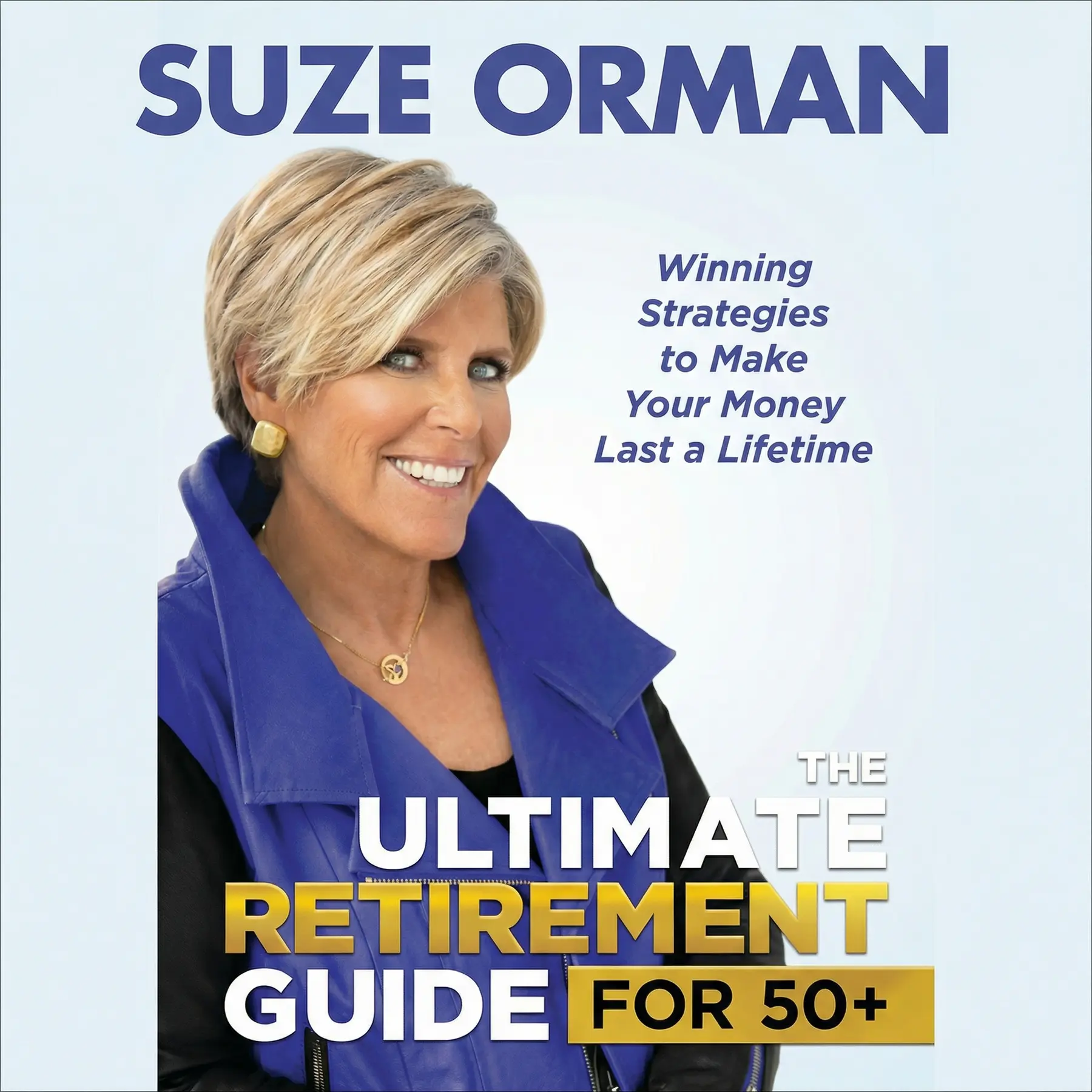
The Ultimate Retirement Guide for 50+: Winning Strategies to Make Your Money Last a Lifetime
By Suze Orman
Suze Orman shows people over 50 how to make their savings last into their nineties. Her plan is to cut car and housing costs, ride out market crashes, add guaranteed income and protect the family with a trust.
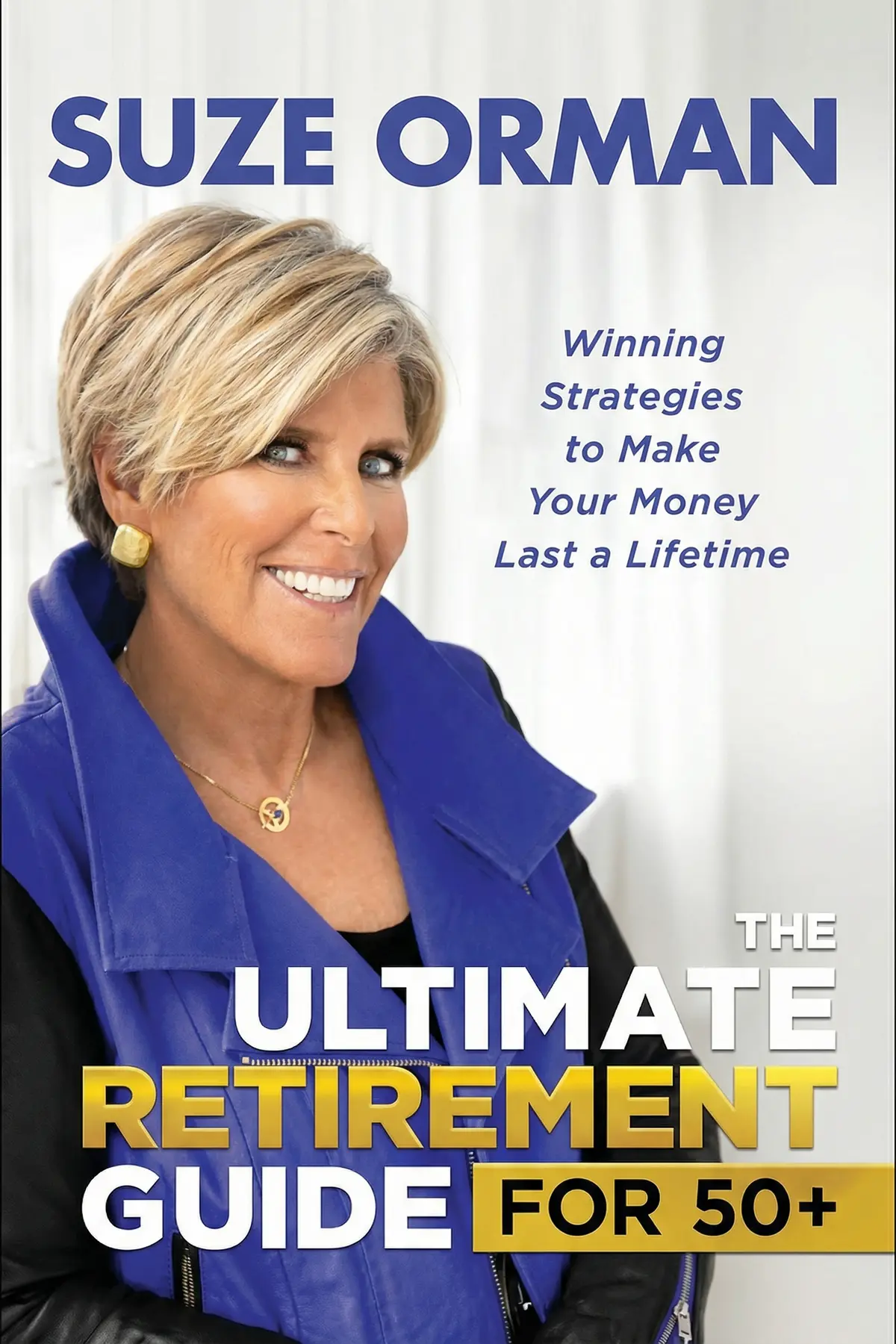
Table of Content
1. Introduction
48 sec
If you are in your fifties or sixties without a company pension, the real challenge is making your savings last as long as you do. In The Ultimate Retirement Guide for 50+, personal finance expert Suze Orman starts from a sobering assumption: if you are healthy in your early sixties, plan on living into your nineties.
Her argument is that a secure retirement is now something you build yourself. You build it by shrinking your biggest costs while you still earn, avoiding risks you don’t need to take, and pairing stocks for growth with money you can count on when markets fall. The advice is plain and specific. It covers how long a car loan should run, what a smaller home adds up to over ten years, and how many months of cash to hold before your last day at work.
2. Take charge of your retirement planning today
1 min 26 sec
A generation ago, retirees had almost nothing to decide. Today the same stage of life comes with tax choices, withdrawal puzzles and market swings, and the people facing them are mostly on their own.
3. Plan for a life that reaches 95
1 min 41 sec
Orman’s mother looked at her family history and made a reasonable guess about how many years she had left. The guess was wrong by decades, and the cost showed up exactly when she could least afford it.
4. Support grown children without sinking your savings
1 min 32 sec
Helping an adult child feels like plain good parenting. Orman sees a trap in it that can leave both generations short of money at the worst possible moment, and she offers three firm rules.
5. Cut thousands from the car you drive
1 min 33 sec
Finding an extra $500 a month for savings sounds painful. Orman points to one everyday expense where a few simple rules about loans, age and ownership can free that money without much sacrifice.
6. A smaller home that pays for your freedom
1 min 38 sec
Most retirees want to stay in the house full of family memories. Orman puts numbers on the alternative, and over a decade the difference grows large enough to change what retirement looks like.
7. Stay calm and invested when markets crash
1 min 41 sec
The older we get, the stronger the urge to sell when stocks plunge. Orman explains why that move usually backfires for retirees, and what to set up before your last paycheck so you never need to make it.
8. A paycheck for life that lets stocks grow
1 min 39 sec
Stocks protect a long retirement from rising prices, yet they can collapse in the very year you need cash. Orman describes a way to have both growth and certainty, and she is frank about its price.
9. Protect your family with a will and trust
1 min 28 sec
Many people believe a will is all their family will ever need. Orman explains what a will cannot do, both after you die and while you are still alive but unable to manage your own money.
10. Conclusion
1 min 02 sec
For most people, the pension that once ran retirement for them is gone. Orman’s guide turns that loss into a set of decisions anyone can make. Most of them involve doing the unexciting thing early: the three-year car loan, the smaller house, the rent from a grown son, the trust signed while you are well. Each trades a little comfort now for years of not worrying about money later.
Start by running your plan to age 95, with prices climbing every year, and see where it breaks. If the gap is wide, look first at your two largest bills, the car and the home. Before your last working day, set aside two years of living costs in a higher-paying online savings account, so a bear market becomes something you can simply wait out. And if fear of crashes keeps you out of stocks, price an annuity that covers your essential bills.
Orman’s mother expected a short widowhood and lived more than thirty years longer. Plan for the long version of your life, because it may be the one you get.
About this book
What is this book about?
Company pensions used to make retirement simple: work for decades, then cash a guaranteed check every month. Today most people outside government jobs must fund and manage their own retirement, often with low interest rates, volatile markets and the real chance of living into their nineties. Suze Orman, a personal finance expert with decades of advice behind her, starts from the reader's situation today. She sets ground rules for supporting adult children without becoming dependent on them later. She shows how a three-year car loan and a smaller home can free hundreds of dollars a month for savings. She explains why retirees should hold on to stocks through bear markets, protected by two years of cash and possibly an income annuity. Readers get specific numbers to plan with, from the odds of reaching 90 to what $1,000 a month of guaranteed income cost in 2019. They also find out about two papers, a will and a revocable living trust, that keep their families out of probate court and away from a financial tangle.
Book Information
Who it's for
Savers without company pensions
People in their fifties and sixties without a company pension who worry their savings won't last.
Supporters of grown children
Parents still paying for adult children while their own retirement fund lags behind.
Recent retirees weighing investments
New retirees unsure whether to stay in stocks, buy an annuity or set up a trust.
About the Author
Suze Orman
Suze Orman was born in Chicago in 1951. She worked as an account executive at Merrill Lynch from 1980 to 1983 and founded the Suze Orman Financial Group in 1987. Her program, The Suze Orman Show, ran on CNBC from 2002 to 2015. She has written, co-produced and hosted nine PBS specials, won two Emmy Awards and eight Gracie Awards, and twice been named to the Time 100 list. She also hosts Suze Orman's Women and Money Podcast.
Ratings & Reviews
Ratings at a glance
What people think
Listeners find this retirement guide both educational and straightforward, offering actionable tactics and tools from start to finish. The work earns praise for its financial advice, helping listeners reach financial independence, and they appreciate the crisp, articulate presentation. They value the author’s professional knowledge and consider it a great investment, with one listener noting it is a mandatory read for anyone planning their retirement.
Top reviews
Matteo
Suze Orman has a way of cutting through the noise that I find incredibly refreshing. While she definitely gives off a "eat your greens" vibe—basically telling you to stop spending and start saving—the advice is undeniable. I'm hitting that 50-year mark soon, and her practical strategies for downsizing and managing inheritance were exactly what I needed to hear. Gotta say, it's not all fun and games, but standing in your truth regarding your bank account is the only way to find real peace. The bulleted lists at the end of each chapter are perfect for quick reference and provide excellent resources for further research.
Show moreLandon
Finally got around to reading this after turning 52 last month, and it was the wake-up call I desperately needed. One quote really stuck with me: "It’s better to do nothing than something you don’t understand." That simplified everything for me because I've always been intimidated by complex investment jargon and aggressive brokers. She breaks down the choice between paying off a mortgage and investing in a pension in a way that actually makes sense for the average worker. Not gonna lie, the first few chapters gave me some serious anxiety, but sticking through to the end helped me map out a real path toward financial freedom.
Show moreRatree
This guide is an absolute must-read for anyone feeling that pre-retirement anxiety that starts creeping in during your fifties. I have trusted Suze’s financial advice for years, and this latest edition is just as clear and well-written as her previous work. She provides a sense of empowerment that makes the daunting task of retirement planning feel achievable rather than terrifying. I loved the positive spirit she brings to the table, even when she’s telling you the hard truths about your spending habits. For the cost of a book, you get a lifetime’s worth of expertise and resources. Highly recommended for all my friends in their late 40s.
Show moreZoe
Picked this up on a whim and I'm so glad I did because it really simplified my perspective on my 401k. The book is incredibly informative and easy to understand, even if you don't have a background in finance or accounting. I've already started implementing her suggestions regarding downsizing while I'm still working to save on property taxes. It’s well worth the money for the peace of mind alone. The audible version is especially good since she narrates it herself with such conviction and includes a helpful PDF. I will be referring back to these resources for a long time as I transition into this next phase.
Show moreSamira
The chapter on Long-Term Care insurance alone was worth the price of admission for me. Before reading this, I was completely overwhelmed by the options, but Suze lays out exactly what to look for and what to avoid. Her clear, direct style helps remove the emotion from financial decisions, which is exactly what I need right now. I appreciate that she updated this for 2023 so the information on interest rates and laws is actually current and usable. This book isn't just about money; it's about making hard life choices and ensuring you can live your later years with dignity and independence.
Show moreAom
Is this the most revolutionary finance book ever written? Probably not, as much of the advice regarding 401ks and Roth accounts has been around for decades. However, the 2023 updates make it relevant for today’s specific tax laws and economic climate, which is where many older guides fail. I personally appreciated the section on how to handle adult children who still rely on you financially. It’s a tough-love approach, but Suze makes a compelling case for why your retirement must come first. The writing style is very accessible, though I did find her constant mentions of her island lifestyle a bit jarring compared to the frugal advice she gives.
Show moreOrathai
As someone who usually avoids financial gurus because they often feel out of touch, I was pleasantly surprised by the practicality here. Suze focuses on much more than just the numbers; she dives into where you should live and what kind of insurance you actually need. I particularly liked the advice about not leasing cars, which is a trap so many people my age fall into. To be fair, she can be a bit preachy at times, but the information is so well-organized that I can overlook the tone. It’s a solid resource for anyone starting to plot their path toward the finish line while still working.
Show moreYui
After hearing Suze speak on a podcast, I decided to grab the latest edition to see if I was on the right track for 65. The way she explains the changes in tax laws and how they affect your inheritance plans was extremely helpful for me. I did feel like some chapters were a bit repetitive, and she definitely tries to persuade you to follow her specific lifestyle choices throughout the book. However, the core financial guidance is sound and provides a great head start for those of us not quite at retirement age yet. It’s a practical, easy-to-digest guide that covers almost all the necessary bases.
Show moreJoe
The truth is, I found this to be a bit of a mixed bag. Suze employs some generalizations that feel a bit off-base for people who aren't already starting with a significant nest egg. Frankly, her advice on long-term care insurance felt a bit like a suggestion to simply "look into it" rather than providing a concrete plan. I did learn a few things about trusts and Roth 401ks that I hadn't considered before, so it wasn't a total waste of time. It’s a decent primer, but if you’ve been following personal finance for years, you might find yourself disagreeing with at least half of her specific recommendations.
Show moreNarumon
Look, I expected more than just a rehash of basic personal finance tips I could find on any free blog. Most of this was either too early for me to use or way too late to implement for my aging parents. I found myself comparing it to the Charles Schwab Guide to Finances After 50, which I felt was much more thorough in its analysis. It bothers me when extremely wealthy authors talk about how happy we can all be with a "simple life" while they enjoy houses on private islands. It just feels a bit condescending to the average worker struggling to make ends meet in this economy.
Show moreQuestions about this book
What is the main idea of The Ultimate Retirement Guide for 50+?
Suze Orman argues that with company pensions mostly gone, people must design their own retirement. That means planning to live to 95, cutting big costs like cars and housing while still working, setting boundaries with adult children, staying invested in stocks through crashes with two years of cash on hand, considering an income annuity for guaranteed income, and creating a will and a living revocable trust.
How long should I plan for my retirement savings to last?
Orman advises assuming you will live to 95 unless a medical condition is likely to shorten your life. A woman of 65 in average health has a 44 percent chance of living to 90, and for a couple who are both 65, the chance that at least one reaches 90 is 62 percent. Her own mother, widowed at 66, expected only a few more years like her parents and grandparents, yet lived to 97 and was broke in her eighties.
Should retirees sell stocks during a bear market?
Orman says no. Bear markets have happened seven times since 1970, yet $10,000 in an S&P 500 index fund from the early 1980s grew to $30,000 by late 2019. Selling after a fall is already too late, and timing the market means being right twice. Portfolios usually recover in about two years, so she recommends an emergency fund covering at least 24 months of living costs.
What is the difference between a will and a living revocable trust?
In Orman’s account, a will is for personal items, such as a bracelet or a watch, but passing large assets through it requires a probate court and a judge’s approval, which is slow and expensive. A living revocable trust holds assets like real estate and bank and investment accounts, needs no court approval at death, and lets a successor trustee manage your money if illness leaves you unable to.
How can I save more for retirement after 50?
Orman focuses on large costs. Pay off car loans within three years, buy certified pre-owned cars that can cost up to 40 percent less, and drive them for at least ten years. Consider downsizing: cutting a $2,000 monthly housing cost by 25 percent frees $500, which in a Roth IRA for ten years at 5 percent grows to more than $75,000 tax-free.
Readers also enjoyed




AUDIO SUMMARY AVAILABLE
Listen to The Ultimate Retirement Guide for 50+ in 15 minutes
Get the key ideas from The Ultimate Retirement Guide for 50+ by Suze Orman, plus 5,000+ more nonfiction titles.
- 5,000+ titles
- Listen as much as you want
- 7-day free trial
- Cancel anytime









