

A Promised Land
Barack Obama
 English
 ไทย
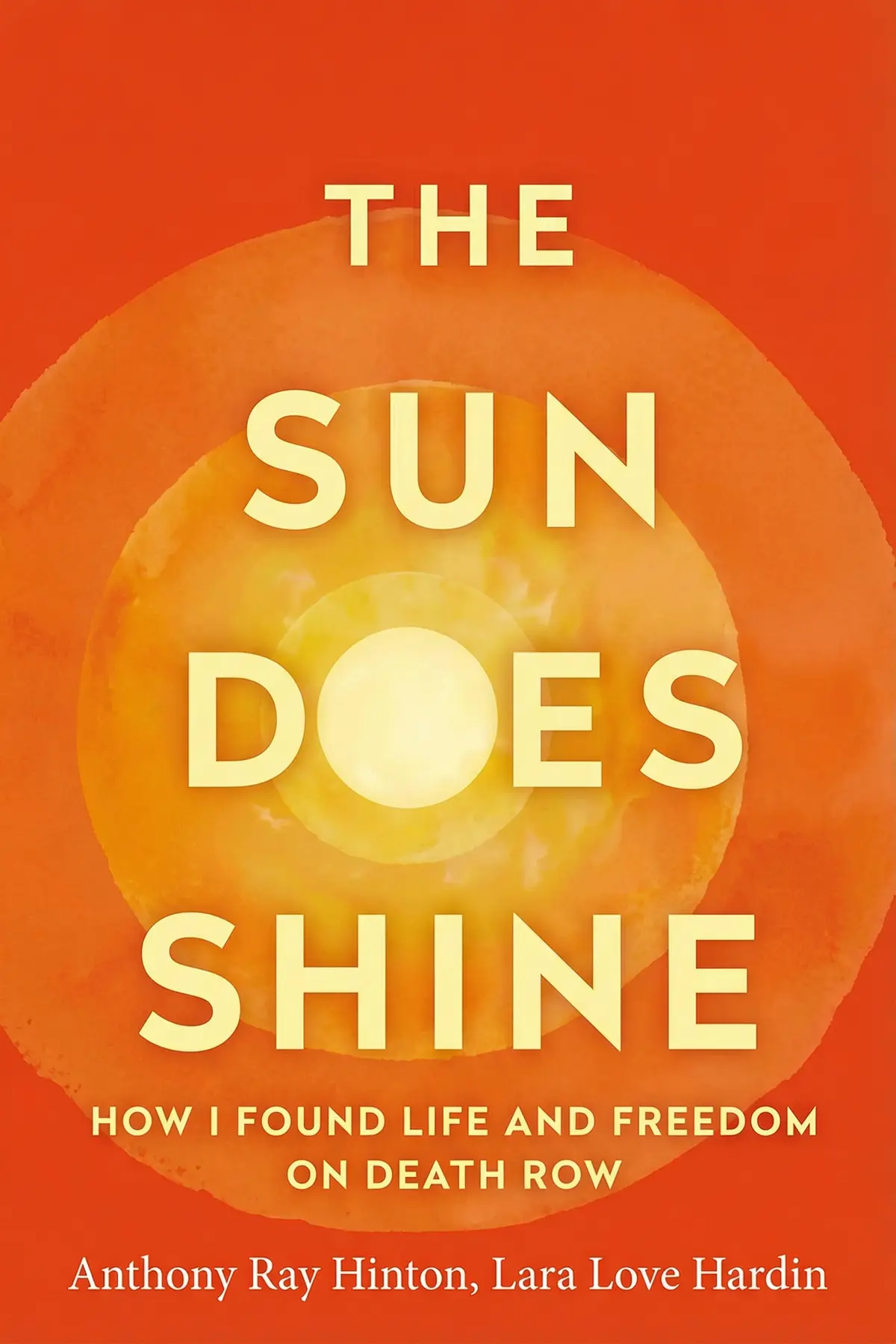
Anthony Ray Hinton spent nearly three decades on Alabama's death row for murders he did not commit. His memoir shows how a wrongful conviction gets built, and how he kept his mind and heart free inside.
59 sec
When life treats you unfairly, it can feel as if the only choices left are rage or despair. Anthony Ray Hinton faced an injustice few people ever will, and he found a third choice. In The Sun Does Shine, written with Lara Love Hardin, Hinton tells how he was arrested in 1985 for Alabama restaurant shootings he did not commit, convicted on a broken case and held on death row for nearly three decades.
His story proves two things at once. The state condemned him because he was poor and Black, not because of evidence. And inside a cell the size of a small bathroom, he built a kind of freedom out of compassion, imagination and hope, then chose forgiveness on the way out. Follow his account and you will see exactly how a wrongful conviction gets assembled, and what one person can still decide when nearly everything has been decided for him.
1 min 32 sec
A mother’s strict rules for a Black boy in 1970s Alabama were meant to keep him alive. They also planted the habits that would later decide how he survived the worst years of his life.
2 min 16 sec
He was signed in at work during one of the shootings, he passed a lie detector test and the gun had not been fired in decades. Watch how none of that mattered.
1 min 55 sec
On a row where men were led to the electric chair a short walk from his cell, Hinton had no power to stop anything. He found one thing he could still give.
1 min 46 sec
Hinton discovered that a man he considered a friend had committed the country’s last lynching of a Black man. What followed came from Hays himself, who presented Hinton to his parents as his best friend.
1 min 42 sec
Hinton once spent two full days somewhere far from death row without anyone noticing he was gone. Then he found a way to take six other men with him.
2 min 09 sec
After years of failed appeals, a lawyer offered Hinton a way off death row. He fired him on the spot, and that refusal set up a 16 year fight that reached the highest court.
1 min 54 sec
Walking out after three decades was only half the story. The other half was learning to live outside, and deciding what to feel about the people who had put him away.
1 min 10 sec
The Sun Does Shine leaves two pictures side by side. One is a system that saw a poor Black man and stopped looking: a dusty gun declared a murder weapon, an expert ridiculed for having one eye, a witness chasing a reward, a state that spent years defending its own mistake. The other is the man inside it, making noise so a dying neighbor would not feel alone, calling a Klansman’s son his friend, flying to London in his head and leaving an empty chair for Larry.
The book is clear that an innocent man should never have had to endure any of this, and his survival does not excuse the system. What his story offers is a way to act when circumstances are out of your hands. Decide who you will be inside them. Stay present for people you cannot save, and feed your mind with stories, shared with others when you can. And watch how fast certainty about someone’s guilt starts bending the evidence around them.
He walked out into the Alabama sunshine still choosing love over hate, and still saving his receipts.
In 1985, Anthony Ray Hinton was mowing his mother's lawn in Alabama when police arrested him for restaurant robberies and shootings he could not have committed. He had an alibi, a passed polygraph and an old gun that had not been fired in decades. He was still convicted and sentenced to death, and almost 30 years passed before he walked free. Written with Lara Love Hardin, The Sun Does Shine traces how race and poverty shaped every stage of his case, from a racist arrest and an underpaid lawyer to a state that kept defending its errors long after the evidence collapsed. It is also the story of how Hinton survived: comforting men on their way to the electric chair, befriending a Klansman's son, escaping in his imagination and starting a book club on the row. Readers get a clear, human picture of how wrongful convictions happen, the long legal fight with lawyer Bryan Stevenson that ended in a unanimous Supreme Court ruling, and a hard-won case for hope and forgiveness when your circumstances are out of your hands.
Readers facing a situation they cannot control who want a real account of keeping hope alive.
Anyone curious how wrongful convictions happen, from a racist arrest to an underfunded defense.
People struggling to forgive who want to hear from someone with every reason not to.
Anthony Ray Hinton was convicted of killing two fast food restaurant managers in Birmingham, Alabama, crimes he did not commit, and spent decades on death row. After the US Supreme Court ruled in his favor, the charges were dropped and he was released in April 2015. He now speaks about prison reform, faith and forgiveness. His co-writer, Lara Love Hardin, is a literary agent, president of True Literary and a prison reform advocate who once served ten months in county jail. She has written five New York Times bestsellers as a collaborator and co-founded The Gemma Project for incarcerated and formerly incarcerated women.
Listeners find this an incredible work that keeps them engaged throughout, offering a gripping narrative about injustice and redemption. The prose is masterfully written, and listeners characterize it as a poignant experience that brings them to tears while simultaneously renewing their belief in mankind. They value the sincere depiction of how forgiveness can triumph over unfairness, and one listener notes how it teaches that we always have a choice.
Picked this up after seeing it on Oprah's list and I am just floored by the resilience of the human spirit. Anthony Ray Hinton spent thirty years on Alabama's death row for a crime he didn’t commit, yet his narrative isn't just one of bitterness. Instead, he shares how he used his imagination to survive a 5x7 cell, even 'marrying' Sandra Bullock in his mind to keep from losing his sanity. The way he describes his friendship with Lester, who never missed a visiting day, is enough to make anyone tear up. Truth is, the system failed him at every turn, from the blind ballistics expert to the racist prosecutor. It is a hauntingly beautiful story about the power of hope and the absolute necessity of legal reform. His eventual walk into the sunshine with Bryan Stevenson is a moment of pure, hard-earned catharsis that I won't soon forget.
Show moreWow, my heart is absolutely aching after finishing this memoir. It is impossible to read about Anthony’s love for his mother and not feel the weight of those thirty lost years he could have spent with her. He writes with such a distinct, soulful voice that you feel like you’re sitting right there on that narrow bunk with him. The book club he started for the inmates was a highlight for me, showing how literature can bridge gaps between the most unlikely people. Not gonna lie, I cried multiple times, especially during the descriptions of the executions taking place just feet away from his cell. Hinton’s faith is the backbone of the story, and while I’m not particularly religious, his conviction is undeniably inspiring. This is more than a book; it’s a testament to surviving the unthinkable with grace.
Show moreEvery person in America needs to read this book right now to understand the reality of our 'justice' system. Hinton was sentenced to die because he was poor and Black in Alabama, and the lack of evidence against him was staggering. The incompetence of his initial court-appointed lawyer was infuriating, showing exactly why legal reform is a life-or-death issue. Thankfully, Bryan Stevenson and the Equal Justice Initiative stepped in, but it still took decades to correct a manifest injustice. Look, it’s a tough read because it makes you angry at the world, but Hinton’s humor provides much-needed levity. He chooses joy in a place designed to kill it. I am left with a profound sense of respect for his courage and his refusal to let hate win.
Show moreHow can a man spend three decades in hell and come out with more love in his heart than most people who have never suffered? Anthony Ray Hinton is a true hero for our times. His ability to forgive the people who stole his youth—the judge, the witnesses, the state—is nothing short of miraculous. Frankly, I don’t think I could have done it. This book teaches us that we always have a choice in how we respond to our circumstances, even when those circumstances are 5 feet by 7 feet. The bond he shared with his best friend Lester is the purest example of loyalty I have ever encountered in a biography. Reading about his first meal after being exonerated made me realize how much we take for granted. This is a life-changing book that restores your faith in humanity.
Show moreCan you imagine being punished for something you didn't do while everyone who is supposed to protect you actively tries to end your life? That was Anthony Ray Hinton’s reality for thirty years. This memoir is gut-wrenching, particularly the parts detailing the institutional racism that allowed the prosecution to ignore his clear innocence. The ballistics evidence was a joke, yet it took the Supreme Court to finally force Alabama to listen. I was struck by how he used humor to put people at ease, even when he was the one in the most pain. It’s a masterclass in emotional intelligence and resilience. His transition back into a world full of iPhones and new technology was both funny and heartbreakingly sad. Please read this and then pass it on to someone else.
Show moreThe chapter where Anthony starts the book club on death row will stay with me forever because it shows the power of shared humanity. He got men who were discarded by society to sit down and discuss James Baldwin and Harper Lee. It’s a beautiful irony that a man locked away for a crime he didn’t commit ended up bringing so much light to others. The writing is incredibly accessible and moves at a fast pace, making it hard to put down. You find yourself rooting for him, screaming at the injustice, and finally weeping with relief. His mother’s unwavering belief in his innocence was his anchor through the storms of three decades. This book is a mandatory addition to any library on social justice and the American experience.
Show moreThere are no words to describe the mixture of rage and inspiration I felt while turning these pages. To think that thirty years of a man's life can be discarded because of a prosecutor’s ego is sickening. Yet, Hinton’s message isn’t one of revenge, but of redemption and the power of the mind to transcend physical walls. He reminds us that even in the darkest pit, 'the sun does shine' if you have the courage to look for it. The details about the trauma he still carries—the way he can't sleep in a bed that's too soft—hit me hard. It’s an honest portrayal of the aftereffects of wrongful imprisonment. I am grateful he found the strength to share this journey with us. Absolutely brilliant and deeply moving.
Show moreThe US justice system often feels broken in the abstract, but Hinton’s account puts a human face on the systemic failures that are usually just statistics. To be fair, some of the middle chapters felt a bit repetitive as the years of legal stalling dragged on, but perhaps that was intentional to mirror the agonizing wait. The racism he encountered was blatant and sickening, particularly the comments from the police during his arrest. However, what really shines is Hinton's capacity for forgiveness. He even managed to find common ground with a KKK member on the row, which sounds impossible until you read his perspective. It’s an analytical look at how poverty and race can essentially seal a person's fate before they even step into a courtroom. This is an essential read for anyone who wants to understand the flaws in our capital punishment system.
Show moreIf you were moved by 'Just Mercy,' then Anthony Ray Hinton's personal perspective is the necessary companion piece. While Stevenson’s book is about the legal fight, this is about the soul of the man in the cell. Hinton captures the sensory details of death row—the smells, the sounds of the yellow mama chair, the silence of the nights. My only minor complaint is that the timeline jumps around a little bit in the beginning, which was slightly confusing. However, the emotional core of the book never wavers. It’s a stark reminder that the death penalty is often more about who has the power than who is actually guilty. Hinton’s steadfast spirit is a beacon of light in a very dark subject matter. This book will stay with you long after you close the cover.
Show moreAfter hearing so much praise, I found the writing style a bit simplistic even though the story itself is undeniably powerful and important. Personally, I think the collaboration with Lara Love Hardin resulted in a tone that felt a bit too 'polished' at times for such a raw subject. I wanted more depth regarding the psychological trauma of solitary confinement beyond the imaginative escapes. That said, the facts of the case are horrifying and everyone should know what happened to Mr. Hinton. The way the state of Alabama fought to keep an innocent man on death row even after evidence cleared him is a national disgrace. It’s a 5-star story told in a 3-star way, but the message of persistence and the role of the EJI is still worth your time. I’m glad he’s free and telling his truth now.
Show moreIt is Anthony Ray Hinton’s memoir, written with Lara Love Hardin, about being arrested in 1985 for Alabama restaurant shootings he did not commit. Despite an alibi and a passed polygraph, he was convicted and sentenced to death. He spent nearly three decades on death row before lawyer Bryan Stevenson won a unanimous Supreme Court ruling and the state dropped the charges in 2015.
Police matched bullets from three crime scenes to his mother’s old gun, which had not been fired in 25 years. A survivor picked him from a photo lineup after detectives gave him Hinton’s name. His underpaid lawyer hired an expert the prosecution discredited, a witness with a grudge and a $5,000 reward lied, and his polygraph was kept out of court.
He leaned on compassion, imagination and hope. He made sure condemned men heard they were not alone, befriended fellow inmates including Klansman Henry Hays, and escaped in his mind to places like London and Wimbledon. He also founded a book club, opening with Go Tell It on the Mountain by James Baldwin, so that seven men could discuss something other than their cases.
His mother taught him to forgive, and death row reinforced it. He came to believe that how we choose to live matters, whether we love or hate, because life can change in a single day. He forgave his prosecutor, who later wrote that he could tell Hinton was a killer by looking at him, as well as his first lawyer and his judges.
Barack Obama


Masaji Ishikawa


Ben Macintyre

Fay Bound Alberti


Daniel Goleman

James Shapiro

AUDIO SUMMARY AVAILABLE
Get the key ideas from The Sun Does Shine by Anthony Ray Hinton, plus 5,000+ more nonfiction titles.









