

A Life Decoded: My Genome: My Life
J. Craig Venter
 English
 ไทย
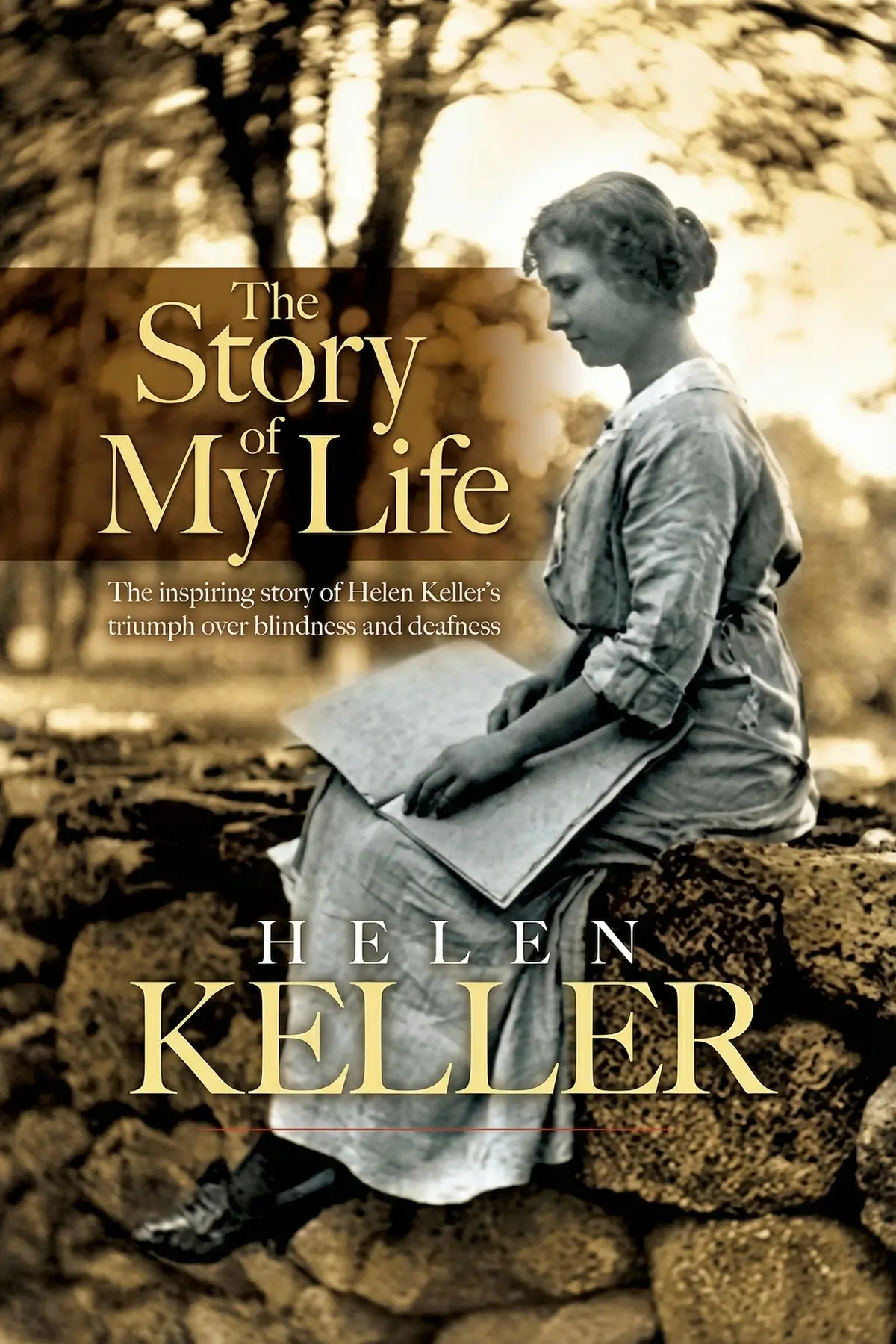
Helen Keller's own account of growing up deaf and blind: how a teacher gave her language, how she learned to speak, and how she earned a place at college against tests that never bent for her.
58 sec
Most of us meet our limits as walls. Helen Keller, who lost both sight and hearing to a fever at 19 months, learned to treat hers as problems to work through, and what changed everything was a single word spelled into her hand. In The Story of My Life, Keller recounts her childhood in Tuscumbia, Alabama, the teacher who gave her language, and the long climb that followed, from learning to speak to passing a college entrance exam.
Her story makes one case from start to finish. Once a person has the means to reach others, obstacles that once caused rage can become sources of meaning and even pleasure. Along the way you get a vivid picture of how understanding grows from touch and naming, how one teacher can change a life, and how a determined girl handled failure, unfair tests and other people’s doubts.
1 min 35 sec
A five-year-old could fold laundry yet set herself on fire over a damp apron. Her early years show what happens to a quick mind when it has almost no way to say what it wants.
1 min 56 sec
A doll, a cup of water and a cloud overhead became the tools of one of history’s great lessons. The order in which they came holds a method any teacher can borrow.
1 min 50 sec
At 12, Keller was questioned like a suspect over a story she could not remember ever hearing. Her confidence in writing came back only gradually, as she learned over time to move past that fear.
1 min 46 sec
A principal decided illness meant Keller should wait another year for college. Her mother disagreed, and what followed was an exam written in an unfamiliar system of raised dots.
1 min 31 sec
People wondered whether a woman who could not see Niagara Falls could truly enjoy it. Keller had an answer, and her favorite books reveal why reading mattered to her more than almost anything.
1 min 07 sec
Keller’s life is often told as a miracle. Her own account suggests something slower and more human. A fever closed two of her senses. Then a mother, a teacher, a head of school and a speech teacher each handed her another way to reach the world, and each time she reached, the world grew. The girl who threw an apron into the fire became a young woman reading Macbeth and German stories, with a college entrance exam behind her that was never adjusted for her.
What she offers a modern listener is a way to look at limits. When frustration boils over, yours or someone else’s, look for what cannot yet be said. When you teach, start with what can be touched and build toward what cannot. And when a test will not bend, find the one ally who will.
The rest is the attitude Keller kept: the obstacle was where the meaning lived. She found pleasure in getting past it, as when she learned that what she drank and what she felt in a stream were both water.
A fever at 19 months took Helen Keller's sight and hearing, and for years she could share only what a nod or a shake of the head could carry. Her frustration turned into fits of rage, an apron thrown into a fire, a mother locked in a pantry. Then, in 1887, Anne Sullivan arrived and began spelling words into her hand. In The Story of My Life, Keller tells how naming things opened her world: first a doll, then water, then ideas such as thinking and love. She describes learning to speak by feeling a teacher's mouth, being questioned over a story she was accused of copying at 12, and preparing for college with almost no special help. The result is a portrait of how understanding grows, how teachers and parents can change a life, and how one young woman came to find pleasure and meaning in getting past obstacles instead of resenting them.
Parents, teachers and managers who want to understand how someone learns when the usual channels are closed.
Readers facing a health or personal limit who want a true story of meeting obstacles without bitterness.
Students of history curious about the real girl behind a famous name.
Helen Keller (1880 to 1968) was born in Alabama and lost her sight and hearing to an illness at 19 months. From the age of seven she worked with her teacher Anne Sullivan, who taught her language, reading and writing. She studied at Radcliffe College, the first deafblind American to graduate from college. She later campaigned for people with disabilities, women's suffrage, labor rights and peace, and helped found the American Civil Liberties Union.
Listeners find this autobiography an incredible account that follows Helen Keller’s development from her youth into adulthood, offering a brilliantly descriptive narrative of her life. The quality of her prose is frequently praised, with one listener remarking that her writing is superior to that of many sighted individuals. While listeners value the educational nature of the book and view Keller as a remarkable woman, reactions to the text size are varied, as several listeners mention that the print is extremely small.
Wow. This isn’t just a simple autobiography; it’s a masterclass in human resilience and a testament to the power of the human spirit. Keller’s ability to describe the fragrance of a blooming flower or the specific texture of a butterfly’s wing with such vividness is mind-blowing, frankly surpassing the descriptive powers of many sighted authors I've read. The narrative follows her journey from a silent, dark childhood into the academic rigors of Radcliffe College, which is an staggering achievement for anyone. While some might find the prose a bit flowery, I found it perfectly captures the Victorian era’s literary aesthetic. Anne Sullivan’s role as the 'Teacher' is central here, and seeing their bond evolve through their early lessons is deeply moving. It’s an informative, beautiful account that serves as a beacon of light for anyone facing their own 'impossible' obstacles.
Show moreAfter hearing about the 'Miracle Worker' since I was a child, reading Helen's own words was a revelation that painted a much more complex picture of her genius. She wasn't just a passive student; she was a fiercely intelligent, driven woman who fought for every scrap of knowledge she could get. The way she describes her transition from a state of 'no-thought' to the moment at the well-house is iconic for a reason. I loved the chapters detailing her love for nature and how she used her remaining senses to build a world that felt just as full as ours. To me, her writing style is elegant rather than 'dated,' reflecting a woman who deeply loved the classics she studied at Radcliffe. It’s a wonderfully detailed account of a life that could have been miserable but was instead filled with a contagious excitement for learning.
Show moreHelen Keller’s autobiography is essentially a triumph of the spirit, but it’s also a fascinating look at 19th-century pedagogy and the concept of self-directed learning. The relationship between Helen and Anne Sullivan is the heartbeat of this book. Sullivan’s methods were so progressive for the time, treating Helen as a capable mind rather than a 'broken' child. I was particularly moved by the letters where Helen expresses her joy in reaching her goals, showing a persistence that makes my own daily complaints feel trivial. The prose is beautiful and sophisticated; it’s hard to believe she learned to write this well without ever hearing the rhythm of speech. If you want a story that proves the mind can transcend physical limits, this is it. It’s an amazing read that everyone should experience at least once.
Show moreKeller manages to describe the world with more clarity and passion than most people who have all five senses. This book is a beacon of hope. I was especially struck by her intelligence; the way she mastered multiple languages and complex literature while being both blind and deaf is nothing short of miraculous. The prose is elegant and reflects the high-caliber education she fought so hard to obtain. While the print size in most editions is notoriously small, the content itself is worth the squinting. It’s a wonderful, detailed account of how she escaped the 'quiet garden' of her early childhood to join the world of ideas. This isn't just a book for people interested in disability; it's a book for anyone who wants to understand the limitlessness of the human mind. Absolutely inspiring and genuinely moving from start to finish.
Show moreEver wonder how someone perceives a world they can neither see nor hear? Helen Keller provides a window into that experience, though perhaps not the one you’d expect. Instead of focusing on the 'nightmare' of her disabilities, she highlights her triumphs and her intellectual awakening. Personally, I was fascinated by the specific details of her education, like how Miss Sullivan spelled words into her palm or how she learned to 'hear' by feeling the vibrations of lips. The middle section gets a bit bogged down in her academic pursuits, and the prose is definitely a product of its time—very ornamental and dense. Some might find the sheer optimism a bit much, but you can't help but be inspired by her drive. Just a heads up: the print in my copy was incredibly small, making it a bit of a strain to read, which is ironic given the subject matter.
Show morePicked this up on a whim and was immediately struck by the sheer vibrancy of Keller's descriptions. Not gonna lie, I was confused at first by how a blind-deaf person could use so many visual and auditory metaphors, but then it clicked: she’s describing the world using the language we gave her to bridge the gap. It's a fascinating study in linguistics and adaptation. Look, the book isn't perfect; the structure is a little unfocused toward the end, and she glosses over the 'how' of her daily life in favor of her philosophy. I wanted more about the mechanics of her communication and fewer poetic musings on the Greeks. Still, the grit required to move from 'animal-like' frustration to graduating from a top-tier college is undeniable. It’s a short but powerful read, though the tiny font in this edition was a real chore to get through.
Show moreFinally got around to this classic, and while the dated language takes some adjusting, the core message remains powerful. Frankly, I was surprised by how much I enjoyed the early chapters where she describes her 'primal' state before she could communicate. It’s a brief book, yet it covers so much ground from her childhood in Alabama to her acceptance at Radcliffe. My only real gripe is that it feels a bit unfinished, which makes sense given she was only twenty-two when it was published. She focuses heavily on her education and almost entirely ignores the emotional toll her disabilities must have taken. However, her optimism is infectious, and her descriptions of the natural world are stunningly poetic. It’s a wonderful autobiography that serves as a reminder of what human beings can achieve with the right support and an iron will.
Show moreAs someone who appreciates historical memoirs, I had mixed feelings about the structure here, but the content is undeniably significant. The book does a great job showing the 'how' of her education, particularly the use of raised print and manual alphabets. However, I agree with other reviewers that the prose is a bit over-eager and flowery, which sometimes masks the actual experience she’s trying to convey. In my experience, the most interesting parts were her interactions with famous figures like Alexander Graham Bell, which grounded the story in history. The letters included at the end offer a unique timeline of her development, even if they aren't all that engrossing individually. It's a bit of a success story brochure, but considering what she overcame, she earned the right to brag. A solid four stars for the historical value alone.
Show moreTo be fair, I expected something much more visceral and grounded. I was looking for a raw exploration of the frustrations and emotional darkness she must have felt, but the book shies away from those personal difficulties in favor of a polished 'success story.' Keller writes with a very flowery, formal style that often feels a bit detached from the reality of her struggle. It makes me wonder how much of the tone was influenced by her editors or even Anne Sullivan herself. The last half of the book is essentially a collection of letters which, while showing her progress in language, felt repetitive and less engrossing than the actual narrative. It is a charming story and a remarkable historical document, but as a memoir, it feels a bit too curated for my taste. It's an important read, certainly, but not always a compelling one.
Show moreThe truth is, I found this incredibly difficult to get through, and not because of the subject matter. My main issue is the writing style—it is so incredibly flowery and overwritten that it feels like the actual person is buried under layers of Victorian fluff. I wanted to know what it was *really* like to live in total silence and darkness, but Keller focuses almost entirely on how she 'became normal.' She downplays her anger and her hardships so much that the story loses its emotional weight. It feels like a 'sanitized' version of her life meant to inspire people rather than an honest autobiography. Also, the letters at the end are quite dull and don't add much to the narrative. It’s an amazing accomplishment that she wrote this at twenty-two, but it just didn't click with me as a reader. I felt bored more often than I felt moved.
Show moreIt is Helen Keller’s account of growing up deaf and blind after a fever at 19 months. She describes her frustrated early childhood, the arrival of her teacher Anne Sullivan in 1887, learning words through the manual alphabet, learning to speak, a painful accusation of copying at 12, and her hard-won entry to college in 1900.
Sullivan used the manual alphabet, spelling words with one hand onto Helen’s hand. The first word was doll, practiced while Helen touched her doll. The breakthrough came when Helen grasped that the water she drank and the water in a stream shared one name. Sullivan then moved to ideas, spelling think while touching her head and explaining love through clouds and rain.
Around age ten, inspired by Ragnhild Kåta, a deaf and blind girl in Norway who could talk, Keller decided she would speak too. Her teacher Sarah Fuller let her touch her face to feel the shape of the mouth and tongue during speech, and Helen copied the movements. Keller describes the result as a deep sense of freedom.
Her story suggests that angry outbursts often signal something that cannot yet be said, that good teaching moves from what can be touched to what cannot, and that one ally can change an outcome, as her mother did when a principal wanted to delay her exams. It also shows the value of finding places where a limit does not apply, as reading did for her.
It suits parents and teachers interested in how understanding grows, readers living with a disability or a hard limit who want an honest story of persistence, and anyone curious about the real person behind a famous name. Keller writes about failures and fears as well as triumphs, including the accusation that made her afraid to write.
J. Craig Venter


Ishmael Beah

James Herriot


Barack Obama


Masaji Ishikawa

Ben Macintyre
AUDIO SUMMARY AVAILABLE
Get the key ideas from The Story of My Life by Helen Keller, plus 5,000+ more nonfiction titles.









