
12 min 43 sec
Available in: English
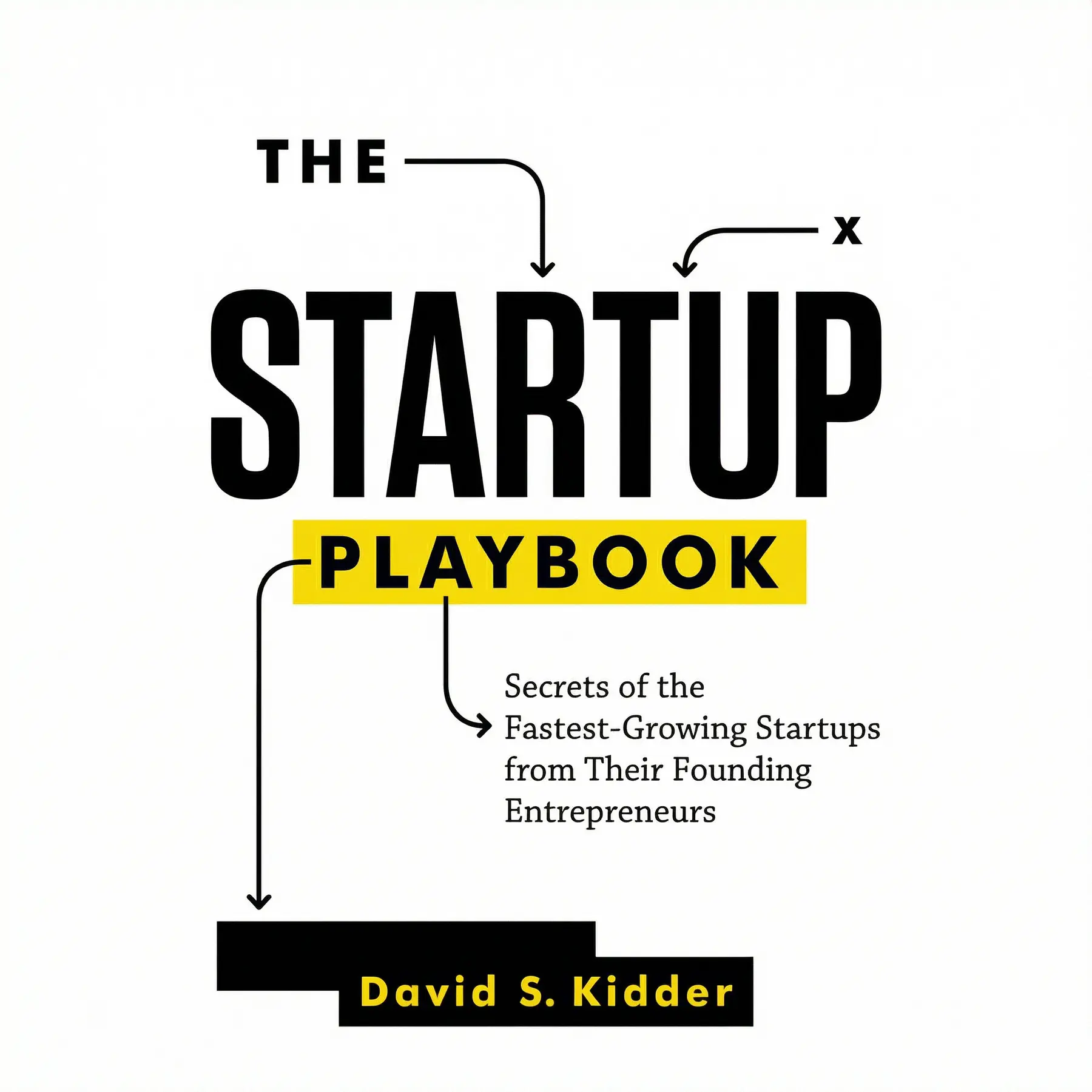
The Startup Playbook: Secrets of the Fastest-Growing Startups from Their Founding Entrepreneurs
Founders of fast-growing companies such as LinkedIn, Spanx, Zipcar, Honest Tea and Jawbone show how to spot opportunities early, protect and fix a young business, and keep customers and staff committed for the long run.
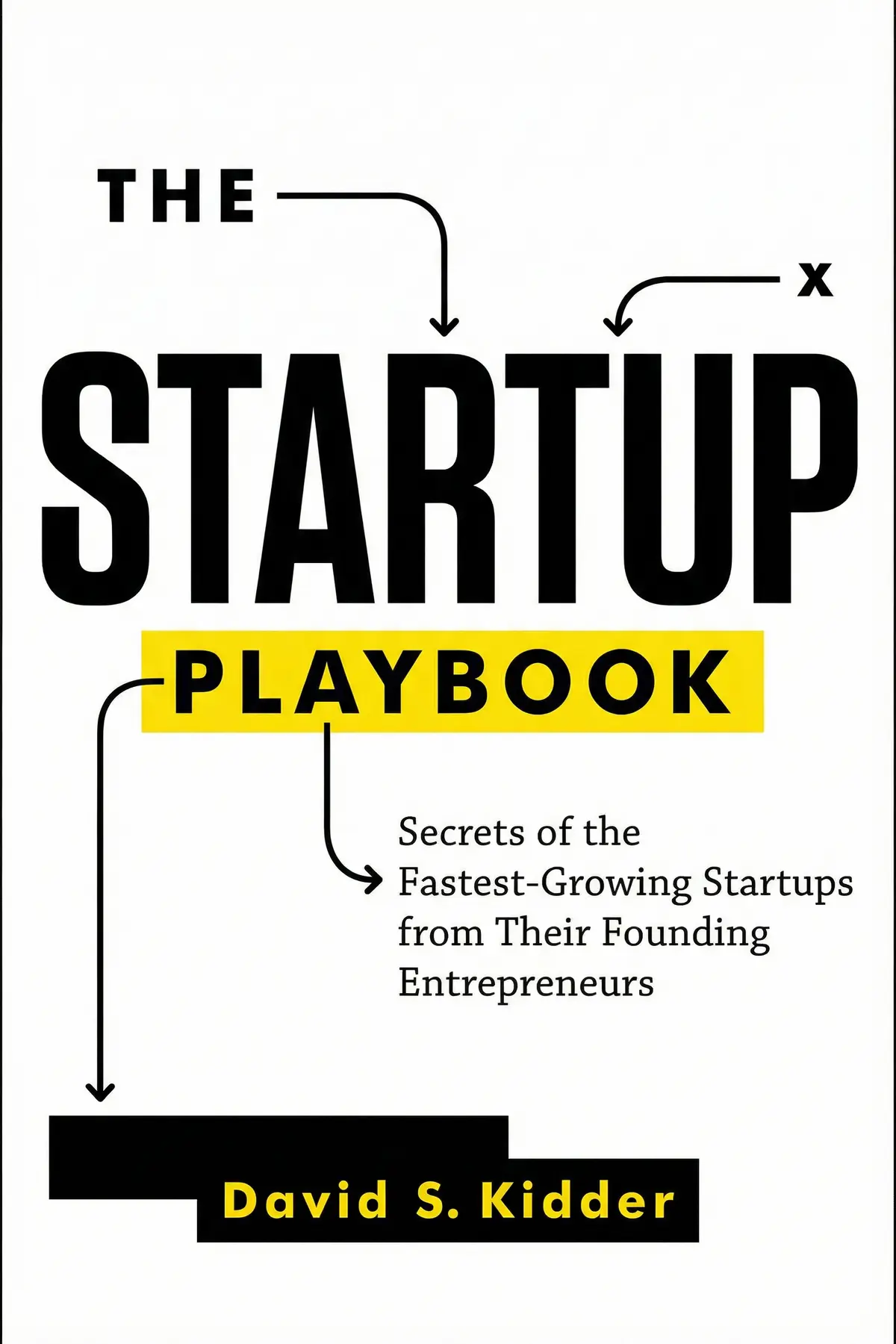
Table of Content
1. Introduction
1 min 00 sec
Most new companies fail, and passion alone will not save yours. In The Startup Playbook, entrepreneur and angel investor David S. Kidder gathers lessons from founders of fast-growing companies, and the first is about timing: the best moment to launch is often when your idea still looks unnecessary to almost everyone. Reid Hoffman started LinkedIn while people believed newspapers and headhunters had hiring covered, and that doubt kept rivals away.
Beneath their different stories, Kidder’s founders share one habit. They see a future before the crowd does, then protect it, correct it fast, and build it around the people who will stay with them. Each idea here comes from a named founder, from Spanx and Zipcar to Honest Tea and Jawbone. By the end, any business idea can be put through a short set of tests, from whether it is early enough to whether your first customers are likely to stay for life.
2. Spot the trend while others still doubt it
1 min 29 sec
When Reid Hoffman proposed a professional network, people asked why anyone would need one. That doubt looked like a weakness, yet it hid an advantage most founders overlook when everyone around them says no.
3. Fix the flaw that sank earlier attempts
1 min 32 sec
A network with no members is worth nothing, so who joins first? LinkedIn faced that trap at launch, and the way out came from a feature that let new users scan their email address books for contacts already on the network.
4. Turn idle resources into your next product
1 min 28 sec
A car spends most of its life parked, and one founder saw a company in that waste. The same way of looking can turn ordinary objects around you into new products.
5. Keep your goal vivid and your plan private
1 min 32 sec
Sara Blakely pictured herself on Oprah’s show while still in high school. Her method kept her going for years, but her parents’ reaction to footless pantyhose shows why some plans are best kept close.
6. Raise your prices and keep your customers
1 min 21 sec
Three months into Zipcar, Robin Chase found a flaw that would sink the company unless prices rose sharply. Telling customers felt like the worst possible move, and their response surprised her.
7. Build a team and customer base that lasts
1 min 40 sec
Honest Tea’s founder felt he had to work nonstop, yet he tried his best to leave the office at the same hour every evening. His reason, and a juice made for children, reveal how a company keeps its people.
8. Stay ahead because yesterday's success will not protect you
1 min 33 sec
Reaching a sales goal feels like the moment to relax. Jawbone’s founder treated it as a warning, and his fitness bracelet shows what customers notice beyond whether a product works.
9. Conclusion
1 min 08 sec
The founders in Kidder’s book come from very different markets, from hosiery and tea to car sharing and wearable technology, yet they share a way of looking. Each saw something before it was obvious: a network that hiring did not seem to need, cars sitting idle most of the day, a television appearance imagined in high school. After the seeing came the harder part, keeping that vision alive while protecting it, correcting it and building it around people who would stay.
The habits travel well beyond startups. Treat early doubt about an idea as a possible sign of good timing, then name the obvious objection and design the answer in. Keep watch for things you wish existed but cannot find, and for resources that sit unused around you. And when something breaks, tell the people who rely on you quickly and plainly, as Chase did with a 25 percent price rise her customers chose to pay.
Passion gets a founder started. Kidder’s founders suggest that seeing early, and staying early, is what keeps the company alive.
About this book
What is this book about?
Over 500,000 companies start in the United States every month, and most will not survive. Every founder is expected to bring passion and hard work, so those qualities rarely explain who makes it. David S. Kidder looks instead at what the founders of fast-growing companies actually did, and draws a playbook from their stories. The lessons come from named people. Reid Hoffman launched LinkedIn while the idea still looked pointless, and he solved its empty-network problem before it could stall him. Robin Chase built Zipcar out of cars that sit parked most of the day, then rescued it with an honest price rise. Sara Blakely of Spanx held on to a vivid picture of success while keeping her plans away from doubters. Seth Goldman of Honest Tea kept his staff healthy and his customers loyal, and Hosain Rahman of Jawbone refused to rest on past results. Readers get a set of tests for any business idea: whether it is early, whether it answers the objection that sank earlier attempts, whether it puts idle resources to work, and whether it keeps the people a company depends on.
Book Information
Who it's for
First-time founders testing ideas
First-time founders testing whether an idea is early, original or simply unwanted.
Professionals weighing a startup
Professionals thinking of leaving a job to start a company and looking for lessons from people who did it.
Small business owners
Small business owners who need to keep customers loyal and staff healthy while the company grows.
About the Author
David S. Kidder
David S. Kidder is an entrepreneur and angel investor from Upstate New York and a graduate of the Rochester Institute of Technology. He has started several technology and advertising companies, including Net-X, SmartRay Network and Clickable, and co-founded Bionic, which brings venture capital and entrepreneurial methods to large enterprises. He has invested in more than thirty companies and received Ernst and Young's Entrepreneur of the Year Award in 2008. He also co-wrote New to Big and created The Intellectual Devotional, a New York Times bestselling series.
Ratings & Reviews
Ratings at a glance
What people think
Listeners find the book quite accessible and consider it a must-read for entrepreneurs. It offers a wealth of great advice, and one listener notes it contains hundreds of vital business lessons. The storytelling style also resonates with listeners, including one who notes it's written from the perspective of a young entrepreneur. Furthermore, listeners find the content motivating.
Top reviews
Sing
Picked this up on a whim after seeing it mentioned on Oprah’s list, and I have to say, the collection of insights here is staggering. David Kidder doesn't just give you dry theories; he presents the living history of entrepreneurs who have actually survived the trenches of Silicon Valley. Each profile feels like a private mentorship session where you learn how to turn failure into a prerequisite for success. The storytelling style kept me engaged throughout the weekend, making complex concepts like venture capital and market inefficiencies feel surprisingly accessible. I especially loved the section on Sarah Blakely—the Spanx story is a masterclass in persistence and branding. It is rare to find a book that manages to be both a motivational spark and a practical manual. If you are serious about scaling, this belongs on your nightstand immediately.
Show morePing
Finally got around to finishing this, and the chapter on leadership alone makes the entire purchase worthwhile for any manager. Kidder captures the essence of what it means to lead with a manifesto rather than just a mission statement pinned to a wall. I was captivated by the idea that a founder should act like a party host, making everyone feel welcome while maintaining the energy of the room. It’s a refreshing take on corporate culture that moves away from sterile HR policies toward genuine human connection. The writing is incredibly clear, and the structure allows you to dip in and out of different profiles without losing the thread. Not gonna lie, I’ve already started implementing the 'strategy session' format for my board meetings with great results. This is essential reading for anyone who wants to produce great people, not just great products.
Show moreNarumon
Wow, the section on treating your company like an oxygen supply—where capital is the lifeblood you must protect—completely shifted my perspective on financial management. This book doesn't just tell you to work hard; it tells you how to work smart by finding market inefficiencies and excess capacities. I loved the raw honesty in the descriptions of jumping off a cliff and trying to build a plane on the way down. It's a terrifying metaphor, but one that every founder recognizes in their gut. The profiles are succinct, powerful, and filled with the kind of grit that you usually only hear about in private conversations between CEOs. This is a must-read for anyone who feels like they are currently in 'midair' and needs to know where to land. Easily one of the most motivating books on my shelf.
Show moreYindee
This book reads like a highlight reel of Silicon Valley’s greatest hits, offering a punchy, fast-paced look at how top-tier founders actually think. Most of the advice is high-level, focusing on the mindset of a young entrepreneur rather than the nitty-gritty of daily operations. Truth is, the breadth of lessons is impressive, covering everything from hiring strategies to the psychology of being a 'cultural anthropologist' within your own company. I found the advice about recruiting yourself into obsolescence particularly striking because it challenges the ego-driven way most people lead. While some of the tech-heavy stories felt a bit detached from my own industry, the overarching themes of customer focus and clear vision are universal. It is a quick read that packs a significant punch if you are looking for big-picture inspiration.
Show moreSook
David Kidder manages to distill hundreds of vital business lessons into a format that is incredibly easy to digest during a commute. I appreciated how the book emphasizes that great business leaders must be like mind-readers, anticipating what the customer needs before they even know it themselves. The specific tactic of 'building backwards from a future state' has already changed how I approach my quarterly goal-setting. Personally, I found the section on hiring people whose judgment you respect to be the most practical advice in the entire volume. It's a solid collection of wisdom that balances the emotional roller coaster of starting a company with tactical advice on execution. While some stories are more engaging than others, the sheer volume of perspectives ensures that every reader will find at least five or six ideas they can use immediately.
Show moreThida
The 'jumping off a cliff' analogy for starting a company resonates deeply with the anxiety I feel every single Monday morning. Kidder does a fantastic job of curating voices that speak to both the terror and the exhilaration of building something from nothing. I particularly liked the advice about ignoring the board of directors in favor of listening to the actual customers who use your product daily. It’s easy to get caught up in the politics of high-level business, but this book brings the focus back to what really matters: solving problems. The writing is punchy and the short chapters make it perfect for a quick burst of motivation before starting the workday. While it’s definitely geared toward the high-growth tech world, the lessons on resilience and team building are worth the price of admission for any leader.
Show moreTakeshi
As someone trying to build a local, homegrown service business from scratch, I found much of the advice here a bit too rarefied. The book is heavily skewed toward tech startups that begin with tens of millions of dollars in venture capital, which simply isn't the reality for most small business owners. Frankly, it was hard to relate to entrepreneurs who talk about 'selling out' to massive corporations as their primary goal. However, I can't deny there are some fantastic tidbits of wisdom hidden between the lines of those high-stakes stories. The concept of building an org chart for twelve months in the future is a clever way to visualize growth. It’s a decent read for the 'big-picture' stuff, but don’t expect a roadmap for a business that isn't aiming for a billion-dollar exit.
Show moreJob
Ever wonder how the giants of the tech world justify their massive pivots and contradictory strategies? This book provides a glimpse into that chaotic world, though it sometimes feels like a collection of vague platitudes rather than a rigorous playbook. To be fair, the diversity of voices is great, but the advice often conflicts—one founder says be early, another says wait for the market to mature. I suppose that is the reality of business, but it makes for a confusing reading experience if you are looking for a definitive 'how-to' guide. The layout is clean and the stories are short, which makes it an easy book to get through during a busy week. It’s a good supplement to other more technical business books, even if it lacks a cohesive, singular methodology.
Show moreSomboon
Look, if you are looking for a step-by-step guide on how to handle the legalities of a startup, you should probably look elsewhere. This book is much more focused on the philosophical and strategic side of entrepreneurship, which is valuable but can feel a bit abstract at times. I enjoyed the stories, but I frequently found myself wishing for more data and fewer anecdotes. For instance, many founders talk about 'paranoia' being a good thing without explaining how to balance that with maintaining a healthy company culture. It’s a bit of a mixed bag; some chapters are brilliant, while others felt like fluff. I’d recommend it for the inspiration, but keep your expectations grounded in terms of actual, actionable 'playbook' steps.
Show moreKwan
To be fair, Kidder has an amazing network, but most of these entries feel like the same recycled advice we’ve all heard a thousand times before. 'Focus on the customer' and 'don't be afraid to fail' are hardly revolutionary concepts in 2024. I struggled to stay interested because so many of the entrepreneurs featured represent a very specific, elite tier of the business world that feels disconnected from the average person's struggles. Most of these people started with huge safety nets and connections that aren't mentioned in their 'pull yourself up by your bootstraps' narratives. It felt more like a promotional piece for venture-backed tech firms than a practical guide for the everyday entrepreneur. If you have read any other major business book in the last decade, you probably won't find anything new here.
Show moreQuestions about this book
What is the main idea of The Startup Playbook?
David S. Kidder draws lessons from founders of fast-growing companies such as LinkedIn, Spanx, Zipcar, Honest Tea and Jawbone. The common thread is seeing an opportunity before others do, then protecting and correcting it quickly. His key message is that entering markets early, knowing where you want the business to go and keeping the customer in focus all raise a startup’s chances of success.
How did LinkedIn solve the problem of having no users at the start?
Early on, people doubted a network with so few members could offer anything. Reid Hoffman anticipated that problem and built a feature that let new members search their email address books for contacts already on LinkedIn. Users saw who had joined and could invite friends and colleagues who had not. Each new member brought in others, and the network grew quickly.
Should you share your startup idea with friends and family?
Kidder advises caution. Sara Blakely’s parents reacted with deep doubt when she announced her plan to market footless pantyhose, despite how committed she was. Sharing early can leave you defending your business model instead of getting support, and someone might take the idea. His advice is to discuss it only with potential investors until the business is up and running.
How can I find a good startup idea according to the book?
The book suggests a few routes. Look for resources that are used inefficiently, as Robin Chase did with cars that sit parked most of the time, which led to Zipcar. Give familiar objects new functions, the way phones became small computers. And watch for products, apps or services you or others want but cannot find, since that gap often signals an unmet need.
Who should read The Startup Playbook?
It suits aspiring and early-stage founders who want concrete lessons from people who built successful companies, and professionals considering a move into entrepreneurship. Small business owners also get practical guidance on raising prices honestly, as Zipcar did, keeping staff from burning out, as Honest Tea’s founder modeled, and staying ahead of changing customer tastes, as Jawbone tried to do.
Readers also enjoyed



7 Powers: The Foundations of Business Strategy
Hamilton Helmer



Alibaba: The House That Jack Ma Built
Duncan Clark

Bad Blood: Secrets and Lies in a Silicon Valley Startup
John Carreyrou
AUDIO SUMMARY AVAILABLE
Listen to The Startup Playbook in 15 minutes
Get the key ideas from The Startup Playbook by David S. Kidder, plus 5,000+ more nonfiction titles.
- 5,000+ titles
- Listen as much as you want
- 7-day free trial
- Cancel anytime









