
14 min 24 sec
Available in: English
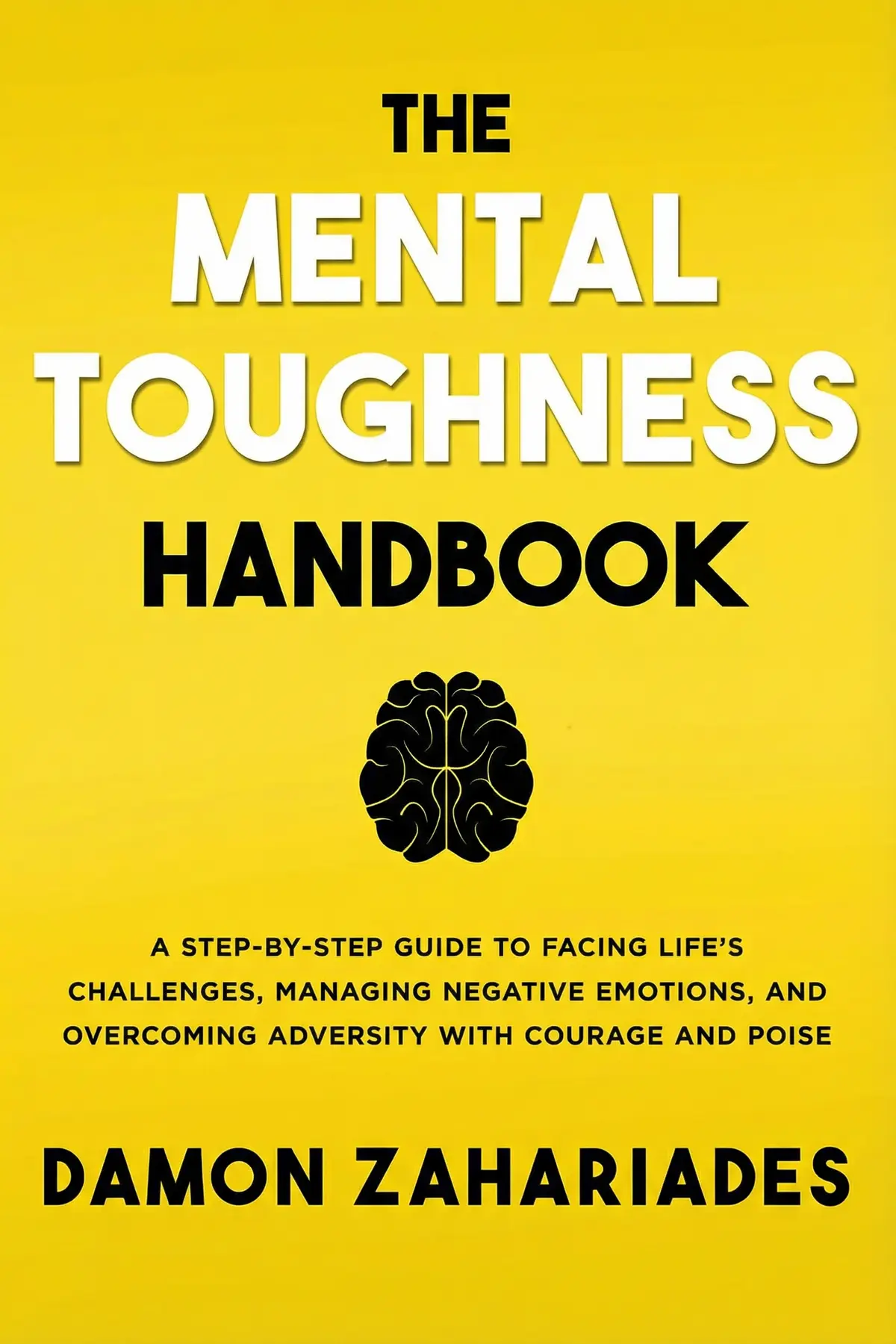
The Procrastination Cure: 21 Proven Tactics for Conquering Your Inner Procrastinator, Mastering Your Time, and Boosting Your Productivity!
A practical set of tactics for people who keep putting things off. Find out why you delay, then change your to-do list, calendar, workspace, deadlines and inner voice so that starting gets easier.
Table of Content
1. Introduction
1 min 07 sec
Most chronic procrastinators are not lazy. They are losing a tug of war. In The Procrastination Cure, productivity writer Damon Zahariades describes two versions of you pulling in opposite directions. One is a present self that wants a reward right now. The other is a future self that wants the payoff of finished work. Spend a free afternoon on Netflix when a big presentation is a week away, and you have watched the present self win.
Zahariades argues that humans are built to procrastinate some of the time, and that this is fine. The trouble starts when the delay becomes a habit. His cure has two parts. First, find out why your present self keeps winning, whether the cause is fear, perfectionism or a task that is simply dull. Then change your list, your calendar, your desk, your circle and your inner voice so it gets fewer chances. Each tactic is small enough to test tomorrow morning, from a ten-minute start to a phone switched to airplane mode.
2. Name the fear behind the delay
1 min 27 sec
Productivity hacks often fail for people who procrastinate a lot, and the reason has nothing to do with the hacks themselves. Three hidden motives keep pulling you away from work, and each one needs a different answer.
3. Get past the first ten minutes
1 min 34 sec
The tasks we dread most tend to shrink once we touch them, but touching them is the hard part. A joke from Mark Twain and a trick involving a set of keys show three ways through.
4. A to-do list short enough to finish
1 min 32 sec
A long to-do list feels responsible, yet it may be the very thing keeping you from doing anything on it. One firm number and a simple scoring habit change what a day’s work can achieve.
5. Do less by cutting, handing off and playing
1 min 29 sec
Some tasks sit on the list for weeks without any fear or perfectionism behind them. They are just dull. Zahariades has an unusually blunt view of what such tasks deserve.
6. Fill your calendar just enough
1 min 27 sec
A schedule that is too full breaks your spirit. One that is too empty hands your day to your phone. Getting the balance right depends on a law about how work behaves.
7. Build a workspace your impulses can't hijack
1 min 31 sec
The devices you work on are the same ones designed to pull you away from work. One psychologist measured how much online time goes to putting things off, and the figure is hard to ignore.
8. Let other people set your deadlines
1 min 32 sec
Promises we make to ourselves are easy to break, and a study of students at MIT showed how easy. The fix involves admitting something many people would rather keep private.
9. Kinder self-talk breaks the delay cycle
1 min 36 sec
Every missed task can make the next one harder to start, and the cause is not the missed task itself. Zahariades traces a loop that many habitual procrastinators never notice they are in.
10. Conclusion
1 min 09 sec
The Procrastination Cure treats delay as a design problem with an emotional root. The present self will always prefer the easy reward, and Zahariades does not pretend you can argue it out of that. What you can do is understand what it fears, then shrink its openings: a shorter list, a calendar without empty hours, a phone in airplane mode, a deadline someone else set and a kinder voice when things go wrong.
He adds one more tactic that turns the present self into an ally. Temptation bundling pairs something you dislike with something you enjoy. If you love novels but hate the gym, let yourself open the book only after the workout is done. Wanting the reward pulls you through the chore.
Tomorrow morning is a sensible place to begin. Choose your frog, the task you most want to avoid, and promise it just ten minutes before anything else. Keep the rest of the day’s list to seven items or fewer. When the day goes badly, notice the voice calling you a failure and remind it that everyone makes mistakes.
Your future self is waiting on the other side of those ten minutes.
About this book
What is this book about?
Most procrastinators know what they should be doing. The trouble is a present self that wants a reward now and keeps beating a future self that wants finished work. Damon Zahariades argues that the urge to delay is human and nothing to be ashamed of. It becomes costly once it hardens into a habit: bills paid late, projects rushed and small health complaints left to grow. His approach starts with diagnosis. Fear of failure, perfectionism, anxiety about decisions and plain boredom each call for a different response. From there he offers practical tactics. Eat the frog first thing in the morning, commit only to the first ten minutes, and keep the daily list to seven tasks. Fill the calendar so no big blocks of free time remain, and work in timed blocks. Block digital distractions, cut or delegate dull tasks, and ask other people to hold you to deadlines. He ends on the loop that keeps many procrastinators stuck. Each delay feeds negative self-talk, and each harsh thought feeds the next delay. Readers get a short toolkit they can test on tomorrow's to-do list.
Book Information
Who it's for
Last-minute students and professionals
Professionals and students who keep postponing reports, exam preparation and dreaded emails until the last minute.
Freelance and remote workers
Freelancers and remote workers whose days disappear into social media and unplanned hours.
Self-critical perfectionists and worriers
Perfectionists and worriers whose harsh inner voice turns every delay into the next one.
About the Author
Damon Zahariades
Damon Zahariades worked in corporate jobs for many years before going out on his own. He now owns a content marketing agency and writes practical guides to getting more done. He also runs the blog ArtOfProductivity.com, which aims to help readers make better use of their day. His other books include The Mental Toughness Handbook.
Ratings & Reviews
Ratings at a glance
What people think
Listeners find the writing clear and to the point, filled with straightforward advice that is easy to put into practice. They value the book's logical layout and how it enhances time management skills, while one listener remarks that the chapters are simple to integrate into a morning ritual. Listeners characterize the material as both fascinating and absorbing, including one review that emphasizes how the work totally shifted their outlook on productivity.
Top reviews
Nina
Damon Zahariades has a knack for cutting through the fluff and getting straight to the mechanics of why we stall. I’ve read my fair share of self-help, but the way he explains the psychological 'why' behind our avoidance was a total eye-opener for me. The concept of 'eating the biggest frog first' isn't necessarily new, yet the way it's framed here as a tactical strike against morning anxiety made it finally click. This isn't just a list of tips; it’s a manual for restructuring how you approach your energy levels throughout the day. It’s a quick read, perfect for a morning routine, and it honestly revolutionized my perspective on freelance deadlines.
Show moreOn
As someone who has spent years drowning in to-do lists that never seem to get shorter, this was a breath of fresh air. This book is short, sweet, and avoids the technical boredom that usually kills my motivation to finish reading. The advice on setting up a reward system for progress, rather than just the final result, has been a game-changer for my daily output. In my experience, most productivity books are written for people who are already high performers, but this feels accessible to everyone. It’s organized beautifully, making it easy to flip back to specific tactics when you feel a slump coming on. Truly a valuable partner in my everyday struggle.
Show moreMingkwan
Wow, this book actually forced me to get off my butt and stop overthinking every single task on my plate! It is wonderfully concise, which is perfect because the last thing a procrastinator needs is a four-hundred-page manual that takes months to finish. I loved the emphasis on rewarding yourself for minor progress instead of just waiting for the final victory. The '10-minute rule' is a complete game-changer for my daily workflow. If you want something technical and academic, you should probably look elsewhere. But if you want a simple, high-impact guide that you can read over coffee and implement by lunch, this is absolutely the one.
Show morePop
Each tactic in this book is presented with zero ego and maximum utility, which is exactly what I needed. I rarely finish a book from start to finish without getting distracted, but the short chapters kept me engaged. The first few tactics—especially the one about just committing to the first ten minutes—are now etched into my brain. I genuinely wish I had read this back in college; it would have saved me so many late-night library sessions. It’s simple, yet valuable and useful for anyone who feels like they’re constantly swimming against the tide of their own laziness. Highly recommended for the practical-minded person.
Show moreUdom
Picked this up during a particularly bad week where my to-do list felt more like a mountain range than a schedule. Frankly, the book is incredibly concise, which I appreciated since I usually lose interest when productivity guides get bogged down in pseudo-scientific jargon. While some might argue this could have been a long-form blog post, I find value in having all these synthetic tips organized in one place. The '10-minute rule' is something I’ve started using immediately to break the initial paralysis of starting a new project. My only real gripe is that a few sections felt a bit like common sense disguised as revelation, but sometimes we need to hear the obvious repeatedly before it sticks.
Show moreTeng
Finally got around to finishing this, ironically enough, and I have to say that Part 2 is worth the price of admission alone. While Parts 1 and 3 were a bit hit-or-miss for me, the middle section is packed with actionable tips that are easy to implement without feeling overwhelmed. Not gonna lie, I was skeptical about whether a 150-page book could offer a real 'cure,' but the focus on small wins is very effective. It’s a very good book for procrastinators who need a kick in the pants rather than a deep philosophical lecture. I do wish the author had gone a bit deeper into the 'active procrastination' controversy, though.
Show moreYulia
The chapter on why we actually stall was more enlightening than the tips themselves, which was a pleasant surprise. As a writer, I often find myself doing 'productive' things like cleaning my desk just to avoid the blank page, and Zahariades calls this out perfectly. The book is very readable and moves fast, which is essential for someone with a short attention span. I appreciate that it doesn't try to be an academic thesis; it’s just straight-to-the-point advice. Some of the tactics felt a little lazy or oversimplified, but the majority are solid reminders of how to manage time better. It’s definitely earned a permanent spot on my desk.
Show moreWichai
After hearing about Zahariades from a colleague, I decided to give this a shot to help manage my morning routine. It’s a very practical book that doesn’t waste time on fluff or ego, focusing instead on utility. Personally, I found the section on 'eating the frog' to be the most helpful, even if I'd heard the term before. The way he breaks down the barriers to starting is much more effective than your average productivity blog. I think it’s a bit of a stretch to call it a 'cure,' as habits take a long time to break, but it’s certainly an excellent toolkit. A very quick read that delivers exactly what it promises.
Show morePierre
The truth is, most of these strategies aren't revolutionary if you've already explored the productivity genre extensively. To be fair, the book is well-written and serves as a nice synthetic version of several other popular methods. However, if you’re someone who already struggles with deep-seated habits, simply setting a Google Calendar notification or a pop-up reminder isn't going to be the magic bullet suggested here. I found the analysis of the procrastinator's mind to be a bit surface-level. It’s a decent enough refresher for someone in college or a new job, but I’ve found other resources more helpful over the years for tackling the actual root of the problem.
Show moreApichat
Not what I expected given the hype surrounding these tactical guides. Look, it felt like an expanded blog post with way too many filler words for such a short book. The writing style didn’t exactly scream 'expert,' and at times, it felt like the author was just hacking his way through basic concepts that anyone with a search engine could find in five minutes. I especially struggled with the idea of 'active procrastination'—doing something else useful to avoid the main task—because that’s just shifting priorities, not solving the core issue of being stuck. It felt a bit like a low-effort publication that doesn't offer anything truly insightful or unique for chronic procrastinators.
Show moreQuestions about this book
What is the main idea of The Procrastination Cure?
Damon Zahariades describes procrastination as a battle between a present self that wants instant gratification and a future self that wants long-term results. He argues that you first need to understand why you delay, whether through fear of failure, perfectionism, anxiety about decisions or boredom. Then you can change your to-do list, calendar, workspace, deadlines and self-talk so the present self has fewer chances to take over.
How many tasks should be on a to-do list according to Damon Zahariades?
Seven or fewer. Zahariades argues that seven tasks can realistically be finished in a day, so unfinished items stop piling up, and the limit forces you to drop busywork. To choose the seven, he suggests writing short-, medium- and long-term goals and then rating each task from one to five by how much it moves you toward them.
How do you stop procrastinating on your phone and social media?
Zahariades says trying to ignore online temptation doesn’t work, so change the setup. Put your phone in airplane mode, install an internet blocker such as Freedom or StayFocused, and when you need to check a fact while writing, note it on paper for later. He refers to psychologist Timothy Pychyl, whose research showed that people waste an average of 47 percent of their online hours on procrastination.
Why are self-imposed deadlines less effective?
Breaking a promise to yourself hardly hurts, while promises to others carry weight. Zahariades cites a 2002 MIT study in which students who set their own paper deadlines were far more likely to submit late than students given a deadline by the researchers. His advice is to ask a manager, professor or friend to set the date, and to tell someone your plans so they can check on your progress.

Readers also enjoyed




AUDIO SUMMARY AVAILABLE
Listen to The Procrastination Cure in 15 minutes
Get the key ideas from The Procrastination Cure by Damon Zahariades, plus 5,000+ more nonfiction titles.
- 5,000+ titles
- Listen as much as you want
- 7-day free trial
- Cancel anytime









