
12 min 45 sec
Available in: English
The Power to Change: Mastering the Habits That Matter Most
A faith-based roadmap for making change last. Rethink who you believe you are, train before the hard moments arrive, repeat small habits for years and rely on God's power when willpower runs out.
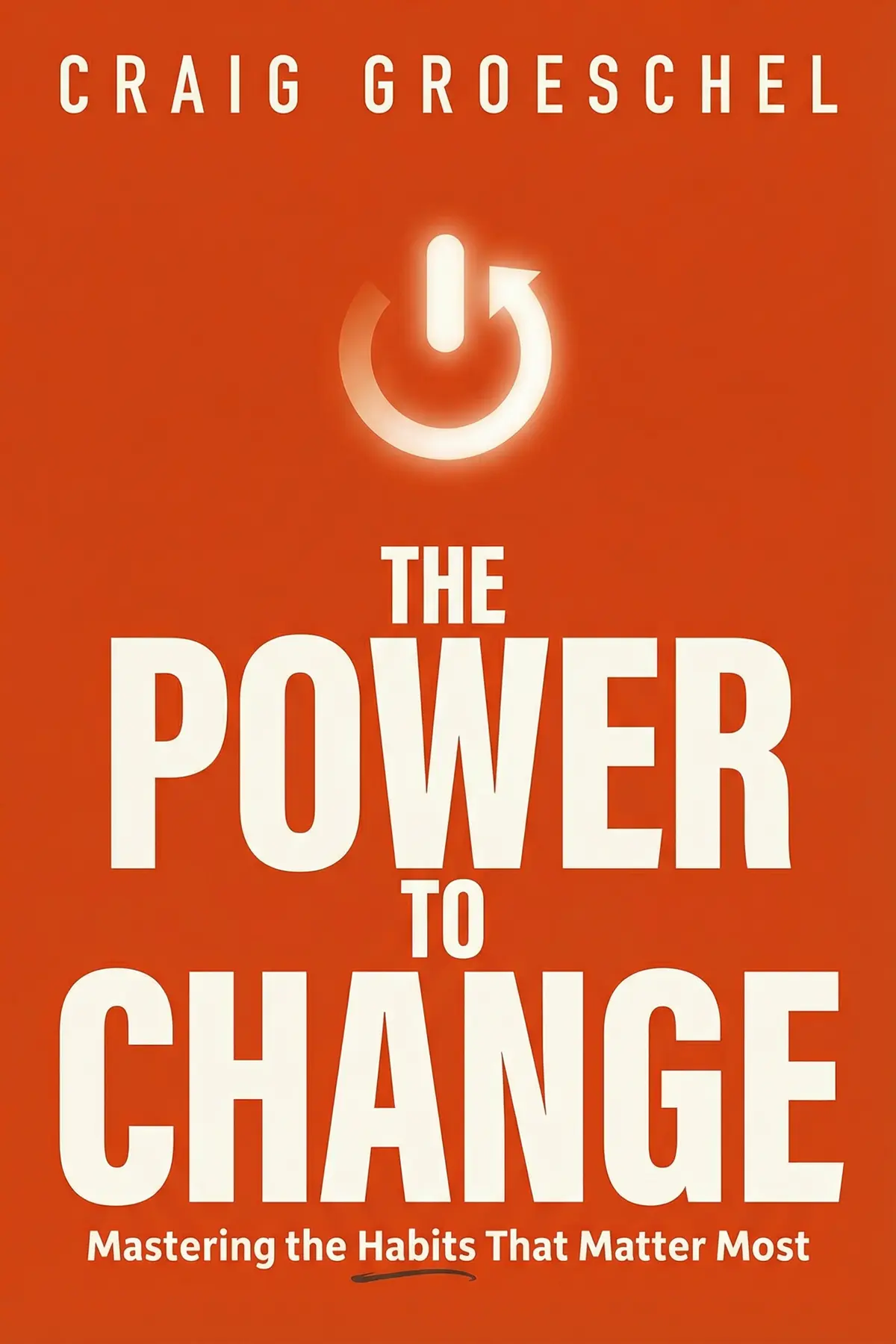
Table of Content
1. Introduction
1 min 02 sec
If you have tried to quit drinking, manage money better or be more present with your kids, and slid back every time, Craig Groeschel thinks the trouble began before you ever picked a technique. In The Power to Change, the pastor argues that behavior follows identity: people who see themselves as average, careless or hooked keep acting that way, whatever method they borrow. So change has to start with the picture you hold of yourself.
From there Groeschel lays out a roadmap with four linked parts. See yourself differently, train for change instead of merely trying, repeat small habits with patience, and lean on God’s power because willpower runs out. The book is written from a Christian faith, with Scripture at every turn, and its practical tools sit alongside the faith: a way to set up a habit so it starts by itself, a firm rule for ending a bad one, and an exercise for naming the small daily acts that add up over years.
2. Change how you see yourself first
1 min 57 sec
A college student who had always seen herself as average went on to earn perfect grades. At first, she dismissed the idea that she was gifted. What changed was one belief, and Groeschel says the same lever sits under every habit you want to fix.
3. Train before the moment that counts
1 min 53 sec
Giving your very best on the big day sounds like the right plan. Groeschel argues it is exactly why so many attempts at change collapse, and a college dance contest shows what the winners do differently.
4. Choose the smaller pain of discipline
1 min 38 sec
Everyone knows discipline is uncomfortable, and Scripture admits it too. Groeschel offers a simple comparison that makes the hard choice easier, then explains why the habits you already have have been shaping you for years.
5. Set up good habits and starve bad ones
1 min 45 sec
A jump rope on the nightstand, ten minutes of writing before a bedtime book, phone apps that lock themselves at night. Small adjustments like these decide whether a habit starts on its own or fades within a week.
6. Lay one brick every single day
1 min 34 sec
Rebuilding a ruined city wall looked impossible to many people. The man who led the work used a plan so plain it sounds like a joke, and it finished the job in under two months.
7. Lean on a strength beyond willpower
1 min 42 sec
A strong self-image, trained discipline and steady habits sound like a complete plan. Groeschel insists one ingredient is still missing, and he lays out four concrete steps for drawing on it when your own resolve runs dry.
8. Conclusion
1 min 14 sec
What Groeschel offers, finally, is a different place to look for change. Most failed attempts focus on the moment of struggle itself: the cigarette, the phone at midnight, the sharp word to a spouse. His roadmap moves the real work before and around that moment. It lives in the identity you carry, in practice done ahead of time, in bricks laid daily when no one is watching, and, for him above all, in the help you ask God for when willpower runs low. Amy’s grades rose only after her belief about herself changed. The wall rose only when people stopped staring at the whole and set the next stone.
The first steps the book supports are modest. Pick one verse that describes who you are and read it until you believe it. Name one area to change and the small daily habits that would get you there, then tell someone you love what you are aiming for. Put the first reminder where you cannot miss it, and remove the trigger for the habit you want gone.
None of this will look like much in the first week. After the first day, Nehemiah’s builders could not see a wall either, only a single brick, set in the right place.
About this book
What is this book about?
Many people know the cycle well. They resolve to quit drinking, handle money wisely or be a more present parent, it works for a while, and then the old ways return. Craig Groeschel argues that most attempts fail because they start in the wrong place. Behavior follows identity, so a new routine built on an old self-image rarely survives. Groeschel, a pastor writing from a Christian faith, lays out a roadmap in four linked parts. First, shift your self-image by getting to know who you truly are, who you are becoming, and what you are called to do. Second, set clear goals and train for them ahead of time, using discipline and habits, instead of just trying harder in the moment. Third, stay consistent, laying small daily bricks the way Nehemiah's builders rebuilt Jerusalem's wall. Fourth, draw on God's power, because willpower runs out. Alongside the Scripture, readers get concrete tools: placing cues where they cannot be missed, deciding the time and place of a habit in advance, attaching a new habit to an old one, removing triggers for bad habits and seeking professional help when addiction is involved.
Book Information
Who it's for
Christians wanting faith-based change
Christians who keep falling back into old habits and want a faith-based plan for change.
Trying to change habits
People trying to quit drinking or smoking, spend more wisely or be more present with family.
Familiar with habit tips
Readers who know habit tips already but want them tied to identity and Scripture.
About the Author
Craig Groeschel
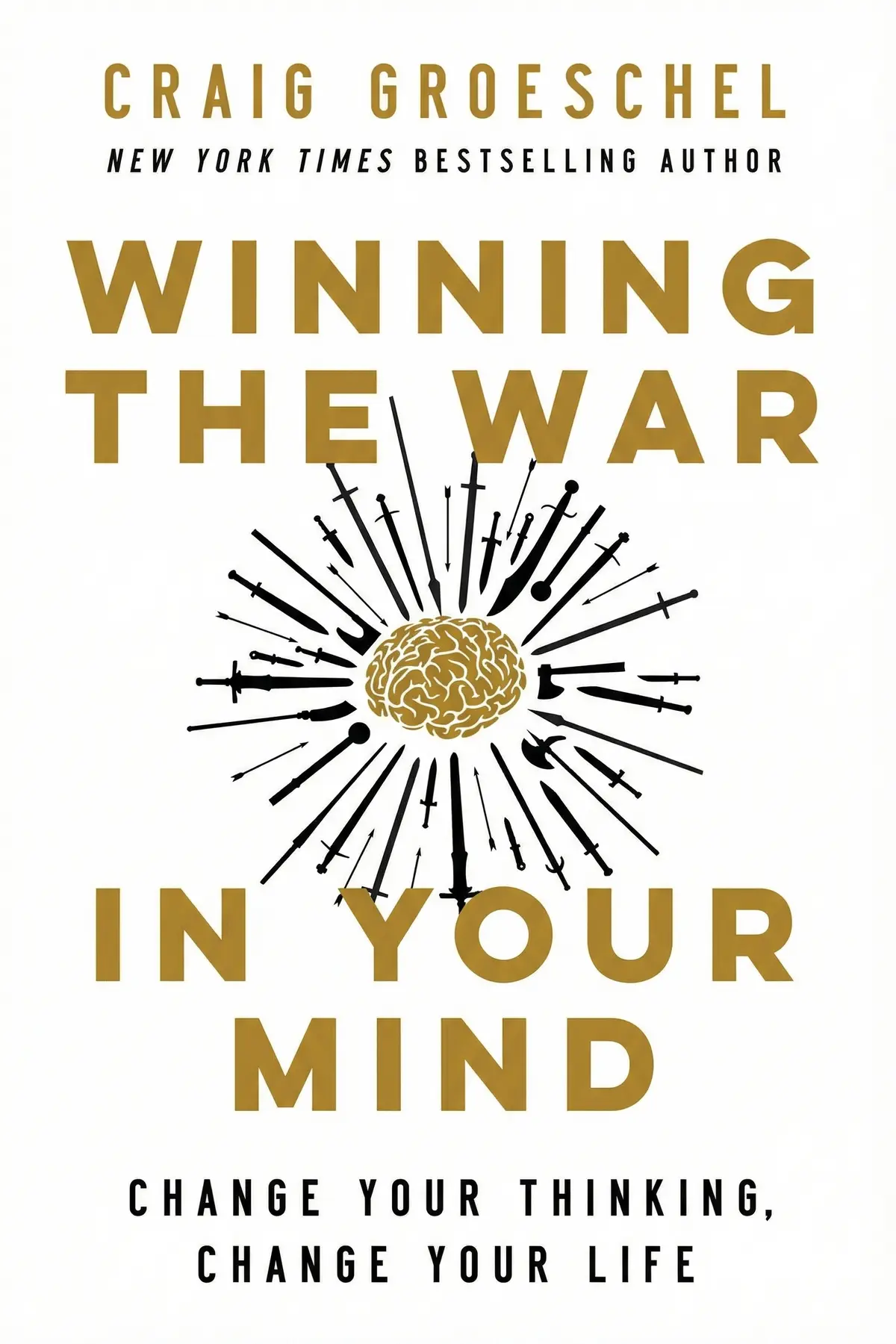
Craig Groeschel is an American minister, author and speaker, born in 1967. In January 1996 he and his wife, Amy, started Life.Church in a garage in Edmond, Oklahoma, and he serves as its senior pastor. The church launched a fully digital church experience in 2006 and released the YouVersion Bible app in 2008. He speaks at leadership conferences around the world and hosts the Craig Groeschel Leadership Podcast. His books cover church leadership, marriage, purpose and more, including Winning the War in Your Mind.
Ratings & Reviews
Ratings at a glance
What people think
Listeners find this work compelling and simple to follow, featuring usable tips for cultivating better habits. They admire the blend of scriptural insights and comedy, and one listener points out that it forces readers to reflect more deeply on their own lives. Listeners prize the strategy for improvement, as one labels it a proof way for transformation, whereas another draws attention to its step-by-step Biblical practices.
Top reviews
End
Finally got around to finishing this, and the concept of 'training vs. trying' has completely shifted my mindset. For years, I attempted to white-knuckle my way through New Year’s resolutions, only to fail by February because my willpower eventually ran dry. Craig Groeschel explains with such clarity why our human strength is a finite resource that cannot sustain permanent transformation. By shifting the focus to spiritual discipline and identity, the book provides a roadmap that feels sustainable rather than exhausting. Frankly, the blend of modern habit science and ancient Scripture makes the advice feel both grounded and divinely inspired. I particularly appreciated the humor woven into the stories, which kept the more convicting parts from feeling like a lecture. If you are tired of the cycle of self-inflicted disappointment, this is the manual you need to read. It isn't just about doing better; it is about becoming who God already says you are.
Show moreFinn
Ever wonder why you keep falling back into the same ruts even when you have the best intentions? This book dives deep into the psychology of self-perception and how it dictates every move we make. I’ve read a lot of self-help, but linking my 'true self' to Biblical affirmations like being an 'ambassador' or a 'friend of Christ' provided a missing piece for me. The writing is incredibly accessible and punchy, making it easy to consume even on a busy schedule. I loved the Nehemiah analogy regarding the 'bricks' of our lives. It reminded me that big changes aren't overnight events but the result of small, consistent actions done with God’s help. While some might find the religious focus heavy, for a believer, it is exactly the empowerment needed to bridge the gap between knowing and doing. This is hands-down a five-star resource for anyone serious about growth.
Show moreFatou
As a long-time student of productivity, I was skeptical about whether this would offer anything new, but I was pleasantly surprised by the depth of the self-reflection exercises. The book challenges you to look inward and identify the labels you’ve unfairly given yourself over the years. Are you actually an 'average student,' or is that just a lie you’ve lived into? Groeschel uses the story of Amy to illustrate how our choices are born from our identity, which was a lightbulb moment for me. The prose is lean and moves quickly, yet it carries a weight that forces you to pause and pray. I specifically appreciated the emphasis on 'small wins' and cumulative effects. It’s not about a massive overhaul; it’s about laying one brick at a time with consistency. This book is a powerful tool for anyone feeling stuck in a cycle of shame or stagnation.
Show moreUraiwan
The chapter on identity was a total game-changer for my self-perception and how I view my daily failures. Groeschel argues that we don't just need to change what we do, but we need to change how we see ourselves in God’s eyes. This hit home. I’ve spent years trying to 'stop being lazy' instead of 'becoming a disciplined steward of my time.' The difference is subtle but massive. The book provides an excellent roadmap for making positive change permanent by leaning into God’s grace rather than our own grit. I loved the practical tips on starting small habits—making them easy, pleasurable, and shared with others. It’s a beautiful reminder that our calling is to lead a holy life, and that starts with the tiny decisions we make when no one is watching. This is an essential read for any Christian feeling burnt out on self-improvement.
Show moreBun
Stop relying on your own failing willpower and start tapping into a higher source of strength. This is the central premise of Groeschel's latest, and it is delivered with such conviction that you can't help but feel motivated. The writing style is punchy and direct, which I love—no fluff, just straight-to-the-point wisdom. He breaks down the process of change into manageable pieces: identity, training, and consistency. The Nehemiah story was a highlight for me, illustrating how massive goals are just a collection of small, faithful 'bricks.' It’s a refreshing take that moves away from the 'hustle culture' and moves toward a 'surrender culture' that actually yields results. I’ve already bought three copies to give to friends in my small group. This isn't just a book you read; it’s a book you do. If you're ready for a real transformation, pick this up immediately.
Show moreMoo
Look, we’ve all tried to quit a bad habit only to find ourselves back at square one three weeks later, feeling like a failure. This book addresses that exact pain point with a combination of grace and grit. Groeschel’s insight into 'training' versus 'trying' changed the way I approach my fitness and my prayer life. It’s about the work you do *before* the moment of temptation, not just your reaction in the heat of it. The compound effect of small habits is explained in a way that makes big goals feel achievable rather than daunting. I finished the book feeling equipped, not just inspired. The mix of personal anecdotes, biblical examples, and actionable steps makes this one of the most practical books I’ve read in years. It truly teaches you how to draw on God’s power to fuel the change you’ve been longing for.
Show morePrae
Craig Groeschel has a gift for taking complex behavioral science and filtering it through a very relatable, witty lens. To be fair, if you’ve already read Atomic Habits, a lot of the 'habit stacking' and environment design tips will feel familiar. However, the spiritual context adds a layer of 'why' that secular books often miss. I found the sections on breaking bad habits by eliminating triggers to be particularly practical for my daily life. My only slight gripe is that the middle sections felt a little repetitive, hammering home the same points a few times too many. Still, the call to rely on God’s power rather than our own depleted willpower is a message I desperately needed to hear. It’s a quick, engaging read that offers a step-by-step path toward becoming a more present and disciplined version of yourself. Definitely worth the time for the perspective shift alone.
Show moreBook
Wow, I didn't expect a book on habits to be this funny, but the author’s candor made the medicine go down easy. It’s a great blend of pastoral heart and practical coaching that focuses on long-term results rather than quick fixes. I gave it four stars because some of the biblical interpretations felt a bit simplified to fit the productivity mold, but the core message remains solid. The 'training' mindset is a game-changer. It stops the guilt-trip of 'not trying hard enough' and replaces it with a structured plan for growth. I’ve started implementing the environment prompts—like putting my Bible on my pillow—and it’s actually working. For those seeking a faith-based approach to personal development, this is a top-tier choice that doesn't feel like a dry sermon. It’s actionable, encouraging, and deeply rooted in the idea that we are empowered by the Holy Spirit.
Show moreJob
After hearing so many people talk about this book at my church, I decided to see if it lived up to the hype. In my experience, most 'Christian self-help' books are either too mystical or too legalistic, but this one strikes a perfect balance. It respects the science of how our brains work while staying firmly anchored in the Word of God. I found the sections on environment design and 'habit stacking' extremely useful for my morning routine. My only minor criticism is that the tone can be a bit 'cheerleader-ish' at times, which might not resonate with everyone. However, the practical value is undeniable. It’s a roadmap that guides you through the messy process of trial and error until you find what sticks. If you're looking for a way to align your daily habits with your spiritual values, you really can't go wrong here.
Show moreTum
The truth is, this book feels like a very high-quality Christian remix of James Clear’s work. If you are already a fan of Craig Groeschel’s leadership podcast, you will recognize most of the themes here immediately. It’s a good book, but I was hoping for a bit more original research or deeper theological exploration into the nature of the will. Instead, it’s a very fast-paced, 'how-to' guide that stays mostly on the surface. It is certainly engaging and the humor is a nice touch, but it might feel a bit 'lite' for those looking for a deep academic or spiritual study. That said, for someone who hasn't read much about habit formation, this is a perfect introduction. It’s easy to digest and provides clear steps, but seasoned self-help readers might find themselves skimming through sections they’ve seen elsewhere. It’s a solid 3.5 rounded down for the lack of new concepts.
Show moreQuestions about this book
What is the main idea of The Power to Change by Craig Groeschel?
Groeschel argues that lasting change begins with how you see yourself, because behavior follows identity. From there you set clear goals, train for them ahead of time through discipline and habits, and repeat small habits consistently until they add up. Finally, he says, change lasts only when you rely on God’s power, since willpower gets depleted. The roadmap mixes Bible passages with practical habit-building tools.
What is the difference between trying and training in The Power to Change?
Trying means putting in effort during the moment itself, while training means doing the work before the moment arrives. Groeschel compares it to a college dance contest: giving your best on competition day will not win, but planning the choreography and practicing it every day beforehand will. Training prepares you so that when temptation or pressure comes, you already know how to act.
How does Craig Groeschel say to break a bad habit?
His rule is elimination. Drawing on Proverbs 4:14 to 15, he advises never stepping onto the path in the first place, which means removing the triggers that set the habit off. A smoker stops buying cigarettes, and someone who scrolls late locks their phone apps after ten at night. When a habit involves addiction, he says to seek professional help instead of relying on yourself alone.
Is The Power to Change a Christian book?
Yes. Groeschel is a pastor, and he grounds each step in Scripture, from identity verses such as John 15:14 to Nehemiah’s rebuilding of Jerusalem’s wall. His final argument is that God’s power, not willpower, makes change last. The book also gives practical tools anyone can use, such as placing cues in plain sight, planning a habit’s time and place, and attaching new habits to existing routines.
How can I apply The Power to Change in daily life?
Start by choosing a Bible verse that describes who you are and reading it until you believe it. Name one area you want to change and the small daily habits, or bricks, that would move you there. Tell a loved one your goal, since Groeschel cites Dr. Gail Matthews on the value of sharing goals. Make the habit pleasurable, easy and shared, and repeat it patiently.
Readers also enjoyed

A New Earth: Awakening to Your Life’s Purpose
Eckhart Tolle

A Return to Love: Reflections on the Principles of a Course in Miracles
Marianne Williamson

59 Seconds: Change Your Life in Under a Minute
Richard Wiseman

Aflame: Learning from Silence
Pico Iyer


Alcoholics Anonymous
Alcoholics Anonymous World Services




A Guide to the Good Life: The Ancient Art of Stoic Joy
William B. Irvine
AUDIO SUMMARY AVAILABLE
Listen to The Power to Change in 15 minutes
Get the key ideas from The Power to Change by Craig Groeschel, plus 5,000+ more nonfiction titles.
- 5,000+ titles
- Listen as much as you want
- 7-day free trial
- Cancel anytime









