
12 min 57 sec
Available in: English
The Portfolio Life: Future-Proof Your Career and Craft a Life Worthy of You
Shows why depending on one employer is riskier than it looks and how to design a mix of work, side projects, skills, relationships and rest that protects you and fits who you are.
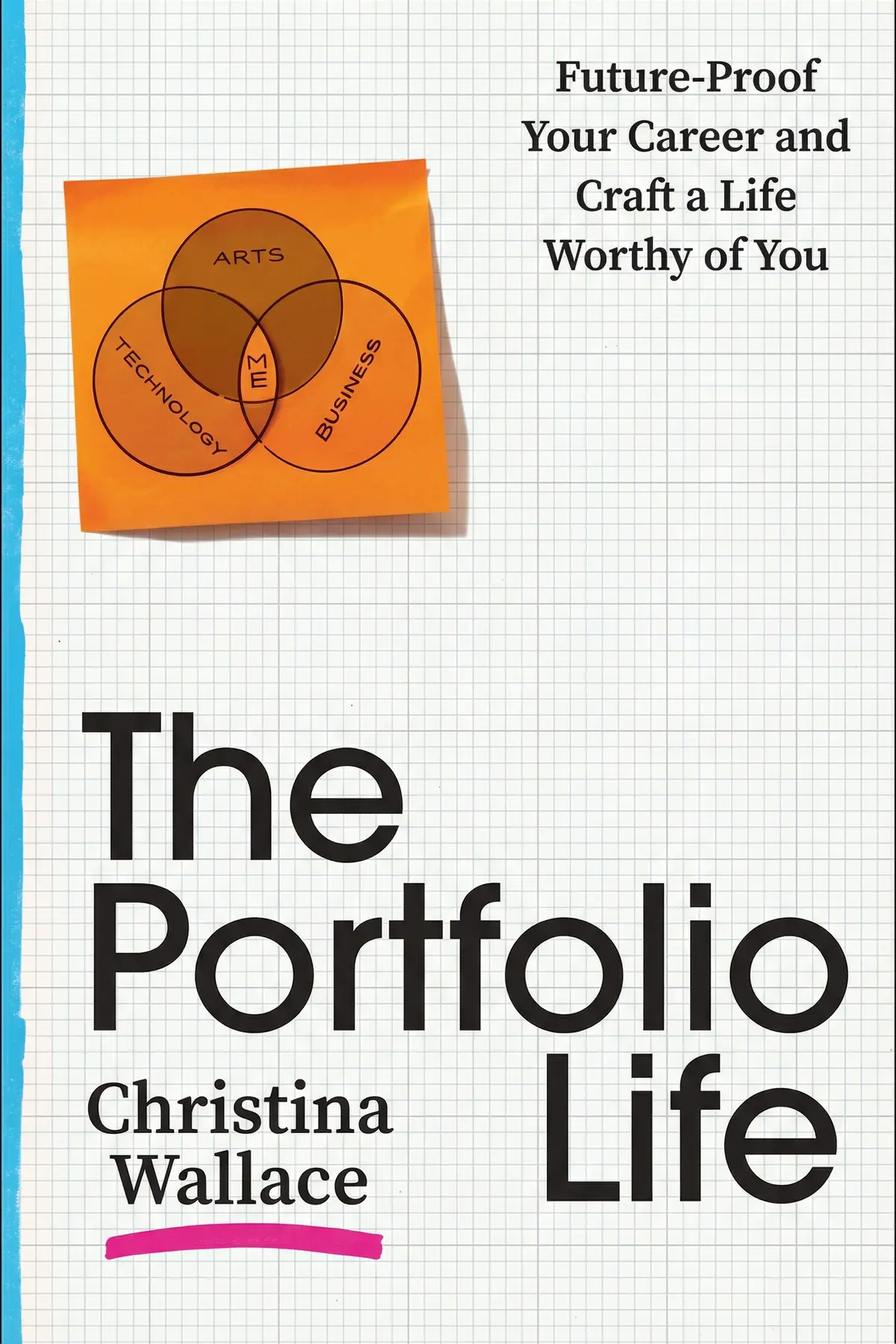
Table of Content
1. Introduction
1 min 04 sec
A career built on one employer, one title and one paycheck can feel safe while carrying more risk than almost anything else you could choose. That is one of the claims made in The Portfolio Life, by Harvard Business School senior lecturer Christina Wallace. Her alternative comes from investing: a sound financial portfolio mixes cash, stocks, bonds and property so the parts protect one another, and she argues a life can be built the same way.
The old route of a steady job, a house, three decades or more at one firm and a pension has become hard to reach as wages stall and costs rise. Wallace sees little point in waiting for politicians or executives to fix it. Her case is that you can design your own spread of identity, income, skills and relationships that holds when any one part fails. Ahead are four pillars for testing your current setup, three models to choose from, a five-step mapping exercise, and the advisers and habits that keep it all running.
2. Stop trusting one employer with everything you have
1 min 30 sec
The advice your parents gave about a stable job sounds like the cautious option. Wallace argues it hides a danger that grows quietly every year you follow it, and few people notice until it is too late.
3. Build an identity no job title can contain
1 min 29 sec
Most people answer the question of who they are with a job title. Wallace thinks that habit leaves them exposed in a way a bank account never shows, and that it starts with a question every child hears.
4. Keep enough options to reshuffle when life shifts
1 min 26 sec
When a contract ends or a crisis hits, some people have only two choices left. Others can adjust half a dozen dials at once. Wallace explains what separates them, and it has little to do with luck.
5. Choose the career model that fits your risk appetite
1 min 42 sec
There are three common ways to build a life with several parts, and each one carries a hidden cost. Picking the wrong one can leave you exhausted, misunderstood by employers or pulled in too many directions.
6. Map your wishes, needs and hours in five steps
1 min 53 sec
Restlessness is easy to feel and hard to act on. Wallace offers an exercise with a notepad and one ordinary week that shows exactly where your life and your wants have drifted apart, and how far.
7. Recruit a personal board of five advisers
1 min 26 sec
Companies do not rely on one person’s judgment, yet most of us run our careers alone. Wallace names five very different people every life needs around it, and one of them is the person you least want to hear from.
8. Check your money, time and future on a schedule
1 min 25 sec
More independence brings new ways to slip, from uneven income to days that fill up without joy. Wallace’s defense is a set of regular reviews, including one that asks you to look further ahead than most people do.
9. Conclusion
1 min 02 sec
Wallace’s book amounts to a change of job title for the reader: from an employee climbing a ladder someone else built to the chief executive of a life with several moving parts. The role asks for more management than a linear career. You keep the books, choose the advisers and decide where the hours go. In exchange, no single company, boss or market can take everything at once, and the parts of you that never fit on a business card finally get room to grow.
The method begins small. Write the hundred wishes, then spend one ordinary week tracking your hours and see how many of your needs those hours actually meet. Decide whether you are, for now, a moonlighter, a zigzagger or a multihyphenate, and tell that choice to someone who could sit on your board. Then put a monthly check on money, time and the trends around you into your calendar, and keep the appointment.
The old blueprint promised safety through staying put. Wallace finds it in having more than one place to stand.
About this book
What is this book about?
The old career plan of one employer, a house, decades of loyalty and a pension has become hard to reach for many workers. Wages stall, costs rise and moving up is slower than it was for earlier generations. Christina Wallace argues that waiting for leaders to repair this is a long wait, and that the safer move is to redesign your own life. Her model comes from investing. A balanced financial portfolio spreads money across different assets so they protect one another, and Wallace applies the same logic to a life. She rests it on four pillars: identity, optionality, diversification and flexibility. She then describes three ways people put it into practice, as moonlighters, zigzaggers or multihyphenates. Readers get a five-step exercise that maps wishes, needs and the real use of their week, plus a personal board of five advisers and regular checks on money, time and the future. The result is a clear picture of what you want and a plan for getting there.
Book Information
Who it's for
Everything in one job
Employees who sense that one job holds their income, savings and sense of self.
Wanting to combine passions
People with side projects or several passions who want a structure for combining them.
Explaining a varied career
Career changers who need to explain a varied work history and plan their next move.
About the Author
Christina Wallace
Christina Wallace is a Senior Lecturer at Harvard Business School, a serial entrepreneur, an angel investor and a Broadway co-producer with five Tony Award nominations. She spent ten years building businesses in fashion, media and education, including an education technology venture at the American Museum of Natural History aimed at drawing more girls into STEM. She has also been a Boston Consulting Group consultant and began at the Metropolitan Opera. She co-wrote New to Big and co-hosted The Limit Does Not Exist, a podcast about careers that span several fields.
Ratings & Reviews
Ratings at a glance
What people think
Listeners find the guide useful, with one noting it is packed with practical examples and exercises. They also appreciate how it empowers people to overhaul their professional and private lives, and one listener mentions it offers a phenomenal reframing of work/life balance. Additionally, the book gets high marks for readability, and listeners value the research-based methodology, with one highlighting the perfect blend of case studies.
Top reviews
Camila
Wallace masterfully reframes our obsession with single-track careers into something far more sustainable and exciting. I’ve always been 'memorably lopsided' rather than well-rounded, and seeing that framed as a competitive advantage was a total epiphany for me. The book is a perfect blend of high-level strategy and actionable steps, like the time audit in chapter ten. I ended up dog-earing page after page to reference later. Not gonna lie, I was skeptical about another business-prof-turned-author, but her focus on maximizing happiness over just maximizing a bank account is refreshing. The concept of the Portfolio Life allows for rest and relationships without the guilt of not being 'productive' every second. It’s a playbook for the future of work that values the human behind the labor. This is a must-read for anyone who feels like they are worshipping a god with firing power.
Show moreNadia
Finally got around to reading this, and it’s a total game-changer for anyone fearing the next recession. Wallace takes complex operations equations and business practices and applies them to everyday life in a way that is surprisingly easy to digest. I loved the emphasis on being memorably lopsided. It’s such a relief to stop trying to fix all my weaknesses and just lean into what I’m actually good at. The book is refreshing, practical, and incredibly timely. My bank account and my mental health are already seeing the benefits of the diversification strategy she outlines. I've already recommended this to three friends who are currently 'between' things. It’s the perfect blend of research and real-world application. Don’t miss this read if you’re looking for a sustainable way to balance work and life without losing your mind.
Show moreChamlong
Picked this up during a career pivot, and the timing could not have been better. Christina Wallace provides a phenomenal reframing of how we should view our professional and personal identities as a collective asset. Frankly, the concept of a 'Personal Board of Directors'—including a cheerleader and a negotiator—is something I wish I had implemented a decade ago. It’s an empowering read for anyone feeling stuck in the typical 9-to-5 grind or fearing the volatility of today’s market. My only real gripe is that the middle sections felt a bit like they were stretching for content. Some of the anecdotes about anonymous people were less impactful than the actual exercises. However, the four pillars of identify, optionality, diversification, and flexibility are solid frameworks. If you are a professional generalist who feels like a square peg in a round hole, this will resonate deeply. It is a research-based approach that actually feels practical for the modern world.
Show moreGung
Ever wonder why the old career ladder feels so broken? This book answers that question by treating your life like a diversified investment portfolio. Personally, I loved the intersectional view Wallace takes, acknowledging how inequality and student debt impact our ability to take risks. The advice to seek feedback from your network to find themes in your own happiness was incredibly helpful. I reached out to a few former colleagues and the results were eye-opening! However, I did find the author's personal stories a bit braggy at times—not everyone can just call up a friend at Harvard when they need a new gig. Still, the practical examples of people building flexible lives around their myriad interests are inspiring. It’s a great read if you need to rethink your time management and stop letting life just happen to you.
Show morePui
As someone who has always struggled to fit into a single job title, I found the concept of 'lopsidedness' incredibly validating. The Portfolio Life is filled with practical exercises that help you audit your time and align it with your core values. Look, it’s not a perfect book; the financial chapter felt like it belonged much earlier in the text. But the core message about rejecting the 'work-ist' culture is vital. Wallace uses a perfect blend of case studies to show that a career isn't a ladder, it's a collection. I particularly appreciated the section on planned rest, even if the author admits she struggles with it herself. It made her feel more human and less like a guru on a pedestal. The writing is engaging and the short, punchy chapters make it an easy read for busy people. Definitely worth your time.
Show morePranee
The chapter on time management alone was worth the purchase price for me. Truthfully, I’ve been feeling completely overloaded, and Wallace’s reminder that 'what is not measured is not managed' was the kick in the pants I needed. The book empowers readers to reshape their careers by focusing on diversification and rebalancing. I appreciated the specific detail on recruiting a personal Board of Directors. It’s a lot more intentional than just 'finding a mentor.' While the tone can occasionally veer into being a bit preachy about the downsides of capitalism, the underlying logic is sound. We live in a world of climate disasters and economic shifts; why wouldn't we diversify our skills? It’s a practical playbook for anyone who wants to stop being a one-dimensional employee and start being a multifaceted human. This is a solid four-star read.
Show moreVera
Look, we all know that the 'hustle culture' is dead, but what actually comes next? Christina Wallace provides a compelling answer with her Portfolio Life framework. In my experience, the most valuable part of this book is the permission it gives you to be more than just your job title. The actionable steps regarding your personal 'Board of Directors' and the time audit are high-quality tools for anyone feeling burnt out. I gotta say, the writing is very readable and the sentence lengths keep things moving at a brisk pace. It’s not just a career book; it’s a life strategy book. While some of the HBS references are a bit much, the core message about seeking feedback and leaning into your network is universal. It's a solid, research-based approach to finding a version of success that doesn't require sacrificing your soul to a corporation.
Show moreKanchana
This book feels like a classic case of an idea that should have stayed a long-form HBR article. While the core philosophy of diversifying your life to mitigate risk is interesting, there just wasn't enough meat on the bones to justify the full length. To be fair, the writing style is very accessible and the research-based approach adds a layer of credibility that many self-help books lack. But the constant references to the author’s time at HBS started to feel repetitive and a bit alienating for those of us without Ivy League networks. I found myself skimming the middle chapters because the anecdotes felt like tangents. The truth is, the advice on finding your 'velocity' and 'vision' in partners is valuable, but the delivery is bogged down by a 'woe is me' tone regarding capitalism that felt inconsistent with the author's elite background. It’s okay, but maybe just read a summary.
Show moreDuang
Not gonna lie, the tone of this book rubbed me the wrong way at points. It’s hard to take advice on career agility from someone who seems to have a safety net made of Harvard connections and elite professional circles. I felt exhausted just reading about the 'tasks' you're supposed to do, like contacting dozens of people for feedback on your best traits. Who actually has the time for all this? That said, the four pillars—identify, optionality, diversification, and flexibility—are genuinely helpful concepts. The idea of not letting a single job define your entire identity is a message we all need to hear. I just wish it felt a bit more grounded for those of us who aren't serial entrepreneurs. It’s a good book with some brilliant and helpful tips, but it requires a lot of 'velocity' to actually implement everything she suggests.
Show moreSiriphen
To be fair, I expected more practical depth and fewer stories about anonymous people that felt like filler. The concept of the 'Portfolio Life' is a great hook, but the book repeats itself so much that I felt like I was reading the same chapter three times. As a business student, seeing basic operations equations like utilization used as 'revelations' felt a bit patronizing. It lacks the 'meat on the bones' needed for a full-length book. I think the author is talented, but this really could have been a 20-page PDF or a long article. There was a weird 'woe is me' vibe throughout that didn't mesh well with the constant bragging about startup successes. I didn't find the advice on social media or personal websites particularly novel either. This was a disappointment for me.
Show moreQuestions about this book
What is the main idea of The Portfolio Life?
Christina Wallace argues that relying on one full-time job is among the riskiest choices a person can make, because income, benefits and savings all depend on one organization. She proposes building a life like a balanced financial portfolio, mixing work, side projects, skills, relationships and personal time. Four pillars support it: an identity separate from your job, many open options, diversified income and skills, and the flexibility to reshuffle when life changes.
What are the three portfolio life models Christina Wallace describes?
Moonlighters keep a steady full-time job and add side projects, gaining security but needing strict time management. Zigzaggers move from one field to an unrelated one, mostly one at a time, building broad skills but needing a clear story for each switch. Multihyphenates work in several fields at once or merge two into a new career, which can mean inventing a path that does not yet exist.
How do I start building a portfolio life?
Wallace suggests a five-step exercise. Write a hundred wishes for your life, then list your needs based on your happiest periods. Track your time for a typical week by category, and match each category to the needs it meets. Finally, compare everything: small gaps call for small tweaks, while a life far from your wishes may need a new design, sketched as a pie chart of your ideal time.
What is a personal board of directors in The Portfolio Life?
Wallace asks readers to act as the chief executive of their own lives and surround themselves with five kinds of advisers. A Coach helps you grow, a Negotiator tells you what pay and benefits to expect, a Connector introduces you to people, a Cheerleader keeps you motivated, and a Truthteller steers you back when you drift. Naming someone for each role shows where your support is missing.
Readers also enjoyed

60 Seconds & You’re Hired!
Robin Ryan




Be A Free Range Human: Escape the 9 to 5, Create a Life You Love,
Marianne Cantwell
Be the Unicorn: 12 Data-Driven Habits That Separate the Best Leaders from the
William Vanderbloemen
AUDIO SUMMARY AVAILABLE
Listen to The Portfolio Life in 15 minutes
Get the key ideas from The Portfolio Life by Christina Wallace, plus 5,000+ more nonfiction titles.
- 5,000+ titles
- Listen as much as you want
- 7-day free trial
- Cancel anytime









