

12 min 44 sec
Available in: English
Be the Unicorn: 12 Data-Driven Habits That Separate the Best Leaders from the Rest
Shows which teachable soft skills make someone a rare, sought-after hire, from self-awareness and curiosity to fast decisions and real relationships, with stories and small practices for building each one.
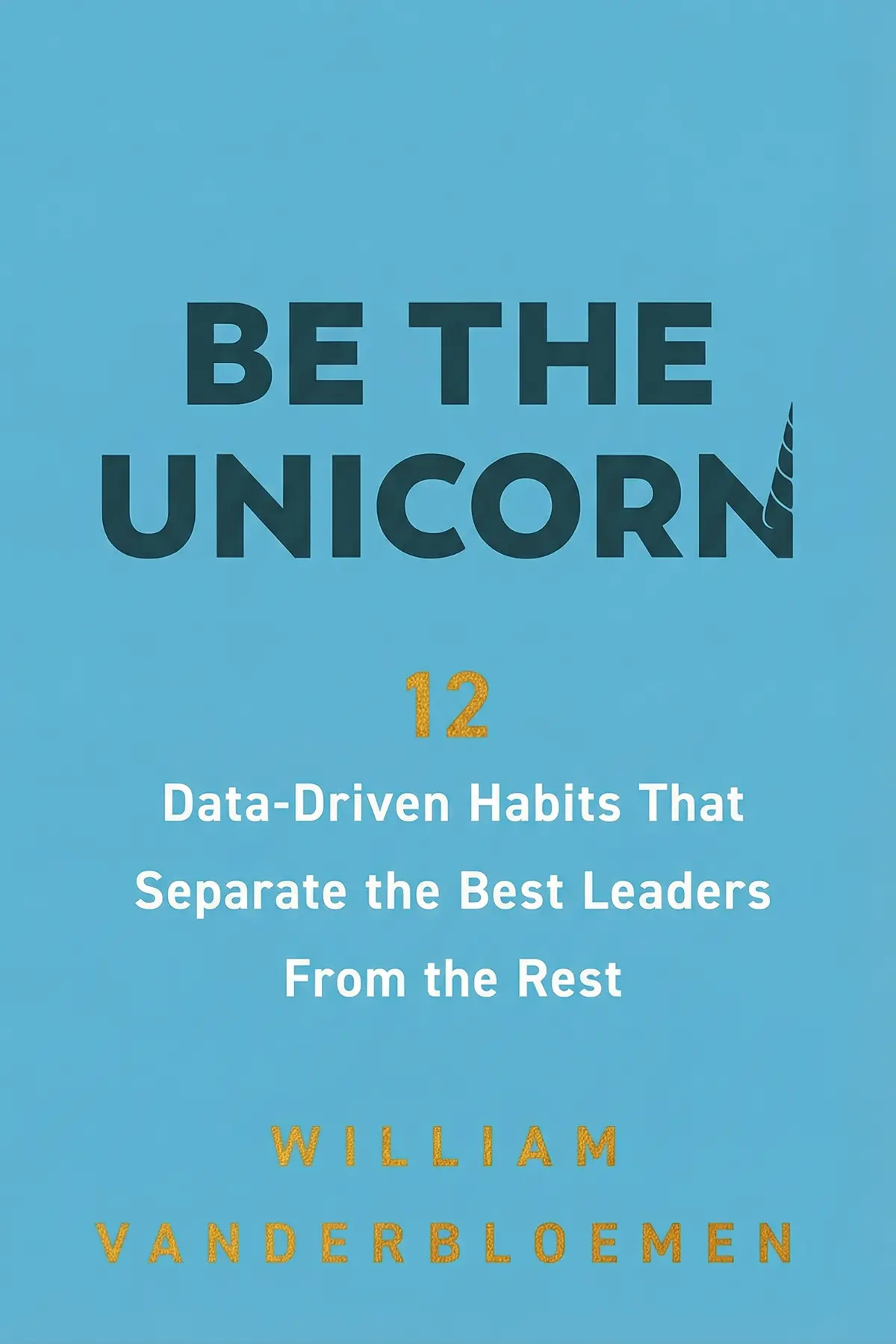
Table of Content
1. Introduction
1 min 03 sec
If you are good at your job but rarely the person a hiring manager remembers, William Vanderbloemen thinks the missing piece can be learned. In Be the Unicorn, the search firm founder and pastor argues that the people organizations most want to hire stand out through soft skills, and that those skills are teachable. His evidence is more than 30,000 candidate interviews, which led him to twelve habits shared by the rarest performers.
Picture a robot and a person in the same job interview. The machine processes data in seconds, yet the person who can talk about teamwork and real connection walks out with the offer. That is Vanderbloemen’s bet about work in an age full of technology.
Six of his twelve habits are covered here: knowing yourself, staying curious, adapting, anticipating, moving quickly and connecting with people. Each one comes with a person who lived it and a small practice you can try in your next meeting, interview or email.
2. Know your strengths and the limits beside them
1 min 42 sec
A billionaire whose life was marked by kidnapping attempts and family tragedy drew on one habit for survival and success, keeping her company’s menu nearly unchanged since 1948. It also takes humility, starting with the admission that nobody knows it all.
3. Ask the questions that turn into opportunities
1 min 52 sec
A college student’s fascination with Japanese tea ended up as a company. The habit behind it also changes how interviewers see you, and it is the first thing a busy schedule squeezes out.
4. Let go of ideas when better ones arrive
1 min 42 sec
One woman reached the top of a major corporation without a careful career plan, and many companies survived the pandemic the same way. The skill they shared gets harder with age unless you train it.
5. See one or two steps ahead
1 min 45 sec
Both guest speakers were late, the board was waiting on screen, and the chair stayed calm. What he had prepared shows that foresight is far more ordinary, and far more useful, than long-range prediction.
6. Decide fast and stop fearing mistakes
1 min 55 sec
Our brains are built to hesitate, and hesitation feels responsible. Yet at one search firm, a simple signal about candidates often pointed to who would become a star employee. The quickest to respond often became the stars.
7. Build relationships that open doors for others
1 min 37 sec
A young girl with poor eyesight, stuck in a harsh orphanage, spoke up to one visiting inspector, and that single plea changed two lives. Collecting contacts, Vanderbloemen warns, is not what made it work.
8. Conclusion
1 min 08 sec
The robot in that interview got every calculation right and still lost the job. Vanderbloemen’s whole argument sits in that picture. Technical skill gets you considered, but what makes you rare is how you handle yourself, other people and change, and none of that is fixed at birth. Snyder’s unchanged menu, Rosenzweig’s tea question, Burns’s unplanned rise, Jeremy’s backup topic, Mycoskie’s quick calls and Sullivan’s plea to an inspector were all habits someone chose to practice.
You can start small. Ask one trusted colleague where you fall short, and actually listen to the answer. Walk into your next meeting with a plan B, and when a reversible decision lands on your desk, make it the same day. Then reach out to one person you have let drift away, and see what you can offer them.
None of this needs special talent, only repetition. Done often enough, these habits turn an ordinary candidate into the one the interviewer remembers, the kind of person no robot can replace.
About this book
What is this book about?
Technology keeps getting better at calculation, yet the people organizations compete hardest to hire are often set apart by something else. William Vanderbloemen, who has interviewed more than 30,000 candidates as an executive recruiter, argues that the rarest performers share a set of soft skills, and that all of them can be learned. He calls these people Unicorns and identifies twelve habits they have in common. This reading focuses on six of them: knowing yourself, staying curious, adapting to change, anticipating what comes next, moving quickly and building genuine connections. Each habit comes with a person who shows it in action, from Lynsi Snyder, who heads In-N-Out, and Ursula Burns, who rose to lead Xerox, to Blake Mycoskie of Toms Shoes and Anne Sullivan. The promise is practical. Readers learn why each habit matters for their career and team, and they get concrete moves to start with: asking for candid feedback, asking what if before changes arrive, making quick calls on choices that can be changed later, asking questions before offering solutions and giving back to the people in their network.
Book Information
Who it's for
Candidates and junior professionals
Job seekers and early-career professionals who want to stand out in interviews and promotions.
First-time managers
New managers who want to grow self-awareness, foresight and stronger team relationships.
Hesitant decision makers
Overthinkers who stall on decisions while waiting for the perfect moment.
About the Author
William Vanderbloemen
William Vanderbloemen, born in 1969, is an entrepreneur, pastor, speaker and author. He spent more than 15 years in ministry, and at 31 became senior pastor of First Presbyterian Church, the oldest congregation in Houston. He later founded Vanderbloemen Search Group, an executive search firm that helps churches, ministries and faith-based organizations find staff. He holds degrees from Wake Forest University and Princeton Theological Seminary. His other books include Next: Pastoral Succession That Works, Search and Culture Wins.
Ratings & Reviews
Ratings at a glance

What people think
Listeners find the book an exceptional listen that offers valuable insights and leaves them feeling inspired. Furthermore, the writing style is highly regarded, and listeners value its hands-on methodology, with one listener pointing out the inclusion of wide-ranging examples from different backgrounds. The work also earns praise for its take on leadership, with one listener mentioning it outlines 12 great characteristics for special candidates/leaders. Conversely, the quality of the information gets varied reactions, as several listeners mention that the book lacks data to back up its assertions.
Top reviews
Arjun
Wow. I finally understand why some people just seem to 'get it' in the workplace while others struggle. Vanderbloemen’s breakdown of the twelve essential soft skills is exactly the kind of blueprint I’ve been looking for to level up my career. While the book is an easy read—I polished it off during a single afternoon—it’s packed with broad examples from many walks of life that make the concepts feel attainable. I particularly resonated with the section on being 'anticipatory.' It’s a trait we often ignore in standard HR manuals but one that makes a massive difference in high-stakes environments. Truth is, most business books are dry and repetitive, but this one left me feeling genuinely motivated to audit my own habits. It’s a fantastic read for anyone who wants to stop being a face in the crowd and start being the person everyone wants to hire. I’m definitely a unicorn in the making!
Show moreSoontorn
Finally got around to finishing this, and I feel like I've just been handed a secret blueprint for my career. I loved the way it was set up! The use of broad examples from many walks of life made the traits feel universal. Before reading this, I never realized that my habit of over-preparing was actually an 'anticipatory' unicorn trait. It gave me a lot of confidence to see that the things I already do well are valued by top recruiters. The author’s stories are engaging, and the book flows so well that you can finish it in just a few sittings. It's incredibly helpful to see the 12 traits laid out so clearly because it allows you to identify exactly where you need to improve. I’m already planning to reread the chapter on 'nurturing curiosity' next week. This is a must-read for anyone serious about leadership.
Show moreChatchai
After hearing about Vanderbloemen's background in executive search, I was curious to see his 'data-driven' approach to leadership. The twelve traits he outlines, like likability and persistence, are certainly the hallmarks of top-tier talent. To be fair, the book does lean heavily on personal anecdotes, including several stories about meeting Bill Clinton that felt a bit like name-dropping after the third mention. However, the core message is solid. I found the practical strategies for cultivating these habits much more useful than the typical abstract advice you find in this genre. My only real gripe is the suggestion that being 'responsive' means answering texts at 11 PM. As a VP, I value speed, but I also value boundaries and employee burnout prevention. Aside from that specific take, it’s a well-structured guide that provides helpful insights into what search firms are actually looking for in 2024.
Show morePor
Ever wonder what makes a 'unicorn' candidate stand out in a pile of resumes? This book answers that question by focusing on the soft skills that an MBA simply can’t teach you. I appreciated the emphasis on simple kindness and agility. It reminded me a lot of Dale Carnegie’s work, updated for a digital-first world. The chapter on responsiveness was particularly convicting, even if I disagree with the author’s 'test' of sending late-night texts to candidates. That felt a bit extreme and neglected common 'do not disturb' settings. Regardless, the writing style is very accessible and the 12 traits are a great checklist for anyone in a leadership role. It’s refreshing to see a business book that isn't just written for one specific demographic. It felt inclusive and applicable to anyone willing to put in the work to improve their professional presence.
Show moreJames
As someone who has spent years in middle management, I found the 12 traits to be a solid refresher on what actually matters in the corporate world. We often get so bogged down in technical KPIs that we forget about likability and anticipation. Vanderbloemen's writing style is engaging and the book is well-structured, making it easy to jump to the chapters that address your specific weaknesses. I appreciated the 'actionable' tips at the end of the chapters, even if some felt a bit simplistic. It’s a great gift for a recent grad or someone starting their first management role. It provides a clear set of characteristics that help you understand why certain people climb the ladder faster than others. It’s not a revolutionary text, but it’s a practical and motivating guide that stays focused on professional growth.
Show moreNook
Direct opinion: Vanderbloemen has some decent insights, but the execution feels a bit like a promotional tool for his firm. To be fair, the 12 traits he selected are spot on for anyone trying to navigate the modern job market. I liked that the book was accessible to both men and women, which isn't always the case with business books written by 'pastors-turned-execs.' The tone is generally positive and leaves you feeling like you can actually achieve these changes. I did find the constant references to his high-level connections a little distracting, but I suppose that’s the nature of a book written by a top recruiter. If you can get past the lack of formal citations and the occasional name-drop, there is real value here for anyone wanting to improve their soft skills and stand out in a crowded field.
Show moreFon
Picked this up because the title caught my eye, and to be fair, it’s a quick, easy read for a short flight. The twelve traits identified—like curiosity and connection—are definitely important, but I didn't find the advice on *how* to master them particularly deep. It felt a bit like a long click-bait article that was expanded into a full-length book just to promote the author's executive search business. There are some good points made, especially regarding how to adapt to change, but it’s pretty standard fare for the leadership genre. If you’ve read John Maxwell (who wrote the foreword) or Simon Sinek, you’ve heard a lot of this before. It isn't a bad book by any means, and it leaves you feeling motivated, but don't expect it to be a mindset-altering experience. It’s a solid 3-star 'light' business read.
Show moreSuvannee
The chapter on responsiveness really made me pause, though not necessarily for the right reasons. Vanderbloemen suggests that 'unicorns' are those who respond instantly, even to late-night messages. In my experience, a leader who can’t respect a 11 PM boundary is a red flag, not a unicorn. This book has a bit of a 'sneaky' religious undertone that might turn off some secular readers, though it’s not overt. I think the biggest flaw is that the author treats these 12 traits as universal wins, failing to mention that what works for an executive assistant might be detrimental for a creative director. For instance, being highly 'adaptable' is great, but sometimes you need a leader who stays the course despite the noise. It’s a decent collection of observations from a guy who has seen a lot of resumes, but I would have liked more circumspection and less name-dropping.
Show morePornpimon
This book is essentially a series of anecdotal sermons disguised as a business manual. While the title proudly proclaims the content is 'Data-Driven,' I spent the entire time searching for a single citation or bibliography to back up the claims. It’s frustrating. Vanderbloemen took the time to write an unnecessarily detailed index but couldn’t be bothered to show his work. Frankly, it feels like the Fox News of self-help books—lots of confident assertions and catchy phrases, but very little substance. The stories are mediocre and feel like they could have been manufactured to fit the narrative of each chapter. I was hoping for a rigorous look at modern leadership, but instead, I got a 'lukewarm' collection of thoughts that lacked originality. If you want real career science, look elsewhere. This felt more like a promotional brochure for his recruiting firm than a groundbreaking leadership tool.
Show moreUraiwan
Not what I expected from something claiming to be based on extensive survey data. I felt like I was reading a collection of LinkedIn posts stitched together with zero scientific rigor. Where are the case studies? Where are the actual statistics? The author repeatedly mentions his data but never actually shows the methodology. It’s all just 'I met this famous person' and 'I think this trait is good.' I was assigned this for a book club and I honestly struggled to find a single original thought that hadn't been covered better by authors like Cal Newport or Carla Harris. It’s light on actual advice and heavy on fluff. Calling this 'data-driven' is a massive stretch. I ended up skimming the last half because the tone felt so repetitive. Save your money and just read a summary online; you won't miss anything vital.
Show moreQuestions about this book
What is the main idea of Be the Unicorn?
William Vanderbloemen argues that the people organizations most want to hire are set apart by soft skills, and that these skills can be taught. After interviewing more than 30,000 candidates, he identified twelve habits shared by the rarest performers, whom he calls Unicorns. Six of them are acting quickly, adapting to change, anticipating the future, knowing yourself, staying curious and building genuine connections.
Who should read Be the Unicorn?
It suits job seekers who want to stand out, early-career professionals aiming for promotion and new leaders building their teams. Vanderbloemen writes from the view of a recruiter, so much of the advice speaks to how hiring managers see candidates, such as his finding that the fastest-responding candidates at his firm often became star employees.
How does Vanderbloemen suggest making faster decisions?
He names two obstacles. The first is being unreachable, so he advises staying contactable through at least one channel and using an automatic reply when you are away. The second is fear disguised as perfectionism. Most decisions are not life-defining and can be reversed, he argues, so asking whether a reply really needs to be flawless helps you act with confidence.
What does it mean to be an Anticipator?
An Anticipator looks slightly farther ahead than others, without trying to predict the distant future. Vanderbloemen describes three parts to the skill: recognizing patterns, partly by learning from history; imagining several scenarios; and staying mentally flexible by asking what if. His example is Jeremy H., who kept a backup topic ready when both guest speakers arrived late to a Zoom board meeting.
How can I apply the ideas in Be the Unicorn this week?
Ask a trusted colleague for honest feedback about your limits. Before an important meeting, prepare one backup plan. When a decision can be undone later, make it quickly. Ask questions before proposing solutions, read beyond your field, and contact someone you have lost touch with or open a door for someone else, as Vanderbloemen encourages.
Readers also enjoyed



A Year with Peter Drucker: 52 Weeks of Coaching for Leadership Effectiveness
Joseph A. Maciariello



60 Seconds & You’re Hired!
Robin Ryan

Acting with Power: Why We Are More Powerful Than We Believe
Deborah Gruenfeld


All In: How Great Leaders Build Unstoppable Teams
Mike Michalowicz
AUDIO SUMMARY AVAILABLE
Listen to Be the Unicorn in 15 minutes
Get the key ideas from Be the Unicorn by William Vanderbloemen, plus 5,000+ more nonfiction titles.
- 5,000+ titles
- Listen as much as you want
- 7-day free trial
- Cancel anytime









