

14 min 07 sec
Available in: English
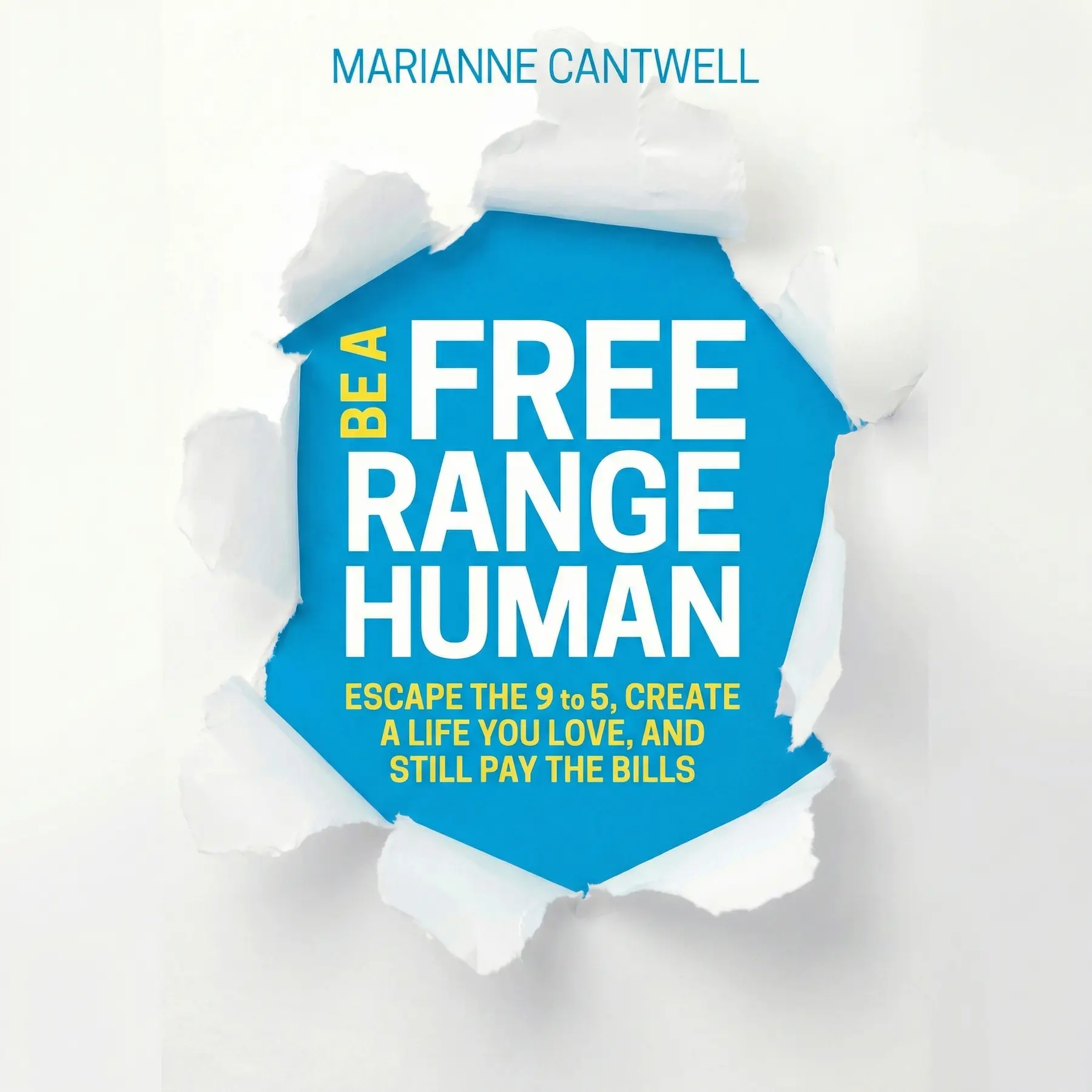
Be A Free Range Human: Escape the 9 to 5, Create a Life You Love, and Still Pay the Bills
Shows why a steady job is riskier than it looks, and how to build a low-cost independent business around what you love and your hidden strengths, testing ideas cheaply instead of planning forever.
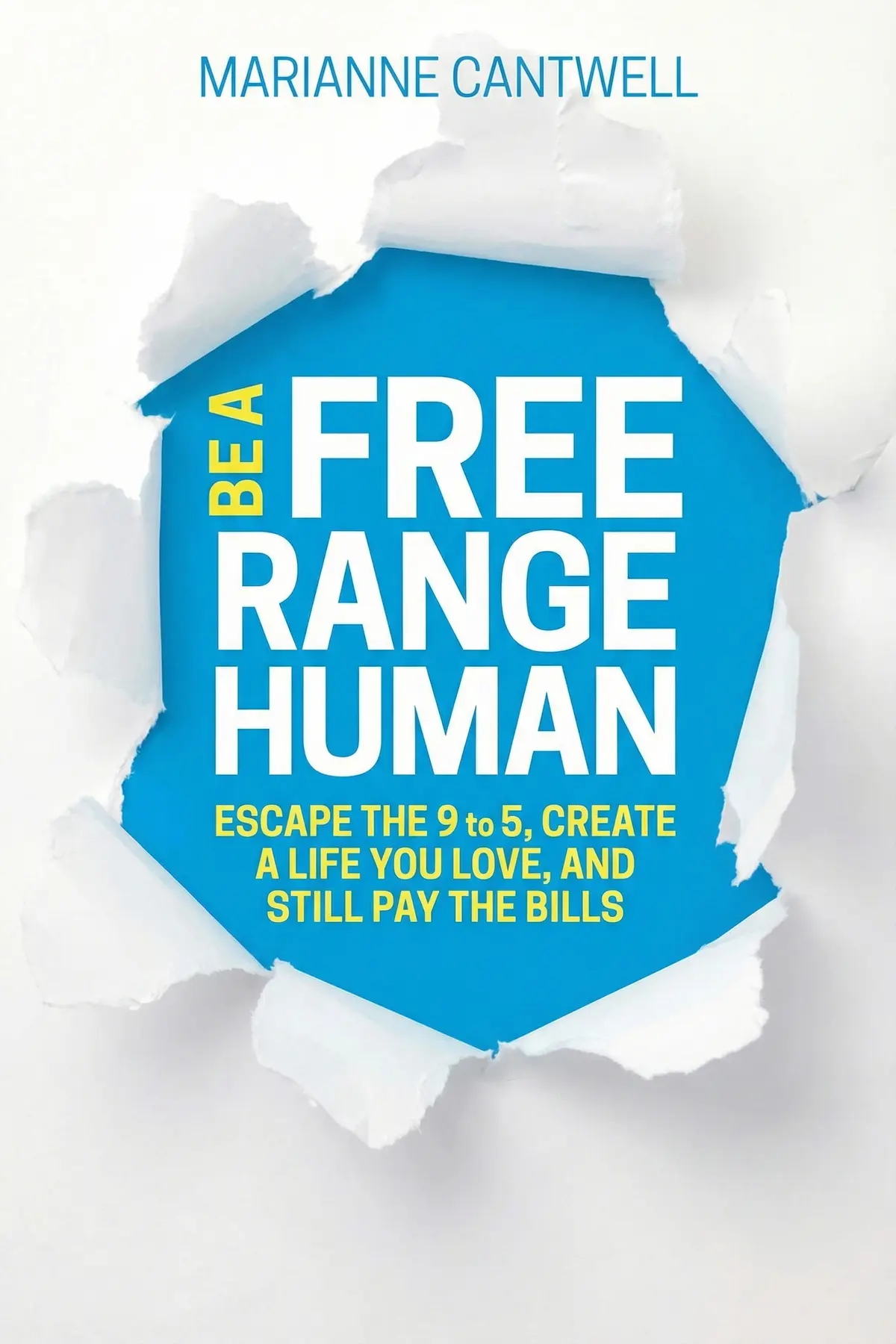
Table of Content
1. Introduction
56 sec
If you stay in a job you dislike because it feels safe, Marianne Cantwell has an uncomfortable point for you: that safety may not exist. In Be A Free Range Human, Cantwell, a speaker and consultant who helps people switch to work they love, argues that an employee who can be let go on a month’s notice is already self-employed, just with a single client. Once you see that, building something of your own looks far less reckless.
Her case is that a life on your own terms is within reach for ordinary people, as long as you start from what you love and who you really are, keep costs low, and test cheaply instead of planning forever. Along the way she offers a pen-and-paper exercise for finding what you want, a fresh way to read your weaknesses, an honest comparison of four business models and a reason to stop trying to please everyone.
2. See your steady job as a risky bet
1 min 32 sec
The paycheck that keeps you in a job you dislike feels like the safe choice. One line in your employment contract tells a different story, and it changes how risky going alone really is.
3. Hear what you want before the critic speaks
1 min 41 sec
Most adults struggle to say what they would truly like to do with their years. A psychologist’s picture of two voices in the head explains why, and a short exercise with a genie gets around the louder one.
4. Turn your so-called weaknesses into paid strengths
1 min 36 sec
The trait your boss keeps criticizing might be exactly what someone else would pay for. Cantwell discovered this about herself only after she changed the setting around her, not the habit.
5. Be original without inventing anything new
1 min 50 sec
Finding a competitor with nearly your exact business, down to the website, almost made Cantwell quit. An old Hewlett Packard computer and an Apple music player show why that fear rests on a myth.
6. Pick a business that keeps costs low
1 min 56 sec
The most common escape dream is a little café or bookshop, and it is one of the hardest ways to make a living. Cantwell compares four alternatives, each with its own ceiling and its own catch.
7. Skip the business plan and test with ten people
1 min 43 sec
The future founder of Groupon lost a year tweaking his first product to fit what he assumed people wanted. What he did differently the second time is something you can try this month with a handful of friends.
8. Win loyal customers by daring to divide opinion
1 min 44 sec
Office life rewards never upsetting anyone, and that habit can sink a small business. A language teacher whose critics keep writing about him shows what happens when you stop aiming to please everyone.
9. Conclusion
1 min 09 sec
Cantwell’s book rests on a single reversal. Most people think they are choosing between a safe job and a risky dream, yet the safe job was never as safe as it seemed. Once that is clear, the question changes from whether to try something different to how to try it cheaply, honestly and soon.
Her answer keeps the stakes small on purpose. Low costs mean no investors, no investors means no lengthy plan, and no plan means you can put an idea in front of ten real people this month. Treat it as an experiment with no income on the line, and every mistake becomes information about what works.
Her closing advice speaks to the fear that something will go wrong. Weigh that fear against how you feel right now, giving your best years to work that does not fit, and ask what not trying is costing you. The only path with no risk at all, she points out, is doing nothing.
So begin where she begins. Answer the genie question on paper tonight, before the loud man gets a word in. Then find ten people who might pay for what you wrote down.
About this book
What is this book about?
Many people stay in jobs that bore them because leaving feels reckless. There are bills, responsibilities and a mortgage, and following your passions seems like something for the young and carefree. Marianne Cantwell argues that this trade no longer holds, because the job you are protecting is far less secure than it appears. Cantwell, a speaker and consultant who calls herself a free-range human, starts by redefining risk: an employee without real security is self-employed with a single client. From there she guides the reader through the inner work of finding what they truly want, rereading their weaknesses as strengths in the wrong setting, and getting past the belief that a business idea must be completely new. She then compares four kinds of free-range business and explains why low costs come first. The practical side is lean and quick. Skip the detailed business plan, run a small test with around ten people, and speak in your own voice to the customers who will love you, even if others do not. Readers get a way to start small, learn from mistakes and treat the whole move as an experiment.
Book Information
Who it's for
Unhappy office workers
Office workers who stay in jobs they dislike because leaving feels too risky.
Career switchers needing direction
Career switchers who have a vague dream but no idea which kind of business fits it.
Stuck planning to freelance
Would-be freelancers stuck polishing a plan or waiting for a perfectly original idea.
About the Author
Marianne Cantwell
Marianne Cantwell is a speaker and consultant who helps people move into a life and work they love, and she describes herself as a free-range human. She regularly runs courses on escaping what she calls the corporate cage. Her work has been featured on the BBC and in many British and international newspapers and magazines.
Ratings & Reviews
Ratings at a glance
What people think
Listeners find this volume to be a motivating and emboldening resource for anyone seeking to exit the corporate world in favor of a versatile, "free-range" existence. They value the hands-on activities and structures designed to pinpoint movable talents, with one listener highlighting the usefulness of viewing perceived flaws as career advantages. Furthermore, the writer's energetic delivery and actual success stories are often mentioned as encouraging high points. Although some listeners believe the suggestions are a bit too hopeful concerning the monetary challenges of launching a business, they also note that the guide delivers the necessary "myth-busting" and psychological change required to begin the journey.
Top reviews
Bee
If you're currently staring at a gray office wall wondering if this is all there is, you need to read this immediately. Marianne Cantwell provides a spunky and blunt wake-up call for anyone trapped in cubicle-land. What I loved most was the shift from 'career wealth' to 'life wealth.' It’s not just about making money; it’s about how you spend your limited time on this planet. The written exercises are incredibly helpful for articulating those quiet dreams you’ve been too scared to voice. While the book encourages skipping the complex business plan, it replaces that fluff with actual micro-prototypes to test your ideas. It’s a life-affirming guide that challenges conventional wisdom in the best way possible.
Show moreSook
The chapter on reframing your weaknesses as 'superpowers' was a complete lightbulb moment for me. Cantwell explains that we’ve been lied to since school, taught to fix our flaws rather than double down on what we’re naturally brilliant at. This book isn't about opening a traditional café or a B&B—which she rightly points out are often just 'cages' with better coffee. Instead, it focuses on low-cost, high-freedom ventures like digital products and specialized services. To be a free-range human requires a massive mindset shift, and this guide provides the perfect roadmap for that transition. It’s empowering, realistic about the 'perfectionism trap,' and deeply personal. I've already recommended it to three colleagues who are burnt out.
Show moreFah
Stop what you're doing and buy this if you’ve ever felt like a rebel without a cause in your office job. I’m already a free-range human, and even I found immense value in the way Marianne Cantwell structures her frameworks. She walks the talk, and her enthusiasm for 'living anywhere' is grounded in actual experience. The focus on 'doing all the things you like' instead of picking just one niche is a game-changer for multi-passionate people. It’s refreshing to see a business book that doesn't prioritize growth for the sake of growth, but rather freedom for the sake of happiness. Truly an inspirational read that provides the essential 'myth-busting' needed to take that first terrifying step.
Show moreSara
Ever wonder why the standard career advice feels so outdated? This book explains exactly why the 'security' of a nine-to-five is a myth in today's economy. Cantwell’s breakdown of the four types of free-range businesses—services, virtual products, physical products, and advertising—is incredibly clear and helps you avoid the common trap of starting a business that just becomes another cage. I loved the advice to use friends as guinea pigs for micro-projects. It makes starting a business feel like a fun experiment rather than a high-stakes gamble. The tone is perfectly balanced between being encouraging and being blunt about the reality of the work involved. This is hands-down the best guide I’ve read for the 'indie' career path.
Show moreArjun
Picked this up during a particularly soul-crushing week at my 9-to-5 and it was exactly the mental reset I needed. The core idea that your 'weaknesses' are just strengths in the wrong environment was a total revelation for me. For years, I was told my inability to focus on one task was a flaw, but Cantwell reframes that as being a fast-moving, big-picture thinker. The 'myth-busting' sections are top-tier, especially the part about how your idea doesn't actually have to be original to succeed. I’m currently running my first one-week experiment based on her advice. It’s scary but much more actionable than the usual abstract self-help fluff you find on the shelves.
Show moreBank
As someone who has always felt a bit 'unemployable' because I can't stick to one thing, this was a breath of fresh air. Cantwell’s writing style is like having a conversation with a very smart, very rebellious friend. She breaks down the four main types of free-range businesses and explains why fixed costs are the enemy of freedom. I appreciated the straight-talk about why most people fail—they spend a year planning instead of just getting their product out there. My only gripe is that it can feel a bit repetitive in the middle sections, but the core message is solid. If you’re looking for the permission to stop being 'average' and start being yourself, this is your manifest.
Show moreFinn
Finally got around to reading this after hearing it mentioned in several digital nomad groups. It’s much more than just a 'how to work from your laptop' guide. It’s a deep dive into why we feel caged by the 9-to-5 grind and how to dismantle the mental barriers we've built up over decades. The section on 'micro-prototypes' is worth the price of the book alone. Instead of guessing what people want, you actually test it with real humans immediately. Frankly, it’s a lot more 'human' than most business books. It addresses the fear and the 'what if it goes wrong?' questions head-on. A very solid 4-star read that I’ll likely revisit when I hit my next career plateau.
Show morePlernpiriya
Marianne Cantwell is undeniably energetic, and her enthusiasm for the 'free-range' lifestyle is infectious. However, I have to be fair: the practicalities are a bit thin. The book argues that you don't need a business plan or an MBA to get started. That might work for a freelance writer, but what if your dream requires a significant loan? Most banks won't just take your 'superpowers' as collateral. I also wished there was a 'further reading' list included to help with the actual legal and financial setup of a company. It’s a fantastic motivational tool to get you to quit a soul-crushing job, but you’ll definitely need a few more technical books to actually build the foundation of your new business.
Show moreSuwit
Truth be told, I loved the case studies, but I finished the book feeling like I needed a 'Part 2' for the nitty-gritty details. The author is great at the 'why' and the 'what,' but the 'how' is often simplified to 'just do it.' For those of us with anxiety, 'just jumping in' is easier said than done! I did appreciate the critique of the traditional business plan, though. She's right that they are often just strategic guesses that keep you from taking action. The book is a great primer for the mindset shift needed to leave corporate life, but don't expect it to be the only resource you'll need. It’s a motivator, not a complete encyclopedia of entrepreneurship.
Show moreKomsan
Is this book inspiring? Yes. Is it realistic for someone with a mortgage and zero savings? Not really. The author suggests moving to the beach and starting small, but the 'how' of paying the bills during that transition felt very glossed over. Look, I love the sentiment of 'Carpe Diem,' but some of the advice feels overly optimistic regarding the financial realities of the current economy. It felt like a lot of marketing for digital products that might not have a real audience. If you want something with more grit and data, I would suggest Tim Ferriss or Chris Guillebeau instead. This is fine for a motivational boost, but the actual execution steps felt a bit 'fly by the seat of your pants' for my taste.
Show moreQuestions about this book
What is the main idea of Be A Free Range Human?
Marianne Cantwell argues that the choice between a secure job and a fulfilling one is false, because jobs are no longer secure. An employee who can be dismissed on a month’s or three months’ notice is effectively self-employed with one client. She then shows how to build a low-cost independent business around what you love, your real strengths and your own voice, starting small and testing instead of planning.
Who should read Be A Free Range Human?
It suits people who feel trapped in office jobs they dislike but stay for the steady paycheck, and career switchers who want independence without giving up their standard of living. It also helps anyone who keeps putting off a business idea because they think it needs a full plan, outside investment or a concept nobody has tried before.
What are the four types of free-range business Cantwell describes?
Services, where you are paid for your time, like web design or therapy, are quick and cheap to start but limited by hours. Virtual products such as e-books and online courses can be sold repeatedly but need strong market knowledge. Physical products take time and materials. Advertising on a blog or YouTube is easy but works best as a supplement. Her first rule across all of them is to keep costs low.
How do you find what you really want to do, according to Cantwell?
Cantwell draws on psychologist Richard Wiseman’s idea of a quiet creative voice that gets overruled by a loud inner critic. To get past it, write fast answers without self-editing: when you last felt fully alive and engaged, and what you would do with twelve months off on full pay from a genie. Then note what specifically excites you about that plan.
Do you need a business plan to start a free-range business?
Cantwell says no, at least at first. Citing Jason Fried and David Heinemeier Hansson’s Rework, she treats long-range plans as guesses written before you know anything, and mainly useful for persuading investors. If you keep costs low, you need no investors. Instead, run a micro prototype with about ten people, in the spirit of Groupon founder Andrew Mason, who chose to launch quickly after his over-planned first business flopped.
Readers also enjoyed


Alibaba: The House That Jack Ma Built
Duncan Clark


60 Seconds & You’re Hired!
Robin Ryan





7 Powers: The Foundations of Business Strategy
Hamilton Helmer
AUDIO SUMMARY AVAILABLE
Listen to Be A Free Range Human in 15 minutes
Get the key ideas from Be A Free Range Human by Marianne Cantwell, plus 5,000+ more nonfiction titles.
- 5,000+ titles
- Listen as much as you want
- 7-day free trial
- Cancel anytime









