
14 min 16 sec
Available in: English
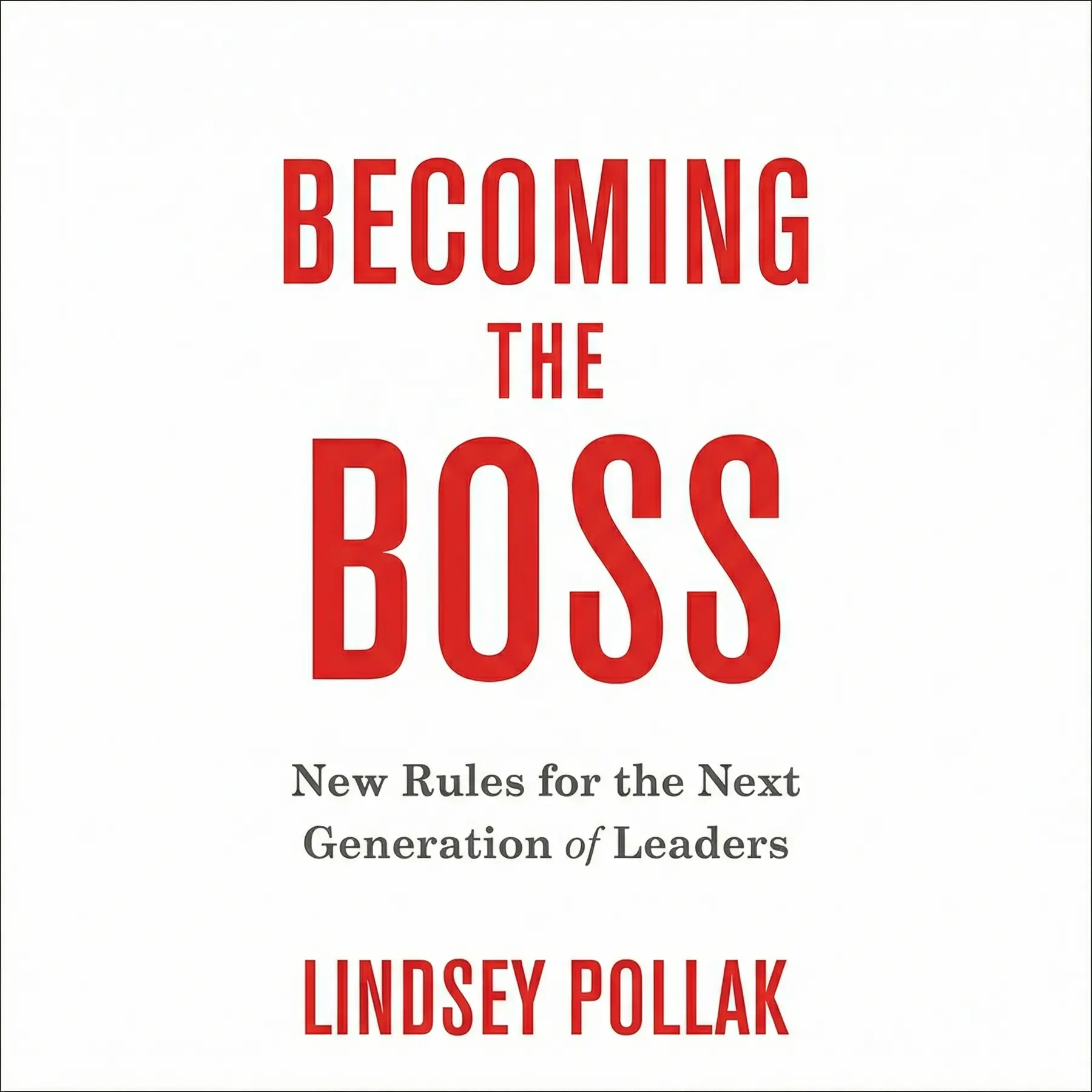
Becoming the Boss: New Rules for the Next Generation of Leaders
A practical guide for young professionals who want to lead in a fast-changing workplace: how to manage yourself, build a reputation online and off, communicate like a boss and network upward.
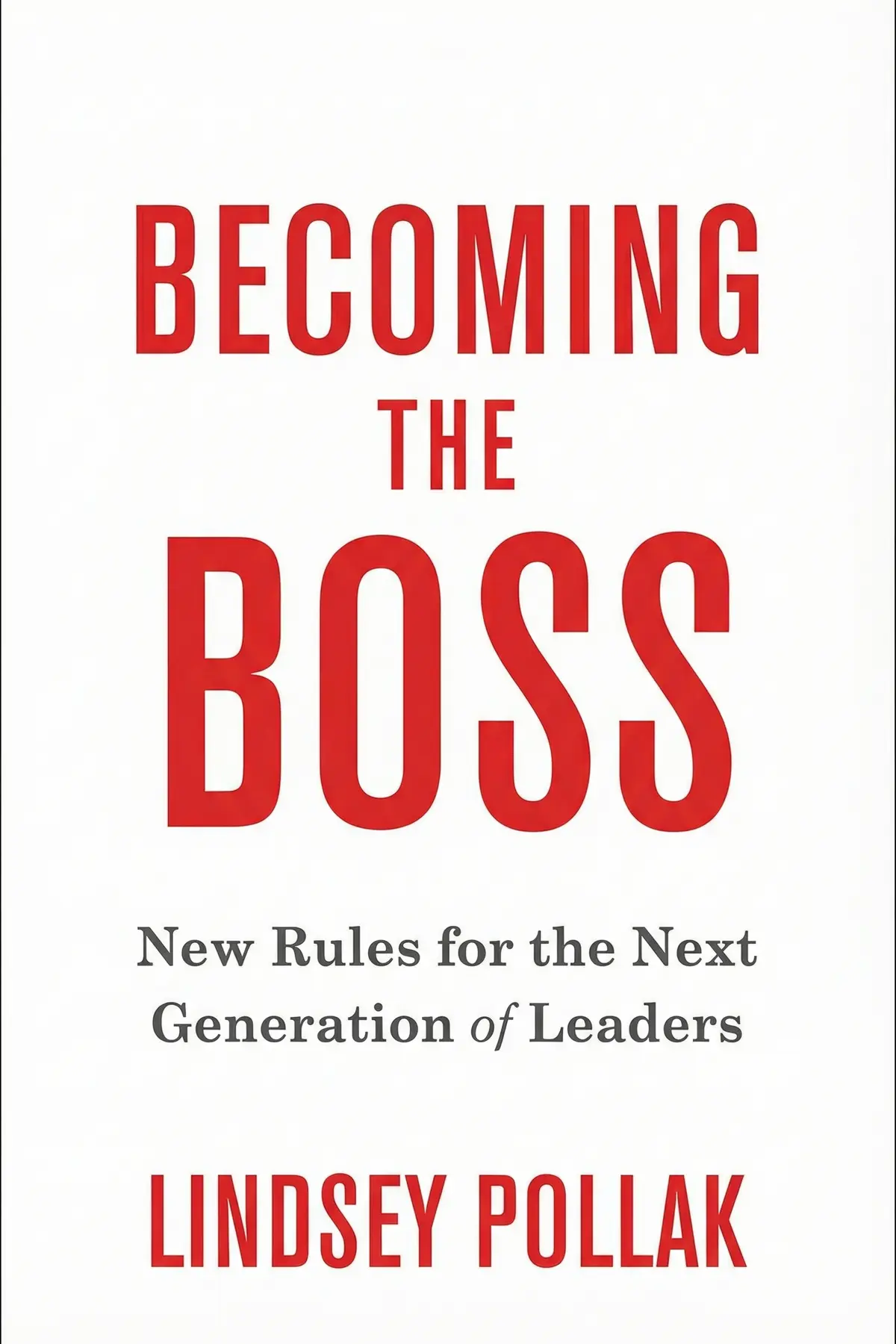
Table of Content
1. Introduction
1 min 01 sec
Most people assume leadership arrives with a title, and that they will learn it once someone hands them a team. In Becoming the Boss, career and workplace expert Lindsey Pollak argues the opposite: the habits of a good boss start long before the promotion, beginning with how you run your own work and life.
She writes for a workforce that has changed. Millennials, born between 1980 and 2000, tend to be tech savvy and self-directed, often juggle several jobs at once, and work with tools that never stop shifting. What worked for Steve Jobs or Bill Gates, Pollak says, is worth studying but may not work now.
Her case is that modern leadership is a handful of learnable skills: leading yourself, shaping a reputation online and off, communicating generously and reaching up to people ahead of you. Each comes with steps small enough to try this week, from a 30-second introduction to a calm answer for the question that stumps you.
2. Run your own life before running a team
1 min 42 sec
Most definitions of a leader start with the people they manage. Pollak points to a second half of the job that comes first, and a simple question that settles whether a frightening move is worth making.
3. Become known for something people remember
1 min 50 sec
When nobody stays with one employer for long, you are always competing for the next role. Pollak describes three qualities that make people pick you, and a half-minute exercise most professionals never bother to do.
4. Clean up and sharpen your online profile
1 min 38 sec
Other people can damage your professional standing with a single tag, years before you apply for the job that matters. Pollak explains how to protect yourself and how one headline line changes what strangers see.
5. Talk less about yourself, tell your team more
1 min 47 sec
One study counted a single small word in how leaders speak. A survey of managers found something that hurts morale more than micromanagement. Together they reshape how a boss should talk, and through which channel.
6. Earn trust with names and honest answers
1 min 42 sec
Every leader eventually faces a question they cannot answer, often in front of others. Pollak offers three ways to respond that can actually raise your standing, plus one common workplace habit to drop entirely.
7. Get through your first months as a new manager
1 min 42 sec
Younger people are being promoted into management, and most of them privately feel unready. A Deloitte figure shows how common that is, and Pollak lays out the early moves that win a team’s goodwill.
8. Always take the meeting, even unlikely ones
1 min 40 sec
Applying for a job you probably will not get sounds like wasted effort. Pollak argues it is one of the smartest moves a young professional can make, and explains how to reach people far above you.
9. Conclusion
1 min 14 sec
Pollak’s book adds up to a simple claim with a demanding edge. The boss you hope to become is assembled now, from small repeated choices: how you handle fear, what people find when they search your name, how often you talk about yourself, whether you take the meeting. None of these needs a title. All of them are visible to the people who will one day decide whether to give you one.
She also cares about the person behind the role. On days when the schedule overflows, she suggests spending 15 minutes deciding what truly matters; an important email can wait a few hours while you sit in a key meeting. When stress rises, accept it instead of fighting it, since resisting makes it worse, then take three deep breaths and feel the body begin to relax.
And when you wonder whether to stay in your job or change course, Pollak offers an unusual compass: your childhood dreams. If you are moving toward them, keep going. If you have drifted far away, take the idea of a change seriously.
Leadership, in her telling, is something you practice daily, long before anyone makes it official, until the title finally catches up with you.
About this book
What is this book about?
Many young professionals assume leadership will be taught once someone hands them a team. Lindsey Pollak argues that the habits of a good boss have to be built earlier, and that the habits that served past business icons may not fit a world where technology keeps shifting and most people hold several roles at once. Pollak breaks modern leadership into skills anyone can practice. She starts with leading yourself: managing fear, widening your knowledge and auditing your own gaps. She moves to personal branding, from a 30-second introduction to a sharper LinkedIn headline and a cleaner set of tagged photos. She then turns to communication, drawing on a University of Texas finding about how often leaders say the word I and an Accountemps survey on what really damages morale. Readers also get advice for their first months as a young manager, including a Deloitte figure showing how few new Millennial leaders feel ready, and a networking rule worth adopting at once: always take the meeting. The result is a set of small, concrete steps for becoming the kind of person others want to follow.
Book Information
Who it's for
Young professionals eyeing leadership
Young professionals who want a leadership role and are unsure how to prepare for it.
Newly managing a team
First-time managers, especially young ones who feel unready for their new leadership role.
Needing a clearer brand
Freelancers and job hunters who need a clearer personal brand and a stronger network.
About the Author
Lindsey Pollak
Lindsey Pollak is a career and workplace expert with a particular interest in how people succeed early in their careers. A Yale University graduate, she was named to the Thinkers50 Radar List of global management thinkers in 2020. She has spoken to and advised more than 250 organizations, including corporations, law firms, conferences and universities, has served as an official LinkedIn ambassador and sat on the board of FourBlock, a nonprofit helping veterans change careers. Her other books include The Remix and Getting from College to Career.
Ratings & Reviews
Ratings at a glance
What people think
Listeners find the book highly knowledgeable, offering a solid overview of management history and theory. It is seen as particularly helpful for those early in their careers, with one listener mentioning it serves as an excellent gift for recent graduates. Additionally, the prose itself earns praise, as one listener describes the work as well-written.
Top reviews
Montri
Wow, I wish I had this during my first week of management because it would have saved me so much anxiety. The writing is incredibly clear and well-informed, acting as a bridge between college life and the corporate world. Lindsey Pollak manages to distill complex management history into actionable steps that don't feel like a cheesy self-help gimmick. Frankly, the advice on giving and receiving feedback is worth the price of the book alone. It’s the perfect gift for new graduates who are ambitious but perhaps a bit nervous about the transition to a formal leadership role. Everything is organized so logically that it feels like a textbook for your career, only much more engaging and fun to read. Highly recommended for any young worker looking to move up the ladder quickly.
Show moreNum
Picked this up as a graduation gift for my sister and ended up reading the whole thing myself before wrapping it! It is essentially a survival guide for the modern workplace. Pollak is a great writer who knows how to keep things moving without getting bogged down in jargon. The advice on being 'visible' and 'consistent' is something I’ve already started implementing with my own team. Not gonna lie, I was worried it would be full of cheesy platitudes, but it’s actually a very practical synthesis of great ideas from various gurus. The organization is top-notch, making it easy to flip to a specific section when you need advice on something like delegation or meeting prep. It’s a must-read for any young professional who wants to be taken seriously from day one.
Show moreLevi
As someone who just stepped into a team lead role, I found Pollak’s advice to be grounded and immediately applicable. She moves away from high-level academic theory and dives straight into the mechanics of being a supervisor. The section on leveraging LinkedIn to build a professional identity was a standout, though some of the networking tips feel a bit pre-COVID in their execution. To be fair, the core principles of using people’s names and avoiding office gossip are timeless leadership pillars that every young professional should master early on. It lacks a certain 'wow' factor but makes up for it by functioning as a reliable checklist for the day-to-day grind of management. I plan to keep it on my shelf as a quick reference when I'm feeling overwhelmed by delegation tasks or giving feedback.
Show moreRatchada
Lindsey Pollak offers a very digestible synthesis of leadership theory that avoids the fluff found in most business titles. She focuses heavily on the idea of being 'visible, different, and consistent,' which resonated with my own experiences in the tech sector. To be fair, some of the broader generalizations about generations can feel a bit reductive, but her tactical advice on conducting formal meetings is spot on. I appreciated that there was no cheesy shtick involved—just real-world scenarios and clear checklists. Look, you aren't going to find revolutionary psychological breakthroughs here, but you will find a well-written manual for professional maturity. It’s a great refresher for anyone who might have accidentally slipped into bad habits like gossiping or poor delegation. A solid four stars for its organization and practicality.
Show moreAnthony
After hearing several mentors recommend this, I finally picked up a copy to see if it lived up to the hype. It is a very well-written guide that excels at breaking down the 'how-to' of daily leadership tasks. For example, the sections on handling tough questions and managing up were incredibly helpful for my current situation. Personally, I think the author does a great job of making leadership feel attainable rather than some mystical quality you're born with. There are some minor criticisms to be made regarding the dated examples, but the core message about consistency and visibility remains true. It’s a positive and real outlook on the corporate world. Even if you've been in your role for a while, it’s a valuable check-list for staying sharp. I found myself nodding along to most of the advice.
Show moreAroon
This is essentially a manual for professional maturity that focuses on the soft skills often ignored in college. While some of the content is definitely common sense, Pollak presents it in a way that feels fresh and urgent. I particularly liked the emphasis on never gossiping and knowing how to handle those awkward, tough questions that inevitably arise during team meetings. In my experience, these are the exact skills that differentiate a mediocre boss from a great one. The book is well-informed and offers a nice summary of management theory without being dry. To be fair, some chapters are stronger than others, and the 2014 references are a bit of a trip down a weird memory lane. Still, the underlying logic is sound and the checklists are genuinely useful for anyone managing peers.
Show moreJun
Not what I expected from a typical business book, mostly because it felt so approachable and conversational. Lindsey Pollak has a knack for taking broad generalizations about leadership and turning them into small, manageable actions. I loved the focus on the everyday—how to use names effectively and how to build a personal brand by being different. It’s super easy and quick to read, which is perfect for a busy professional. Frankly, I think we often overcomplicate leadership, and this book brings it back to basics in a way that is actually helpful. While it would have been nice to see more updated advice on hybrid work environments, the fundamental advice on becoming a boss remains very strong. It’s an unabashed synthesis of great ideas that works well as a reference.
Show moreCamila
Is this book still relevant in a post-pandemic world? That was the question on my mind throughout the read, and the answer is a bit complicated. On one hand, Pollak’s insights into personal branding and being visible are solid. On the other hand, the 2014 publication date means she couldn't account for the massive shift toward remote work and Zoom culture. The truth is, citing figures like Bill Cosby or Joss Whedon as positive examples feels extremely dated and distracting now. While there is a valuable synthesis of leadership ideas here, a lot of it feels like common sense that you’d pick up in your first year on the job anyway. It’s a decent primer if you’ve never read a single management book, but seasoned pros won’t find much new here.
Show moreKru
The chapter on personal branding is definitely the highlight here, offering a clear framework for anyone trying to stand out in a crowded field. Lindsey Pollak asks a great question: 'Do I want this more than I am afraid of it?' That really stuck with me as I considered my own career trajectory. However, the book does suffer from being a bit too simplistic at times. In my experience, leadership is much messier than these neat checklists suggest. To be fair, it serves as a nice summary of management history, but it lacks the depth needed for navigating complex, modern organizational structures. It’s well-informed but feels more like an introductory course than a masterclass. I’d suggest it for students, but seasoned managers might find it a bit too basic for their needs.
Show morePaisley
Finally got around to reading this, but the cultural references are incredibly jarring and make it hard to take the advice seriously. Using Tulsi Gabbard or Bill Cosby as role models for leadership is a major oversight that hasn't aged well since the book’s release in 2014. Beyond the outdated examples, much of the content felt like broad sweeping generalizations that most people learn through basic office experience. Not gonna lie, I was expecting something a bit more original than 'don't gossip' and 'use people's names.' While the writing quality is decent and the tone is encouraging, it mostly feels like a collection of blog posts stitched together. If you are a brand new intern, you might find a nugget or two here, but for anyone else, it’s mostly just a repeat of things you've heard a thousand times before.
Show moreQuestions about this book
What is the main idea of Becoming the Boss by Lindsey Pollak?
Pollak argues that leadership is built before you get the title. Because technology keeps changing and most people hold several roles, the old models of leadership do not fully fit. She breaks modern leadership into learnable skills: leading yourself, building a personal brand online and offline, communicating with an outward focus, managing a team well in the first months and networking up to more experienced people.
Who should read Becoming the Boss?
It is written for young professionals and new managers, especially Millennials, whom Pollak describes as tech savvy, self-directed and often working several jobs. It suits anyone preparing for a first leadership role, anyone recently promoted who feels unready, and job hunters or freelancers who want a clearer personal brand and a stronger professional network.
How should a leader answer a question they don't know?
Pollak suggests three responses that protect your credibility. Refer the person to someone better placed to answer. Defer by promising to get back to them, then follow through. Or ask them to be more specific, which sometimes lets you answer on the spot. She pairs this with other basics: use people’s names, check names in emails, make eye contact and avoid gossip.
What does always take the meeting mean in Becoming the Boss?
It is Pollak’s networking rule. She advises applying for and interviewing for jobs even when they do not fully match what you want. An interview can reveal a better role in the same company, or the employer may come back months later with a position that suits you. The same spirit applies to joining groups of more senior people, such as the Young Entrepreneur Council.
How can a new manager apply Becoming the Boss right away?
Pollak recommends an early win, such as dropping an unpopular required report, and asking every team member about their goals for the next five years and how you can support them. Learn the tools your company uses, ask colleagues from other cultures how business works where they come from, communicate more rather than less, and talk about yourself less often.

Readers also enjoyed


A Bigger Prize: How We Can Do Better Than the Competition
Margaret Heffernan





A Year with Peter Drucker: 52 Weeks of Coaching for Leadership Effectiveness
Joseph A. Maciariello



60 Seconds & You’re Hired!
Robin Ryan
AUDIO SUMMARY AVAILABLE
Listen to Becoming the Boss in 15 minutes
Get the key ideas from Becoming the Boss by Lindsey Pollak, plus 5,000+ more nonfiction titles.
- 5,000+ titles
- Listen as much as you want
- 7-day free trial
- Cancel anytime









