

13 min 51 sec
Available in: English
The Pomodoro Technique: The Acclaimed Time-Management System That Has Transformed How We Work
Shows how to stop procrastinating by splitting work into 25-minute stretches of total focus, each followed by a short break. It also covers the simple rules, tools and replies that keep those stretches safe from interruptions.
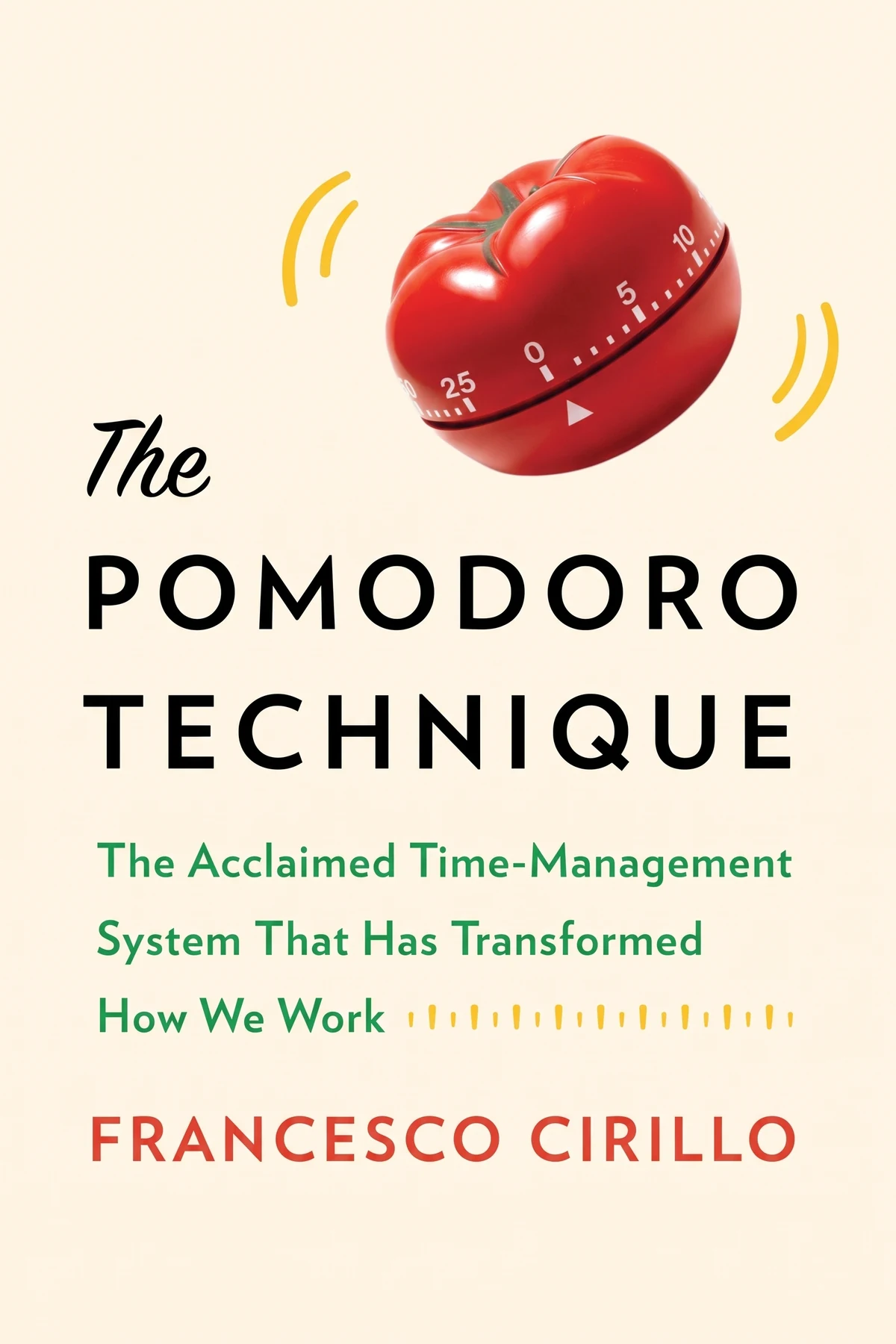
Table of Content
1. Introduction
1 min 01 sec
If your workday ends with an untouched to-do list and an evening of guilty catch-up, the fix may be smaller than you expect: a kitchen timer and a promise to focus for 25 minutes. In The Pomodoro Technique, Francesco Cirillo describes the system he built as a university student in the 1980s, when a tomato-shaped timer finally got him working. Each 25-minute stretch of uninterrupted work is called a pomodoro, and every one is followed by a short break.
Cirillo’s case is that procrastination is beaten by structure, not by willpower. Short, strict intervals with real rest between them turn a frightening project into a row of small steps you can actually finish. The method has only a few rules, and its power depends on keeping them without exception.
By the end, you will know how to plan a day in pomodori, what to do when you finish a task early, and exactly what to say when a colleague drops by in the middle of your work.
2. Break the cycle of the wasted workday
1 min 54 sec
Hours of scrolling, a guilty glance at the inbox every few minutes, then a night shift on the sofa that achieves nothing. A student with a kitchen timer found a way to end that loop.
3. Climb the big project ten small steps a day
1 min 40 sec
Nobody reaches the top of Everest in one jump, yet most of us plan our biggest projects as if we could. A modest daily target can take you further than a heroic last-minute push.
4. Count only full pomodori, with no exceptions
1 min 34 sec
What should you do when you finish a task with five minutes left on the timer? Cirillo’s answer sounds rigid, and it is, for a reason that goes deeper than the task itself.
5. Rest on schedule to keep your focus sharp
1 min 39 sec
Skipping a break feels like a way to get more done. Cirillo argues the opposite, and his reasoning shows why a blurred line between working and resting invites procrastination right back in.
6. Plan your day with a timer and two lists
1 min 45 sec
The whole system runs on tools found in almost any home. The real skill lies in a habit most people never practice: guessing how long a task will take, then getting better at it.
7. Park stray thoughts on paper and keep working
1 min 32 sec
Some of the worst interruptions do not come from your phone or your colleagues. They come from your own head, and they always sound urgent until the timer rings.
8. A friendly no protects your whole day
1 min 39 sec
A colleague wants to chat about last night’s game, someone needs a pen, the phone keeps ringing. Turning people away feels rude, but Cirillo’s ready-made replies tend to earn respect instead.
9. Conclusion
1 min 07 sec
The tomato timer looks like a toy, but in Cirillo’s system it works as a boundary. While it ticks, one task gets your full attention and everything else waits: the inbox, the snack, the sudden idea, the friendly visitor. When it rings, rest is not a reward you might earn but part of the work. The method asks for very little equipment and a lot of consistency, and that trade is what turns a frightening 50-slide project into a series of half hours you can actually finish.
The changes it supports are small enough to try tomorrow. Write a To Do Today list with a pomodoro estimate beside each task, and aim for ten full pomodori. Treat an early finish as time to polish and review, never as permission to open your email. Keep paper beside the timer for the thoughts that feel urgent, and have a kind, firm sentence ready for the people who do not know you are busy.
Then pay attention to how your evening feels. Cirillo’s real promise is a workday that actually ends, with no night shift on the sofa and no guilt waiting at home.
About this book
What is this book about?
Many workdays follow the same pattern. A big task waits, the hours go to email, coffee and social media, and the guilt follows you home into a night shift that gets no more done. Francesco Cirillo knew this pattern from his own university years, and his way out was a kitchen timer shaped like a tomato. His Pomodoro Technique cuts work into 25-minute units called pomodori. During each one you focus on a single task you chose in advance, and nothing else. Then you take a five-minute break, and after four pomodori a longer one. Cirillo argues that the method works only when its rules are kept strictly: there are no half pomodori, breaks are never optional, and interruptions from inside your head or from other people are written down or politely put off. Readers get a complete, low-cost system. It needs a timer and two lists, a way to estimate tasks in pomodori, and ready answers for the colleague who drops by mid-task. The promise is modest and practical: more finished work, less stress, and evenings that belong to you again.
Book Information
Who it's for
Losing days to distraction
Students and office workers who lose whole days to email, social media and guilt.
Professionals who procrastinate
Professionals facing large projects who tend to delay, then cram before deadlines.
Struggling to say no
Anyone working in a busy office who struggles to say no to friendly interruptions.
About the Author
Francesco Cirillo
Francesco Cirillo created the Pomodoro Technique as a university student in the 1980s, when he was struggling to organize his workday. He wrote a book about the method in 2006 and gave it away as a free download. It was downloaded more than 2 million times before he withdrew it in 2013. Cirillo is a partner in Cirillo Consulting, a firm based in Berlin, where he coaches people and trains them in his technique.
Ratings & Reviews
Ratings at a glance
What people think
Listeners find the book’s approach to be impactful, with one noting its usefulness during study blocks and another pointing out its specific advantages for those with ADHD. The guide is also a fast read that features clear, concise language. Furthermore, listeners value how uncomplicated the system is, with one individual remarking on how it truly embodies the principle of keeping things simple.
Top reviews
Tun
Ever wonder why you can't stay on task for more than ten minutes? For those of us struggling with ADHD, Cirillo’s system is a total lifesaver because it turns focus into a game. I appreciated the crisp writing style that doesn't waste time on flowery metaphors, instead getting straight to the point of the 25-minute sprint. The idea that a pomodoro is indivisible really helped me stop letting tiny distractions derail my entire afternoon. While some might find it too simple, that's exactly where the genius lies. Frankly, the methodology is effective because it acknowledges our human limits rather than ignoring them. It's a quick read that provides a framework I can actually stick to without feeling overwhelmed.
Show moreBrahim
Wow, I didn't realize how much I was actually doing wrong until I sat down with Cirillo’s original text. Most people think it’s just about the timer, but the rules regarding internal and external interruptions are what make it work. The writing is incredibly crisp, and the simplicity of the layout makes it a very quick read for busy professionals. I’ve started applying the 'add it up' rule for small tasks, and my to-do list has never looked cleaner. It’s a great resource for anyone who feels like their day is constantly being hijacked by 'urgent' emails. Simply put, this book provides the discipline that most of us are lacking in the digital age.
Show moreSaovapa
After hearing about this for years, I finally decided to see what the fuss was about. The beauty of this book is that it doesn't try to overcomplicate your life with expensive software or complex filing systems. It's just you, a paper list, and a tomato-shaped timer. I’ve found that my concentration has improved significantly since I started treating the pomodoro as an indivisible unit of time. Even if I finish early, I use the remaining minutes for a quick review, which has actually improved the quality of my output. For such a short book, it packs a punch in terms of practical, actionable advice that you can start using immediately.
Show moreLily
Picked this up because a colleague kept raving about his kitchen timer, and I wanted to see if there was more to it. It turns out that the record-keeping and estimation parts are the real meat of the system, even if they feel a bit bureaucratic at first. I’m a developer, so the idea of tracking quantitative estimation errors really appealed to my analytical side. The rule that you must finish the full 25 minutes even if the task is done is a bit controversial, but it actually works. It forces you to review and over-learn the material, which has been great for my recent study sessions. It’s a solid, quick read even if it gets a bit repetitive in the middle chapters.
Show moreFinn
The concept of 'protecting the pomodoro' was a total game-changer for my workflow during deep-work blocks. Most productivity books are filled with fluff, but Cirillo keeps the instructions very direct and easy to follow. I especially liked the emphasis on the mandatory five-minute break, as I used to just work straight through and burn out by noon. Not gonna lie, I initially thought the idea of a 25-minute block was too short for complex coding tasks. Yet, breaking things down into smaller units actually made my estimates much more accurate over time. It’s a very practical manual that doesn’t try to be more than it is, which I find refreshing in this genre.
Show moreNitaya
Finally got around to reading the source material after years of using third-party apps that claim to follow the technique. There is a lot more emphasis on the 'qualitative' side of work here than I expected. The book teaches you how to actually observe your own habits, which is something a simple app can't do for you. It’s particularly beneficial for students who struggle with long study sessions because it provides a clear light at the end of the tunnel. I did find the sections on team applications a bit dated, but for individual productivity, it’s still top-tier advice. It’s a fast read, and the ease of use makes it accessible for almost anyone.
Show moreMoo
As someone who has used the 25-minute timer for years, I found the actual book surprisingly dense with unnecessary bureaucracy. The core technique is brilliant, but I’m not convinced that the intense record-keeping is necessary for everyone. Do I really need to track every single 'X' on a sheet of paper to be productive? For some, this might feel like a Tayloristic ploy to micromanage your own brain, which isn't exactly fun. However, the chapter on handling interruptions was genuinely helpful and provided some practical scripts for negotiating with coworkers. It’s a decent guide if you need a rigid structure to stay disciplined, but most people can probably get the gist from a summary.
Show morePaiboon
It's rare to find a productivity guide that prioritizes simplicity quite as much as this one does. Cirillo’s method is a great companion to GTD, especially if you struggle with the actual 'doing' part of your tasks. Personally, I think the book is a bit too clinical and could have used a bit more wit or personal anecdotes to keep things engaging. It reads a bit like a manual for a kitchen appliance, which I suppose is fitting given the title. The advice on breaking down activities that take more than seven pomodoros is excellent, but the rest felt like common sense. It’s a useful reference, but don’t expect to be entertained by the prose.
Show moreJin
This book feels like an over-expanded academic paper that somehow lost its soul along the way. While the 25-minute timer idea is clearly a five-star concept, the book itself is a frustrating two-star experience. Cirillo spends way too much time over-explaining simple concepts that could have been summarized in a single blog post or a cheat sheet. I found the pseudo-scientific tone a bit grating, especially when he starts citing inspirational quotes to back up anecdotal evidence. Truth is, you don’t need 150 pages to understand how to wind up a kitchen timer and work. If you’ve already heard of the basic 25/5 rhythm, there isn't much here that qualifies as a hidden gem.
Show moreDylan
To be fair, the core methodology here is absolutely solid, but the writing style is incredibly repetitive. I felt like I was reading the same three paragraphs about time-boxing over and over again just to reach a certain page count. Why does such a simple concept need this much filler? The bibliography and citations felt forced, as if the author was trying too hard to make a personal habit look like a rigorous scientific discovery. I’ve been using a timer for years, and while the 'indivisible' rule is interesting, it doesn't justify the price of a full book. You’re better off just downloading the cheat sheet from the website and saving yourself an afternoon of reading.
Show moreQuestions about this book
What is the Pomodoro Technique?
It is a time-management method created by Francesco Cirillo when he was a university student in the 1980s. You choose one task, set a timer for 25 minutes and work on nothing else until it rings. That block is called a pomodoro. Then you take a five-minute break. Once you have finished four pomodori, you rest for longer, somewhere between 15 and 30 minutes. The name comes from the tomato-shaped kitchen timer Cirillo first used.
What happens if I get interrupted during a pomodoro?
Cirillo’s rule is strict: there are no half pomodori. If you give in and check your email, the pomodoro is cancelled and you start again. For thoughts that pop up, write them down and return to work, then review them afterward. For other people, use voicemail, turn off notifications and tell visitors you are in a pomodoro and will get back to them. Only real emergencies justify stopping.
What should I do if I finish a task before 25 minutes are up?
Keep working until the timer rings. Cirillo suggests using the remaining time to improve what you made, for example by refining a slide or checking the font. If nothing is left to improve, review the work and summarize it for yourself so it sticks in your memory. Do not start your break early and do not check email.
What tools do I need for the Pomodoro Technique?
Only a timer and two lists. Any timer works, from a kitchen timer to a phone, though Cirillo prefers one that ticks and rings, because the sounds help the mind switch between work and rest. The inventory holds every task you want to do someday. The To Do Today list holds the day’s tasks, each with an estimate of how many pomodori it will take.
How many pomodori should I do in a day?
Cirillo suggests a goal of ten pomodori a day, which adds up to 250 minutes of focused work. He argues that this steady pace takes you much further on a big project than a last-minute rush, while the regular breaks keep you from wearing out. It also means you can end the day with real progress and keep your evenings free.
Readers also enjoyed



AUDIO SUMMARY AVAILABLE
Listen to The Pomodoro Technique in 15 minutes
Get the key ideas from The Pomodoro Technique by Francesco Cirillo, plus 5,000+ more nonfiction titles.
- 5,000+ titles
- Listen as much as you want
- 7-day free trial
- Cancel anytime









