
14 min 12 sec
Available in: English
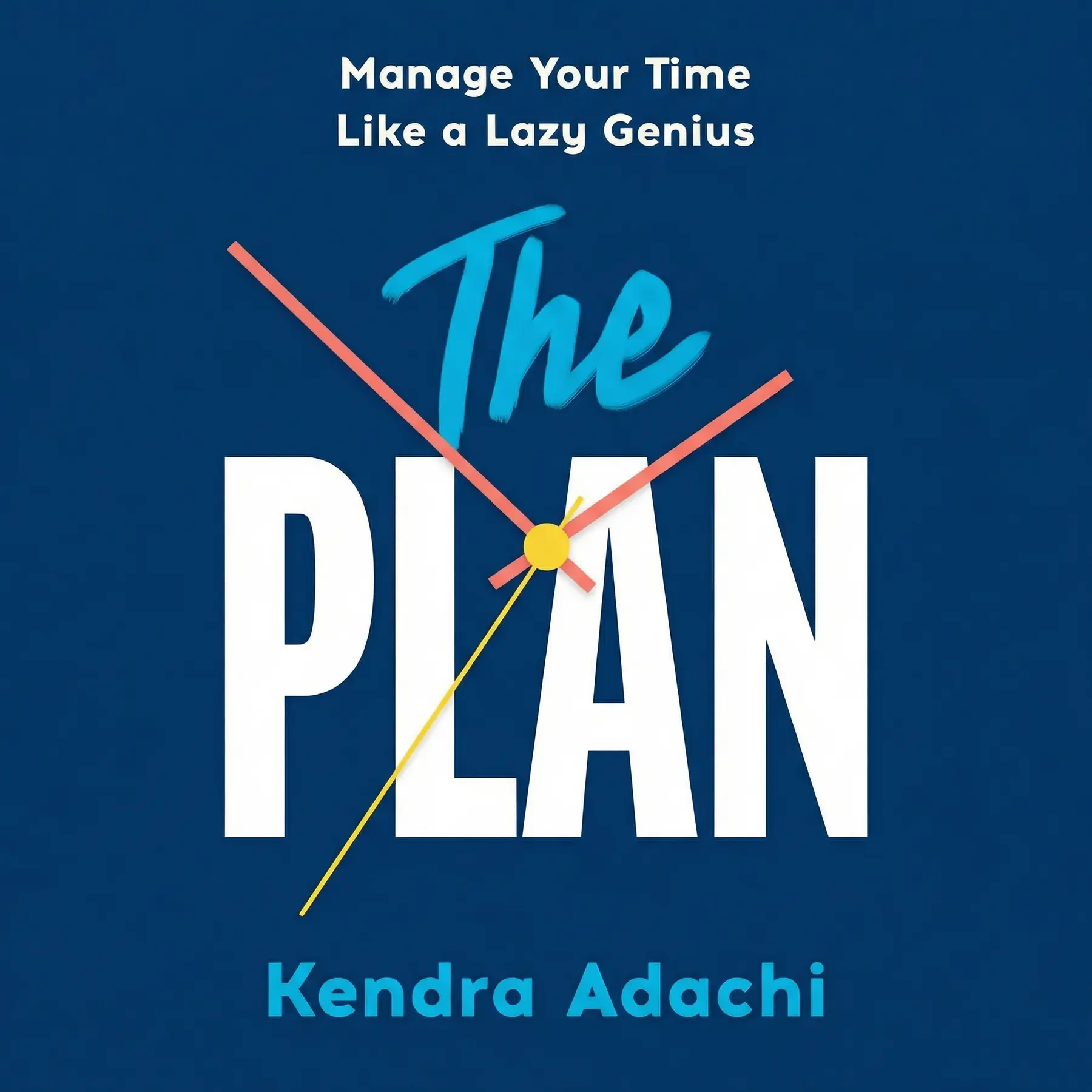
The PLAN: Manage Your Time Like a Lazy Genius
Shows how to plan your days, weeks, months and seasons around your real energy and priorities. Its four-part framework treats rest, flexibility and self-compassion as part of getting things done.
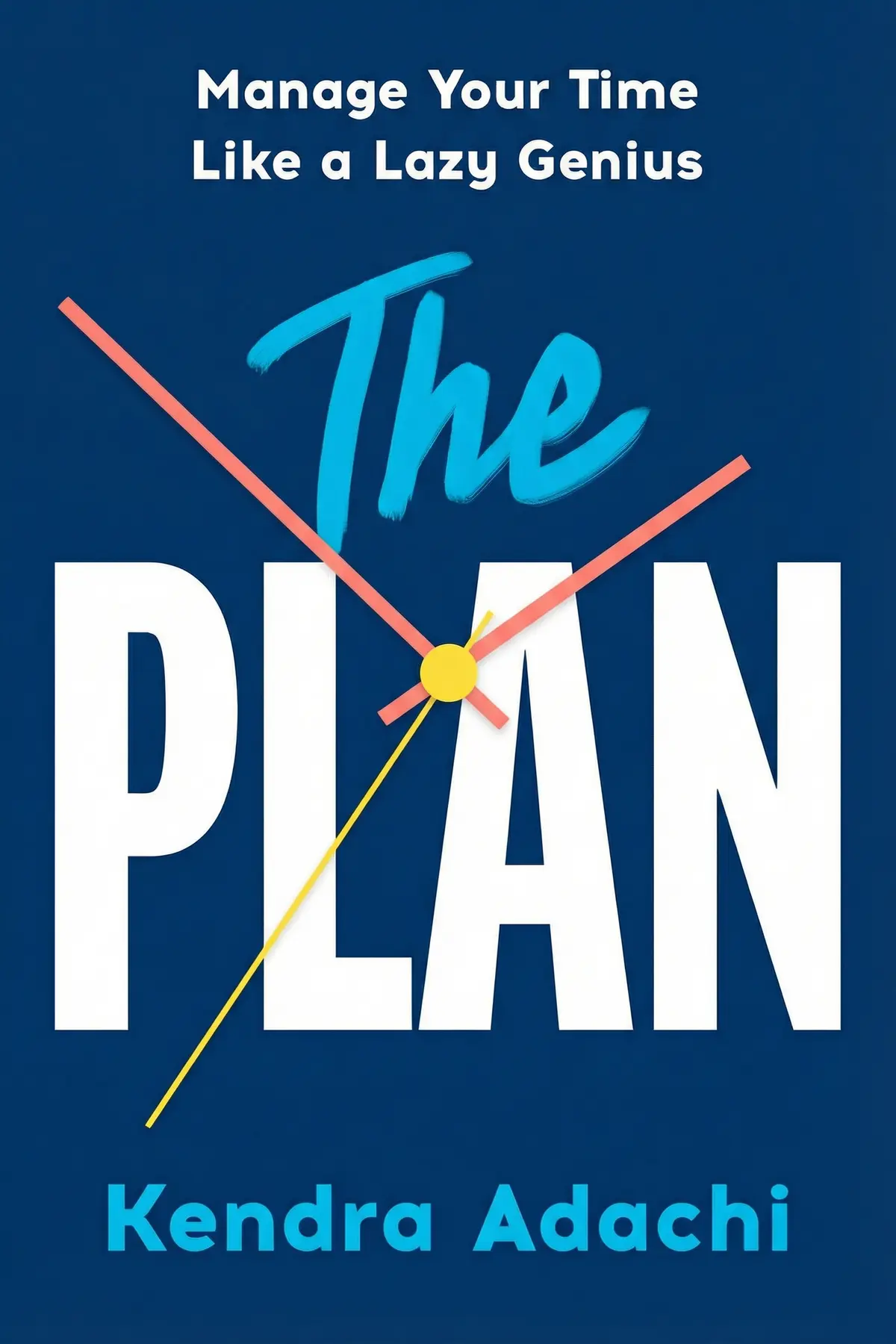
Table of Content
1. Introduction
1 min 04 sec
Maybe every productivity system you have tried has left you feeling behind. In The PLAN, Kendra Adachi says the system was probably the problem, not you. Most popular methods, she argues, treat achievement as the goal at any price and assume one approach suits everyone. That leaves many people, especially women and people from historically marginalized groups, feeling they are failing at something that was never built for their lives.
Adachi, the author behind the Lazy Genius books and podcast, offers a different frame with four parts: Prepare, Live, Adjust and Notice. Her throughline is simple. Time management works when it bends to your energy, your season of life and what matters to you. Squeezing more out of every hour is not the aim. The book supplies the tools for it: a lighter way to write a to-do list, plans at four time scales, a monthly map of energy, and three short talks for the days when everything goes wrong.
2. Stop blaming yourself for advice that never fit
1 min 43 sec
You bought the planner, downloaded the app and still ended the week behind. Adachi traces that familiar failure to a design flaw in the advice itself, and to who it was written for.
3. Plan from where you actually stand today
1 min 35 sec
Most plans are written for an imagined future self with more time and more discipline. Adachi starts somewhere less flattering and far more useful, and she asks you to stop grading ordinary days.
4. Small corrections keep a plan from breaking
1 min 46 sec
When a day goes off course, the instinct is to throw the whole plan away and start fresh. Adachi argues that instinct is exactly what keeps plans fragile, and offers two gentler habits instead.
5. Match your tasks to a monthly energy rhythm
1 min 49 sec
Most time advice assumes your energy is the same every week of the month. Adachi argues that for women this is far from true, and she maps each week to a season with its own best work.
6. A to-do list that lightens your load
1 min 32 sec
The standard to-do list keeps growing until it feels like a wall. Adachi’s version adds one question most lists never ask, and that question is what lets you cross things off without doing them.
7. Make room for the hope-tos each month
1 min 41 sec
Bills always get paid, while the class you keep meaning to take slides into next year. Adachi uses longer planning windows to change that balance, starting with three questions about the month just gone.
8. What to tell yourself when plans collapse
1 min 52 sec
Some days the list is endless, the plan breaks by midmorning, or you are simply too tired to care. Adachi keeps three short talks ready for exactly those days, including one built around a 17-minute nap.
9. Conclusion
1 min 10 sec
Adachi’s PLAN asks a different question from most time advice. The usual question is how to get more done. Her question is how to spend your time and energy so that it fits who you are, where you are in life, and what matters most to you. Every tool in the book grows from that question: the list that asks why each task matters, the month with space for an art class, the cycle map that lets a low-energy week be about bills and rest, and the pep talk that treats a 17-minute nap as part of the work.
The practical start is small. The next time your list overwhelms you, empty it onto paper, cross off the shoulds and sort what remains into Now, Soon, Later and Never Mind. Before you plan a new month, write down what went well and what drained you in the last one. And when a plan falls apart, treat it as an intention that met real life, then change one small thing.
On these terms, a good week is not measured by how much it held. It is measured by whether you ended it still connected to what you care about.
About this book
What is this book about?
Many people have tried planners, apps and strict routines and still end each week feeling behind. Kendra Adachi argues that the fault often lies with the advice. Popular productivity methods, in her view, chase achievement at any cost and assume one approach fits everyone. That leaves many people, especially women and people from historically marginalized groups, feeling inadequate. Her alternative is the PLAN, a four-stage loop: Prepare, Live, Adjust and Notice. You plan from where you are now, accept the season you are in, correct course in small steps and watch your own reactions with kindness. Adachi connects the four stages to the phases of the menstrual cycle, so women can match their work to their changing energy across the month. The book then turns practical. It offers a lighter way to write a to-do list, simple routines for weekly, monthly and seasonal planning, and three short pep talks for the days when the list is endless, the plan falls apart or exhaustion takes over. The result is a way to get things done that leaves room for rest and for what you care about.
Book Information
Who it's for
Burned out on productivity
Professionals, parents and students who keep abandoning rigid productivity systems and feel burned out.
Women wanting energy-based planning
Women who want to plan their work around energy that shifts across the month.
Plans keep falling apart
Anyone whose plans keep collapsing and who wants a kinder way to start again.
About the Author
Kendra Adachi
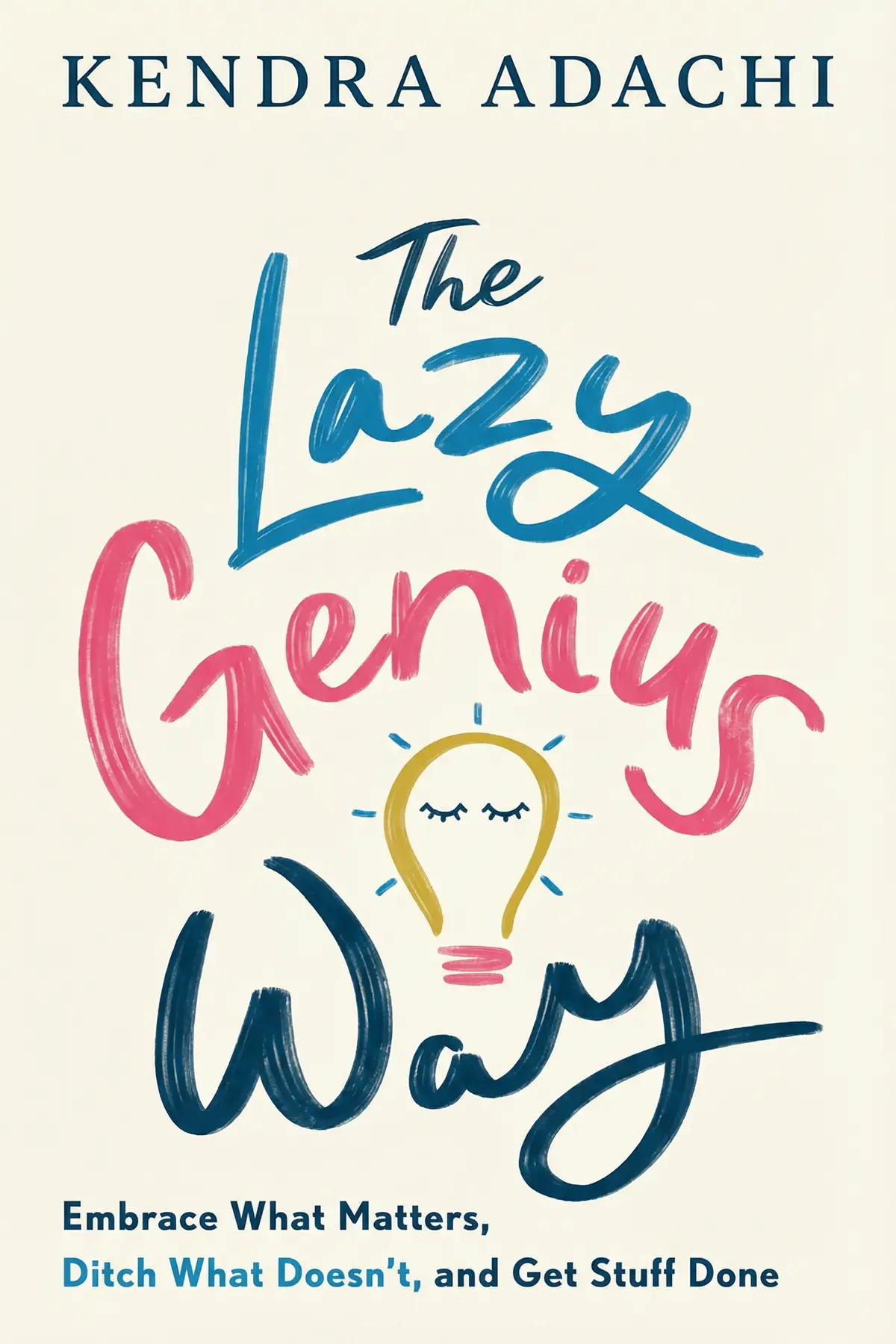
Kendra Adachi is a two-time New York Times bestselling author, known for The Lazy Genius Way and The Lazy Genius Kitchen. She founded The Lazy Genius Collective and hosts The Lazy Genius Podcast, which is nationally ranked. There she helps listeners stop trying to do everything, focus on what matters to them, and drop harmful perfectionism. She lives in North Carolina with her husband and three children.
Ratings & Reviews
Ratings at a glance
What people think
Listeners view this time management book as a definitive resource for planning that provides supportive advice tailored for women. The work delivers a gentle strategy for managing schedules and promotes a kindhearted perspective on productivity, all while remaining highly relatable and personal. Listeners value its revelatory perspectives and emphasis on life's priorities, with one listener mentioning how it leads to increased inner peace.
Top reviews
Tang
Ever wonder why traditional planning feels like a trap? Kendra Adachi finally answers that by acknowledging that most systems are built for people whose lives don't involve fluctuating hormones or domestic labor. I found the 'PLAN' acronym—Prepare, Live, Adjust, and Notice—to be a breath of fresh air compared to the rigid 'crush it' mentality of typical productivity gurus. The chapter on cycle syncing was a total game-changer for my energy management. While the acronyms can get a bit thick, the core message of self-compassion shines through. It’s less about doing more and more about being kind to yourself while navigating the chaos of daily life. This isn't just a planner; it’s a manual for inner peace and a toolkit for the modern woman.
Show moreWacharapol
Kendra Adachi has created something truly special here for the 'go-with-the-flow' girlies who still want to get things done. Most productivity books feel like they’re shouting at you to wake up at 5 AM, but 'The Plan' feels like a quiet conversation over coffee. I’ve never seen a planning book emphasize 'Notice' as a vital step, yet it’s exactly what I needed to find inner peace in my hectic schedule. The way she breaks down seasonal planning versus daily planning helped me lower the bar in the best way possible. Not gonna lie, I teared up during a few of the pep talks. It’s a holy grail for women who are tired of being tired. I’m buying copies for my entire friend group!
Show moreBig
The Plan is the first time management book that didn't make me feel like I needed to change my personality to be successful. Adachi tackles the reality that 90% of planning advice is written by men for men, and she offers a beautiful, feminine alternative. I loved how she encourages us to 'notice' our lives instead of just 'managing' them; it’s such a subtle but profound shift in mindset. Using her strategies, I’ve finally stopped feeling guilty for the days when my energy is low. The book is packed with practical lists and TL;DR sections that make it a great reference guide for the long haul. It truly feels like a companion for life’s transitions. If you want a plan that actually sticks, this is it.
Show moreRatree
Finally, a time management book that doesn't make me feel like a failure for having a life that changes from day to day. Kendra Adachi’s 'Big Sister' energy is all over these pages, providing a much-needed antidote to the hustle culture that dominates the genre. I particularly loved the 'Pep Talks' section toward the end; reading them felt like getting a warm hug when I was drowning in a busy week. The idea of the PLAN pyramid—Prepare, Live, Adjust, Notice—is a helpful framework that allows for the 'hiccups' of real life. My only gripe is that it feels a bit repetitive if you’ve listened to every single podcast episode. Still, having all these strategies in one physical place is incredibly valuable for my seasonal planning.
Show moreMarasri
After hearing so much buzz, I picked this up hoping for a revolution in my calendar, and I mostly got it. What I appreciated most was the concept of the 'Someday List' as a replacement for the high-pressure bucket list. Kendra focuses on the 'Notice' part of her PLAN framework, which helped me realize how much of my life I was missing while trying to optimize it. The book is deeply rooted in compassion, encouraging us to work with our bodies instead of against them. I'll admit the tone is a bit more 'activist' than her previous work, which might surprise some readers. However, the practical tools for adjusting your schedule when things go sideways are worth the price of admission alone. It’s a solid 4-star read for anyone needing to reclaim their time from perfectionism.
Show moreYindee
Picked this up during a particularly chaotic month, and it was exactly the grounding force I needed. The distinction between 'preparing' for your day and 'living' it seems obvious, but Kendra’s breakdown of how to 'adjust' when things fail is pure gold. I’m a visual learner, so the sketches and the pyramid framework really helped me wrap my head around her method. I do agree with other reviewers that the acronyms can get overwhelming if you try to implement everything at once. My advice? Take what you need and leave the rest. The focus on 'kindness over efficiency' is a radical shift that actually made me more productive in the long run. It’s a very human approach to a very mechanical subject.
Show moreWachira
Gotta say, I wasn't sure if I needed another book on planning, but Kendra’s 'The Plan' won me over. It’s less about a rigid schedule and more about creating a flexible rhythm that respects your humanity. The 'Pep Talks' are fantastic—I’ve already bookmarked the one for 'feeling overwhelmed' to read during my Monday morning slump. I did find some of the socio-political commentary a little heavy-handed, but the actual planning advice is so sound I can overlook it. It’s much more about 'recovering from burnout' than it is about squeezing every second out of the day. A very refreshing and compassionate take on time.
Show moreMind
The Plan offers some solid mindset shifts, but I struggled with the delivery. As a longtime fan of the Lazy Genius, I expected more of her signature practical 'how-to' and less of the social commentary. The tone felt surprisingly aggressive when discussing the patriarchy, which felt at odds with her usual message of accessing kindness. Truth be told, I’m in a season of life where cycle syncing isn't relevant, so those sections felt like a waste of pages for me. That said, I still appreciate the TL;DR summaries at the end of each chapter. They make it easy to grab the essentials without getting lost in the acronym soup. It’s a decent read if you need permission to slow down, but it lacks the universal appeal of her first book.
Show moreWatcharaporn
Look, I love Kendra’s podcast, but this book felt like a bit of a rehash of things she’s said before. While the PLAN tetrahedron (Prepare, Live, Adjust, Notice) provides a nice structure, I didn't find many 'new' principles that aren't already in her other books. The emphasis on being a 'genius about what matters' is still the core, just repackaged into a time management context. To be fair, the section on cycle syncing is interesting, even if it’s not applicable to everyone’s situation. I found the tone a bit repetitive, with the same points about the patriarchy being made over and over again. It’s a helpful resource for someone new to her work, but for 'OG' fans, it might feel like a 3-star companion rather than a standalone masterpiece.
Show moreKwan
This book was a major departure from what I loved about 'The Lazy Genius Way,' and frankly, it missed the mark for me. The author claims to write for women in any life stage, yet the heavy focus on menstrual cycles and childcare left me feeling completely excluded as a perimenopausal woman without kids. I found the 'PLAN' tetrahedron and the endless stream of new acronyms to be unnecessarily confusing rather than clarifying. It felt like she was trying to reinvent the wheel with complicated charts when her previous advice was so elegantly simple. The 'us vs. them' vibe regarding male-centric planning felt forced and patronizing at times. If you're looking for practical efficiency, you're better off sticking to her podcast or her first book.
Show moreQuestions about this book
What is the PLAN by Kendra Adachi about?
It is a time management book for people who feel out of step with achievement-driven productivity advice. Adachi offers a four-stage framework: Prepare, Live, Adjust and Notice. You plan from where you are now, accept your current season of life, correct course in small steps and observe yourself with kindness. The goal is to stay productive while protecting your well-being and keeping your time tied to what matters to you.
What does PLAN stand for in Kendra Adachi's book?
PLAN stands for Prepare, Live, Adjust and Notice. Prepare means planning from your present situation and trusting yourself with each next step. Live means accepting your current season without grading each day against your best one. Adjust means small, gradual corrections in place of sweeping changes. Notice means pausing to observe your thoughts and feelings with compassion before you respond.
How does The PLAN connect productivity to the menstrual cycle?
Adachi maps the four phases of the roughly 28-day cycle onto the four stages. The follicular phase, like spring, suits planning and new challenges. Ovulation, like summer, suits presentations and networking. The luteal phase, like fall, suits detailed work and reviewing progress. The menstrual phase, like winter, suits rest and routine tasks such as paying bills. She argues that working with these rhythms supports both effectiveness and health.
How can I apply The PLAN to my to-do list?
Use Adachi’s Lighten the Load method. Write down everything on your mind, note why each task matters, and drop anything you only feel you should do. Then group the rest by urgency or by the energy it needs, and pick daily tasks to match. On overwhelming days, sort tasks into Now, Soon, Later and Never Mind, and let go of whatever is not critical.
Readers also enjoyed






AUDIO SUMMARY AVAILABLE
Listen to The PLAN in 15 minutes
Get the key ideas from The PLAN by Kendra Adachi, plus 5,000+ more nonfiction titles.
- 5,000+ titles
- Listen as much as you want
- 7-day free trial
- Cancel anytime









