

11 min 37 sec
Available in: English
The Moral Case for Fossil Fuels
By Alex Epstein
Alex Epstein argues that coal, oil and gas should be judged by what they do for human lives. He holds that their benefits outweigh their risks and that today's green alternatives cannot replace them yet.
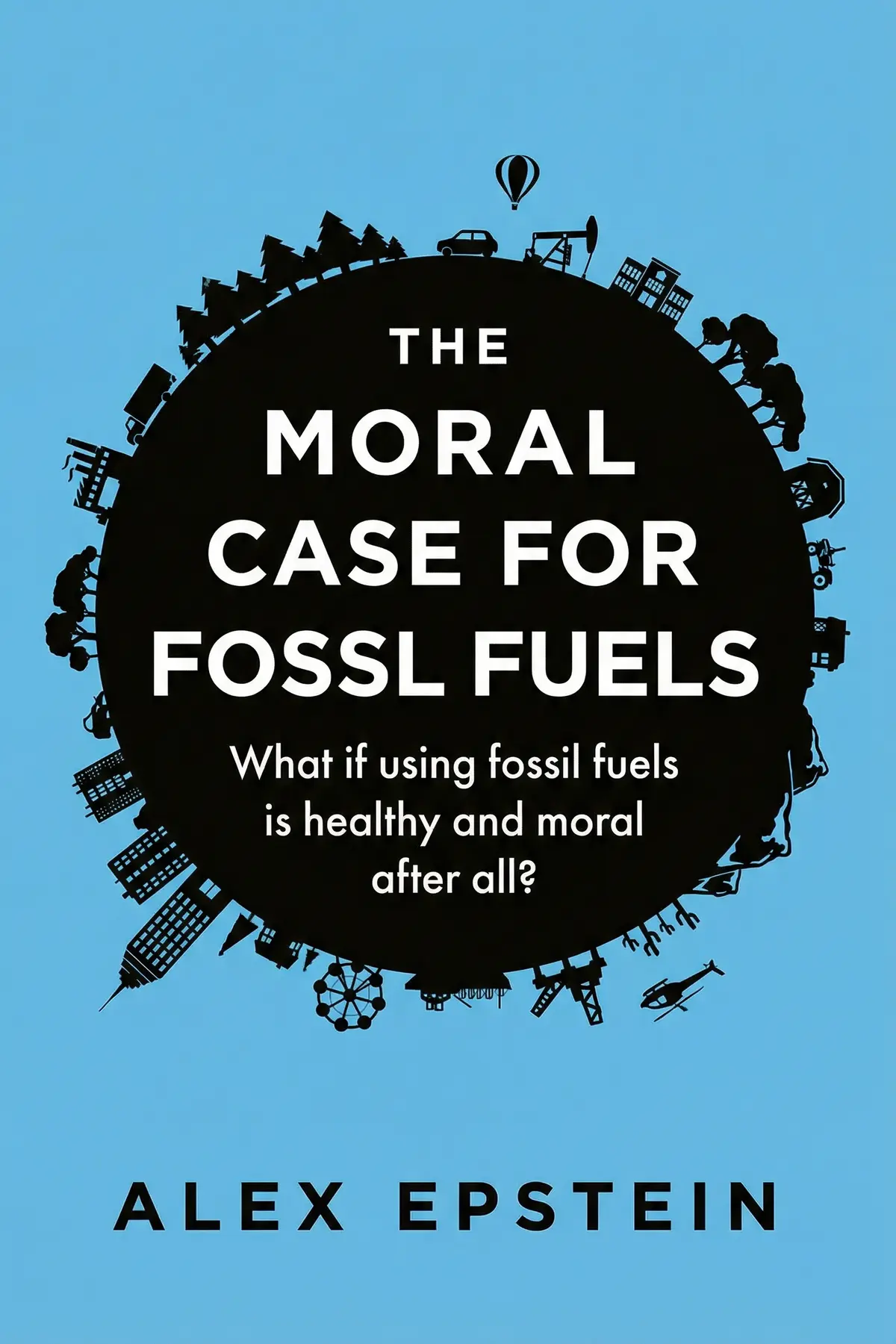
Table of Content
1. Introduction
1 min 02 sec
If every headline leaves you feeling guilty when you fill a tank or switch on the air conditioning, Alex Epstein wants you to look at the other side of the ledger. In The Moral Case for Fossil Fuels, the energy theorist offers one striking comparison: deaths from droughts, floods and extreme temperatures fell from more than five million in 1932 to under thirty thousand in 2013. He gives machines and buildings powered by coal, oil and gas much of the credit for that fall.
His argument is that energy should be judged by what it does for human lives. Measured that way, Epstein says, fossil fuels feed people, shelter them and fill their homes. Their dangers can be managed, and today’s green options are still too costly and unreliable to replace them. So for now, he concludes, using them is the moral choice. Whether or not you agree, his case gives you a clear test for weighing any claim about energy, along with the numbers his side of the debate rests on.
2. Judge energy by the lives it improves
1 min 48 sec
Most arguments about energy keep only one column of the accounts. Epstein insists on filling in the other one, and the items he lists start at your dinner plate and end at the chair you are sitting on.
3. See what makes power truly cheap and dependable
1 min 36 sec
Sunshine and wind arrive free of charge every day, while oil has to be found, drilled and refined. Epstein explains why the free option can still cost more, and why price is only half of his test.
4. Manage the risk and keep the benefit
2 min 00 sec
London during the Industrial Revolution choked on coal smoke, yet its air was cleared by switching homes over to electricity, not by giving up energy. Epstein uses that history, and a famously feared power source, to argue that frightening dangers are often smaller than they look.
5. Read climate headlines through a human safety lens
1 min 59 sec
Between 1932 and 2013, one category of deaths fell by more than 99 percent. Epstein builds his most provocative argument on that number, and it changes which question he thinks a climate debate should ask.
6. See what green alternatives cannot yet deliver
1 min 53 sec
Calls to switch to renewables right away assume two things: that coal and oil are running out, and that something better is ready. Epstein tests both assumptions and finds a problem with each one.
7. Conclusion
1 min 19 sec
Epstein’s title carries his real argument in its first adjective. He measures energy by one standard: whether it helps people live better fed, better sheltered and safer lives. By that standard he finds fossil fuels not merely acceptable but right to use. The image he most wants readers to keep is the collapse in deaths from droughts, floods and extreme temperatures. To him, it shows people growing safer from nature while burning more fuel.
He does not claim these fuels must be used forever. His view is that the earth’s reserves buy time for better sources to mature. Until then, a world that relies so heavily on their energy is right to keep using them.
You do not have to accept every claim to take something useful from his case. The next time an energy debate comes up at work or at dinner, put the benefits next to the costs before you judge. Ask what a source costs from start to finish, and whether it delivers power when people need it. And when someone raises a risk, whether bone-dissolving acid or London’s old smog, ask how it could be managed before deciding that the activity must end. For Epstein, any honest answer about energy starts with the people who depend on it.
About this book
What is this book about?
Most public talk about coal, oil and gas lists their harms: pollution, spills and a warming planet. Alex Epstein asks readers to judge them by a different standard. What, he asks, does an energy source do for the people who use it? By that measure, he argues, fossil fuels come out far ahead. They power the fertilizers, irrigation, machines and transport behind modern farming. They supply the raw material for dozens of everyday objects. He credits them with a fall of more than 99 percent in deaths from droughts, floods and extreme temperatures between 1932 and 2013. In his view, their risks can be managed, as earlier generations managed coal smog. He also claims that the earth's reserves could last about 3,050 years. Epstein then looks at the alternatives one by one, from solar and wind to biomass and hydropower. He concludes that none of them is yet cheap, reliable or plentiful enough to meet the world's needs. Readers come away with his full case, a clear test for weighing any energy claim, and the specific numbers this side of the debate relies on.
Book Information
Who it's for
Professionals following energy debates
Professionals who keep hearing energy debates and want the strongest case for coal, oil and gas in one place.
Business leaders weighing risk
Founders and managers in energy, farming or industry weighing costs, reliability and risk.
Curious about opposing numbers
Readers on either side of the climate debate who want to know the other side's numbers.
About the Author
Alex Epstein
Alex Epstein is an American author and energy theorist. He founded the Center for Industrial Progress, a think tank that operates for profit. The Moral Case for Fossil Fuels became a New York Times bestseller, and he is also the author of Fossil Future. In The Moral Case for Fossil Fuels he argues that using fossil fuels more widely can give more people access to affordable, plentiful energy. He was previously an adjunct scholar at the Cato Institute and a fellow at the Ayn Rand Institute.
Ratings & Reviews
Ratings at a glance
What people think
Listeners describe this work as exceptionally engaging and persuasive, noting its detailed investigation and fact-based, rational delivery. They value the even-handed perspective on the fossil fuel sector and the way it challenges common myths surrounding the field. This title offers straightforward insights and stimulating material, with one listener mentioning that it shifted their outlook on the intersection of energy and morality. There is a lack of consensus among listeners regarding climate change, as some contend that global warming is a deceptive claim.
Top reviews
Tanawan
After hearing Epstein on a podcast, I decided to see if his written arguments held up as well as his verbal ones. The core premise—that we should evaluate energy based on a standard of human flourishing—is incredibly powerful. Instead of treating nature as a pristine relic to be left untouched, he argues for using our environment to improve life for all seven billion people. It’s a very readable, logical presentation that challenges the idea that fossil fuels are a necessary evil rather than a net good. I appreciated the thorough research into how energy reliability actually impacts developing nations. While he does mention his love for Brazilian jujitsu a couple of times, it doesn't detract from the central, rigorous argument. This book really helped me re-center my perspective on ethics and industrial progress.
Show moreMoon
Finally got around to reading a book that doesn't just parrot the status quo regarding our energy future. Epstein makes a compelling, fact-based case that fossil fuels are the primary driver of the safety and comfort we enjoy today. The way he flips the script on "environmental" health by showing how much safer we are from climate-related deaths than we were 100 years ago is eye-opening. To be fair, he is quite aggressive toward the "non-impact" movement, but his logic regarding the unreliability of wind and solar is hard to argue with. I found the section on how fossil fuels empower us to "master" our environment particularly inspiring. It’s a quick read but one that will leave you questioning everything you hear on the nightly news. Highly recommended for anyone willing to have their mind changed.
Show moreTantipat
Wow, what a refreshing perspective on energy and ethics that I haven't seen anywhere else. Epstein is a first-rate writer who knows how to break down complex industrial concepts into something digestible for the average reader. He successfully rebuts the popular misconception that our environment is getting "dirtier" by pointing to real-world data on air and water quality. Frankly, it’s about time someone spoke up for the billions of people in the developing world who need this energy to escape poverty. It is a very trim book, but every page is packed with insights that challenge the doomsayer's narrative. This is the kind of book you want to give to your skeptical friends just to see their reaction.
Show morePick
The chapter on the fertilizer effect really opened my eyes to how narrow our public discourse on CO2 has become. Epstein presents a thorough, well-researched case that actually looks at the "big picture" of energy rather than just the negatives. Truth is, most people haven't considered how fossil fuels make us more resilient to nature, not less. He uses clear graphs to show how climate-related deaths have plummeted even as we use more oil and coal. Some might find his tone a bit arrogant, but when you’re dismantling decades of misinformation, I think a little punchiness is justified. This book is a boon to anyone who values a balanced, fact-based view of the industry. It helped me shift my perspective from guilt to gratitude.
Show moreKai
Look, we need to stop feeling guilty for the very resources that keep us alive and thriving. This book is a scathing rebuttal of the movement that wants to see us return to a state of nature that was actually quite brutal for humans. Epstein argues that the "natural" climate is actually dangerous and that fossil fuels allow us to make it safe. The logic is tight, the presentation is compelling, and the moral clarity is something we desperately need in 2024. Personally, I found the discussion on "scaling" energy particularly important—solar and wind just don't have the density to support a modern civilization yet. It’s a bold, provocative title that delivers exactly what it promises on the cover. Don't let the critics scare you away from this one.
Show moreParichat
Epstein, an outsider with a background in philosophy, manages to strip away the jargon and focus on what actually matters: human life. He provides an incredible demonstration of how to reframe an entire industry not as a necessary evil, but as a moral imperative. By focusing on the unique benefits of fossil fuels—reliability, portability, and low cost—he makes the "green" alternatives look like expensive toys. I appreciated how he addressed the specific ways fossil fuels provide clean water and high-yield crops to billions. My only minor criticism is that he can be a bit repetitive with his "human-centered" mantra toward the end. Still, if you only read one non-fiction book this year to understand the world's energy needs, let it be this one.
Show moreLayla
This book provides a much-needed counterweight to the mainstream environmental narrative that often ignores the benefits of industrialization. As a philosopher, Epstein doesn't just argue about carbon parts-per-million; he argues about what we should actually value as a species. I liked his distinction between an untouched environment and a "human-friendly" environment filled with hospitals and clean water. However, I’ll admit I wasn’t convinced by every single point, especially his dismissal of potential long-term ecological tipping points. He tends to brush off valid concerns about biodiversity as merely "emotional" or "anti-human." Still, the central argument that we need cheap, reliable, scalable energy to survive is undeniably true. It’s a thought-provoking content piece that forces you to defend your own moral axioms.
Show moreOwen
As someone who appreciates a good philosophical challenge, I found Epstein’s framing of the "non-impact" vs. "human flourishing" standard quite compelling. He writes with a clarity that is rare in the energy sector, avoiding unnecessary jargon to focus on core moral principles. Gotta say, the occasional references to his Brazilian jujitsu training were a bit odd for a book on energy, but they added a human touch to the narrative. While I agree that fossil fuels are essential for modern life, I felt he was a bit too dismissive of the risks associated with rapid warming. He treats climate volatility as a minor hurdle we can simply "innovate" our way out of without much evidence. Nevertheless, the book is an excellent demonstration of how to reframe a debate from the ground up.
Show moreAnucha
Ever wonder if an author is just ignoring the elephant in the room? While Epstein is a gifted communicator, his "human-centric" value system feels like a license to exploit the planet until there's nothing left. He mocks Malthusian predictions of the past to suggest that future resource exhaustion is a myth, which is a massive logical leap. The truth is, his vision of the world begins in the 1800s and treats everything before that as a dark age of cave-dwelling. I found his attacks on the "2 degrees Celsius" threshold to be more about semantics than actual safety. Even if you agree that fossil fuels helped us develop, that doesn't mean doubling down on them forever is a sound strategy. This book feels like it was written for people who already want to believe that consumption has no consequences.
Show moreFah
Not what I expected, and frankly, quite dangerous in its intellectual dishonesty. Epstein uses his background in philosophy to construct elaborate straw man arguments against anyone who values environmental preservation. My biggest gripe is the constant confusion of correlation with causation; just because life expectancy rose alongside CO2 emissions doesn't mean the emissions caused the health gains. He conveniently ignores the role of regulation and medical breakthroughs while painting a picture where we "owe an apology" to oil companies. The dismissal of climate models as purely "unscientific" felt incredibly shallow for someone claiming to be a rigorous thinker. It’s a polished piece of propaganda that relies on the reader not knowing basic statistics or history. If you value actual scientific consensus over slick rhetoric, skip this one.
Show moreQuestions about this book
What is the main argument of The Moral Case for Fossil Fuels?
Alex Epstein argues that energy should be judged by its effect on human lives. By that standard, he says, fossil fuels are moral to use. They make food, goods and shelter cheap and plentiful, their risks can be managed, and green alternatives such as solar, wind, biomass and hydropower are still too costly, unreliable or limited to replace them. He believes the earth’s reserves will last long enough for better sources to be developed.
What does Alex Epstein say about climate change?
Epstein argues that the planet is warming only slightly and that the change may even help, for example by making the earth more fertile. He calls much public talk about climate inaccurate or dishonest. His main evidence is that deaths from droughts, floods and extreme temperatures fell from 5,073,283 in 1932 to 29,404 in 2013. He credits this drop to durable buildings, heating and air conditioning powered by fossil fuels.
Why does Epstein think solar and wind cannot replace fossil fuels?
He judges energy by the cost of the whole process and by whether it arrives on demand. Sunlight and wind are free, but in his view the equipment needed to capture them is complicated and expensive. Nobody can control when the sky is clear or the wind blows. He adds that biomass competes with food for scarce farmland, and that the United States has no suitable rivers left to dam for hydropower.
Are fossil fuels running out, according to the book?
No. Epstein cites research suggesting the earth holds enough fossil fuel for about 3,050 more years, though much of it is hard to reach with current technology. He expects better extraction methods to appear over that span. He also notes that coal and gas can be turned into additional oil, because every fossil fuel is a hydrocarbon, built from hydrogen and carbon.
How can I apply the ideas in The Moral Case for Fossil Fuels?
Use Epstein’s tests whenever you meet a claim about energy. Put the benefits for people beside the costs. Ask what a source costs from discovery to delivery and whether it supplies power when it is needed. When someone raises a risk, ask how it could be reduced before concluding that the activity should stop, much as London replaced household coal with electricity after 1882.
Readers also enjoyed

Abolish Rent: How Tenants Can End the Housing Crisis
Tracy Rosenthal

Abortion: Our Bodies, Their Lies, and the Truths We Use to
Jessica Valenti

Adults in The Room: My Battle With Europe’s Deep Establishment
Yanis Varoufakis

21 Lessons for the 21st Century
Yuval Noah Harari

A Different Kind of Power: A Memoir
Jacinda Ardern

Age of Anger: A History of the Present
Pankaj Mishra
A Higher Loyalty: Truth, Lies and Leadership
James Comey

Age of Propaganda: The Everyday Use and Abuse of Persuasion
Anthony Pratkanis
AUDIO SUMMARY AVAILABLE
Listen to The Moral Case for Fossil Fuels in 15 minutes
Get the key ideas from The Moral Case for Fossil Fuels by Alex Epstein, plus 5,000+ more nonfiction titles.
- 5,000+ titles
- Listen as much as you want
- 7-day free trial
- Cancel anytime









