

A Promised Land
Barack Obama
 English
 ไทย
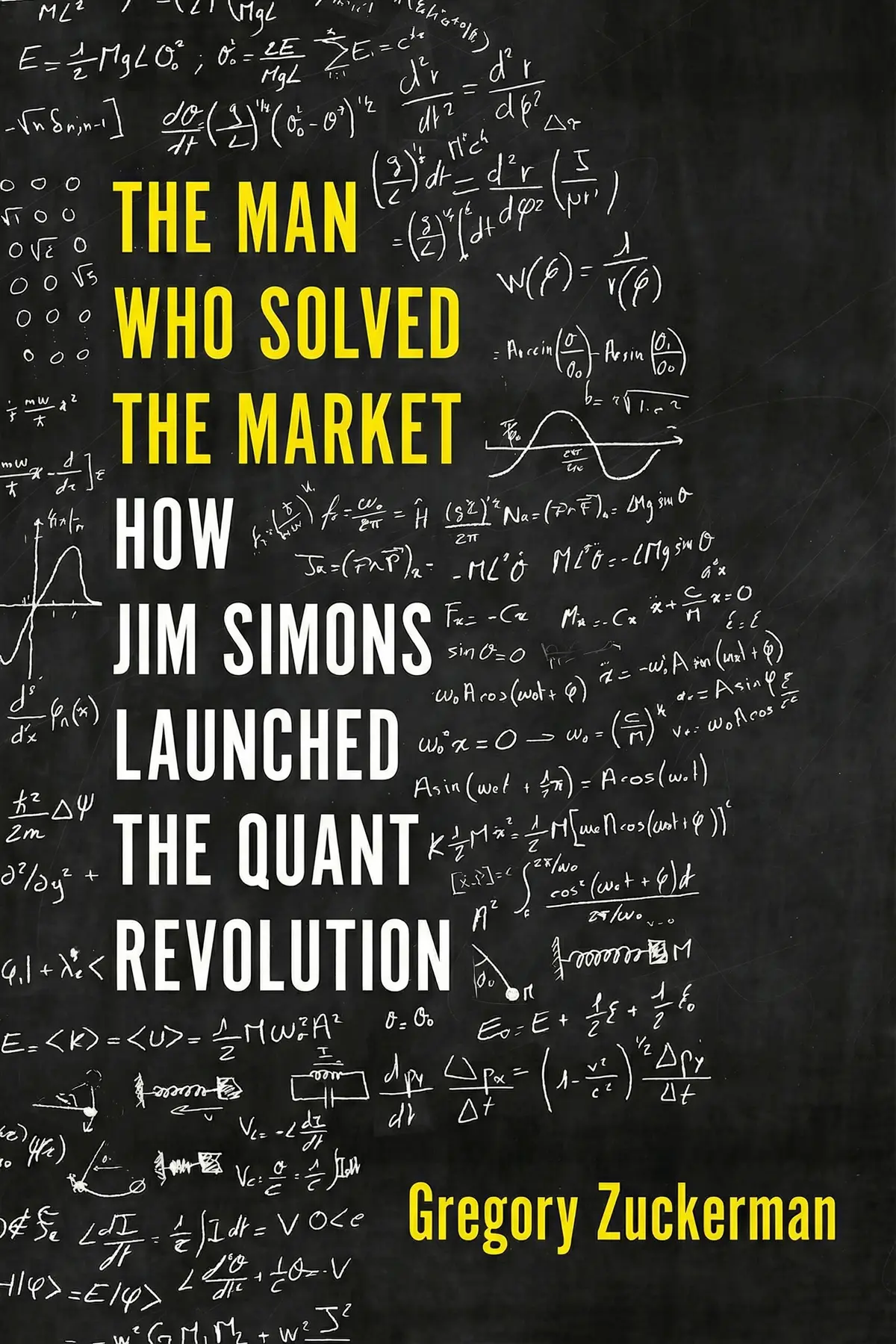
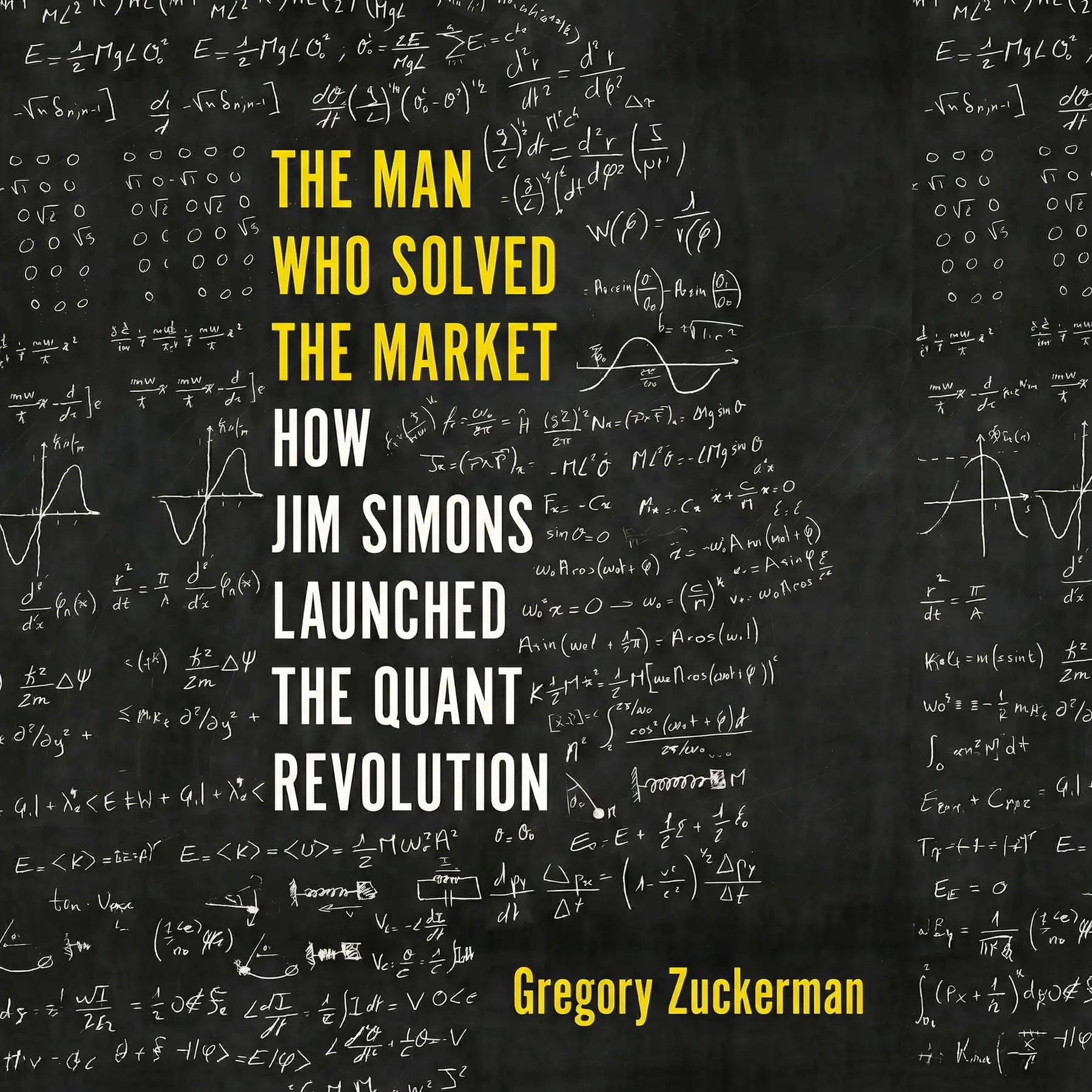
The story of how a code-breaking geometer turned the markets into a mathematics problem. Jim Simons hunted patterns in price data with algorithms and computers, built the best record in investing, and changed how industries forecast.
1 min 00 sec
Markets look like noise to most people. Jim Simons saw shapes in them, like shoals of fish or a distant nebula, with mathematics underneath that could predict where they would go next. In The Man Who Solved the Market, Wall Street Journal writer Gregory Zuckerman tells how that conviction made Simons the most successful investor of modern times, by way of childhood arithmetic, prize-winning geometry and Soviet code-breaking.
The story proves one thing. Simons won by refusing to ask why markets move, treating them instead as a code that data, mathematics and computing power could read. That bet produced a fund with annual returns above 66 percent. It also brought crushing early losses, private doubt and a partner whose politics turned into a crisis. Follow it and you can explain the quant revolution to a friend, and borrow a few of its habits of thought for the hard problems on your own desk.
1 min 43 sec
A four-year-old on a family car trip worked out a puzzle that ancient Greek philosophers argued over. Years later, one late-night scene in a café told him exactly what kind of life he wanted.
1 min 50 sec
A secret Cold War agency had failed for over a decade at its main job. Its fix was to hire people with no code-breaking experience for their sheer brainpower, and one of them became its star.
1 min 40 sec
A soap film on a wire frame made Simons famous among mathematicians. At the same time he was sketching a way to bet on stocks that ignored everything other investors thought mattered.
1 min 46 sec
A tool that could guess the next play in a baseball game without knowing the rules ended up on the walls of a strip-mall office. Then a day at the beach paid off in millions.
1 min 44 sec
Simons named his fund after a novel about a sailor who abandons a sinking ship. When the losses came, he found himself lying on his office couch, comparing himself to that sailor.
1 min 56 sec
Simons bought up decades of old price records, and history turned out to be a weak guide. The answer that worked cost a fortune and gave his firm a view no rival had.
1 min 41 sec
A quiet programmer with a dry sense of humor helped drive the firm’s great success through the 1990s. His beliefs, formed years earlier in a government lab, eventually cost him his job at the top.
1 min 26 sec
Zuckerman likens Simons to the Medici, the banking family whose fortune shaped politics and art in Renaissance Italy, and the comparison fits. No trading legend has matched his profits, and that includes Ray Dalio, Steve Cohen, Peter Lynch, George Soros and Warren Buffett. In recent years Renaissance has earned about 7 billion dollars a year in trading gains, more than the annual revenue of Levi Strauss, Hyatt Hotels or Hasbro, and Simons is worth around 23 billion dollars.
His methods traveled further than his money. Professional sports teams everywhere now crunch statistics at scale. Armies rely more and more on robots, doctors use computers to help diagnose illness, and algorithms drive forecasting almost everywhere. Like the Medici with their painters and scholars, Simons also became a patron, funding the Simons Foundation’s work in education and health, the Math for America initiative, healthcare in Nepal and large gifts to Stony Brook.
For an ordinary career, what carries over is a habit of mind. Watch what actually happens before insisting on knowing why. Let outsiders bring their bad ideas to your hardest problem, and expect a bold move to look like a mistake for a while. The boy who could not see why a gas tank would ever run dry grew into a man who read the markets’ smallest tremors.
Most investors study companies, read the news and trust their instincts. Jim Simons did none of that. A gifted mathematician who had cracked Soviet codes and won fame for his geometry, he decided that the markets were just another system of hidden patterns. You did not need to know why prices moved. If you had enough data, the right mathematics and fast enough computers, you could predict the moves. Gregory Zuckerman follows Simons from a toddler halving numbers to a Long Island strip mall with graphs and charts on the walls, and from there to Renaissance Technologies and its Medallion fund. Medallion went on to post annual returns above 66 percent and more than 100 billion dollars in trading profits. The road was not smooth. There were punishing losses, a founder who wondered whether he knew what he was doing, and a star colleague, Robert Mercer, whose political spending forced him out of the firm. Readers get a clear account of how the quant revolution began, why its methods spread from finance into sports, medicine and the military, and what habits of thought made it possible.
Investors and finance professionals who want to know how quantitative trading began.
Engineers, analysts and data scientists curious about pattern-finding methods that moved from code-breaking to Wall Street.
Academics or specialists weighing a leap into business who want an honest picture of the doubts along the way.
Gregory Zuckerman is an American investigative journalist and a Special Writer at The Wall Street Journal, where he has covered finance, investing and business since 1996, after reporting on media companies at the New York Post. He has won the Gerald Loeb Award three times. His other books include The Greatest Trade Ever, The Frackers and A Shot to Save the World, and The Man Who Solved the Market became a best seller on both the New York Times and Wall Street Journal lists.
Listeners find this work absorbing and expertly crafted, especially appreciating the intriguing chronological narrative and deeply investigated material regarding the premier financial geniuses of the modern era. Additionally, the character studies earn praise, with one listener specifically pointing out the valuable perspectives on algorithmic trading. On the other hand, opinions are divided regarding the book’s cost-effectiveness and political themes; some view it as a valuable purchase, whereas others feel it is a poor use of funds and too politically charged.
This book offers a masterclass in narrative non-fiction, chronicling the rise of Jim Simons and his band of eccentric geniuses. Zuckerman excels at spinning a complex timeline into a gripping story that feels more like a thriller than a financial history. While many writers would get bogged down in dry data, the author focuses on the human element, showing how a group of mathematicians and code-breakers essentially conquered Wall Street. I found the transition from academic theory to the high-stakes world of Renaissance Technologies to be particularly fascinating. It’s a well-researched piece of work that sheds light on the greatest financial minds of this century without requiring a PhD to understand. Though the "winning formula" remains a closely guarded secret, the insights into the shift toward computerized investing are invaluable. If you enjoy deep-dive biographies that focus on how individuals change an entire industry, this is an essential read.
Show moreEver wonder how a bunch of code-breakers and academics managed to humble the titans of Wall Street? Zuckerman provides the answer through a brilliantly researched timeline that explores the philosophy of empiricism over rationalism. The most striking part was learning how Simons and his team ignored the "why" of the market and focused purely on the "what." They found patterns in the noise that no human eye could ever detect. This book convinced me that the efficient market hypothesis is flawed because humans are simply too emotional to be rational. The writing is snappy and the pacing is excellent, making it one of the most engaging finance books I’ve read in years. It’s a testament to the power of data and the brilliance of those who know how to listen to it. Highly recommended for anyone curious about the birth of the quant era.
Show moreAs someone who has always been skeptical of the 'efficient market' theory, Zuckerman’s account was incredibly validating. He shows how Renaissance exploited the inherent irrationality of human traders through sheer computational power and relentless data-mining. The truth is, the machine is immune to the cognitive biases that plague even the most seasoned Wall Street veterans. I found the sections on how they sourced non-traditional data sets to be the most enlightening part of the book. It’s a well-written, fast-paced journey through the evolution of modern finance. Zuckerman is a superb spinner of complex stories, and he manages to make the world of high-frequency trading feel human and relatable. Whether you're an industry insider or a layman, there's a lot to gain from this. It’s a fascinating look at the personalities who turned the financial world into a giant math problem and actually solved it.
Show moreWow, Zuckerman really pulled back the curtain on one of the most secretive and successful firms in history. The timeline is fantastic, tracing the path from Simons’ work as a code-breaker to the creation of the Medallion Fund. It’s a relief to read that even the employees were skeptical of their own success at first, only to realize the numbers were 100% genuine. The book does a great job of explaining that removing human error from investing doesn't eliminate human conflict from the office. I was gripped by the rivalry between the mathematicians and the traditional traders. The insights into computerized investing and the use of massive data sets are eye-opening for anyone who thinks they can beat the market with a spreadsheet. This is easily one of the best finance books of the decade. It is a brilliant, well-researched, and highly engaging story about the power of the human mind—and the machines it creates.
Show morePicked this up expecting a technical manual on quantitative trading, but I found a compelling character study instead. Look, if you’re looking for actual mathematical formulas or a blueprint to build your own algo, you’ll be disappointed. Zuckerman focuses instead on the personalities, specifically the duo of Brown and Mercer and their background in natural language processing at IBM. It’s fascinating to see how they applied linguistic patterns to market fluctuations. To be fair, the book does get a bit bogged down in the middle with a revolving door of secondary characters who are hard to distinguish from one another. However, the overall story of how they maintained their edge while rivals like Long-Term Capital Management crashed is worth the price of admission. It’s a solid, engaging account of the quants' takeover of the financial world, even if it skips the nitty-gritty math.
Show moreFinally got around to reading this after hearing colleagues rave about it, and it mostly lived up to the hype. The book provides an excellent biography of Simons, but the real stars are the internal dynamics and the political factions that developed within Renaissance. It’s a fascinating look at how even the smartest people in the room can succumb to ego and rivalry. My only gripe is that the author is sometimes overly dramatic about minor trading losses, acting like the firm was on the brink of collapse when they were still up 20% for the year. It feels like a forced attempt to create tension where the data shows none existed. Still, the insight into how they used Markov chains and price ratios is fascinating. It’s a worthwhile investment for those interested in the intersection of math and money, provided you can ignore the occasionally sensationalist tone.
Show moreThe chapter on the 2007-2008 financial crisis really highlights the tension between mathematical models and human panic. I loved the anecdote about Simons wanting to override the algorithms during a market dip, only to be held back by his own team. It shows that even the man who "solved" the market still felt the primal urge to panic sell. Zuckerman does a great job illustrating the move from old-school chartism to modern artificial intelligence. While the book lacks a "cast of characters" page—which would have been helpful given the dozens of PhDs introduced—the central narrative remains clear. The writing style is accessible and the sentences flow well, making for a quick read. It’s a fascinating story of how intellectual arrogance was replaced by data-driven humility. Even with the slightly distracting political segments, the core story of Renaissance Technologies is well worth your time.
Show moreTo be fair, the title is a bit of a marketing gimmick because the book isn't just about Jim Simons. After the first few chapters, the focus shifts heavily toward Robert Mercer and Peter Brown, which might throw off readers looking for a pure biography. I was hoping for more industrial context on technical analysis and why Renaissance’s models succeeded where others failed so miserably. Instead, we get a lot of fluff about the brand of cigarettes Simons smoked and mundane details about office lunches. The detour into 2016 politics and Mercer’s donations felt like it belonged in a completely different book, making the final third a bit of a slog. It’s not a bad read, but it feels like the author was stretching thin material to fill pages. If you like year-by-year event logs, you'll enjoy it, but don't expect deep market secrets.
Show moreAfter hearing so much hype, I found the final product to be a bit of a mixed bag. On one hand, the early years of Simons’ career and his mathematical achievements are genuinely interesting. On the other hand, the book eventually devolves into a series of anecdotes about workplace grievances and political donations. I missed being presented with more industrial context regarding how Renaissance's short-term tactics differed from traditional value investing. The author focuses so much on the secrecy of the firm that he ends up filling the gaps with useless trivia. It’s a bit frustrating to read about "stolen code" without ever getting a clear explanation of what that code actually did or how the theft was resolved. If you enjoy character-driven biographies, you might like this, but if you want to understand the 'how' of the market, you might want to look elsewhere.
Show moreNot what I expected at all, and frankly, quite a disappointment for someone looking for actual substance. I've been interested in quantitative analysis for years, yet I learned almost nothing new about the actual mechanics of RenTech’s success. The author seems obsessed with trivialities like how tall the employees were or what they played in poker games. Why do I need to know about the personal lives of the employees' children? The whole narrative feels like listening to a grandpa's story where he skips every interesting technical fact to talk about his old friends. Then, in the end, we get a massive dump of political commentary that feels totally out of place. This book is dangerously close to being a waste of time for anyone who actually works in the industry. It’s mostly gossip and very little insight, which is a shame given the subject matter.
Show moreGregory Zuckerman tells the story of Jim Simons, a mathematician and former Cold War code-breaker who founded Renaissance Technologies. Instead of studying company earnings or news, Simons treated markets as patterns in data and used algorithms and computers to predict price moves. His Medallion fund posted annual returns above 66 percent and more than 100 billion dollars in trading profits, the best record in investing.
Simons ignored why prices moved and looked only at the movements themselves. With partner Leonard Baum he applied the Baum-Welch algorithm, which estimates probabilities from a chain of events without knowing its rules. Renaissance gathered huge amounts of historical data, then bought fast computers and live market feeds, and algebraist James Ax refined the mathematics to handle volatile markets.
Mercer, a former IBM coder, helped make Renaissance successful in the 1990s and rose to co-CEO. He also funded right-wing causes, including Breitbart, and backed Donald Trump’s 2016 presidential campaign. Investors reacted with fury, and Mercer had to step down. According to the book, Simons, a long-time Democratic donor, is thought to have made the final decision.
The book points to several habits. Describe the patterns you can observe before arguing about causes, as Simons did with his early eight-state market model. Bring outsiders onto stuck problems, as the code-breaking institute did when it hired mathematicians with no experience. And expect doubt after a big move: Simons faced daily losses of millions before his computer-driven approach paid off.
It suits investors and finance professionals curious about the roots of quantitative trading, and data-minded readers interested in how a mathematician and former code-breaker used computers and algorithms to reshape Wall Street. It also speaks to anyone considering a leap from a secure career, since Simons left academia for finance and openly doubted himself through the fund’s early losses.
Barack Obama


Masaji Ishikawa
Andrew Ross Sorkin

Ben Macintyre


Ha-Joon Chang

James Shapiro
Niall Kishtainy
AUDIO SUMMARY AVAILABLE
Get the key ideas from The Man Who Solved the Market by Gregory Zuckerman, plus 5,000+ more nonfiction titles.









