

Acting with Power: Why We Are More Powerful Than We Believe
Deborah Gruenfeld
 English
Uses a study that followed bright children from 1921 onward to show which traits, relationships and life choices predicted a long life, and why carefulness and close bonds mattered more than cheerfulness.
1 min 09 sec
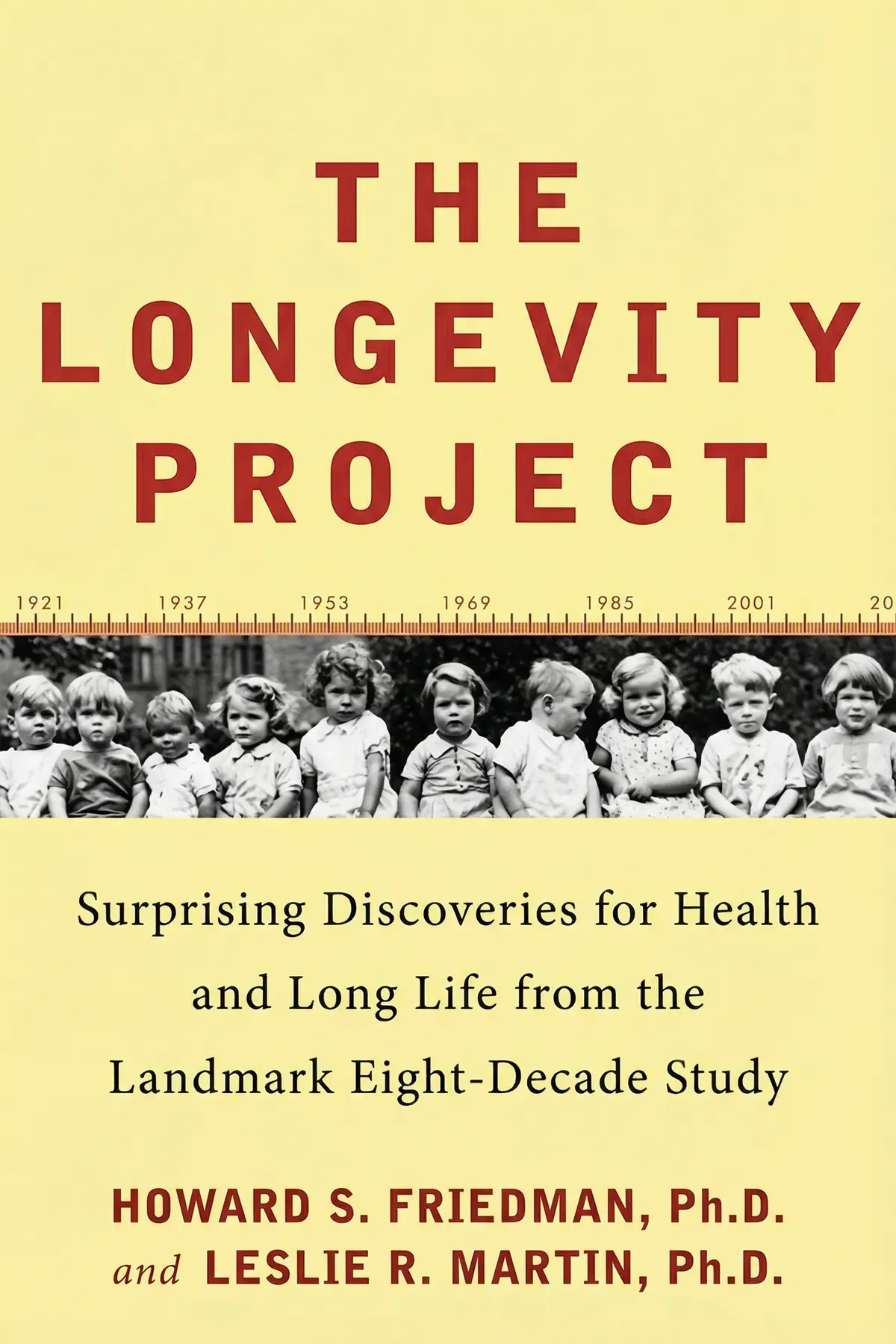
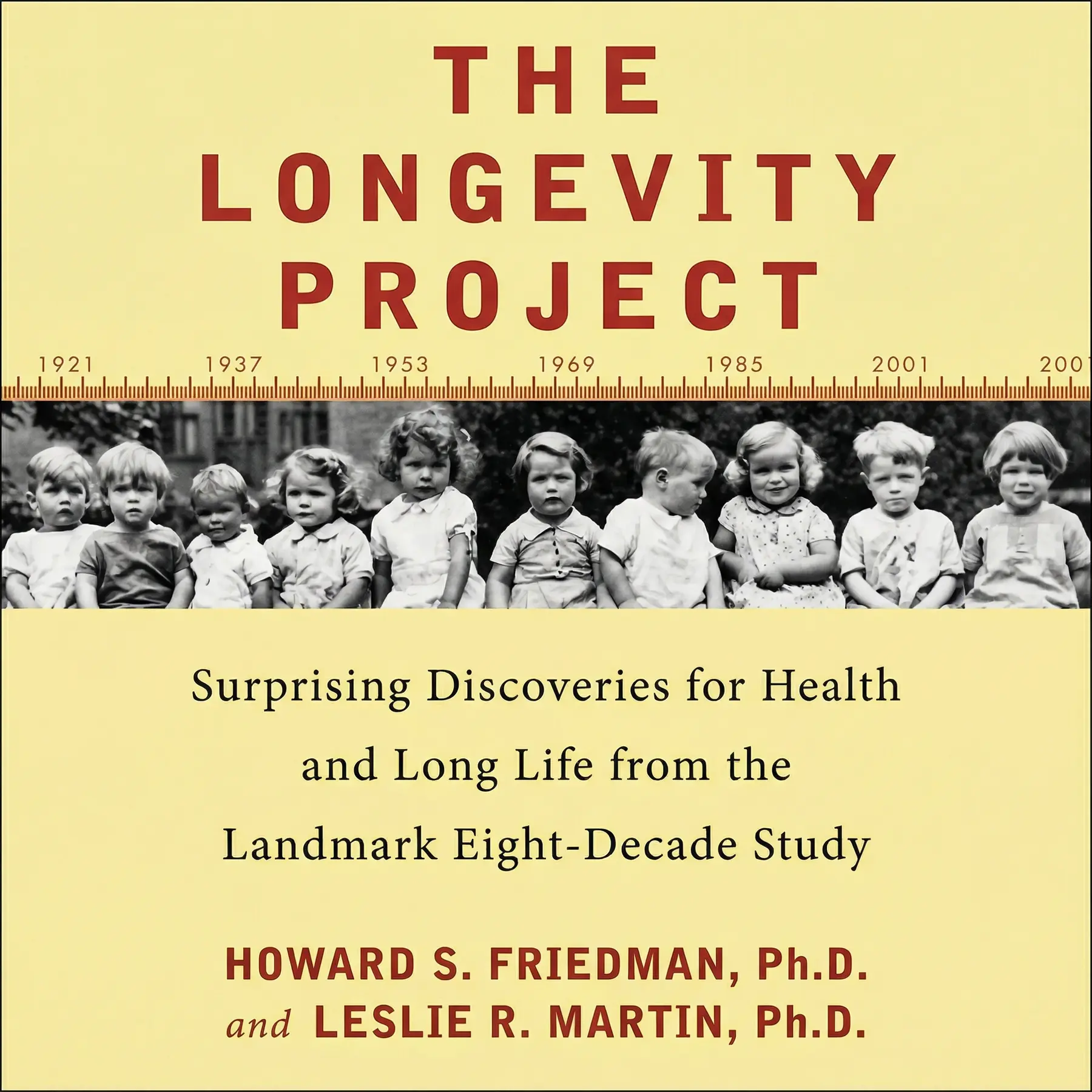
Most advice about living longer focuses on food and exercise. Yet a landmark study that followed its subjects across eight decades found that a careful, conscientious personality predicted a long life better than a sunny one. In The Longevity Project, psychologists Howard S. Friedman and Leslie R. Martin draw that lesson from records begun in 1921. That year the psychologist Lewis Terman started following a group of unusually bright children, hoping to learn what makes a genius. He noted anything that seemed relevant, even how many books a child’s home held. The study outlived him, and in the 1990s the authors used it to answer an older question: who lives long, and why.
The authors’ answer is a whole way of living: persistence, real relationships, meaningful work and a sense of living up to your potential. You will hear why cheerful children often died sooner and why marriage protects men more than women. You will also see how to shape a long road of your own.
1 min 54 sec
The friend everyone teases for over-planning may have the last laugh. One boy in the study scored near the bottom on this trait, changed as he grew up, and his later years show what that change was worth.
1 min 52 sec
Laughter is supposed to be the best medicine, yet the most cheerful children in the study did not live the longest. The reason says a lot about the difference between a good mood and a good life.
1 min 46 sec
One event in childhood predicted an early death better than any other social factor the authors examined, decades before it happened. Some children still lived long lives, and the quality that protected them can be built.
2 min 03 sec
Married men lived far longer than divorced ones, yet remarrying did not restore the advantage. For women the numbers told another story, one that challenges a popular piece of advice about marriage and a longer life.
1 min 55 sec
A devout woman and a man who almost never went to church both lived long lives, while a third participant did not. What separated them had little to do with prayer.
2 min 04 sec
One woman planned carefully, married well and lived into her nineties. Another never married, followed her passions and also lived long. Their stories point to shared themes, and to one habit of mind worth breaking.
1 min 13 sec
The children Lewis Terman chose in 1921 were meant to explain genius. Followed for eight decades, they ended up explaining something most people care about more: who gets to grow old. As Friedman and Martin read the evidence, the answer is unglamorous. The long lives in the study belonged to people who kept going, kept their promises, stayed close to a few others and found work and interests worth getting up for. Cheerful, carefree Paul did not outlast them. Donna’s early losses shaped her years, and James’s change of habits lengthened his.
That puts longevity within reach of ordinary choices, made again and again. You can act on it this week. Pick one area of life where you tend to be careless and become the reliable one there. Move a good habit into time you already spend with friends, so it happens without effort. Give an hour to someone you would call in a crisis. And when a bad day starts to feel like a ruined life, notice the thought, stop it and replace it.
James did not start out careful. He became careful, and the years followed.
Most advice about living longer is about diet and exercise. Howard S. Friedman and Leslie R. Martin take a different route. They go back to records first gathered in 1921, when the psychologist Lewis Terman began following a group of unusually bright children to find out what makes a genius. Terman wrote down anything that seemed relevant, and the study kept going long after his death. Starting in the 1990s, the authors used it to ask a different question: what helps people live long? Several of their answers go against common belief. Careful, conscientious children tended to outlive cheerful, carefree ones. A parental divorce in childhood was the strongest social predictor of an early death, and resilience was what protected the children who still lived long lives. Marriage helped men far more than women. Religion helped mostly through the community it offered. Readers get a clear picture of the traits and choices that added years in real lives, told through participants like Patricia, James, Donna and Emma. The authors argue there is no single path, and they give practical themes for building your own: persistence, close relationships, goals that bring satisfaction and a way to stop catastrophic thinking.
Health-minded readers who want more than diet and exercise tips about living longer.
Adults from divorced families, or going through a divorce, who want to know what protects them.
Anyone curious about what an eight-decade study says about personality, marriage, faith and friendship.
Howard S. Friedman is a Distinguished Professor at the University of California, Riverside, and has spent thirty years studying which personality traits predict a long life. His honors include the James McKeen Cattell Fellow award from the Association for Psychological Science and a career award in health psychology from the American Psychological Association. Leslie R. Martin is a professor of psychology at La Sierra University in Riverside, California. She studies how doctors and patients interact and the psychosocial pathways that lead to health and long life.
Listeners find this book compelling and straightforward to follow, featuring well-crafted writing that explains scientific data in a reachable format. They view it as a gripping study that provides unexpected revelations about long-term health, and one listener points out its multi-generational research approach. Listeners value how the content provokes thought, with one review calling attention to its emphasis on psychological wellbeing and deep satisfaction with life.
Picked this up because I’m a sucker for long-term data and this didn't disappoint. The Longevity Project is probably the most comprehensive look at human lifespan I've ever encountered. It’s not just about what you eat; it’s about who you are. The authors present the multi-generational research in such a way that it feels like a narrative rather than a spreadsheet. I was particularly struck by the findings on how social connections within a community—not just having friends, but being part of a group—impacted the subjects' health. It’s a deep dive into psychological satisfaction. Personally, I found the self-quizzes throughout the chapters to be a fun way to engage with the material. This isn't just another health book; it’s a manual on how to build a life that lasts. Deeply satisfying and highly recommended for anyone interested in the intersection of psychology and biology.
Show moreWow, it’s rare to find a science book that actually feels hopeful without being cheesy. This book completely changed how I think about "health." It’s not just about the numbers on a scale or your blood pressure; it’s about the "life pathway" you choose. The way the authors track Patricia and John from their childhood in San Francisco all the way to their nineties is just captivating. It makes the science feel human. I loved the debunking of the "relax" myth—the idea that hard work and a bit of stress can actually keep you alive longer if you have a sense of purpose. This is a must-read for anyone who feels overwhelmed by traditional health advice. It's well-written, deeply researched, and genuinely fascinating. It’s the kind of book you want to buy for everyone in your family.
Show moreThis book does a remarkable job of taking eighty years of data and turning it into something readable. I was impressed by how Friedman and Martin managed to distill the complex Terman study into clear, digestible chapters without losing the scientific integrity. Most longevity books scream about green juice and marathons, but this one looks at the "conscientiousness" factor, which feels much more grounded. It’s fascinating to see how childhood traits ripple through decades to determine who survives into their nineties. To be fair, some of the conclusions about marriage and gender roles felt a bit dated, even with the modern analysis added in. However, the focus on psychological well-being as a driver of physical health is a perspective we desperately need more of. It’s a thought-provoking read that makes you reflect on your own life patterns. I particularly liked the sections on career satisfaction.
Show moreAfter hearing about the Terman study for years, I finally dove into the source material through this accessible adaptation. The authors do a great job of explaining why "don't worry, be happy" is actually terrible advice for staying alive. It turns out that a little bit of anxiety and a lot of persistence go a long way. I appreciated the nuance regarding marriage; specifically how it benefits men’s longevity more than women’s. That’s the kind of scientific honesty you don't usually see in mainstream health books. My only gripe is that the writing can feel a bit "pop-sciencey" at times, oversimplifying the statistics to make a point. But overall, it’s a fascinating study. It makes you realize that your long-term health is being shaped by choices you made back in elementary school. It’s a sobering but ultimately empowering perspective on aging gracefully.
Show moreFinally got around to finishing this, and the self-quizzes were definitely the highlight for me. It’s one thing to read about other people’s longevity, but it’s another to see where you fall on the conscientiousness scale. The authors have a very engaging style that makes the data feel personal. I was surprised by the section on physical activity—specifically that you don't need to be a gym rat as long as you stay naturally active throughout your life. It's a much more sustainable view of health than what we usually get. I did find the focus on "high-achievers" from the original 1921 group a bit limiting at times, but the authors acknowledge this. It’s a thought-provoking look at how our personalities dictate our survival. Definitely worth a read if you're interested in the "why" behind aging.
Show moreThe chapter on childhood divorce was a real eye-opener for me, especially the part about it having a bigger impact on longevity than the actual death of a parent. It’s these kinds of counter-intuitive findings that make The Longevity Project worth your time. The authors do a great job of focusing on psychological wellbeing as a core pillar of health, which is a refreshing break from the usual "eat your veggies" mantra. The book is well-organized and presents the scientific research in a way that anyone can understand. It’s a fascinating study that spans generations, offering a unique perspective on the long-term consequences of our habits and personalities. I did feel that some chapters dragged a bit, but the overall message is powerful. It’s a great reminder that longevity is a marathon, not a sprint, and our character is the engine.
Show moreEver wonder if your personality is actually your destiny? This book attempts to answer that by following 1,500 people from 1921 until their deaths. While the research is undeniably massive and impressive, I found the "surprises" to be a bit underwhelming. Basically, if you are reliable, stay active, and don't get divorced, you'll probably live longer. Not exactly earth-shattering news, right? Truth is, the writing is a little dry in the middle sections, and I found myself skimming the data points to get to the actual life advice. It’s an accessible study, but it lacks the punch of a truly transformative self-help book. If you like sociological history, you’ll enjoy it. If you’re looking for a quick hack to live to 100, you might feel like you’ve heard this all before. Still, the debunking of the "relax and don't work too hard" myth was quite refreshing.
Show moreThe truth is, some of these findings feel like common sense dressed up in lab coats. We know that being a reliable person with good relationships is better for you than being a reckless loner. Still, the multi-generational approach adds a layer of weight to those common-sense ideas. I enjoyed the bits about how childhood divorce affects kids decades later—it was heartbreaking but very insightful. However, the book struggles to stay engaging throughout its entire length. There’s a lot of "we found X, but Y was also true" which can get muddled. In my experience, it works better as a reference book than a cover-to-cover read. It's well-written enough, but it lacks the "wow" factor I was expecting from the title. A solid 3 stars for the effort and the historical value of the data.
Show moreAs someone who prefers audiobooks, I found the experience of this one a bit clunky because of the charts and quizzes. You really need the physical copy to get the most out of it. The information itself is solid, though. I wasn't familiar with the Terman study before this, so seeing how they followed 1,500 kids for eighty years was pretty mind-blowing. However, I agree with other reviewers that the "surprises" aren't all that surprising. Be a good person, work hard, and don't smoke. Who knew? Gotta say, the writing is clear, but it lacks a certain flair. It’s a bit dry. If you’re a data nerd, you’ll love the methodology. If you’re looking for a page-turner, this might be a bit of a slog. It’s important info, just not always delivered in the most exciting way.
Show moreLook, I really wanted to love this because the premise is incredible. Who wouldn't want to see the results of an 80-year study? But honestly, the transition from the 1920s data to modern-day application felt clunky and a bit forced. The sample size, while large for its time, was very specific to a certain demographic, which makes some of the broader claims feel less "universal" than the authors suggest. I found the tone to be a bit repetitive after the first few chapters. It felt like they were stretching a few core observations—be prudent, be persistent—into an entire volume. I'm not saying the info is bad, but it definitely didn't need to be this long. If you've read a few articles about the Terman study, you've basically read this book. It's more interesting as a historical curiosity than a practical guide.
Show moreHoward S. Friedman and Leslie R. Martin analyzed data from the Terman Study, which followed bright children from 1921 onward. They argue that long life comes from a whole way of living. Conscientiousness, persistence, close relationships, meaningful work and satisfaction with your life mattered more than cheerfulness or any single trick. There is no one path, but the long-lived participants shared these themes.
Not if happy means cheerful. In the Terman Study, the most cheerful children were less likely to live long, partly because as adults they smoked more, drank more and took up riskier hobbies. The authors separate cheerfulness from real happiness. For the long-lived participants, happiness came as a byproduct of strong relationships, a good career and interesting hobbies.
For men, a lot. Men who stayed married usually lived to at least 70, only a third of divorced men did, and none of the remarried men reached that age. For women, staying married or staying single after a divorce made little difference. A marriage helped women live longer only when it was a truly good one.
Build conscientious habits, even late, as James did when he rose from the bottom quarter to the top quarter on that trait. Fit healthy activities into time with friends. Invest in a few close relationships you can count on in hard times. Pursue goals that give you a sense of accomplishment. When catastrophic thoughts appear, recognize them, tell yourself to stop and replace them with positive ones.
Deborah Gruenfeld


Anthony Pratkanis




Richard Wiseman



AUDIO SUMMARY AVAILABLE
Get the key ideas from The Longevity Project by Howard S. Friedman, plus 5,000+ more nonfiction titles.









