

14 min 35 sec
Available in: English
The Locust Effect: Why the End of Poverty Requires the End of Violence
Shows why food, health and schooling aid cannot end poverty while poor people have no protection from violence, and how strengthening broken police and courts, as one Philippine project did, changes the outcome.
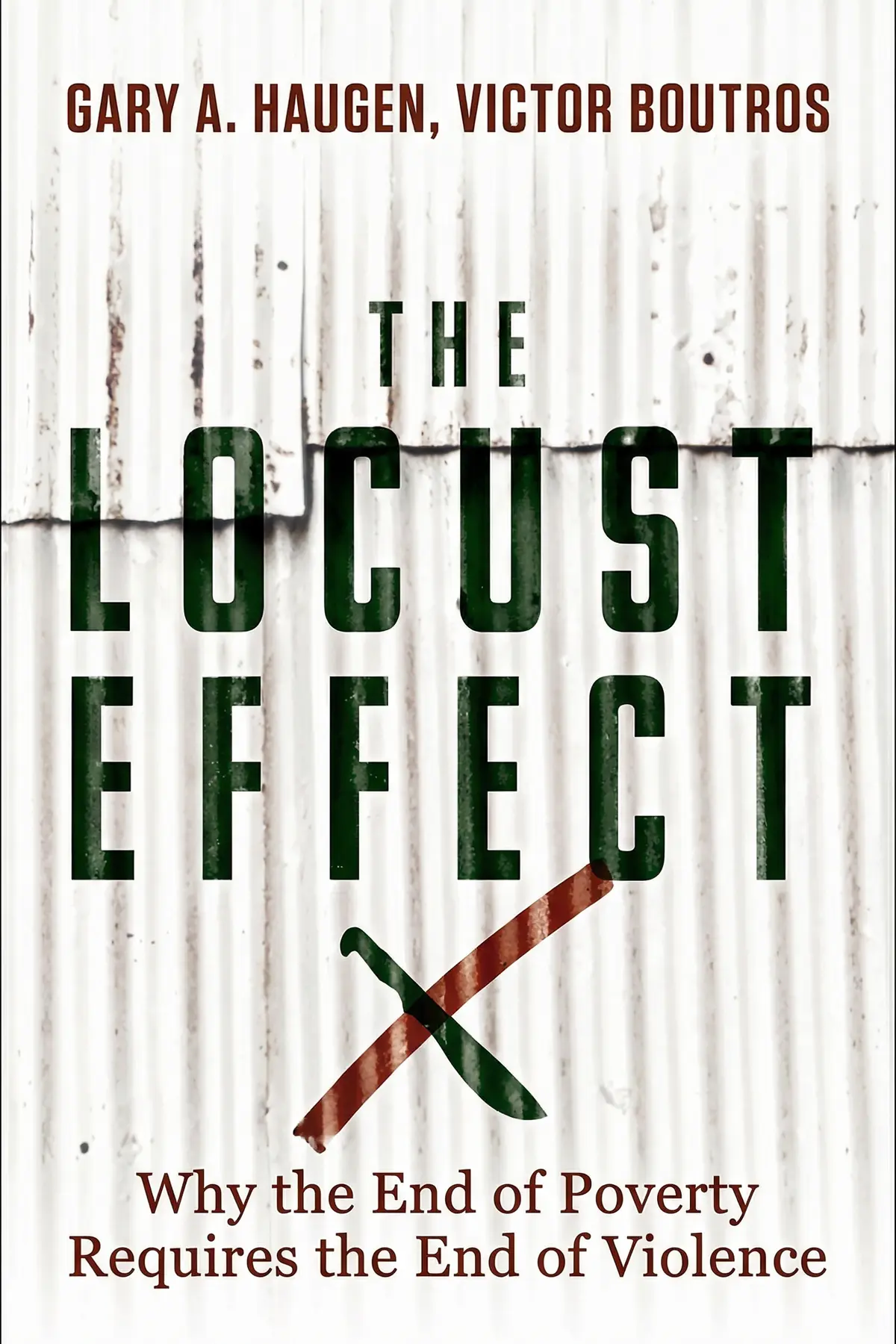
Table of Content
1. Introduction
1 min 13 sec
Anyone who has given money to fight poverty, or worked in development, may be planting a field that gets eaten before harvest. In The Locust Effect, Gary A. Haugen, founder of International Justice Mission, and Justice Department prosecutor Victor Boutros argue that criminal violence does more harm to poor economies than natural disasters do. In Guatemala, crime costs roughly twice as much every year as Hurricane Stan did in 2005.
Their case is blunt. Food, clinics and schools cannot lift people out of poverty while those people have no protection from rape, assault and unjust arrest. Like locusts devouring a replanted crop, violence consumes whatever aid builds. The authors trace why police and courts fail the poor, from untrained officers to laws written for colonial rulers, and why aid money flows around the problem instead of into it. They end in the Philippines, with a project that broke the pattern. Afterward, you will have a question most donors and planners skip, and the evidence to press it: who protects the people this effort is meant to help?
2. Measure what violence really costs a country
1 min 36 sec
A hurricane hit Guatemala’s economy hard in 2005 and was widely seen as a huge disaster. Something with no headlines does twice the damage there every single year, and it hits the women who grow much of Africa’s food.
3. Spot the real reason violence finds the poor
1 min 39 sec
A teenage girl in Peru goes to the police and ends up being blamed. A Kenyan boy faces life in prison over a fight at a water fountain. Their stories point to the same missing thing.
4. Read the numbers that expose a broken justice system
1 min 48 sec
One government spends less on policing per person in a year than an American city spends in a day. Another has ten prosecutors for fifteen million people. Here is what such gaps mean for anyone accused.
5. Trace today's broken policing back to colonial rule
1 min 43 sec
Britain invented a police force that won public trust by fighting crime. In its colonies it built something very different, and many former colonies still run on those rules today.
6. Notice how paid security leaves the poor behind
1 min 49 sec
In one country, private guards outnumber police four to one. Businesses pay heavily to settle disputes outside the courts. It looks like a sensible workaround, until you ask who cannot afford it.
7. Fight the locusts instead of replanting the crops
1 min 47 sec
Development agencies spend fortunes on wells, clinics and classrooms. Almost none of it reaches the one system that decides whether those gains survive, and one major lender’s own rules have kept it that way.
8. One city cut child sex trafficking by 79 percent
1 min 46 sec
Children rescued from traffickers were once held at police stations near the very people who abused them. A four-year project changed that, and the results convinced a national government to take over the bill.
9. Conclusion
1 min 14 sec
The Locust Effect asks readers to see poverty differently. A family can have a new well, a vaccinated child and a seat in a classroom and still lose everything to one assault, one false arrest or one trafficker who knows no one will come. Haugen and Boutros argue that this insecurity is what development work has largely overlooked, and that it was built into the system: police created to serve colonial rulers, courts so short of prosecutors that a Philippine case can take up to ten years, and private guards for anyone who can pay.
Their hope rests on Cebu. A few years of patient work with local police, prosecutors and judges cut child trafficking there by 79 percent, and the government chose to keep paying for it.
The book supports a few habits of mind. When you read about a country’s growth, ask whether its poorest people are any safer as well as richer. When you give to a program for the poor, or build one, find out who protects the people it serves. And when a public system keeps failing, look at what it was first built to do.
Replanting the field is generous. The harvest only survives once someone deals with the swarm.
About this book
What is this book about?
Aid organizations work hard to feed, treat and educate the world's poorest people. Gary A. Haugen and Victor Boutros argue that much of that effort is undone by a problem the aid world barely funds: everyday criminal violence. Rape, assault, trafficking and unjust imprisonment strip the poor of health, income and freedom. In some countries, crime costs the economy more each year than a major hurricane. The authors, a lawyer who founded International Justice Mission and a federal prosecutor, show that poor people suffer this violence because no one protects them. Police in many developing countries are untrained and too few, court cases drag on for years, and many forces still run on laws written to defend colonial rulers. Meanwhile the wealthy buy private guards and private courts, which pushes the poor even further outside the law. The book ends by making the case for change. Less than one percent of development aid goes toward helping justice systems protect the poor, and the authors argue that this must shift. Their proof is a project in Cebu, in the Philippines, where four years of work with local police and courts cut child sex trafficking by 79 percent.
Book Information
Who it's for
Antipoverty charity supporters
Donors and volunteers who want to know whether their giving to poverty causes actually lasts.
Development and rights workers
People working in development, aid or human rights who need evidence for funding justice systems.
Emerging market professionals
Professionals in growing markets curious why growth often fails to reach the poorest.
About the Author
Gary A. Haugen
Gary A. Haugen founded International Justice Mission in 1999, an organization that partners with officials in poor countries to shield people from violence, rescue victims and support survivors. He previously worked in the US Justice Department's civil rights division and headed the UN's inquiry into the Rwandan genocide. Victor Boutros is a lawyer who has prosecuted police misconduct, hate crime and international human trafficking cases for the US Department of Justice. He has documented bonded slavery in India, worked on Ecuador's prisons and helped South African prosecutors fight trafficking.
Ratings & Reviews
Ratings at a glance
What people think
Listeners find the work very accessible and believe it is essential for the socially conscious, highlighting its meticulous research and lucid breakdown of complex themes. They describe the experience as enlightening and profound, with one listener pointing out how it skillfully merges narrative accounts with data. The prose is well-regarded for being both articulate and brief. The book's exploration of violence and poverty elicits a range of responses, as some find the information convicting while others find it disturbing.
Top reviews
Emily
Wow. The Locust Effect isn’t just another dry academic text about international development; it’s a punch to the gut that demands a total rethink of how we view global poverty. Haugen and Boutros make a compelling case that we can provide all the food and medicine in the world, but it won’t matter if the recipient is robbed or beaten the next day. The stories of girls in Kenya and the total breakdown of police systems are horrifying, yet they are essential to hear if we want to actually help. It’s a gut-wrenching read, but the research is so thorough that you can't ignore the data behind the trauma. I found myself highlighting nearly every page because the insights were just that profound. This is required reading for anyone who thinks they understand the complexities of the developing world.
Show moreSawit
The chapter on the 'Locust attack' in the 19th century was the moment everything clicked for me. Comparing a swarm of insects to the way localized violence wipes out a family's economic gains is a brilliant, terrifying analogy. Growing up in the West, I definitely took for granted that I could call the police without expecting to be beaten or extorted for a bribe. This book provides a stark reminder that for millions, the law is the predator rather than the protector. It’s a dense read because of the emotional weight, but the structure keeps you moving through the darkness toward a sliver of hope. I was particularly impressed by how the authors weave stories with data from the World Bank to prove their point.
Show moreTaweesak
Ever wonder why global aid often feels like pouring water into a leaky bucket? This book provides the answer: we are ignoring the "locusts" of violence that eat every crop of progress. The authors do a masterclass job of weaving devastating personal anecdotes with hard statistics. It’s sobering to realize that 27 million people are currently living in slavery, often right under the noses of corrupt local officials. This should be required reading for anyone who cares about human rights. It’s not just about giving money; it’s about demanding justice. I’ve recommended this to my entire church group because it changes the way you pray for the world.
Show moreWin
Finally got around to this after hearing Gary Haugen speak, and the book is even more impactful than his presentations. He and Boutros have a way of taking complex legal concepts and making them accessible to the average person. I was particularly struck by the discussion of "Freedom from Want" versus "Freedom from Fear" and how the latter is often neglected. The success stories from places like Cebu and Brazil provide a much-needed light at the end of the tunnel. It’s rare to find a book that is both this deeply researched and this readable. If you think poverty is just about a lack of food, prepare to have your worldview shattered.
Show moreTum
This book completely dismantled my understanding of what it means to be poor. I used to think poverty was just a lack of resources like clean water or schools, but now I see it’s a state of constant vulnerability. When you have no property rights and your local police are more likely to rob you than help you, you can't build a future. The historical context about how Western cities like New York were once just as corrupt was incredibly helpful for perspective. It proves that change is possible, even if the road is long and incredibly difficult. Every page contains a revelation that makes you stop and think.
Show moreKanokporn
I'll admit, some of the statistics about sexual violence in schools were almost too much to bear. It is absolutely revolting that for so many girls, the place meant for their advancement is the place where they are most at risk. The authors don't shy away from the dark humiliation that defines the lives of the global poor. While the book is heavy on the tragedy, the final chapters on the catalyst for change were genuinely inspiring. If you want to broaden your perspective on the world and move beyond simple charity, you need to read this. It’s a profound, eye-opening account of a hidden epidemic.
Show moreArm
Picked this up after a recommendation from a friend, and I found the writing surprisingly concise for such a heavy topic. The authors focus heavily on the "Rule of Law," arguing that the lack of a functioning justice system is the hidden plague devouring the progress made by NGOs. While I appreciated the analytical approach, some chapters felt a bit repetitive in their emphasis on IJM’s specific successes. Truth is, it’s a necessary perspective even if the tone leans towards a sales pitch for their organization at times. The data regarding "Freedom from Fear" as a precursor to economic stability is logically sound and very well-presented. It definitely changed my perspective on where my charitable donations should be going.
Show moreErn
As someone who has spent time working in international development, I can say this is a paradigm-shifting read. We often talk about Maslow's pyramid, but we forget that "safety" is right there at the base, and without it, self-actualization is a pipe dream. Haugen’s experience with IJM shines through in every chapter, providing a practical, albeit difficult, roadmap for reform. The critique of how the World Bank and other large institutions ignore criminal violence is spot-on and long overdue. Gotta say, it’s a bit of a dense read, but the information is too vital to skim. My only complaint is that I wish it addressed the role of technology more in policing reform.
Show moreKru
To be fair, while the authors are incredibly well-informed, I found the solutions offered a bit too idealistic for the complexities of post-colonial governance. They make a great point about how colonial systems were designed to protect the elite, but the path to fixing that seems much more murky than they suggest. The stories are tragic and definitely eye-opening, yet I wanted more depth on how to actually implement these reforms in places like India without it feeling like Western imposition. It’s an important book for awareness, but I finished it feeling like the scale of the problem is still insurmountable. The writing is good, but the optimism feels slightly misplaced given the depth of corruption described.
Show morePongpan
Not what I expected, and frankly, it left me feeling more hollow than hopeful. The descriptions of child exploitation and the utter depravity of the justice systems in the developing world are so graphic they felt almost voyeuristic at points. I understand the need to shock the reader into action, but the sheer volume of "devastating quotes" and trauma became overwhelming for me. It’s well-written, but the authors' belief that Western-style legal reform is the magic bullet feels a bit myopic given the cultural history of these regions. I struggled to finish it because it was just so relentlessly depressing without offering enough practical steps for the average individual.
Show moreQuestions about this book
What is the main idea of The Locust Effect?
Gary A. Haugen and Victor Boutros argue that poverty cannot end while poor people have no protection from violence. Crime destroys health, work and food production, and like locusts eating a replanted field, it consumes whatever aid builds. The authors show that police and courts in many developing countries fail the poor, and they call on aid organizations to help strengthen those justice systems.
Why do the authors say violence hurts the poor more than other groups?
In their view, the poor suffer violence because they are unprotected, not simply because they are poor. They compare it to malaria, where 90 percent of deaths occur among the poor because they lack good treatment. Untrained, underfunded and often corrupt police, together with slow courts, mean crimes against the poor go unpunished, so attackers like the man who raped 14-year-old Maria in Peru strike again.
Why are police forces in countries like India so dysfunctional?
The authors trace it to colonial history. In Britain, Robert Peel created an unarmed civilian police that earned public trust. In the colonies, especially after India’s 1857 rebellion, Britain used the military-style Irish Constabulary model to protect its rule. Many of those laws were never reformed, and India’s police still work under a Police Act that is 140 years old.
What was Project Lantern?
Project Lantern was a four-year program run by International Justice Mission in Cebu, Philippines, to protect children from sex trafficking. Working with local authorities, it helped create a specialist police task force, made trafficking a court priority and set up safe houses for victims. More than 250 victims were rescued, about a hundred suspects were prosecuted, and children in the local sex trade fell by 79 percent.
How can I apply the ideas in The Locust Effect?
When judging a charity or development program, ask what it does about violence against the people it serves, since less than one percent of development aid goes to justice systems that protect the poor. When reading about a country’s growth, ask whether its poorest citizens are any safer. And when a public institution keeps failing, examine what it was originally designed to do.
Readers also enjoyed


A Splendid Exchange: How Trade Shaped the World
William J. Bernstein

Afropean: Notes From Black Europe
Johny Pitts




All About Love: New Visions
bell hooks


Adults in The Room: My Battle With Europe’s Deep Establishment
Yanis Varoufakis
AUDIO SUMMARY AVAILABLE
Listen to The Locust Effect in 15 minutes
Get the key ideas from The Locust Effect by Gary A. Haugen, plus 5,000+ more nonfiction titles.
- 5,000+ titles
- Listen as much as you want
- 7-day free trial
- Cancel anytime









