

A New Earth: Awakening to Your Life’s Purpose
Eckhart Tolle
 English
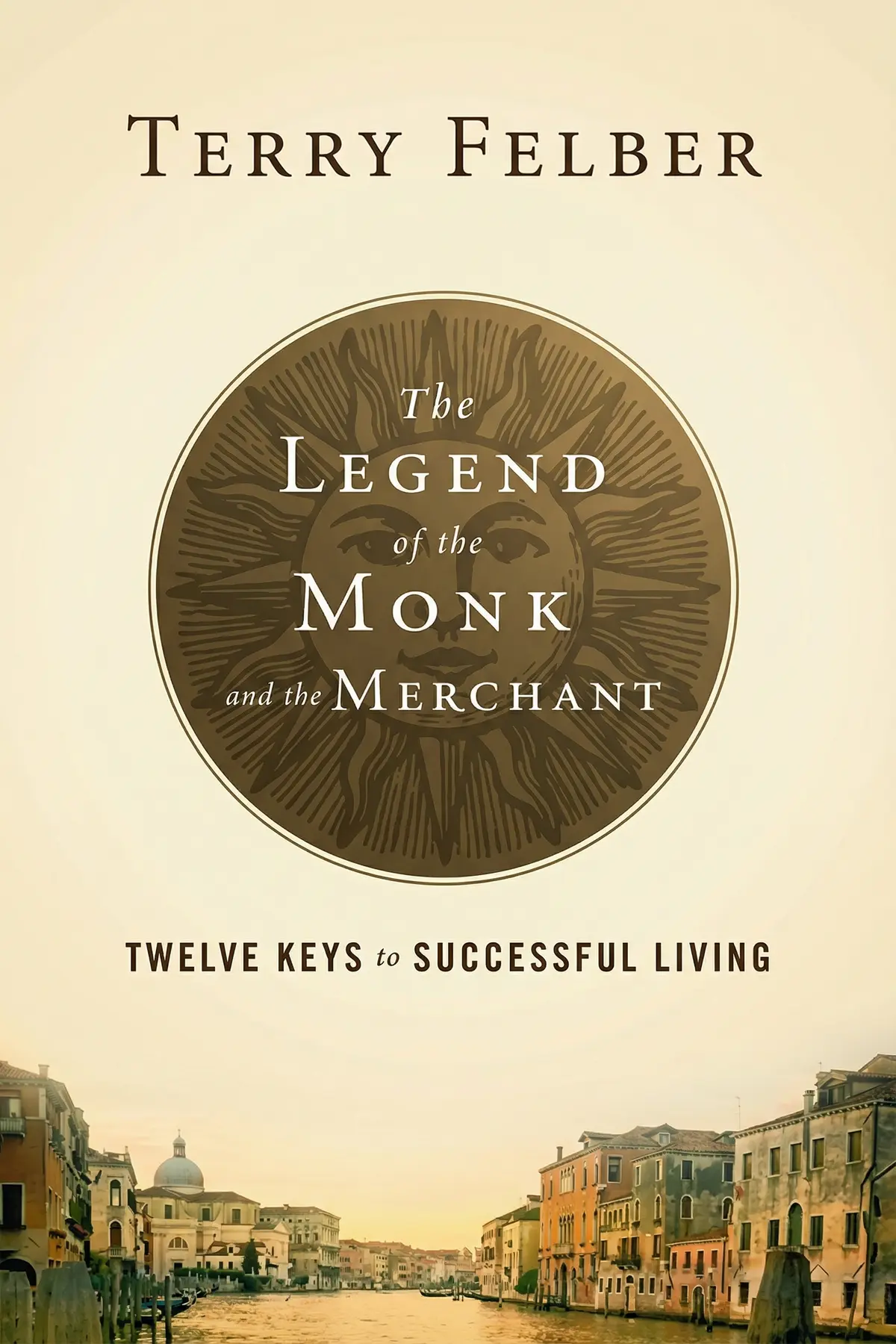
A parable about a young glass-bead trader and his mentor that turns twelve principles on hard work, setbacks, boldness, debt and partnership into a story you can apply to your own career and money.
1 min 01 sec
Plenty of people carry a good idea for years and never begin, waiting for a moment that never arrives. Terry Felber’s The Legend of the Monk and the Merchant starts from the opposite habit: a young man pitches a bold plan, and his mentor tells him an idea is worth nothing without the work to build it.
The book is a parable. Antonio, an orphan raised in a monastery who became a wealthy businessman, walks toward Rome with his 18-year-old grandson Julio and tells him about six meetings with his mentor, Alessio. At each one Antonio brought a problem, and Alessio answered with principles, twelve in all. Felber’s case is that success in money, family and legacy comes from a short list of principles learned from a mentor and held to through every setback.
A factory fire, a feared trader in Morocco and a brother-in-law asking for cash each come paired with a rule you can test on your own work and money this week.
1 min 38 sec
A young man brings his mentor a plan to create one currency for traders everywhere. The mentor loves it, then says something that explains why most good ideas never leave the head of the person who had them.
1 min 38 sec
Antonio sails back in a brand-new boat, then hears a sermon that makes him ashamed of it. His mentor’s reply reframes what money has to do with character and with the people who depend on you.
1 min 41 sec
One night the bead factory burns to ashes and Antonio believes he has failed everyone. His mentor arrives with three ideas, and the most useful one is far more practical than comfort.
1 min 33 sec
A merchant with a fearsome reputation wants to meet Antonio alone on a deserted island. His mentor’s advice divides humility and courage in a way that changes how you walk into any high-stakes room.
1 min 33 sec
A brother-in-law with a failing restaurant asks for a loan, and saying yes looks like the kind thing to do. The mentor says no, and what he offers instead changes the relative’s life.
1 min 30 sec
A mysterious letter calls Antonio to Rome, where his frail mentor reveals what he has been funding for eighteen years. The last principle explains what all the wealth was for.
1 min 03 sec
Felber’s parable rests on one relationship. Antonio never had to work out the rules of success alone. Every few years he brought his newest trouble to someone further along, wrote down what he heard, and lived by it until the next meeting. That habit turned a string of glass beads into a currency, a burned factory into a better one and a feared merchant into a partner.
The book backs a few concrete moves. Keep your principles in writing, the way Antonio kept his journal, so they are within reach on the night of the fire. Choose one idea you have been waiting on and do the first piece of real work. Before taking on debt or lending to someone you love, look hard at the budget and ask whether advice would help more than money.
And find your Alessio, or become one for someone else. The story does not end with a fortune or a cathedral. It ends with a journal in a young man’s hands, and a promise to come back in a year.
Many people have a good idea and never start, or they start and give up at the first disaster. Terry Felber answers both problems with a story. Antonio, an orphan raised in a monastery, grows into a wealthy businessman by meeting his mentor Alessio six times over many years. At each reunion he brings a problem, and he leaves with principles written in a journal. The problems are ones readers will recognize: guilt about earning well, a factory that burns down, a feared rival who wants a meeting, a relative asking for a loan. Alessio's answers join faith and business. He tells Antonio to choose his vocation and work without waiting, to treat hardship as heat that shapes character, to be meek before God but bold with people, to stay out of debt and keep a budget, and to build with partners. Readers get twelve principles in the form of one memorable life, along with a model of mentoring worth copying: bring your real problems to someone wiser, write down what you learn and act on it.
Young professionals and new business owners who have an idea but keep waiting for the right moment to start.
Readers of faith looking for a story that joins Christian values with practical lessons on work, debt and setbacks.
Anyone who wants a mentor, or wants to become one.
Terry Felber has served on several corporate and ministry boards, among them Alticor and the National Association of Evangelicals. He is also the author of Am I Making Myself Clear?, a guide to effective communication. His board work spans both business and church organizations, and this parable brings the two together, setting practical lessons on work and money inside a story about faith and mentorship.
Listeners find this book an accessible read and a valuable use of time, appreciating its fable-based narrative and straightforward principles. Additionally, they praise the instructional method, as one listener points out how it motivates them to evaluate their resource management, while another emphasizes its focus on professional relationships. Listeners also commend the storytelling and faith-based elements; one review notes its subtle endorsement of Catholicism, and many view it as one of the finest books on money they have ever encountered.
Wow. This story caught me completely off guard even though business fables aren't usually my thing. The narrative is structured like a grandfather sitting by a fire passing down hard-won wisdom, which made the lessons feel incredibly personal and immersive. I honestly didn't expect to be so moved by a book about finance and faith, yet I found myself tearing up at the beautiful relationship between the characters. The way Felber illustrates the intersection of the marketplace and ministry is nothing short of masterful. It is easily one of the most significant books I have read this year, and I have already recommended it to several colleagues. My only complaint is that it ended too quickly, leaving me wishing for a sequel to expand on the legacy.
Show morePicked this up after a recommendation from my spouse, and I ended up flying through it in just one afternoon. To be fair, I was skeptical at first because it seemed like it might be dry, but the fiction story is so compelling that it keeps you turning pages. It teaches solid biblical truths about our place as believers in various industries without feeling like a lecture. The principles regarding the generation of wealth to fund the kingdom are explained with such clarity that even a teenager could grasp the importance of their future career. This is a top-ten book for me now. It completely shifted my perspective on how I view my daily labor and my role as a 'merchant' in today's world.
Show moreThis book has earned a permanent spot on my shelf alongside the all-time classics of Christian literature. Look, I’ve read a lot of books about money, but few manage to bridge the gap between the secular and the sacred as effectively as this one does. The story of the monk and the merchant provides a framework for understanding that every believer has a unique calling, whether in the pulpit or the boardroom. It’s a beautifully told story that feels like a classic fable you’d want to read to your children. The way it emphasizes the importance of the merchant's role in supporting the monk’s mission is revolutionary for many who feel their work is 'lesser.' Truly an amazing and life-changing little book.
Show moreAs someone who struggles to balance professional ambition with spiritual values, this book felt like a timely gift. The author focuses heavily on the importance of business relationships and how they serve as a platform for integrity and influence. I appreciated the simple principles, particularly the sections encouraging a deeper examination of how we use our resources for more than just personal gain. While some might find the writing style a bit too elementary, I think that simplicity is what makes the message stick. There is a subtle endorsement of tradition and spiritual discipline that reminded me of Catholic teachings on work as a vocation. It's a solid, encouraging read for anyone feeling stuck in their 9-to-5 grind.
Show moreEver wonder how your daily grind actually fits into a larger divine plan? This book attempts to answer that through a charming, fable-like story that is both easy to read and profoundly challenging. The truth is, most of us view our jobs as separate from our spiritual lives, but Felber argues they are two sides of the same coin. I loved the way the merchant's journey was depicted, showing that financial success isn't a sin if the heart is positioned correctly toward service. Some of the dialogue felt a bit stilted, almost like it was written for a much younger audience, but the themes are universal. It is well worth your time if you need a fresh spark of motivation for your career.
Show moreAfter hearing so much about the 'monk and merchant' concept, I finally decided to see what the fuss was about. The book is incredibly easy to digest, which I think is its greatest strength because it allows the core principles to shine through without getting bogged down. It focuses heavily on the quality of business relationships and the spiritual content of our daily tasks. I particularly liked how it encouraged me to look at my bank account as a tool for ministry rather than just a safety net. Some parts felt a little repetitive, but the overall impact was very positive for my mindset. It’s a great gift for new graduates entering the workforce for the first time.
Show moreGotta say, the way Felber weaves together the roles of the clergy and the marketplace is quite refreshing for a modern reader. The book reads like a fable, making it accessible for people who don't usually enjoy dense non-fiction. I appreciated the spiritual content and the way it subtly highlights the beauty of work, almost reflecting a Catholic perspective on the dignity of labor. There were a few points where the scripture interpretations felt a little stretched to fit the business theme, but the heart of the message remains intact. It’s a short read that packs a punch, especially regarding how we view wealth and its purpose. I’ll be passing my copy along to a friend who is starting a new business venture soon.
Show moreFrankly, I found the narrative to be a bit simplistic at times, even if the core message about work and faith is vital. The author uses a fable-style approach that makes the book an exceptionally quick read, which is great for busy professionals. However, I struggled with some of the specific scriptural interpretations throughout the chapters. For instance, the book emphasizes Paul solely as a tent-maker to prove a point about business, but it overlooks the nuances of his reliance on the church's support for his ministry. While there are definitely some 'nuggets' of wisdom to be found here, you have to read it with a discerning eye. It is a good starting point for discussion, though not a definitive theological treatise.
Show moreThe truth is, while there are some excellent takeaways here, the underlying theology felt a bit shaky in certain chapters. I enjoyed the story itself; it was beautifully written as a tale being told to a younger generation, which kept me engaged until the very end. However, the author’s conclusions about biblical figures and their financial status seemed a bit forced to fit the book's narrative. It’s a good story to illustrate powerful life principles, but I wouldn't use it as a primary source for scriptural study. Personally, I think it works best as a motivational piece rather than a deep theological study. It certainly makes you think about your resource use, which is a positive outcome for any reader.
Show moreNot what I expected given the hype, as the writing felt far too elementary for the complex topics it tried to tackle. To be fair, the message is positive, but the execution reminded me of a third-grade level reader with very little nuance or depth. The main takeaways are barely discussed in detail, leaving the reader with more questions than answers about the actual 'how-to' of the principles. I also felt the foundational idea of the book was based on a slight misunderstanding of certain parables of Jesus. While it’s a quick read, it lacks the intellectual meat I was looking for in a book about faith-based economics. It might be better suited as a gift for a middle-schooler than a seasoned business person.
Show moreTerry Felber tells the story of Antonio, an orphan raised in a monastery who becomes a wealthy bead trader. Walking to Rome with his grandson Julio, Antonio recounts six meetings with his mentor Alessio. At each one he brought a problem and learned principles, twelve in total, covering hard work, money and faith, setbacks, boldness, debt and partnership. The book argues that living by these principles built his business, family and legacy.
Alessio teaches Antonio to seek God, choose a vocation and do whatever it takes; that financial prosperity is linked to soul prosperity; to provide for his family; to see setbacks as stepping stones; that God uses hardship to build character; to take responsibility; to be meek before God and bold with men; to avoid debt and live below his means; to keep a budget; not to lend money; to tithe 10 percent; and that partnership has power.
When Antonio’s brother-in-law Venny asks for a loan to save his struggling restaurant, Alessio advises against it, warning that it could harm the relationship and worsen Venny’s poor money habits. Antonio shares Alessio’s advice on avoiding debt, budgeting and tithing instead. Venny is resentful at first but later follows it and ends up running nine restaurants, with the family relationship intact.
Start with one idea you have been postponing and commit to the work, setting a date to review progress as Antonio did between reunions. When something goes wrong, find the simple cause and own it before drawing big conclusions. Ask for the meeting you have been avoiding. Check your budget and debt, and offer guidance before money when relatives ask. Write your principles down and pass them on.
Eckhart Tolle
Marianne Williamson

Richard Wiseman

Pico Iyer


Alcoholics Anonymous World Services




William B. Irvine
AUDIO SUMMARY AVAILABLE
Get the key ideas from The Legend of the Monk and the Merchant by Terry Felber, plus 5,000+ more nonfiction titles.









