

14 min 37 sec
Available in: English
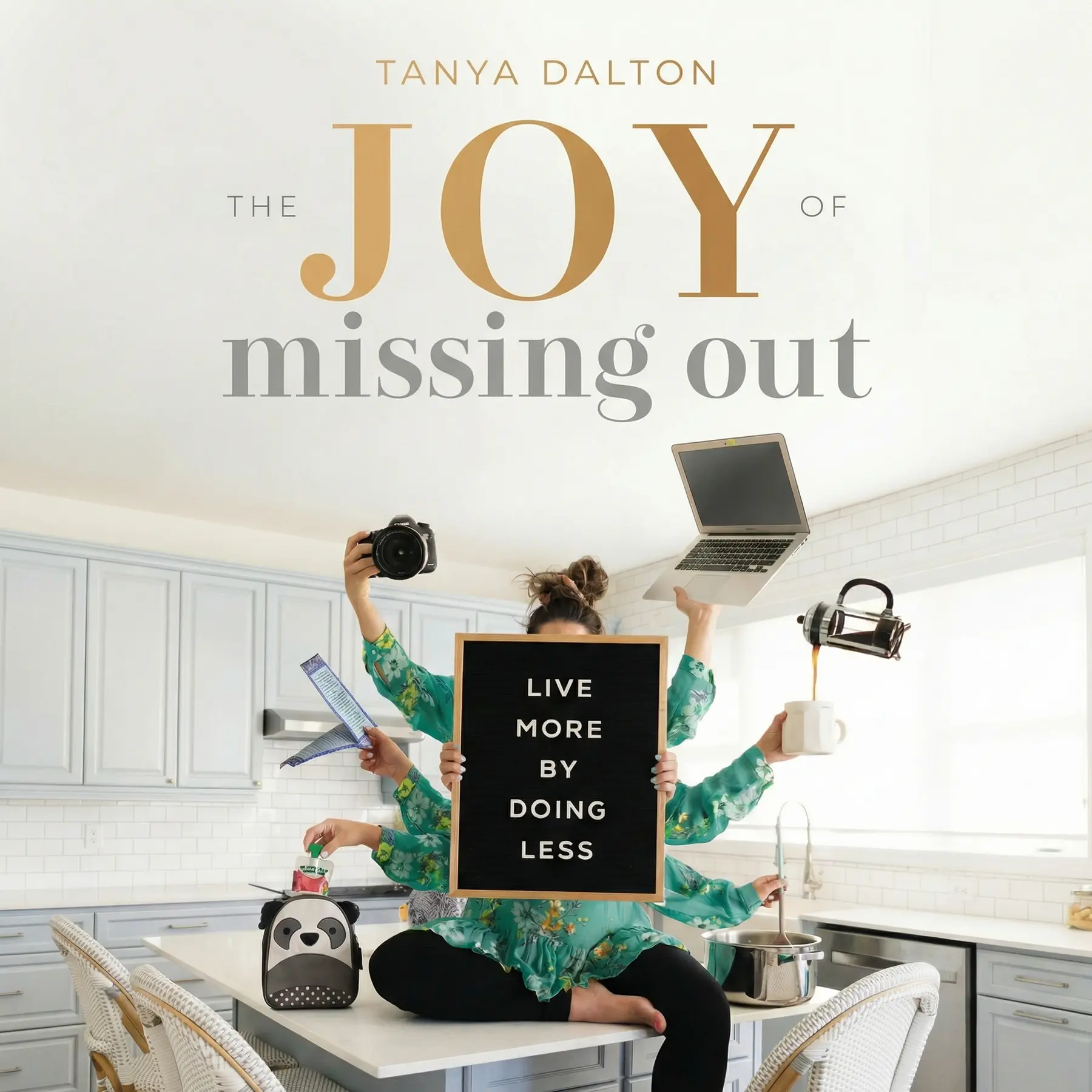
The Joy of Missing Out: Live More by Doing Less
By Tanya Dalton
Shows busy people how to stop chasing balance and start choosing: define a purpose, rank tasks against it, hand chores to habits and routines, and protect empty time so that doing less produces more.
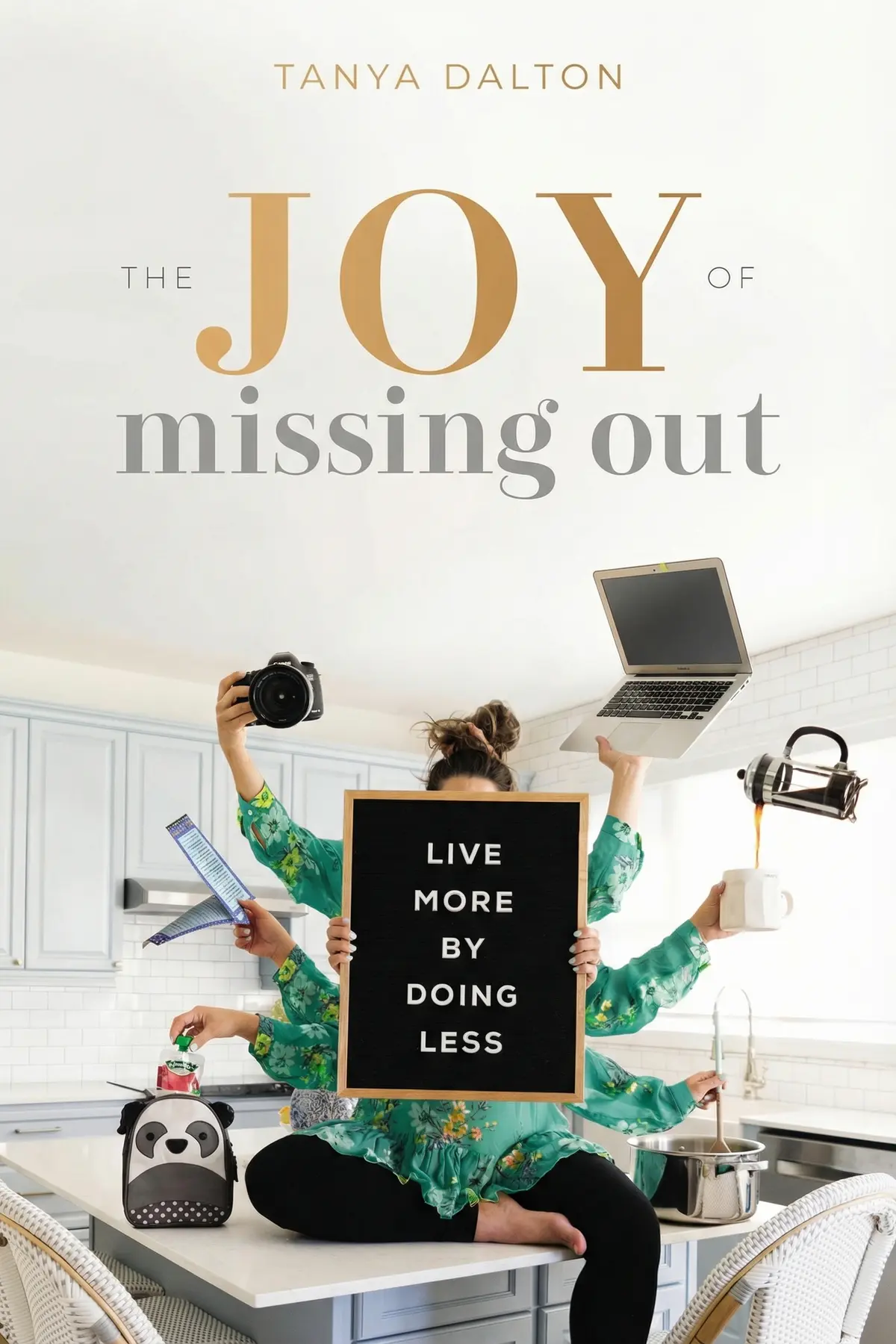
Table of Content
1. Introduction
58 sec
If your days are packed but you still end them feeling you did nothing that mattered, the problem may be the goal of balance itself. In The Joy of Missing Out, productivity expert Tanya Dalton argues that a perfectly balanced life would go nowhere, like a bicycle standing still. Progress, she says, comes from leaning toward what matters most. Her case is that doing less on purpose is how you live more. You decide what your life is for and let that purpose rank your tasks. Habits and routines take over the repeat chores, and you guard some empty time so your mind can recover.
Along the way she takes apart three productivity beliefs that people often hold with pride, starting with multitasking. Expect a short test for any request, a way to sort a crowded to-do list into three levels, and a case for switching off the phone. What you get is a schedule you chose yourself, and permission to let the rest go.
2. Stop balancing and start steering your life
1 min 45 sec
A bicycle held perfectly still tips over, and Dalton argues that a life giving equal shares to everything falls the same way. Her own story about cookies and school volunteering shows which expectation to drop first.
3. Write a purpose that makes decisions for you
1 min 47 sec
Nike and Adobe each sum up who they are in a handful of words. An alphabet exercise and a magazine collage can help you do the same, and the result starts making choices for you.
4. Written goals and firm limits sharpen your focus
1 min 44 sec
Ten years after graduation, a small group of Harvard MBAs was earning far more than all their classmates combined. The habit that set them apart is simple, and it pairs well with a fence around a school playground.
5. Drop three productivity myths that slow you down
1 min 44 sec
Henry Ford was laughed at for cutting shifts and raising pay, until his rivals copied him. Three common beliefs about staying busy turn out to cost far more time than they save.
6. Sort your to-do list into three levels
1 min 47 sec
Most overloaded lists come from not knowing where to start. An airline boss’s one-question filter and three simple levels show which tasks to do first and which to delete.
7. Hand your chores to habits and routines
2 min 12 sec
A three-year-old dragging a laundry basket turned out to be an investment that paid back for years. Habits and routines can take whole categories of work off your mind, as long as you set them up the right way.
8. Empty time that makes your mind sharper
1 min 32 sec
A five-day trip with no screens changed how one group of families spent their evenings. The hours you think you lack may already exist, lost to scrolling.
9. Conclusion
1 min 08 sec
In the end, Dalton’s book is a case for permission. It gives you permission to drop a standard you never chose and to strike a task from the list. It lets you teach your children to do the laundry, or switch off your phone for an evening. Every tool in the book works toward the same aim: removing something so that what remains gets your full attention. The bicycle moves because the rider commits to a direction and keeps adjusting.
The easiest place to start is her test for saying yes. When an opportunity comes up, write it down, then write why you want it. If it does not fit your purpose, the answer is an easy no. If it does, check whether your calendar really has room. Last, ask what saying yes would force you to turn down, and notice how that trade feels. A yes that still feels right after all that is worth giving.
Do this a few times and the things you skip stop looking like losses. They start to look like space you have won back for the work, the people and the rest you actually chose. That is the joy in missing out.
About this book
What is this book about?
Many capable people say yes to everything and carry other people's priorities, yet still end each day feeling they achieved nothing. Tanya Dalton blames the impossible goal of a perfectly balanced life, with equal attention for work, personal life and home. Spread that thin, she argues, and you put in great effort for very little. Her alternative starts with purpose. Readers write a mission, a vision and a short set of core values, then use them to rank everything else. A three-level priority list and a five-question test called CLEAR separate important tasks from merely urgent ones. Dalton takes apart three common beliefs about productivity, on multitasking, breaks and technology. She also shows how habits and routines can take over chores, from tax paperwork to the family laundry. The book closes with whitespace, which is deliberate, unscheduled time away from screens. Dalton presents it as a source of better thinking. The promise is fewer commitments, chosen with care, and the confidence to miss out on the rest without guilt.
Book Information
Who it's for
Overcommitted professionals and parents
Professionals and parents who say yes to everything and end the day feeling they achieved little.
Swamped managers and founders
Managers and founders buried in urgent email who want a simple way to rank tasks.
Worn down by screens
Busy people worn down by constant screens who want their evenings and weekends back.
About the Author
Tanya Dalton
Tanya Dalton is an author, speaker and productivity expert who advises women in leadership as a growth strategist. She founded inkWELL Press Productivity Co. and runs it as CEO. The company's tools help women take on less while still reaching their goals. Fortune Magazine listed The Joy of Missing Out, her first book, among its Top 10 Business Books of the year. Her second book is On Purpose, and she hosts the podcast The Intentional Advantage.
Ratings & Reviews
Ratings at a glance
What people think
Listeners find this book both eye-opening and inspiring, helping them identify their priorities and remove stress. Furthermore, this practical manual combines efficiency strategies with sequential directions, ensuring it is easy to incorporate into daily routines. They also value the thorough material, which features a companion discussion guide and hand-picked resources like podcasts.
Top reviews
Phimwan
Ever wonder why you're always busy but never actually getting ahead? This book shifts the narrative from doing more to doing what matters most to your unique 'North Star.' I loved the step-by-step instructions because they didn't just tell me to relax; they gave me a roadmap to eliminate unnecessary stress. The resources like the companion guide and podcasts really helped me implement these strategies into my chaotic daily life. It’s a refreshing take on productivity that feels manageable rather than overwhelming. To be fair, some parts felt a bit anecdotal, but the overall message is powerful for anyone feeling burnt out by modern life.
Show morePatchara
Finally got around to reading this after seeing it all over social media, and it lived up to the hype for me. The way Tonya Dalton breaks down the concept of JOMO is both enlightening and motivating for those of us struggling with constant FOMO. I especially liked the sections on clarifying your priorities and the practical worksheets included in the companion resources. It’s more than just a book; it feels like a full workshop on how to reclaim your time from the trivialities of life. Personally, the anecdotal style made the advice feel more human and less like a sterile textbook. If you're feeling burnt out, this might be the nudge you need.
Show morePun
This book provides a moving and effective roadmap for anyone feeling the weight of modern-day expectations. Tanya Dalton doesn't just tell you to do less; she shows you how to curate a life that actually reflects your priorities. I found the liveWELL method to be a practical guide that helped me eliminate the background noise of my daily routine. The companion resources are top-notch and really help bridge the gap between reading a concept and actually living it. Frankly, I think every woman who feels like she's drowning in 'busyness' needs to read this immediately. It’s an empowering look at how to find joy in the spaces we create for ourselves.
Show moreSawit
Picked this up during a particularly stressful month and found it surprisingly grounding. Dalton’s liveWELL method provides a clear framework for anyone feeling buried under a mountain of to-do lists and external expectations. I really valued the emphasis on saying 'no' to the unimportant so you can finally say 'yes' to what actually brings you joy. The writing style is very conversational and easy to digest, which is perfect for a self-help book of this nature. I did find the 'CEO of the household' terminology a bit dated, but the actual strategies for time management are solid. It’s definitely worth a read if you need permission to slow down.
Show moreParichat
After hearing so much about the 'joy of missing out,' I was curious how a productivity expert would tackle the subject. Dalton argues that productivity isn't about doing everything, but about doing the right things, which is a distinction I really needed to hear. The step-by-step instructions for auditing your schedule were helpful, though I skipped some of the more flowery anecdotes. It’s a practical guide that combines stress-reduction with actual, actionable systems you can use tomorrow. Gotta say, the companion discussion guide is a nice touch if you're reading this with a book club. Some of the 'CEO' talk was a bit much, but the core advice is solid.
Show moreEmily
As someone who struggles with a never-ending to-do list, I found Dalton’s perspective on 'the power of no' incredibly liberating. The book is written in a very calm and effective manner that makes the idea of cutting back feel safe rather than scary. I appreciated how she curated resources like podcasts to supplement the reading, making the experience feel more interactive. The focus on the 'North Star' helps align your daily actions with your long-term goals in a way that feels very organic. To be fair, it is very mom-centric, but the principles of automation and focus are universal. I finished it feeling much more in control of my schedule.
Show moreNattapong
Not what I expected based on the title alone. Frankly, the title feels like a bit of a misnomer since the book is almost entirely about productivity systems rather than just the philosophy of 'missing out' on things. While I appreciated the advice on automating tasks and cutting away the irrelevant, the tone felt heavily geared toward stay-at-home mothers. As a professional without kids, I found it hard to relate to some of the stories Dalton shared about her household management. It’s a decent guide if you’re looking for a specific method, but I wanted something more philosophical. The constant mentions of her website started to feel a bit like a sales pitch.
Show moreOak
The chapter on setting boundaries was the highlight for me, even if the rest of the book felt a bit sophomoric. Truth is, Dalton is great at motivating you, but the actual 'meat' of the system is fairly standard productivity fare. I liked the focus on finding your purpose, yet I found the constant references to her own life a bit overwhelming at times. It felt like the signal-to-noise ratio was a bit off because the stories went on longer than necessary to make the point. If you haven't read many books in this genre, you will likely find it life-changing. For seasoned self-help readers, it might feel like a rehash of familiar concepts.
Show moreAhmed
Wow, there sure is a lot of talk about being a 'CEO' in this one. While I understand the metaphor Dalton is going for, it felt a little forced and repetitive throughout the chapters. The book does offer some enlightened moments regarding how we spend our limited energy and time. However, I felt like the actual strategies were buried under a bit too much fluff and personal storytelling. In my experience, the best productivity books are concise, and this one wandered off-track a few too many times. It's a decent motivational tool, but I wish it spent more time on the 'how' and less on the branding. It’s okay, just not revolutionary.
Show moreChaiwat
This book was a total letdown for someone looking for a deep dive into the psychology of missing out. Look, it’s basically an extended blog post for her productivity business and the liveWELL method she promotes everywhere. There is nothing truly revolutionary here; it's mostly common sense wrapped in buzzwords like 'North Star' and 'prioritization.' I was frustrated by how often I was directed to her website for the 'real' work. While the strategies for automating life are fine, they aren't anything you couldn't find in a five-minute Google search. It felt very repetitive and aimed at a very specific demographic that I just don't belong to.
Show moreQuestions about this book
What is the main idea of The Joy of Missing Out?
Tanya Dalton argues that chasing a perfectly balanced life spreads people too thin to make progress. As on a bicycle, moving forward takes focus and constant shifts of weight toward whatever matters most at the moment. She asks readers to define a purpose, rank tasks against it, hand chores to habits and routines, and protect empty time. Doing less in this way lets them live more.
What is the CLEAR framework in The Joy of Missing Out?
CLEAR is Dalton’s test for telling important tasks from merely urgent ones. It asks whether a task is Connected to your purpose, Linked to a goal, Essential, Advantageous and Reality-based. Three or more yes answers mark the task as important. Herb Kelleher of Southwest Airlines is her example for the first question: he checked every decision against the goal of being the best low-cost airline.
What are the three productivity myths Tanya Dalton describes?
The first myth is that multitasking is productive. Dalton says it cuts productivity by 40 percent, and she cites a University of London study linking it to a sharp drop in IQ. The second is that there is no time for breaks, although the ultradian rhythm calls for 20 minutes off every 90 to 120 minutes. The third is that technology is always better, when writing by hand helps the brain notice and keep information.
How does The Joy of Missing Out suggest deciding when to say yes?
Dalton’s exercise starts on paper. Write down the opportunity and why you want it. If it does not fit your purpose, decline. If it does, check whether your schedule really has room. Then ask what else you would have to give up by accepting, and notice how that trade feels. If it still feels right after those steps, say yes.
Who should read The Joy of Missing Out?
It suits professionals, parents and leaders who take on too much and end the day feeling unfulfilled, especially if they feel guilty about expectations set by others. Dalton’s tools are practical: an alphabet exercise for writing a mission, a three-level priority list, a habit plan built on record, reward and redirect, and screen-free whitespace. Readers who want permission to do less will find a clear method for it.
Readers also enjoyed





AUDIO SUMMARY AVAILABLE
Listen to The Joy of Missing Out in 15 minutes
Get the key ideas from The Joy of Missing Out by Tanya Dalton, plus 5,000+ more nonfiction titles.
- 5,000+ titles
- Listen as much as you want
- 7-day free trial
- Cancel anytime









