
13 min 39 sec
Available in: English
The Importance of Being Little: What Young Children Really Need from Grownups
Shows why young children learn most through play and trust in a familiar adult. It also explains how preschools came to drill academics instead, and what parents and educators can do to change that.
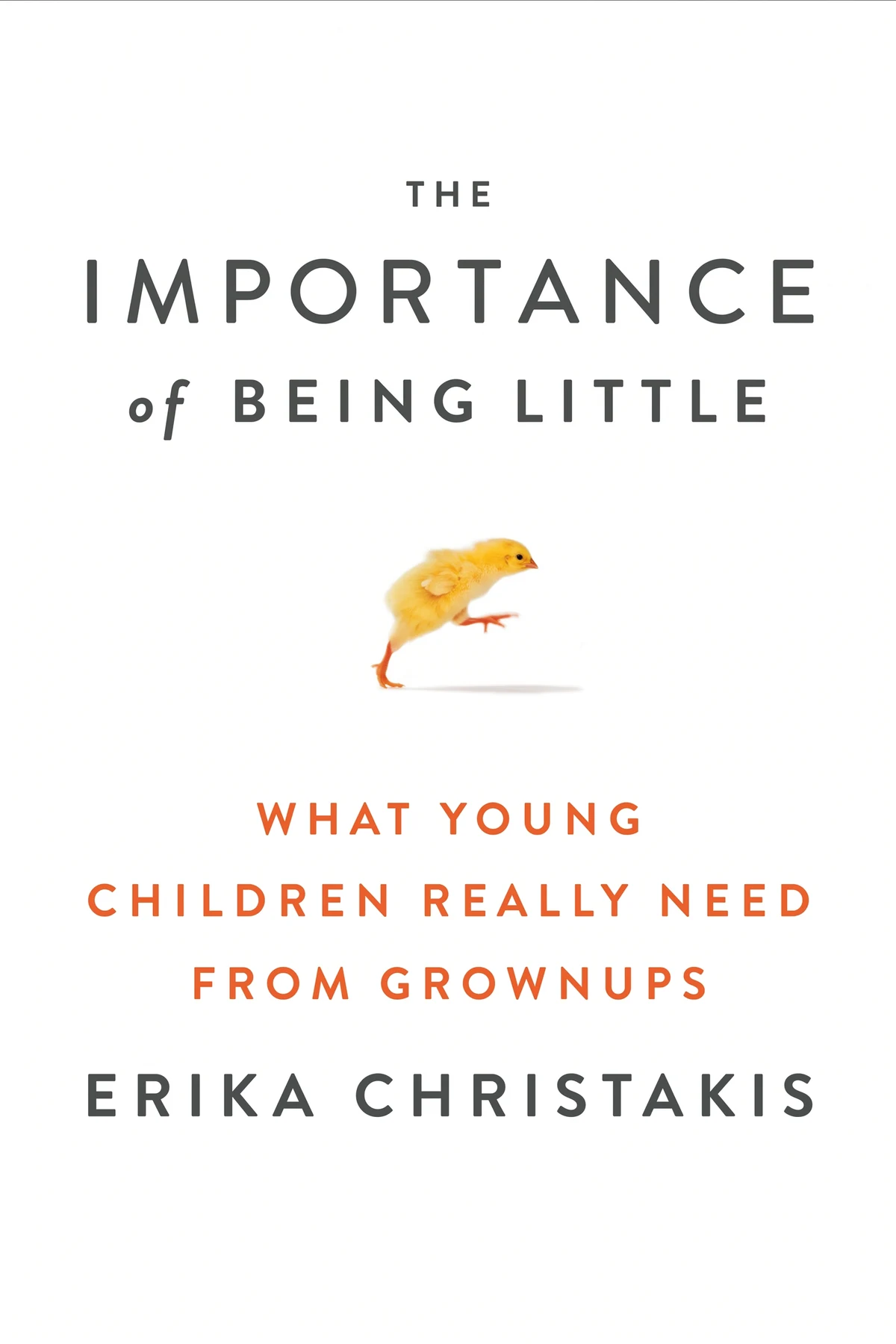
Table of Content
1. Introduction
1 min 05 sec
If you have a small child, or teach one, you may feel pressure to get them reading, counting and sitting still as early as you can. In The Importance of Being Little, educator Erika Christakis argues that this pressure works against the way young children actually learn. Her central claim is plain: little children learn best by playing and by trusting the adults around them, and drilling them gets in the way.
Yet across the United States, preschools have drifted toward standards, worksheets and quiet rows of seated four-year-olds. Christakis traces that drift to adult needs: parents’ fears, political efforts to close an achievement gap, and budgets too small to pay or train good teachers. Her answer is to put the child’s own development back at the center. Follow her argument and you will be able to look at any early classroom, or any afternoon at home, and tell whether it was built for the child or for the grownups, with practical ways to tilt it back toward play.
2. Understand how preschool turned into school
1 min 58 sec
Fifty years ago a preschool visitor would have seen children at play. Today the same visitor might see grammar drills. The reasons behind the change have less to do with children than you might expect.
3. See how quiet classrooms comfort parents, not children
2 min 02 sec
A room full of silent, seated four-year-olds can look like a sign of good teaching. Christakis sees something else in it: the fingerprints of adult anxiety, and a daily lesson children are bound to forget.
4. Trust what small children can teach themselves
2 min 01 sec
Babies notice things far earlier than most adults assume. Yet the usual response to that discovery, cramming in more information, may do harm, and it can even end with a healthy child carrying the wrong diagnosis.
5. Follow the money behind weak early teaching
1 min 54 sec
We understand young minds better than ever, so why do so many classrooms still rely on drills and word lists? The answer sits in a pay slip that compares poorly with jobs that need no teaching license.
6. Teach through play and a trusted adult
1 min 40 sec
Recess looks like the one part of the day when nothing gets learned. Elephants, chimpanzees and a simple classroom habit suggest it may be the part where the most learning happens.
7. Build skills that last beyond preschool
1 min 45 sec
Most people say they would rather raise a child who loves learning than one who recites facts. Turning that wish into a real classroom takes a different goal, a different budget and a lesson from one Nordic country.
8. Conclusion
1 min 14 sec
Christakis’s book is finally a plea to see children at their real size. Most of what has gone wrong in early education, in her telling, began with good intentions: parents wanting safety, lawmakers wanting fairness, teachers trying to meet targets on too little pay and training. Each choice made sense to an adult. Added up, they produced classrooms where four-year-olds sit like people in a business meeting and recite months they will soon forget.
The fix she proposes is a different starting point: the child’s own way of learning, which runs on play and on trust in a familiar adult. Her evidence stretches from ten-month-old babies noticing a new language to elephants and chimpanzees practicing survival through games, and to Finland’s child-centered preschools.
At home, give play real time and stop treating it as a break from learning. When a child asks a question, guide her toward her own answer instead of supplying it. And when a label or a test score arrives, ask first whether the setting ever fit the child. Childhood is short, and the play that fills it is how children get ready for everything that comes after.
About this book
What is this book about?
Preschool used to be a place for play. Today many young children spend their mornings sitting still, reciting the calendar and working toward grammar targets. Erika Christakis, an educator who has taught preschool and worked at the Yale University Child Study Center, argues that this shift serves adults far more than it serves children. She traces the change to several forces: standards set for whole school systems, an early 2000s law meant to close the gap between rich and poor students, parents' growing worries about safety and achievement, and budgets that leave preschool teachers poorly paid and poorly trained. The result, in her view, is a one-size-fits-all classroom that ignores how small children actually learn and labels those who don't fit. Against this, Christakis makes the case for play and for trusting relationships between children and teachers. She draws on evidence from infant research, from the play of animals such as chimpanzees and elephants, and from Finland's child-centered preschools. Readers come away with a clear way to judge any early classroom, and practical ideas for teaching skills rather than facts at home and at school.
Book Information
Who it's for
Parents choosing a preschool
Parents choosing a preschool who feel uneasy about early academic pressure.
Teachers and education leaders
Preschool teachers and education leaders looking for a case for play-based, relationship-centered classrooms.
Policy and training professionals
Policy makers and trainers who want to understand how pay, training and standards shape early learning.
About the Author
Erika Christakis
Erika Christakis is an American educator and writer who specializes in early childhood education. She has taught at the preschool level and is also a parent. Her background includes work in public health, and she has worked at the Yale University Child Study Center on child development and education policy, which gives her both classroom experience and a view of the systems that shape early learning.
Ratings & Reviews
Ratings at a glance

What people think
Listeners find the book accessible with relatable analogies and appreciate its instructional value for both educators and parents. The prose is considered eloquent and stimulating, with one listener highlighting how the author supports her perspectives using academic citations. Additionally, listeners consider the material captivating, with one mentioning it is full of anecdotes that maintain interest. Nevertheless, the work receives varied opinions regarding its academic depth, as one listener noted a deficiency in methodological rigor.
Top reviews
Ubolwan
Finally got around to reading this, and I must say it is a groundbreaking breath of fresh air for anyone feeling the pressure of modern "hyper-parenting." Christakis argues convincingly that we need to get out of the way and let kids be little, focusing on relationship-building rather than standardized testing or data-driven curriculum. The stories she shares are both heart-wrenching and hilarious, providing a vivid picture of the potential that exists when we respect a child’s innate intelligence. Personally, I think every policymaker needs to read her chapters on why we pay daycare workers so little while expecting so much from them. It’s a dense, intellectual journey that reframed how I look at my own four-year-old’s daily interactions at home and in school. It is rare to find non-fiction that is this well-written and genuinely moving.
Show moreSuthee
Wow, what a refreshing perspective on the "nightmare" that early childhood education has become in the era of Common Core and standardized testing. Christakis uses her extensive experience to show that "schooling" and "learning" are often two completely different things, which is a distinction we desperately need to make. Her writing is well-crafted and engaging, pulling you in with stories that make the research feel personal and urgent for today's families. I’ve read a lot of these types of books, but this one stands out because it doesn't just blame parents—it looks at the whole ecosystem of childhood, from policy to play. It’s a must-read for anyone who believes that play is the fundamental building block of human cognition and social behavior. I will be recommending this to every parent I know.
Show moreHarper
After hearing so many mixed things about the book’s structure, I was pleasantly surprised by how much the conversational style actually helped me absorb the complex topics. Erika Christakis has a gift for making child development research feel easy to understand without stripping away the nuance that makes the subject so fascinating. The way she links sleep deprivation to our current "competitive" world was particularly striking and has already changed how I manage my kids' evening routines. While it’s true the book meanders, I found those diversions into history and policy added a richness that a more "structured" guide would have missed entirely. This is an essential read for anyone who wants to protect the sanctity of childhood in an increasingly hurried and academic world. It’s a beautiful, complicated, and ultimately hopeful book that puts the child back in the center.
Show moreSatit
As someone who works in a preschool setting, I found the emphasis on "guided freedom" and high-quality interactions incredibly validating for our daily work. Christakis does a fantastic job of backing her theories with cited research, making the argument for play-based learning feel intellectually grounded rather than just sentimental. While she occasionally gets sidetracked by the "matter-over-mind" problem, the core message about prioritizing the child's thinking process over a finished construction-paper project is essential. Truth be told, I appreciate how she highlights the economic struggles of early educators, though the book's lack of a clear "how-to" roadmap for fixing the system might leave some readers frustrated. It’s a dense read that demands your full attention, yet the insights into how we over-test children are too important to ignore. It really makes you reconsider what a "successful" classroom looks like.
Show moreLayla
Picked this up because I was tired of the typical "beautiful special snowflake" parenting manuals and wanted something with more substance and research-backed teeth. The author’s storytelling is engaging, filled with real-life anecdotes from her Yale Child Study Center days that illustrate exactly how children perceive the world differently than adults. I found the discussion on the "backlash against specialness" particularly insightful, as it challenges the way we label and over-diagnose behaviors in young boys and girls too early. Not gonna lie, the book is quite lengthy and could have used a much tighter edit to remove some of the repetitive themes and the occasional meandering tale. Still, for a parent who wants to understand the "why" behind their child's need for quiet and calm, this is a very valuable and educational resource.
Show moreAstrid
The chapter on "Just Kidding" really opened my eyes to how we use labels to define children's traits far too early in their development. Christakis writes with a clear passion for the field, and her experience as a licensed teacher shines through in the way she describes the "magic" of a well-run classroom. I appreciated the comparison between the oversight of funeral homes and the lack of regulation in early childcare—it’s a shocking wake-up call for anyone unaware of the industry's systemic failures. While some critics point to a lack of methodological rigor in her arguments, her conversational tone makes the heavy research feel much more accessible than a standard textbook. It’s a solid, thought-provoking read that encourages us to prioritize the "little" things that actually matter for a child's cognitive health and long-term happiness.
Show moreJin
Ever wonder why our kids seem more stressed at age five than we ever were? Christakis addresses this beautifully by critiquing the "academic-minded" push that has trickled down into preschools, yet the book itself is surprisingly jargon-heavy for a general audience. I loved the "process, not product" section because it reminds us that a child’s creative journey matters more than a refrigerator-worthy turkey drawing. However, the writing style is quite choppy, making it hard to maintain momentum through the longer, more analytical chapters that some might say lack methodological rigor. In my experience, it works better as a collection of thoughtful essays rather than a cohesive guide for parents seeking immediate, practical advice. It’s a thought-provoking look at the "hot mess" of early education, even if it offers more questions than solid solutions for those in the thick of it.
Show moreWanida
To be fair, Christakis makes some incredibly valid points about the "matter-over-mind" problem in our current public school system. She correctly identifies that we spend way too much time measuring learning through pen-and-paper tests for five-year-olds when we should be fostering the curiosity itself. My main grievance is that the book is quite meandering; it takes thirty pages to say what could have been expressed in ten, which is tough for a parent of three to get through. It’s a mix of brilliant insight and academic fluff that requires a lot of "digging" to find the actionable takeaways for your own family. It’s worth a look if you’re interested in education policy, but casual readers might find the "chaotic fun" of her writing style more exhausting than enlightening. The core message is great, but the delivery is messy.
Show moreRosa
I really wanted to love this book given my background in child development, but it felt like a meandering, stream-of-consciousness soliloquy that never quite found its footing. One moment we are discussing the history of deaf education, and the next we are diving into the minutiae of IEP word-for-word dialogues, leaving me totally exhausted by the lack of structure. Frankly, the author swings back and forth on issues so frequently that I felt more confused about what makes a "good" preschool program than when I started. While there are some gems buried in the clutter—especially the bits about the importance of play—you really have to hunt for them through pages of barely relevant rambling. It's a shame because the subject is vital, but the chaotic organization makes it a chore to finish for any busy parent who just wants clear answers.
Show moreCha
This was a difficult read that felt like a series of disjointed ramblings rather than a focused argument for educational reform. The author seems to have a hard time sticking to one position, often addressing why something is a problem and then immediately explaining why it might not be a problem after all. Look, I agree that kids need more play and fewer worksheets, but the way this information is presented is so disorganized that I lost interest by Chapter 5. There’s an irony in a book about simplifying a child’s life being so incredibly over-complicated and full of barely relevant clutter. I was hoping for a clear outline of how to improve early learning, but instead, I got what felt like a meandering van ride through every random thought the author has ever had about kids.
Show moreQuestions about this book
What is the main idea of The Importance of Being Little?
Erika Christakis argues that young children learn best through play and trusting relationships with adults, yet many preschools now drill academic skills instead. She traces this shift to adult needs: rigid standards, the No Child Left Behind law, parents’ worries about safety and achievement, and poor funding for teachers. Her remedy is to make each child’s personal development the focus of early education.
Why does Erika Christakis criticize teaching the calendar in preschool?
She uses it as an example of Direct Instruction that ignores how children think. Many preschool teachers review the days of the week and the months every day, but it has been documented that small children tend to forget these details. They do not think in weeks, months and years the way adults do, so the daily drill serves an adult idea of learning more than the child.
How does The Importance of Being Little suggest teachers use play and trust?
Christakis describes a teacher who takes a question, perhaps one a child raised, and asks the class to work out the answer together. The teacher reminds the children of what they already know while letting them lead the discussion. A trusting relationship lets children engage freely, and putting engagement first helps each child develop at her own pace.
Who should read The Importance of Being Little?
It suits parents weighing preschool options and feeling pressure to start academics early, preschool teachers who want support for play-based methods, and anyone involved in education policy or funding. The book explains why classrooms look the way they do, from standards to teacher pay, and offers a child-centered alternative illustrated by Finland’s preschool curriculum.
What does the book say about preschool teacher pay?
Christakis notes that preschool teachers are among the worst-paid workers in the country, earning only slightly more than a truck driver or a bartender and rarely receiving health benefits. She cites research by Steven Barnett of NIEER, the national institute focused on early education, which linked low wages to low-quality teaching, and she argues that weak training pushes teachers toward passive methods.
Readers also enjoyed


AUDIO SUMMARY AVAILABLE
Listen to The Importance of Being Little in 15 minutes
Get the key ideas from The Importance of Being Little by Erika Christakis, plus 5,000+ more nonfiction titles.
- 5,000+ titles
- Listen as much as you want
- 7-day free trial
- Cancel anytime









