
13 min 24 sec
Available in: English
 ไทย
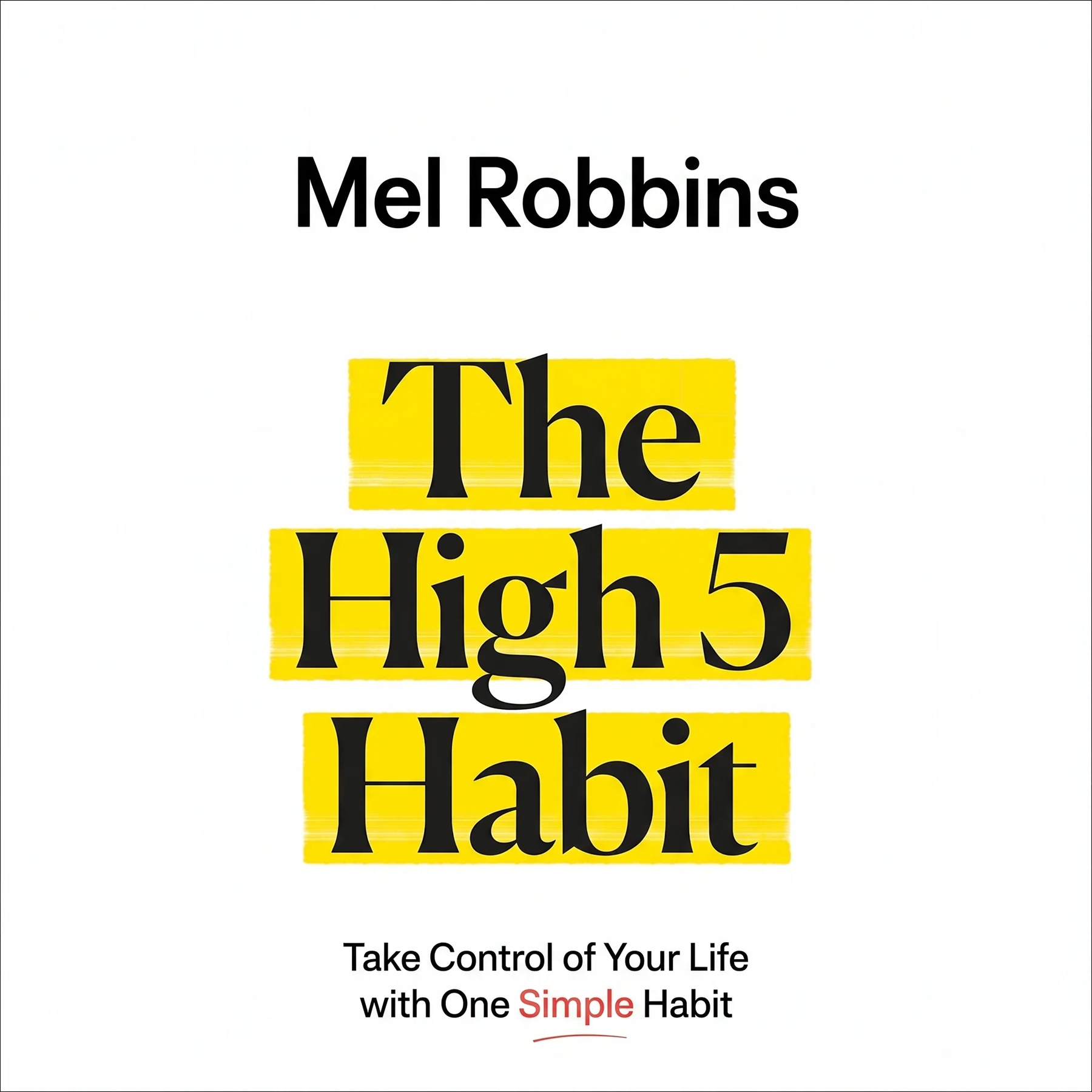
EnglishไทยThe High 5 Habit: Take Control of Your Life with One Simple Habit
By Mel Robbins
Shows how a one-minute morning gesture, high-fiving your own reflection, starts retraining the self-critical habits behind self-sabotage, and how mantras, action and gratitude carry that change through the rest of your day.
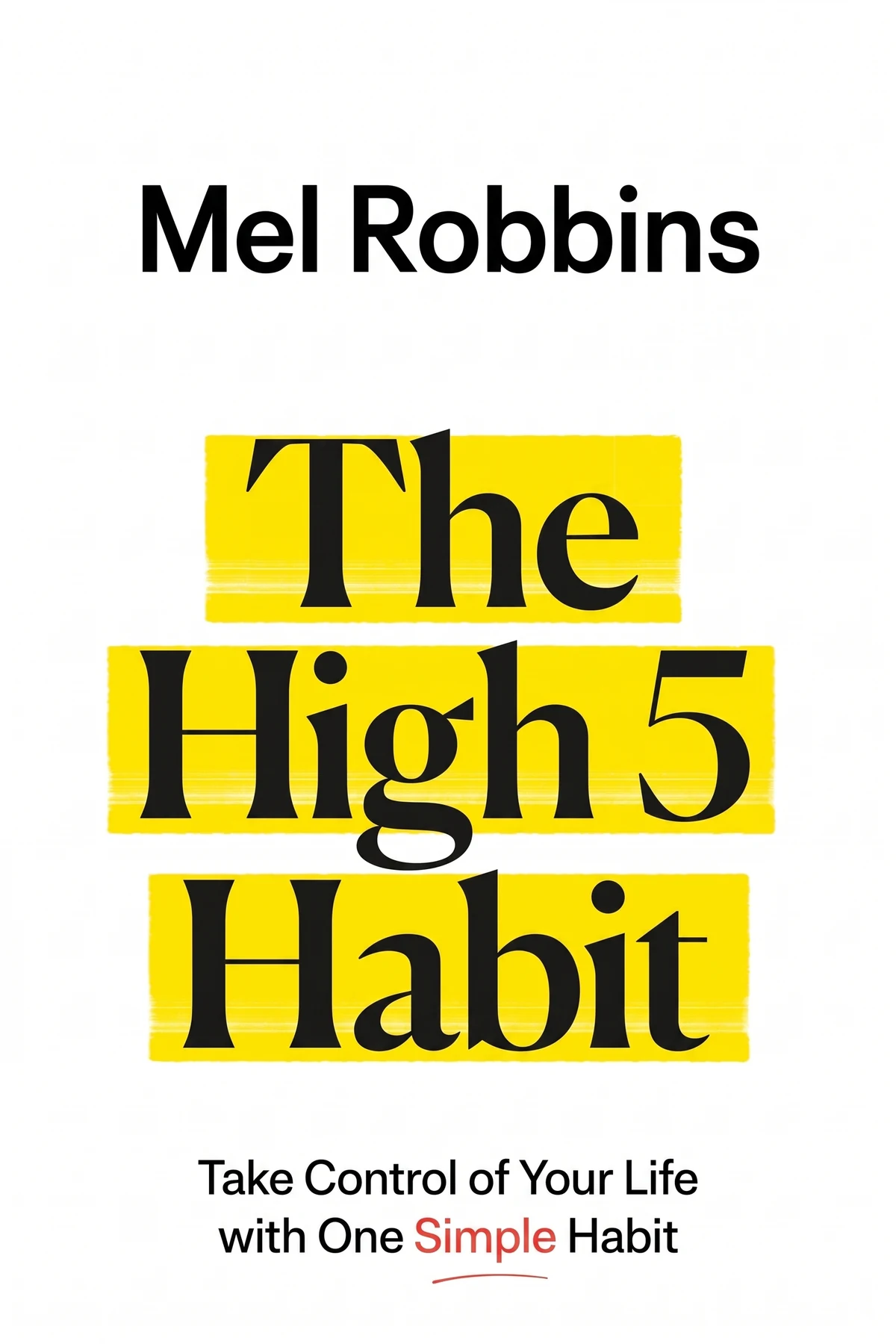
Table of Content
1. Introduction
1 min 00 sec
Most of us start the day in front of a mirror, finding fault with our looks and listing everything that could go wrong before breakfast. In The High 5 Habit, Mel Robbins, a trained lawyer turned life coach, offers a strange and simple fix: raise your hand and high-five your own reflection. She points to research suggesting that adding an unfamiliar twist to a familiar routine puts the brain in a state where new connections form more easily.
Her larger case is that harsh self-talk is a habit, and any habit can be replaced. You interrupt the old thoughts, cheer for yourself on purpose and behave like the person you hope to be. The argument runs from a law student who walked out on an internship she wanted, through a filter in the brain that decides what you notice, to the small word worth saying instead of sorry. What you take from it is a one-minute morning routine and a way to stop working against yourself.
2. Break the loop of self-doubt and self-sabotage
1 min 58 sec
A law student landed the internship she wanted, cared about the project, and still never began it. Her story shows how one kind of thought can quietly undo opportunity after opportunity, and where the cycle can be broken.
3. Start each morning on your own side
1 min 47 sec
Every morning you spend a few minutes alone with the person in the mirror, and most of us waste them. Robbins describes the odd moment she broke her own routine, and what she noticed afterward.
4. Use a high five to train your brain
2 min 00 sec
Torn blisters, a long race and a crowd of strangers kept one runner going. A classroom experiment and a strange-sounding field of brain research help explain what those strangers were giving her.
5. Teach your mind's filter to notice good things
1 min 46 sec
Nobody forgets to clean the lint trap in a dryer for long, because the machine stops working. Robbins argues the mind has a trap of its own, and most of us have never once cleared it.
6. Swap a harsh thought for one you believe
1 min 57 sec
Positive slogans often fail the moment real life pushes back. Robbins explains why most mantras get rejected by the mind that repeats them, and what has to happen after the words for a new belief to hold.
7. Say thank you where you would say sorry
1 min 46 sec
Apologizing looks polite and harmless, even generous. Robbins noticed that a friend’s constant sorries were wearing on her, and the reason reveals what the habit says about the person who can’t stop doing it.
8. Conclusion
1 min 10 sec
The High 5 Habit keeps its promise deliberately small. Robbins does not ask anyone to become a different person overnight. She asks you to recognize that the voice running you down each morning is a habit, the same habit that once walked her out of an internship she wanted, and that habits can be retrained. A raised hand at the mirror is where that retraining starts, because it gives the brain something new to notice and gives you a first act of support.
From there the work spreads into the day. Stop the familiar critical thought with a plain refusal, replace it with a line you actually believe, and then behave in a way that proves it. When someone helps you, thank them instead of apologizing. And if a bigger change has been waiting for years, Robbins suggests setting a deadline three weeks away: enough time to plan the details, too little to keep putting off the first real step.
Keep the marathon in mind. Robbins finished on torn blisters because strangers held out their hands as she ran past. Every morning, you can be one of those strangers for yourself.
About this book
What is this book about?
Many people begin each morning by criticizing the face in the mirror and worrying about the day ahead. Mel Robbins knows the pattern well. As a law student, fear of failure led her to walk out of one internship she wanted and invent an excuse to turn down another job. Her argument is that this inner critic is a habit, and habits can be replaced. The starting point is almost absurdly small: raise your hand and give your reflection a high five. Robbins backs the gesture with an experiment in which high fives motivated schoolchildren better than praise, with research from a field called neurobics, and with the idea that a filter in the brain, the Reticular Activating System, can be taught to notice positive things. From there she lays out a method for the rest of the day. Cut off critical thoughts, swap in a mantra you truly believe, behave as the person you hope to be, and offer thanks in the moments when an apology would normally come out. Readers get a routine that takes a minute, along with a clear explanation of why it works on a mind that has been working against itself.
Book Information
Who it's for
Self-critical every morning
People who start each day criticizing themselves in the mirror and want a kinder routine.
Students and new professionals
Students and early-career professionals who turn down opportunities out of fear of failing.
Guilty for needing help
Chronic apologizers who feel guilty for needing help and want a more confident way to ask.
About the Author
Mel Robbins
Mel Robbins studied at Dartmouth College and trained as a lawyer at Boston College Law School before becoming known for her TEDx talk How to Stop Screwing Yourself Over. Her books include Stop Saying You're Fine, The 5 Second Rule, The High 5 Habit and The Let Them Theory, which reached number one on the New York Times list. Her work has been translated into 65 languages. Since 2022 she has hosted The Mel Robbins Podcast, and she runs a Boston-based media company, 143 Studios.
Ratings & Reviews
Ratings at a glance
What people think
Listeners find this work highly accessible, often completing it in just a day or two, and they value the way its empowering message helps them stay centered on life's positive aspects. The content offers outstanding life guidance by conditioning the brain to recognize new opportunities and possibilities, which listeners describe as being simple to put into practice. They characterize the material as authentic and relatable, with one listener noting how it provides personal and relatable examples, while others mention that it evokes deep emotions and helps sustain a better mood throughout the day.
Top reviews
Tariq
Picked this up on a whim after seeing Mel on social media, and I wasn't prepared for how much it would resonate. It is refreshing to find a self-help book that doesn't feel like a chore to get through. The concept of training your brain to look for opportunities rather than threats—specifically through the Reticular Activating System (RAS)—is a total game changer for my morning routine. I finished the whole thing in two sittings because the writing is so conversational and genuine. While the idea of high-fiving a mirror sounds ridiculous at first, there is something weirdly empowering about acknowledging yourself before the world gets a chance to tear you down. The Uber driver anecdote really hit home for me regarding the importance of setting hard deadlines. It’s not just fluff; it’s a practical framework for shifting your mood instantly. Truly exceptional advice for anyone feeling stuck.
Show moreWan
Wow, I didn't expect a book about a simple physical gesture to be so emotionally charged and impactful. I spent most of the second chapter crying because it forced me to realize how often I ignore my own needs to please others. The author shares some pretty raw personal experiences that make her feel human rather than just another guru on a pedestal. It took me only two days to finish, and I’ve already started the mirror habit every morning. There’s a certain magic in the simplicity; you don't need a fancy journal or a long meditation session to feel a shift. Truth is, we are often our own worst critics, so having a tool to flip that script is invaluable. My mood has been significantly more stable since I started focusing on these new possibilities. Run to get the audio version!
Show moreCarlos
The chapter on the RAS was the literal slap in the face I needed to finally get my life together. Look, I’ve read a lot of self-improvement books, but this one is different because it feels genuinely relatable and grounded in reality. Mel doesn't pretend to have it all figured out, and her vulnerability about her own struggles with anxiety makes the advice more credible. I love how she explains that our brains are literally designed to help us achieve what we focus on. It’s not just toxic positivity where you ignore the bad; it’s about choosing where to put your energy. Since I started high-fiving my reflection, I’ve noticed I’m much more appreciative of my small wins. This book is a complete game changer for anyone who feels like they’re stuck in a rut of self-criticism and doubt.
Show moreSoontorn
As someone who has struggled with chronic morning blues for years, this book provided a lifeline I didn't know I needed. There is a deep psychological shift that happens when you stop criticizing your reflection and start cheering for yourself instead. The truth is, we are often our own worst enemies, and Mel gives us a literal tool to sign a peace treaty with ourselves. I found the book exceptionally easy to read, finishing it in just two sittings while feeling more empowered with every chapter. It’s genuine, raw, and doesn't shy away from the messy parts of being human. I’ve already noticed a better mood throughout the day simply by acknowledging my own effort first thing in the morning. If you need a sign to start being kinder to yourself, this is it. Five stars all the way.
Show moreChanpen
Direct and punchy, Mel Robbins delivers a masterclass in reprogramming your internal dialogue. I’ve been recommending this to everyone because it’s one of the most practical books I’ve encountered this year. It trains your brain to find possibilities where you previously only saw dead ends and failure. The way she explains the Reticular Activating System makes the 'woo-woo' parts of manifestation feel grounded in actual biology. You start to see clues and coincidences everywhere once you tell your brain what is actually important to you. It’s a very fast read, but the impact lingers long after you close the cover. Don't let the simplicity of the title fool you—there is profound wisdom in these pages for anyone willing to actually do the work and try the habit. Simply life-changing.
Show moreMalee
Mel Robbins has a way of making you feel like she’s sitting right across from you at a coffee shop. This book is incredibly easy to digest, though I do think it could have been about fifty pages shorter without all the constant self-promotion of her other work. That said, her breakdown of how guilt acts like reins on a horse was a massive lightbulb moment for my own anxiety. I’ve been using the 5-4-3-2-1 method for a while, but adding the High 5 Habit feels like the missing piece of the puzzle for self-validation. The science bits are interesting, even if they are simplified for a general audience. It's a solid 4 stars because it actually gives you something to do rather than just something to think about. Definitely worth the read if you struggle with that heavy 'Why me?' mentality every morning.
Show moreKet
Ever wonder why you can be a loud cheerleader for everyone else but stay silent for yourself? This book tackles that specific internal struggle with a lot of grace and directness. I loved the section on turning jealousy into inspiration because it’s such a common, toxic emotion we usually try to hide. Mel’s advice on the 'But do you like me?' syndrome was another highlight that felt personally targeted at my own people-pleasing tendencies. The writing style is punchy and high-energy, which keeps you engaged even when the topics get a bit heavy or emotional. I’m giving it four stars because while it’s simple to apply, some of the examples felt a little too miraculous to be entirely realistic for everyone. Still, it’s a fantastic guide for anyone needing a major mindset shift without the fluff.
Show moreCee
Finally got around to reading this after seeing it everywhere, and I have to say, the simplicity is its greatest strength. Most self-help books are filled with complex systems that no one actually follows, but this is something you can start tomorrow morning without any prep. I appreciate how Mel links the High 5 Habit back to her previous 5-4-3-2-1 method, creating a cohesive strategy for personal growth. The stories about the Uber driver and other people she's coached were effective examples of how to force yourself to move forward. My only gripe is that the tone can be a bit too 'American TV host' at times, which might not suit everyone's taste. However, the core message about self-validation and breaking free from the destructive guilt cycle is incredibly powerful and necessary.
Show moreLily
After hearing all the hype, I found myself a bit underwhelmed by the actual substance of the pages. To be fair, the core message is great, but the book feels like one long advertisement for Mel’s other products and success stories. It gets repetitive after the third chapter, and I found the shift from scientific explanations to making a life-changing decision based on a psychic quite jarring and contradictory. Is it a science-based habit or just wishful thinking through the lens of confirmation bias? I appreciate the focus on the RAS and how our brains filter information, but the delivery felt a bit neurotic and self-obsessed at times. It’s a decent motivational boost if you’re feeling particularly low, but don't expect a deep psychological manual. Three stars for the few 'slap in the face' moments that actually made me stop and think.
Show moreDao
Not what I expected from a best-seller, as it felt more like a loosely twisted memoir than a practical guide. Frankly, I regret spending the money on this one because it’s mostly just the author talking about her own life in a way that felt uncomfortably highly-strung and self-obsessed. I was hoping for more actionable science and fewer anecdotes about her own stress-inducing experiences. There were even some weird hints of support for MLMs that rubbed me the wrong way entirely. While the basic habit is fine, you could learn the entire concept from a ten-minute YouTube video instead of slogging through 200 pages of self-congratulation. It felt like the book was trying too hard to convince me that it works instead of letting the results speak. Definitely wouldn't recommend it if you want something analytical or structured.
Show moreQuestions about this book
What is the main idea of The High 5 Habit by Mel Robbins?
Robbins argues that harsh self-talk is a habit that feeds self-sabotage, and that it can be replaced. Her starting point is high-fiving your own reflection each morning, a gesture of self-belief. She then carries it through the day: interrupt critical thoughts, repeat a mantra you believe, behave as the person you hope to be, and say thank you in place of sorry.
Does high-fiving yourself in the mirror actually work?
Robbins cites an experiment in which schoolchildren motivated with high fives felt better about their work and persisted longer than children praised for talent or effort. She also points to neurobics research suggesting that adding an unfamiliar twist to a familiar routine, such as brushing your teeth, puts the brain in a state where new connections form more easily. She suggests a five-day trial to test it yourself.
What is the Reticular Activating System in The High 5 Habit?
Robbins describes the Reticular Activating System, or RAS, as the brain’s filter that decides which information reaches conscious thought. Like a dryer’s lint filter, it can clog with rejections, setbacks and insults, so the mind favors negative input. Because the filter ranks things by importance, she argues you can train it to treat positive things as important by deliberately looking for them.
How do you apply the High 5 Habit to negative thoughts?
Robbins gives three steps. First, interrupt the thought by telling yourself you are not thinking about that. Second, replace it with a mantra that is encouraging and that you actually believe, since the mind rejects mantras it thinks are false. Third, behave as the person you hope to become would, because watching yourself act differently gives your mind proof that the new belief is true.
Why does Mel Robbins say to stop apologizing?
Robbins sees constant apologizing as a sign of excess guilt about having needs. She noticed that a friend’s frequent apologies irritated her, because they shifted attention to the friend and sought reassurance instead of thanking her. Gratitude, she argues, feels better to receive, honors the other person’s generosity and lets you acknowledge your needs without guilt.
Readers also enjoyed

59 Seconds: Change Your Life in Under a Minute
Richard Wiseman





A Guide to the Good Life: The Ancient Art of Stoic Joy
William B. Irvine


A High-Performing Mind: Strengthen Your Mind and Live Your Best Life
Andrew D. Thompson


Abundance: The Inner Path to Wealth
Deepak Chopra
AUDIO SUMMARY AVAILABLE
Listen to The High 5 Habit in 15 minutes
Get the key ideas from The High 5 Habit by Mel Robbins, plus 5,000+ more nonfiction titles.
- 5,000+ titles
- Listen as much as you want
- 7-day free trial
- Cancel anytime









