
12 min 36 sec
Available in: English
 ไทย
EnglishไทยThe 5 Second Rule: Transform Your Life, Work, and Confidence with Everyday Courage
By Mel Robbins
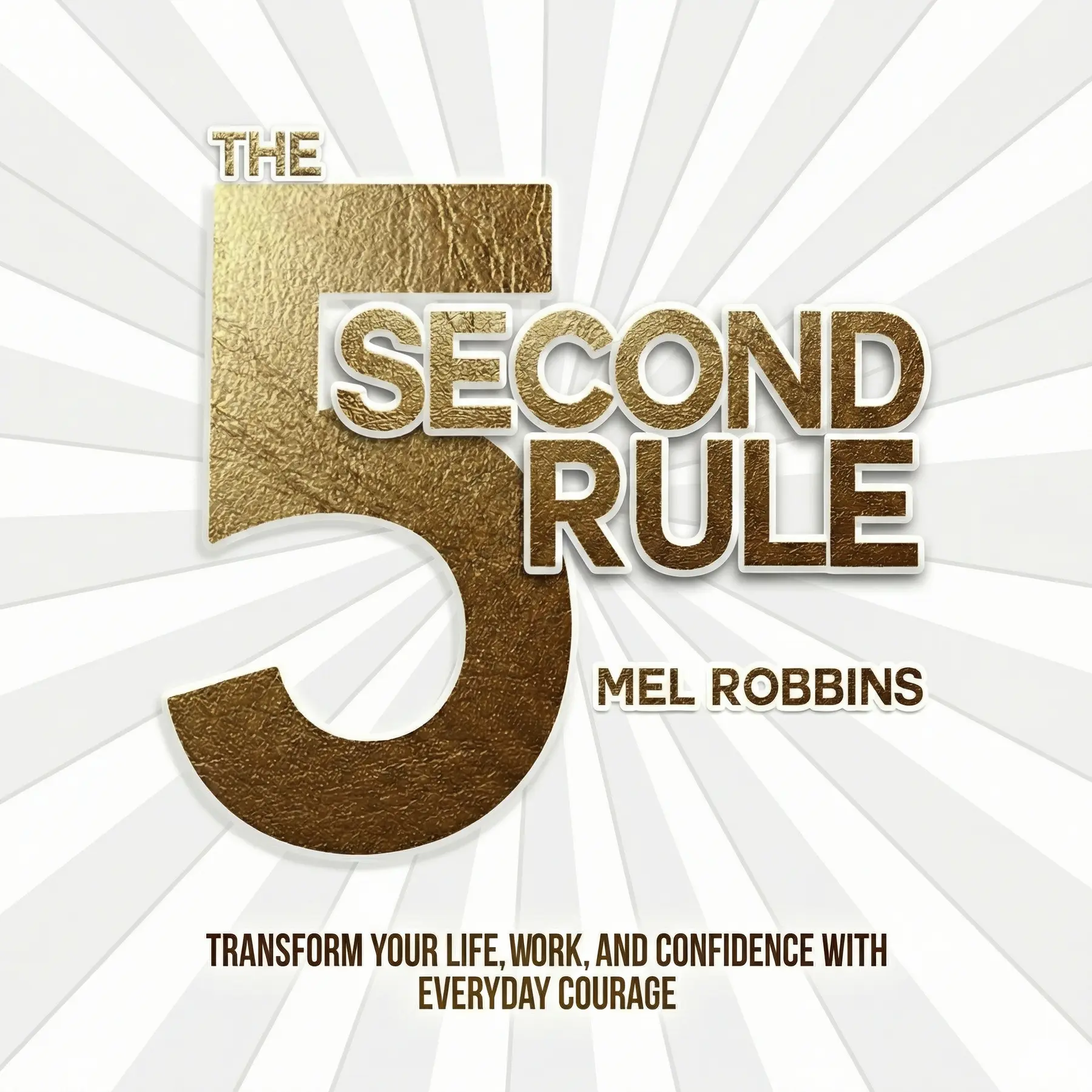
Mel Robbins offers one tool for the moment you hesitate: count backward from five and act. She shows how it helps with getting up, speaking up, procrastinating less and worrying less.
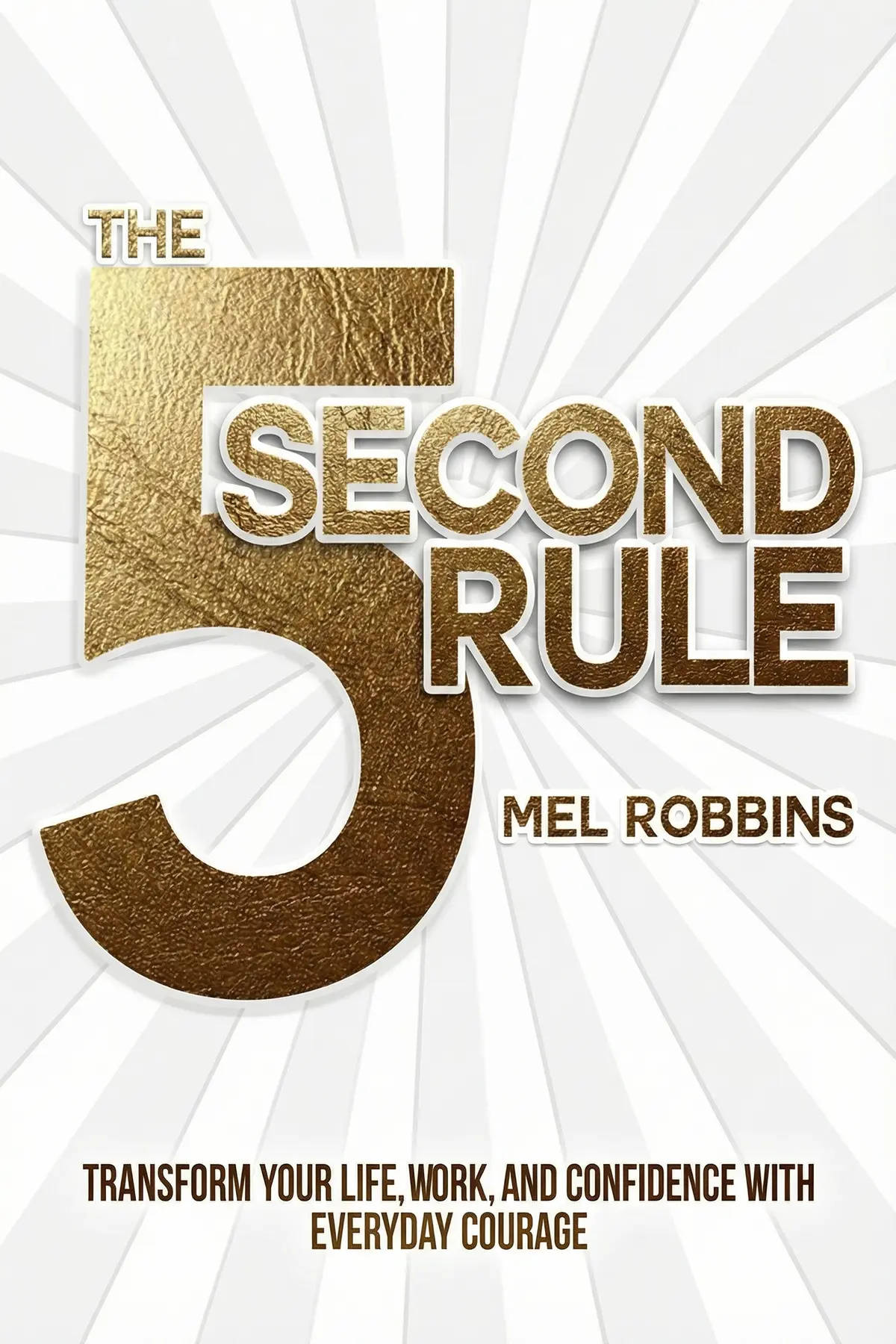
Table of Content
1. Introduction
56 sec
Most people already know what they should do next. What stops them is the few seconds after the thought arrives. In The 5 Second Rule, Mel Robbins offers a tool for that gap: count backward, five, four, three, two, one, and act before hesitation wins. She found it on a bad morning in her own life. She argues it works because our emotions, far more than our reasoning, decide what we do.
The whole case rests on one claim: small acts of everyday courage, started within five seconds, add up to a different life. What follows traces where the rule came from and why feelings make it necessary. It then aims the countdown at three ordinary problems: waiting for the right time, putting work off and worrying. Along the way come two questions to ask whenever anxiety takes over, and one sentence to say before an interview or a speech.
2. Get out of bed before your brain objects
1 min 44 sec
Out of work, short of money and stuck on the snooze button, Robbins tried something almost childish one winter morning. It worked, and she has an idea about why that tiny trick spreads to everything else.
3. Act on your goals even when your feelings disagree
1 min 48 sec
Some patients could list every argument for and against a choice and still could not make it. Their strange problem explains why good plans so often lose to a passing mood, and what athletes do differently.
4. Stop waiting for a right time that never comes
1 min 41 sec
Most employees in one survey were sitting on feedback for their bosses, and even an Apple cofounder nearly stayed in his day job. The cost of waiting is easy to miss until you add it up.
5. Everyday courage comes in five-second doses
1 min 48 sec
A shy woman on a city bus and a young preacher who barely had time to say yes changed history. Neither saw themselves as brave, and that is exactly what makes their story useful to you.
6. Break the procrastination loop the moment it starts
1 min 48 sec
Putting things off was long blamed on laziness and poor planning. A psychology professor’s view points somewhere else entirely, and it explains why a sudden urge to shop online can feel so good.
7. Turn worry into gratitude with two questions
1 min 46 sec
More than a thousand older people were asked what life had taught them, and one regret kept surfacing. Robbins pairs their answer with a countdown and a simple sentence that changes how nerves feel.
8. Conclusion
1 min 05 sec
Nothing in Robbins’s argument asks you to become a different person overnight. Her claim is that habits, mindset and even personality are flexible. They change through the smallest unit of behavior there is: the choice made in the five seconds after an impulse. A woman who could not get out of bed, a shy passenger on a bus and a doubting young preacher all show the same thing. Feelings come first, but they do not get the last word.
The tool costs nothing and fits anywhere. Start with the alarm clock, where failure is cheap and the win is felt at once. Then aim the count at the conversation you have been saving for the right moment, or the task your phone keeps rescuing you from. When worry starts to spread, count down and ask what you are grateful for. Before an interview or a talk, call the racing heart excitement.
None of these acts is dramatic on its own. Robbins’s bet is that these small choices, made five seconds at a time, can add up to quietly redraw who you are.
About this book
What is this book about?
Most people know what they should do: speak up at work, exercise, chase the project they keep postponing. The trouble comes in the seconds after the thought arrives, when fear, tiredness or doubt talks them out of it. Mel Robbins argues that this gap, not a lack of knowledge or talent, is where lives stall. Her answer is the five-second rule. When you feel an urge to act toward a goal, count backward from five to one and move before hesitation takes over. She found it on a hard morning in her own life. She grounds it in research on how emotions drive decisions, and in stories from Rosa Parks, Martin Luther King Jr., Steve Wozniak and E.L. James. Readers learn why waiting for the right moment rarely pays off and why procrastination is a way of coping with stress. They also learn how to use the same countdown to turn worry into gratitude and nerves into excitement.
Book Information
Who it's for
Professionals holding back ideas
Professionals who sit on ideas and feedback, waiting for a right moment that never comes.
Losing hours to phones
Students and remote workers who lose hours to their phones before starting real work.
Wanting help when anxious
Worriers and nervous speakers who want one simple tool for anxious moments.
About the Author
Mel Robbins
Mel Robbins studied at Dartmouth College and Boston College Law School and trained as a lawyer before becoming known for her TEDx talk How to Stop Screwing Yourself Over. Her books, from Stop Saying You're Fine to The Let Them Theory, which reached number one on the New York Times list, have been translated into 65 languages. Since 2022 she has hosted The Mel Robbins Podcast, nominated for the first Golden Globe for Best Podcast, and she runs a Boston-based media production company, 143 Studios.
Ratings & Reviews
Ratings at a glance
What people think
Listeners find the material straightforward to get through and deeply inspiring, packed with impactful guidance and practical pointers. This approach is highly regarded, with one listener characterizing it as an uncomplicated yet potent concept, and many remarking on how remarkably well it functions. They value its real-world utility, including one listener who notes it is an asset for those in therapy, and consider it a life-altering breakthrough that creates real change.
Top reviews
Sienna
Wow, I was not expecting such a physical reaction to a simple mental hack. I have spent years reading every productivity book on the market, but most of them just gave me more things to think about rather than things to do. The 5 Second Rule is different because it focuses on the bridge between thinking and acting, which is where I always get stuck. Counting down 5-4-3-2-1 sounds silly until you actually try it to get out of bed in the morning without hitting that snooze button for the fifth time. It's a game changer for anyone who struggles with that 'brain fog' or procrastination that keeps you glued to the couch. Some people might find the writing simple, but that’s exactly why it works for me. It is a powerful tool that is easy to remember when you are in the middle of a panic or a slump. This book truly transformed my daily momentum.
Show moreWyatt
Game changer is an overused term in the self-help world, but for someone struggling with paralyzing anxiety, it fits perfectly here. Not gonna lie, I was skeptical that a simple countdown could do anything for my mental state. But the truth is, this book provides a simple but powerful idea that actually intercepts the 'emergency brake' my brain pulls whenever I try something new. I’m blown away by how moved my body feels by the simple act of counting down and then just launching into action. The advice is easy to grasp and even easier to use in everyday life, whether you’re trying to lose weight or just get the courage to speak up in a meeting. It’s highly motivational and filled with useful tips that feel attainable. If you feel stuck, this is the push you need to finally get moving again.
Show moreWeera
Finally got around to reading this after hitting the snooze button on my life for far too long. I used to be just like the author, laying in bed while my kids waited for breakfast, feeling like a failure before the day even started. This book gave me the exact tool I needed to stop the spiral. It’s incredible how such a simple idea can be so life-transforming when you actually apply it. I listened to this on Audible, and Mel’s delivery is so energetic and move-inducing that you can't help but feel inspired. The testimonials, while numerous, actually helped me see how other people applied the rule to situations I hadn't even thought of yet. It’s a motivating read all-around and has definitely helped me get my shit together. I highly recommend this to anyone who feels like they are stuck in a rut.
Show moreMoo
Truth is, I didn't think counting backward would actually stop me from overthinking every single minor decision in my business. I was wrong. The 5 Second Rule is a simple but powerful idea that works incredibly well for those of us who tend to get 'paralysis by analysis.' Mel Robbins has a way of delivering powerful advice that feels like a pep talk from a smart friend rather than a lecture from an academic. The book is easy to read and I found myself flying through the chapters. Some might call it an infomercial, but when the product actually works, I don't mind the pitch. It has helped me intercept my pull towards procrastination and has made me much more decisive in my daily life. It’s an incredible tool for anyone looking to grow. I'm genuinely impressed by how much my productivity has shifted.
Show moreNit
Picked this up during a particularly low point where even making breakfast felt like a mountain I couldn't climb. I needed something that wasn't too 'woo-woo' or complicated, and this was perfect. The concept is super simple, making it easy to grasp and use as an actual tool in the heat of the moment. I love how Mel shares her own struggles with getting out of bed and managing her family; it made her feel very human and relatable. Reading about how the rule changed so many lives through the testimonials was actually quite moving. It’s a game changer for my mental health. I’m so motivated now, and it’s incredible how much more capable I feel just by using those five seconds to launch myself into action. This book is a must-read if you want to transform your life and stop waiting for 'the right time.'
Show moreNarongrit
After hearing Mel on a podcast, I decided to dive into the full text to see if there was more substance to the concept. To be fair, the core idea is extremely basic, but the way she frames it as a tool to intercept negative thought patterns is quite helpful. I appreciated the practical application tips, especially regarding how to build a business or improve relationships by just making the move before your brain talks you out of it. The book does feel a bit like an infomercial at times with the constant success stories, which can get a little tiring after the first fifty pages. However, the sincerity in her voice makes it a motivating read all-around. It’s not a literary masterpiece, but it’s a functional manual for people who are tired of their own excuses. I've already started using it to stop my late-night snacking habit.
Show morePannipa
As a practicing therapist, I am always on the hunt for accessible tools that my clients can implement without feeling overwhelmed by complex psychological jargon. This book fits that bill perfectly. While the writing style is simple, that is actually its greatest strength because it makes the powerful advice digestible for people in high-stress situations. I’ve started recommending the 5-4-3-2-1 technique to clients who struggle with procrastination or those who find themselves trapped in negative thought loops. It serves as a practical application for cognitive behavioral shifts. My only minor gripe is the layout, which feels a bit cluttered with social media screenshots and repetitive praise. Still, the core message is a valuable tool for anyone’s mental health toolkit. It truly helps people move from a state of thinking to a state of doing. It's a solid, functional read.
Show moreLaor
The concept itself is undeniably brilliant, yet I found the execution within these pages to be a bit bloated. Look, the 5-4-3-2-1 rule is a fantastic bit of advice that I have already started using to tackle my inbox every morning. It works. But did it need to be a whole book? Probably not. It reads like the author started speaking into a recorder and just printed the transcript without much of a plan for structure. I found myself skimming through the endless testimonials because they all started to sound the same after a while. I would have preferred more 'meat' regarding the science of habits or neurobiology. It’s a helpful concept, and Mel is a very likable narrator, but you can get the gist of it in a much shorter format. It’s a decent library borrow, but maybe not a permanent shelf addition.
Show moreSuphan
Frankly, this felt like a very expensive marketing brochure for a YouTube video I already saw for free. While Mel Robbins is clearly a charismatic and sincere person, the book itself is incredibly repetitive and leans way too heavily on social media testimonials. I was hoping for more scientific depth or nuanced psychological strategies, but instead, I got page after page of people saying 'it worked!' without much 'how' beyond the initial hook. The writing style feels a bit juvenile at times, almost like it was written for a high school audience rather than professionals. If you have five seconds to spare, just watch her TED talk and you will have gained 95% of the value. It’s not that the advice is bad, it’s just that it doesn't require a few hundred pages to explain a countdown. Save your money and just start counting.
Show moreChatchai
I should have 5-4-3-2-1’d my way right out of the bookstore before wasting twenty dollars on what is essentially a transcript of a TED talk. There is absolutely no practical use in this book that you can't find in a five-minute YouTube clip. The entire thing feels like an elaborate advertisement for Mel Robbins' brand, stuffed with filler and 'rah-rah' testimonials that don't add any real value. Her writing is simple and at times juvenile, making it feel more like a high-school project than a serious self-help guide. I don't appreciate being marketed to on every single page. It’s frustrating because the concept is okay, but it is stretched so thin that it becomes transparent. If you want to change your life, just make decisions faster. There, I just saved you eight hours of reading. Genius, right? This was a total disappointment.
Show moreQuestions about this book
What is the 5 second rule by Mel Robbins?
It is a simple decision tool. When you feel an urge to act on a goal, or feel yourself sliding toward a bad habit, you count backward from five to one and move at one. Robbins argues the countdown pulls attention away from anxious thoughts and toward the action, before hesitation wins. She first used it to stop hitting snooze and later to exercise and update her résumé.
Why does the 5 second rule work, according to the book?
Robbins builds on the neuroscientist Antonio Damasio, who found that emotions decide about 95 percent of our choices. His patients who could not feel emotion could list pros and cons but could not decide. Because feelings drive action, Robbins argues, you need a way to act before a feeling of fear or tiredness takes over, the way athletes push past exhaustion. Changing behavior first then changes how you see yourself.
How can the 5 second rule help with procrastination?
Drawing on Timothy Pychyl of Carleton University, Robbins treats procrastination as a way of coping with stress through instant relief, not mere laziness. The fix is to just get started. The moment you feel the pull to check your phone or do something else, count from five to one and begin the task. She adds that beating procrastination this way gives you back a sense of control over your life.
How does Mel Robbins suggest dealing with worry and nerves?
When worry starts, count down calmly from five. At one, ask what you are grateful for in this moment and what you want to remember. Robbins notes that most of the more than 1,200 older people Karl Pillemer interviewed regretted the time they spent worrying. For nerves before an interview or speech, she suggests saying you are excited instead of telling yourself to calm down.
Who should read The 5 Second Rule?
It suits people who know what they want to do but keep putting it off: employees holding back ideas from their managers, people who procrastinate on their phones, and anyone waiting for confidence before acting. Its stories, from Rosa Parks and Martin Luther King Jr. to Steve Wozniak and E.L. James, show ordinary hesitation overcome by small, quick decisions.
Readers also enjoyed

59 Seconds: Change Your Life in Under a Minute
Richard Wiseman





A Guide to the Good Life: The Ancient Art of Stoic Joy
William B. Irvine


A High-Performing Mind: Strengthen Your Mind and Live Your Best Life
Andrew D. Thompson


Abundance: The Inner Path to Wealth
Deepak Chopra
AUDIO SUMMARY AVAILABLE
Listen to The 5 Second Rule in 15 minutes
Get the key ideas from The 5 Second Rule by Mel Robbins, plus 5,000+ more nonfiction titles.
- 5,000+ titles
- Listen as much as you want
- 7-day free trial
- Cancel anytime









