
14 min 12 sec
Available in: English
The Heat Will Kill You First: Life and Death on a Scorched Planet
By Jeff Goodell
Shows why heat is the deadliest force on a warming planet, how it shaped and now threatens the human body, and why cities, migrants, the poor and our defenses against disease feel it first.
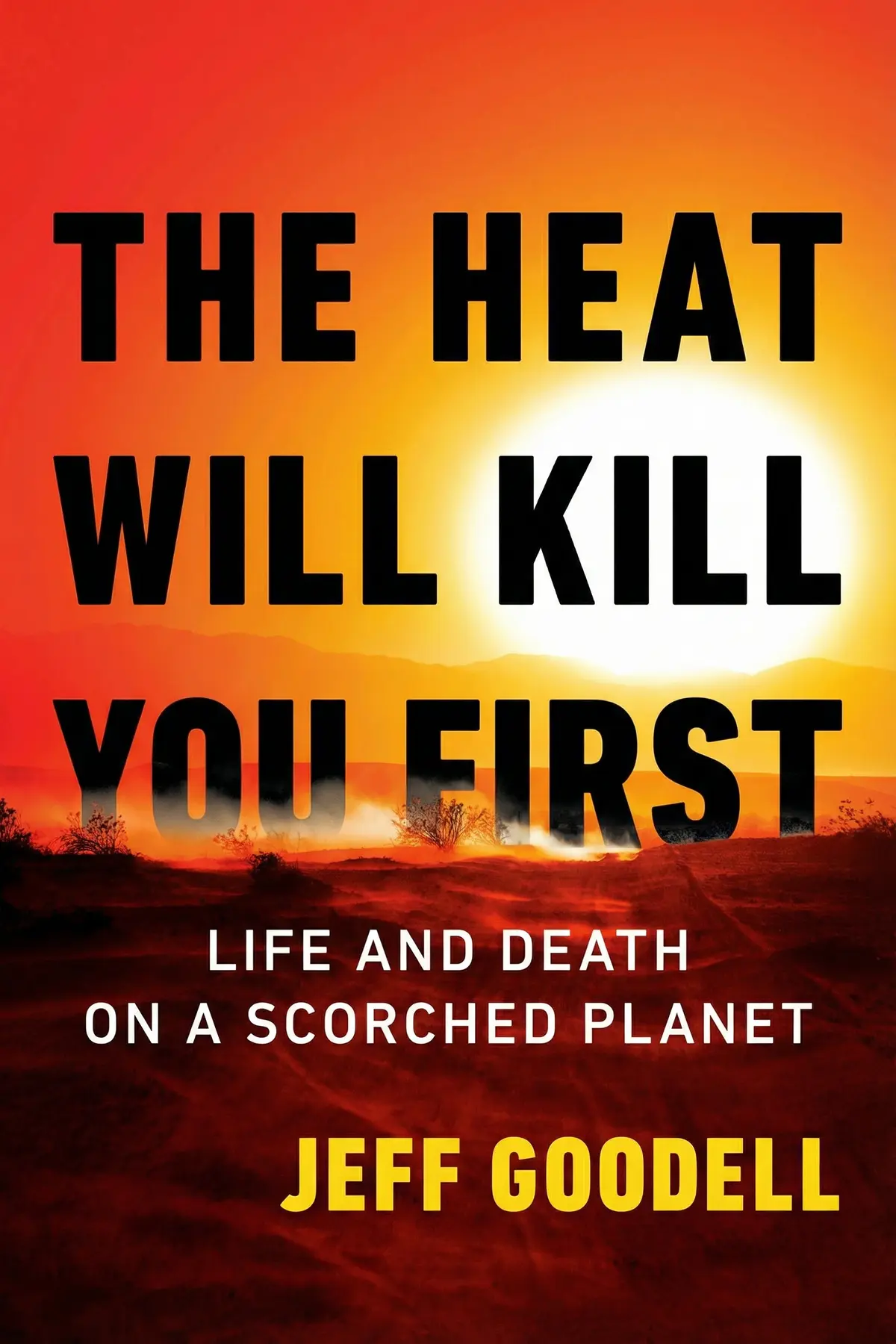
Table of Content
1. Introduction
1 min 04 sec
Most people think of heat as a discomfort, something to wait out with a fan and a cold drink. In The Heat Will Kill You First, longtime Rolling Stone climate writer Jeff Goodell argues it is the deadliest force a warming planet produces: in 2019, extreme heat killed more than 489,000 people worldwide, more than every other natural disaster put together.
His case is that our bodies, our cities and our societies were shaped for a moderate climate, and warming is now moving faster than we can adapt, with the poor paying first. Goodell follows heat from a three-day disaster in the Pacific Northwest to the sweat glands of our ancestors, the slums of Chennai, the Sonoran Desert and a mosquito bite in the Florida Keys. Along the way he explains how to cool a body in danger, who will be forced to move, and which diseases will travel with the heat. The next heat wave in the news will read differently after this, as a story about bodies, money and borders.
2. Read a heat dome as the warning it is
2 min 00 sec
A region once thought safe from extreme heat lost a town, a billion sea creatures and at least a thousand people in three days. Scientists know what caused it. What they cannot tell you is where it lands next.
3. Know the cooling system evolution built into you
1 min 53 sec
Our ancestors could outrun animals through the hottest hours of an African afternoon. The same features that gave them that edge now set a hard ceiling on what a human body can take.
4. Cool your core fast when heat turns dangerous
1 min 47 sec
Drinking plenty of water feels like the safe answer on a scorching day. Goodell explains why it is not enough, which parts of the body to cool first, and which common pills can make things worse.
5. See why city heat falls hardest on the poor
2 min 05 sec
Two cities, one dry and one humid, show how concrete, missing trees and air conditioning divide residents into those who can escape the heat and those who simply have to endure it.
6. Heat will decide who moves and who stays out
2 min 07 sec
Sharks can outswim a warming ocean while starfish cannot, and people face their own version of that split. Heat is pushing hundreds of millions to move, and then turning into a weapon against them.
7. Understand how a warming world spreads disease
2 min 04 sec
A woman in the Florida Keys caught a tropical fever in the middle of the COVID-19 pandemic. Her case points to a far larger risk hiding in mosquitoes, thawing ground and frightened bats.
8. Conclusion
1 min 12 sec
Goodell admits his subject is dark, but he found hope in the people working to reimagine how we might live. He suggests we may come to accept heat deaths as normal. During the COVID-19 pandemic, the United States lost thousands of people a day, and the deaths of the old, the sick and the poor quickly faded into the background. Heat deaths could fade the same way, accepted as the price of summer.
His answer is to keep seeing the links. One heat dome kills hawks, salmon and elderly neighbors in the same week. A slum in Chennai and a desert trail in Arizona belong to one story about who can buy relief. A mosquito in Tavernier and a bat in Malaysia carry news of the same warming.
Some of this you can act on now. Learn the body’s cooling points, the soles, palms and upper face, and teach them to the people you live with. Check on the neighbor without air conditioning when the forecast turns. When your workplace or city plans for heat, ask who is left outside the plan.
There is no map for what comes next, Goodell writes, but heat makes one thing plain: we are in this together.
About this book
What is this book about?
Most people treat a heat wave as an uncomfortable week to wait out. Jeff Goodell argues that heat is the climate crisis at its most direct and most deadly. In 2019 alone, extreme heat killed more than 489,000 people worldwide, more than all other natural disasters combined, and researchers estimate heat waves have cost the world economy $16 trillion since the 1990s. Goodell builds his case from the ground up. He starts with a three-day heat dome that devastated the Pacific Northwest in 2021, then explains how evolution gave humans a cooling system built for a moderate climate. From there he follows heat into overheated cities like Phoenix and Chennai, across deserts where migrants risk death, and into the spread of mosquitoes and viruses as animals flee their warming homes. Readers get a clear picture of who suffers most and why, along with practical advice for cooling a body in danger. They also get Goodell's plea not to grow used to heat deaths, and his reminder that on a hotter planet everyone's fate is connected.
Book Information
Who it's for
Following climate news
Readers who follow climate news and want to understand why heat, not storms, may be the deadliest threat.
Working in hot cities
Managers, planners and outdoor workers in hot cities who need to know who is most at risk.
Caring for the vulnerable
Anyone caring for older or vulnerable people who wants practical heat safety advice.
About the Author
Jeff Goodell
Jeff Goodell is an American non-fiction author and a longtime contributing writer to Rolling Stone, where he has covered climate change, energy and the environment for more than two decades. The Heat Will Kill You First became a New York Times bestseller and was named a best book of the year by NPR, The Economist and the Los Angeles Times. His earlier book, The Water Will Come, was among the New York Times Critics' top books of 2017. He has discussed climate and energy on NPR, CNN and MSNBC, and he is a 2020 Guggenheim Fellow.
Ratings & Reviews
Ratings at a glance

What people think
Listeners find this work to be a highly accessible and educational experience, praised for its superior prose and thoroughly documented material. The narrative effectively emphasizes the dangers of extreme heat and climate change by weaving in stories about actual individuals. Listeners characterize the text as a perspective-shifting revelation, and one listener highlights how it explains the science clearly. There are varying opinions regarding how frightening the content is, as some perceive it as terrifying while others do not share that view.
Top reviews
Pensuda
Living in a scorching urban environment makes this read feel less like a warning and more like a current events report. Goodell manages to take the abstract concept of global warming and distill it into the visceral sensation of your skin burning on a sidewalk. I found the sections on how Paris is redesigning its streets to be incredibly hopeful, contrasting sharply with the bleak reality of how heat impacts the human body on a cellular level. To be fair, it is a frightening book, but ignoring the temperature won’t make it drop. The writing is accessible and avoids the dense academic jargon that usually makes these topics feel inaccessible to the general public. It’s a necessary, if sobering, look at our immediate future.
Show moreAmy
Wow, this was a punch to the gut that I wasn't entirely prepared for even as a climate-conscious person. Goodell doesn't just talk about numbers or degrees; he talks about people, like the farmworkers and the elderly, who are on the front lines of this invisible killer. The prose is sharp and fast-paced, keeping me engaged even when the subject matter felt overwhelming. It’s rare to find a book that handles science so clearly while maintaining such a high level of emotional resonance. I appreciated the historical context regarding how long we've actually known about this crisis, dating back to the 19th century. Truly an essential read for anyone trying to understand why our summers feel so much more dangerous lately.
Show moreSamroeng
Ever wonder why we treat 110 degrees as a simple weather report instead of a looming medical emergency? This book answers that question by breaking down the 'silent' nature of heat as a predator. The anecdotes about real people struggling in places like Tampa and Phoenix make the data feel personal and immediate. Not gonna lie, the section on how air conditioning actually contributes to the very problem it solves was a massive wake-up call for me. It’s a well-researched, relatable, and deeply informative piece of journalism that should be required reading for every city planner and politician. Goodell’s writing is exceptional, turning what could be a dry subject into a narrative that feels like a high-stakes thriller.
Show moreSaengdao
Truth is, I used to think of global warming as a rising sea problem, but Goodell successfully reframed it as a 'cooking from the inside out' problem. The way he explains the science of how our hearts and lungs struggle against extreme temperatures is both fascinating and horrifying. I loved the inclusion of the Paris metro expansion and the efforts to green the city—it gave a much-needed glimmer of hope in an otherwise dark narrative. The book is incredibly well-researched, and the narrator for the audiobook version did a fantastic job keeping the tone serious but engaging. It’s rare to find a science-heavy book that you can actually recommend to your non-scientist friends without hesitation.
Show morePriya
Terrifying, essential, and masterfully written. This isn't just a book about the environment; it's a book about how we live, how we build, and how we survive. Goodell brings a human face to the statistics, making the looming catastrophe feel like a personal story rather than a distant threat. The science is presented clearly enough for anyone to follow, yet it never feels like it's talking down to the reader. I finished this feeling a strange mix of profound anxiety and a renewed desire to see real systemic change in our energy policies. It’s a thought-provoking masterpiece that will stay with me for a long time.
Show morePot
Jeff Goodell has a real knack for translating complex thermal dynamics into something a layperson can actually visualize, though he does meander a bit. The chapters function almost like standalone essays, which makes it easy to digest in sittings, but occasionally the narrative flow gets lost in his personal travelogues. Frankly, I didn’t need twenty pages on boat repairs in the Antarctic to understand that glaciers are melting at an alarming rate. However, when he sticks to the science—like the terrifying way our sweat response fails in high humidity—the book is unputdownable. It’s a thought-changing eye-opener that forces you to respect the sun in a way you probably haven't since you were a child.
Show moreNikolai
The chapter on melting glaciers was easily the standout for me, providing a terrifying clarity on how fast things are actually shifting. I appreciated how the author moved through different ecosystems, from the bottom of the ocean to the middle of a cornfield, to show how interconnected these temperature spikes are. To be fair, some of the personal vignettes felt a little like 'journalistic padding' and could have been tightened up to keep the momentum going. Look, we all know it’s getting hotter, but seeing the specific mechanics of how heat affects everything from insect migrations to the stability of our electrical grids is eye-opening. It isn't just about 'global warming' anymore; it's about the literal survival of our biological systems.
Show moreLars
Finally got around to this after seeing it everywhere, and it certainly lives up to the 'fear porn' label some have given it, but for good reason. The reality is scary, and Goodell doesn't sugarcoat the fact that we are living through the coolest summers we will likely ever experience again. I particularly liked the discussion on urban heat islands and how ancient architecture handled cooling better than our modern glass boxes do. Some parts felt a bit repetitive, and the author’s interjected opinions occasionally bordered on annoying, but the core information is too important to ignore. It’s a solid 4-star read that will definitely change how you look at a forecast.
Show moreYam
As someone who lives in a city where the 'heat island' effect is very real, the sections on urban planning were absolutely fascinating. Goodell does a great job of showing that heat isn't an equal opportunity killer; it hits the poor and the marginalized much harder. I did find the author's frequent mentions of his own travels a bit distracting—it felt like he was bragging about his carbon footprint while lecturing us on ours. Despite that, the information about the history of climate warnings in the US government was a great addition. It's a sobering reminder that we've had the data for decades and chose to look away. Definitely worth your time if you want to understand the modern world.
Show moreWei
While the core message is undeniably urgent, the execution felt like I was paying for the author's luxury vacation to the poles. I found the writing style incredibly frustrating and full of unnecessary filler that distracted from the actual science. One moment we’re learning about fascinating biology, and the next we’re spending an entire chapter praising someone for the 'brave' act of giving heat waves names like they’re hurricanes. It felt a bit like climate voyeurism—lots of pointing at tragedy without offering much in the way of coherent solutions or deep nuance. Some of the scientific assertions, like the specific temperature at which cells break down, seemed oversimplified to the point of being misleading. There are better, more rigorous books on this topic if you want actual data over anecdotes.
Show moreQuestions about this book
What is the main idea of The Heat Will Kill You First?
Jeff Goodell argues that heat is the most direct and deadly effect of climate change. Human bodies, cities and societies were shaped for a moderate climate, and warming is now outpacing our ability to adapt. In 2019, extreme heat killed more than 489,000 people, more than all other natural disasters combined. The harm falls hardest on the poor, the elderly, outdoor workers and people forced to migrate.
How do you cool someone down during heatstroke, according to Jeff Goodell?
Goodell says drinking water helps but will not prevent heatstroke on its own. The key is lowering core body temperature quickly with cold showers, cold baths or bags of ice. Focus on the soles of the feet, the palms and the upper face, where blood flows close to the skin. He also warns that Tylenol and aspirin can worsen the situation by affecting the kidneys.
Why are cities more dangerous in a heat wave?
Concrete, steel and asphalt trap heat, so cities can be up to 20 degrees warmer than the countryside at night. Goodell shows that heat deaths in Maricopa County, Arizona tripled in a decade. In Chennai, India, lost wetlands and trees left outdoor workers and slum residents with almost no relief, while wealthier residents relied on air conditioning.
How does climate change spread disease in the book?
Goodell explains that warmth widens the range of mosquitoes such as Aedes aegypti, which carries dengue and Zika, and that by 2080 this could expose 5 billion people to risk. Warming also forces animals into new contact with people. Of about 40,000 mammal viruses, a quarter could infect humans, and bats are a special concern, as with the Nipah virus, which kills 75 percent of those infected.
Is there any hope in The Heat Will Kill You First?
Yes, though Goodell does not soften the danger. He points to people already working to reimagine how we live, and to cities like Los Angeles and Paris adding shade trees and deflecting sunlight. His central worry is that we will grow used to heat deaths, as he believes happened with COVID-19. His hope rests on remembering that everyone on the planet is connected.
Readers also enjoyed

Beyond Words: What Animals Think and Feel
Carl Safina
Cod: A Biography of the Fish That Changed the World
Mark Kurlansky
Comfortably Unaware: What We Choose to Eat is Killing Us and Our
Richard A. Oppenlander

Cradle to Cradle: Remaking the Way We Make Things
William McDonough
Drinking Water: A History
James Salzman
AUDIO SUMMARY AVAILABLE
Listen to The Heat Will Kill You First in 15 minutes
Get the key ideas from The Heat Will Kill You First by Jeff Goodell, plus 5,000+ more nonfiction titles.
- 5,000+ titles
- Listen as much as you want
- 7-day free trial
- Cancel anytime









