

14 min 44 sec
Available in: English
The Gift of Not Belonging: How Outsiders Thrive in a World of Joiners
Psychiatrist Rami Kaminski describes otroverts, people who connect well one-on-one but feel no pull to join groups. He shows why they get misread, and how accepting the trait turns it into independence, self-trust and fresh thinking.
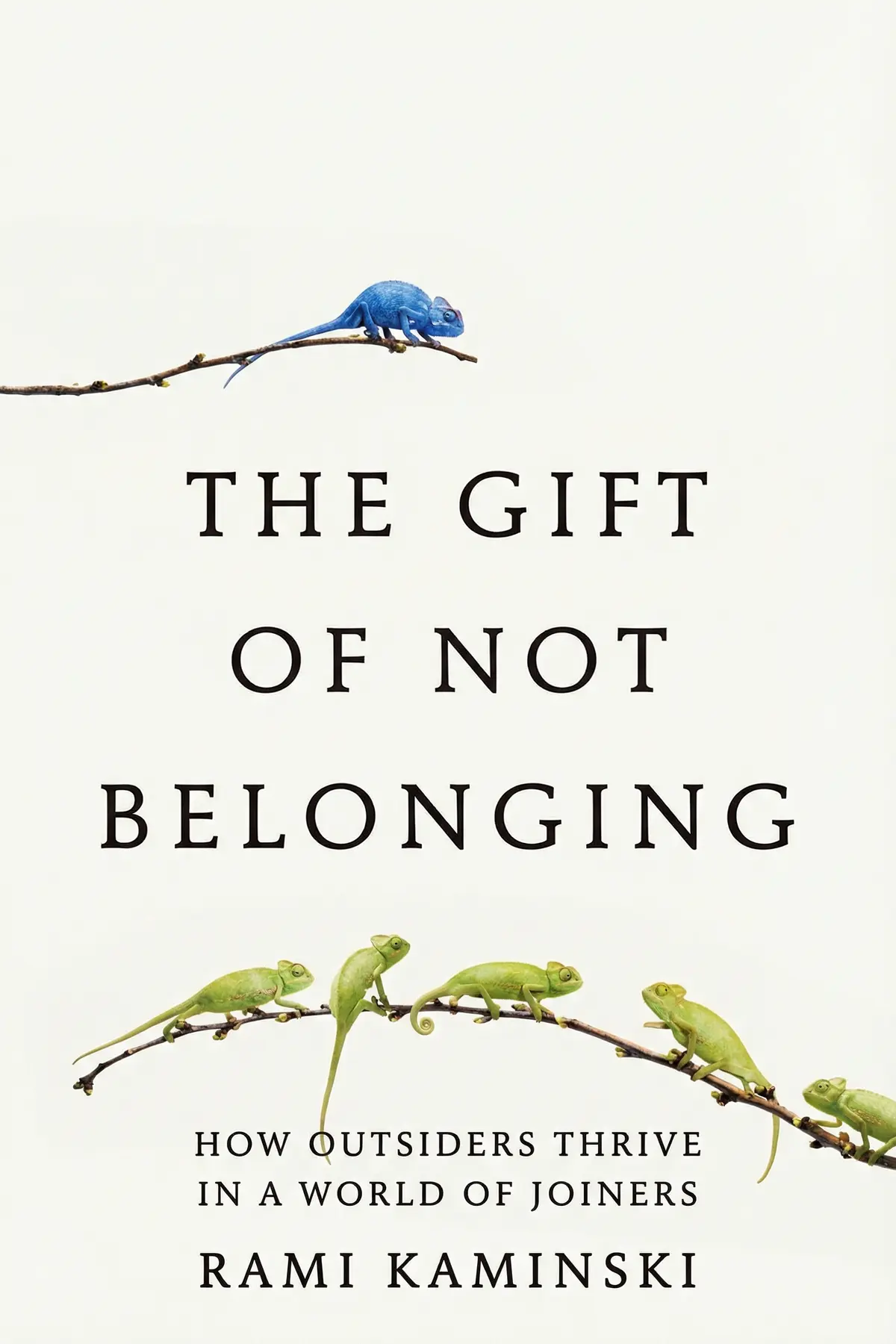
Table of Content
1. Introduction
59 sec
If a crowded party leaves you lonelier than an evening on your own, you may not be shy or broken at all. In The Gift of Not Belonging, psychiatrist Rami Kaminski argues that some people simply lack the drive to join groups, and he calls them otroverts. They are neither introverts turned inward nor extroverts turned toward the crowd. They face another way entirely, and with one person at a time they can be warm and even magnetic.
Kaminski, drawing on his patients and his own life, treats this as a healthy and permanent way of being. His throughline is simple: otroverts suffer when they force themselves to belong and thrive once they accept that they never will. What follows will help you spot the trait, separate it from the labels it gets confused with, choose which gatherings deserve your energy, and see why minds that ignore the crowd often notice what the crowd misses.
2. Recognize the otrovert behind a sociable face
2 min 07 sec
A teenager is invited to every party, liked by adults and never bullied, yet the harder her parents push her to fit in, the more out of place she feels. Kaminski thinks they are solving the wrong problem.
3. Spot the labels that misread otroverts, and correct them
2 min 12 sec
One woman spent years in treatment for a condition and barely improved. Her years of treatment had brought little improvement, because it targeted a phobia she never had. The trouble was that they were treating something she never actually had.
4. See where the pressure to join comes from
2 min 08 sec
A ten-year-old at his first Scouts meeting expected to feel part of something bigger. Instead, one ceremony gave him an early sense that he was fundamentally different from the boys around him.
5. Skip draining events without losing the people
1 min 55 sec
For years one man attended every family function out of guilt and came home resentful. A simple sorting habit gave him his energy back, and the feared fallout from saying no never came.
6. Fit school, work and old age to your nature
2 min 07 sec
A popular fourteen-year-old with every social advantage began falling apart, and the cause had little to do with what her parents feared. Each stage of life sets a different trap for people who never wanted in.
7. Turn independent judgment into your greatest advantage
2 min 07 sec
Hundreds of psychiatric patients had been written off as hopeless for decades. One doctor’s refusal to accept the verdict everyone shared changed their lives, and it reveals what outsiders bring that insiders rarely can.
8. Conclusion
1 min 09 sec
Kaminski turns a familiar question around. The usual one asks how to help someone belong. His asks what happens to a person who was never built to, and across A, T, M and his own Scouts evening, the answer repeats: the trouble starts with the forcing, and the healing starts with acceptance. The quiet figure in the corner of the party, watching, may be the one who sees what everyone else has agreed to overlook.
What follows is practical. Notice whether you feel lonelier in a crowd than alone, and treat that as information about your nature before anyone treats it as a condition. Sort your obligations the way J did, let the unnecessary ones go, and expect the people who matter to stay. Shape your work around independence where you can, as D did when she left her job to work for herself. And when your judgment departs from the group’s, give it a fair hearing before you fold.
Belonging, in Kaminski’s telling, was never the only road to a good life. For some people, the distance is the gift.
About this book
What is this book about?
Some people go to the parties, laugh at the jokes and handle small talk well, yet feel most alone in a crowd. Many are told they are shy, anxious or socially awkward, and the advice to try harder to fit in only makes things worse. Rami Kaminski, a psychiatrist with more than forty years of experience in the field, gives this pattern a name: the otrovert. Otroverts are neither introverts nor extroverts. They can be warm and engaging with one person, but the urge to join a group and adopt its thinking never takes hold. Kaminski argues that this is a healthy, fixed trait, and that the drive to belong to groups is taught in childhood rather than inborn. Drawing on his patients and his own life, he shows how otroverts are misdiagnosed, why everyday social obligations drain them, how the trait plays out from childhood to old age, and which strengths it brings, from immunity to groupthink to a rich inner life. Readers get a way to recognize the trait and a practical approach to living with it.
Book Information
Who it's for
Professionals alone in crowds
Professionals who handle meetings and parties well but feel most alone in a crowd.
Parents of reluctant joiners
Parents of a child or teen who turns down invitations and resists every push to fit in.
Doubting their clinical label
Anyone treated for shyness or social anxiety who suspects the label never fit.
About the Author
Rami Kaminski
Rami Kaminski is a psychiatrist with more than forty years of experience, including work at Mount Sinai and Columbia University Irving Medical Center, and he was named Physician of the Year at Mount Sinai. At the New York State Office of Mental Health he helped create community programs, among them the Second Chance Program, and helped organize the mental health response to 9/11 in New York City. In 2023 he founded The Otherness Institute and developed the Otherness Scale for measuring traits of otroversion.
Ratings & Reviews
Ratings at a glance
What people think
Listeners find the book highly stimulating, and one listener describes how it steered them through a process of recovery and self-discovery. They also value the perceptive material, with one listener remarking on its scientific approach. The central concepts attract favorable reviews, and listeners admire the work's realism, with one listener noting how effortlessly they connected with the author's own journey.
Top reviews
Titiluck
Wow, I felt like someone finally reached into my brain and explained why I hate parties but love deep conversations. For years, I thought I was just a broken introvert, but Kaminski’s description of the 'otrovert' as someone who lacks the communal impulse but remains socially skilled fits me perfectly. This book is a powerful reminder that not belonging isn’t a weakness; it is a gift that allows for true authenticity. I binged the whole thing in one sitting because it felt like someone was finally documenting my inner world with total accuracy. The author explains that we don’t follow social norms because we see them as silly, not because we’re trying to be rebellious. It’s an eye-opening read that has helped me stop feeling like a 'weirdo' for choosing solitude over the hivemind. If you’ve ever felt like an outsider even when surrounded by friends, you need to read this.
Show moreJai
The final chapters of this book are where Kaminski truly shines, pivoting from personality theory to a deeply moving philosophical meditation on mortality. He argues that being an 'otrovert' better prepares a person to face the dread of death because they have already mastered the art of being alone. This section was profoundly moving and elevated the book from a simple personality guide to something much more significant. Look, I know some people are annoyed by the lack of scientific citations, but for me, the clinical experience Kaminski brings to the table is evidence enough. He captures the essence of the outsider with such precision that it’s hard not to feel seen. The book is thought-provoking and encourages a level of self-discovery that few 'pop-psych' books actually achieve. It’s a beautiful defense of the individual against the pressure of the group, and I’ll be recommending it to all my 'outsider' friends.
Show moreSurasit
If you’ve ever been called 'difficult' simply because you don't care about social status or groupthink, buy this book immediately. Kaminski’s exploration of the 'otrovert' is one of the most insightful things I’ve read in years. He manages to articulate that specific feeling of being an observer rather than a participant, and he does so with a sense of realism that is rare in self-help. I appreciated how he distinguished this trait from autism, explaining that it’s about a lack of communal impulse rather than a lack of social ability. The writing is engaging and fast-paced, filled with independent, original thinking that challenges the way we view social hierarchies. While the tone is definitely confident—bordering on arrogant at times—it’s refreshing to see an author stand so firmly behind a new idea. This book didn’t just give me a new label; it gave me permission to be exactly who I am without apology.
Show moreVipawan
Finally, a book that describes the weird middle ground between being a shut-in and a social butterfly! I’ve always struggled with the introvert label because I’m not shy and I actually enjoy one-on-one socializing, yet I loathe the 'hivemind' energy of large parties. Kaminski’s definition of the 'otrovert' hit the nail on the head for me, providing a much-needed vocabulary for my experience. The book offers a realistic look at the struggles of being an eternal observer in a world that demands participation. Not gonna lie, some of his claims about neurodivergence felt a bit dismissive, and I wish there was more data to support his theories. Despite these flaws, the core idea is powerful and helped me stop feeling guilty for avoiding social situations that don't serve me. It’s a quick, punchy read that encouraged me to trust my own instincts rather than trying to fit into a mold that was never made for me.
Show moreWipawan
The Gift of Not Belonging found me at the exact moment I needed it during my recovery from a major life burnout. For years, I felt like a failure because I couldn't find a sense of belonging in traditional groups, but Kaminski argues that this distance is actually a hidden strength. His writing on 'original thinking' and the freedom that comes from being an outsider was incredibly validating for me. To be fair, the author’s style is quite swaggering and he clearly thinks very highly of his own perspective, which might rub some readers the wrong way. I also noticed the lack of citations, which is a bit concerning for a book written by a psychiatrist. However, the emotional resonance of the text outweighed the lack of scientific rigor for me personally. It’s a deeply relatable journey that encourages you to build deep, meaningful connections on your own terms rather than following the crowd.
Show moreThawee
Rami Kaminski offers a fascinating, if somewhat subjective, look into the psyche of those who stand on the periphery of social groups. I picked this up after seeing a mention of his 'Otherness Institute' and was intrigued by the idea that not belonging is a distinct personality trait. The book is at its best when it explores how otroverts navigate childhood and adolescence without the need for communal approval. I found his insights into how these individuals approach work and romance to be particularly illuminating and applicable to my own life. While the book leans heavily on anecdotal evidence, the realism of the patient stories makes the 'otrovert' concept feel authentic. I do agree with other reviewers that he is a bit hard on extroverts, portraying them as almost mindless joiners. Still, for anyone who has ever felt like a 'special snowflake' in a world of conformists, this provides a comforting and insightful framework.
Show moreBenjamin
Is it just me, or does everyone feel like they don't quite fit in sometimes? Kaminski taps into that universal feeling of being an outsider, which makes the first few chapters quite engaging. Personally, I appreciated the realism in his descriptions of feeling alone in a crowd, and I found the sections on independent thinking to be quite thought-provoking. However, as the book progressed, the claims became increasingly grand and lacked the scientific grounding I expected from a psychiatrist. The author relies heavily on his own subjective perceptions, presenting anecdotal experiences as if they are universal facts. It’s a catchy idea, but the 'otrovert' label feels a bit like the Forer effect—traits so vague and flattering that anyone would want to claim them. I liked the focus on finding strength in solitude, but the lack of a bibliography or references to recent scholarship makes it hard to take the core theory seriously as a new psychological framework.
Show moreMingkwan
Frankly, this is a bit of a mixed bag that offers some interesting insights while suffering from a significant lack of professional vetting. As someone who has always felt a bit disconnected from social norms, I related to Kaminski’s journey and his desire to reframe 'not belonging' as a gift. The book is an easy read and the case studies from his decades of clinical work are definitely the highlight. That said, the tone often veers into the condescending when discussing 'communal' people, reducing complex humans to mere caricatures. He describes a flag as just a 'piece of cloth' to an otrovert, which feels like a shallow way to dismiss the depth of human connection to symbols and community. While the book guided me through some self-discovery, I couldn't ignore the author's apparent hubris regarding his own character. It’s an interesting perspective if you take it with a grain of salt, but don't expect a scientific breakthrough here.
Show morePla
After catching an interview with Dr. Kaminski, I was genuinely excited to dive into his theory, but the execution left me frustrated. The central premise is that there exists a third category beyond the traditional introvert/extrovert spectrum, yet the definitions provided are incredibly muddy. To be fair, the book occasionally lands on some decent advice about living authentically, but you have to wade through pages of self-promotion to find it. The word 'hivemind' is used so frequently that it becomes obnoxious, creating a binary where you are either a brilliant outsider or a communal drone. I found the dismissive tone toward those who enjoy group festivities to be quite narrow-minded and arrogant. While I see myself in some of the descriptions, I can’t help but feel that a combo of introversion and neurodivergence explains these traits much better than a brand-new, unscientific label. It lacks the rigorous research found in books like Susan Cain’s Quiet, making it feel more like a flattering horoscope than a clinical text.
Show moreScarlett
This book is a massive disappointment that feels more like a manifesto for the author’s ego than a psychological study. Kaminski introduces the 'otrovert' as a revolutionary concept, but he fails to provide any empirical data or peer-reviewed citations to back his claims. Instead, we are treated to a series of anecdotal stories and a confusing dismissal of introversion that feels wildly outdated. Truth is, the author spends more time praising his own 'original thinking' than actually exploring the complexities of human personality. He defines the majority of society as a mindless 'hivemind' while elevating otroverts to a status of near-mystical superiority. It is particularly frustrating to see him brush off neurodivergence as if ADHD or autism are merely narrow clinical checklists that his 'otroverts' have somehow evolved past. The writing lacks nuance and relies on bizarre, random examples, like the idea that not liking soccer is a defining trait of this new category. It feels less like science and more like a self-congratulatory rebranding of social isolation for a post-pandemic audience.
Show moreQuestions about this book
What is an otrovert?
Rami Kaminski uses the word for a person who faces neither inward like an introvert nor outward toward the group like an extrovert. Otroverts can be warm and engaging, especially one-on-one, but they lack the inborn drive to join groups or adopt collective thinking. They prefer deep conversations with one person, avoid team activities and trust their own judgment. Kaminski treats the trait as binary and permanent, much like left-handedness.
How is an otrovert different from an introvert?
According to Kaminski, introverts retreat from overstimulation into a private inner world and often seek the security of a shared group identity. Otroverts stay tuned outward, sensing every mood and tension in a room. Crowds tire them because they feel pulled into a group they do not identify with. He groups introverts and extroverts together as communal people, since both look toward the center of their group.
Is being an otrovert a mental health problem?
Kaminski argues it is not a pathology but a healthy way of being that is often misdiagnosed. He describes a patient, DC, who got years of care for social anxiety and barely improved because she never had a social phobia, and another, T, whose fatigue from trying to satisfy family expectations was wrongly labeled as several psychiatric conditions. Both improved once they accepted their non-belonging.
How can an otrovert live more comfortably?
Kaminski recommends what he calls the art of letting be: accepting the trait and building life around it. One practical step comes from his patient J, who sorted family obligations into necessary and unnecessary and dropped the second group. Kaminski observes that skipping unwanted events usually has no real cost. At work, otroverts tend to do best in independent roles with room to make their own decisions.
What strengths do otroverts have?
Kaminski names independence from groupthink, strong self-trust, comfort with solitude that leads to honest one-on-one bonds, and a rich inner life. His own example is the Second Chance Program, which grew from his doubt that hundreds of written-off psychiatric patients at Mount Sinai were truly beyond help. Reassessed and properly diagnosed, many of them reclaimed their lives.
Readers also enjoyed

Acting with Power: Why We Are More Powerful Than We Believe
Deborah Gruenfeld


Age of Propaganda: The Everyday Use and Abuse of Persuasion
Anthony Pratkanis




59 Seconds: Change Your Life in Under a Minute
Richard Wiseman


AUDIO SUMMARY AVAILABLE
Listen to The Gift of Not Belonging in 15 minutes
Get the key ideas from The Gift of Not Belonging by Rami Kaminski, plus 5,000+ more nonfiction titles.
- 5,000+ titles
- Listen as much as you want
- 7-day free trial
- Cancel anytime









